Gold(III) Complexes with Aromatic Cyano-Substituted Bisdithiolate Ligands as Potential Anticancer and Antimicrobial Agents
Dulce Belo, Sandra Rabaça, Sara G. Fava, Sílvia A. Sousa, Diogo Coelho, Jorge H. Leitão, Teresa Pinheiro, Célia Fernandes, Fernanda Marques

TL;DR
This study explores gold complexes with specific ligands that show potential as anticancer and antibacterial agents, particularly effective against resistant cancer cells and certain bacteria.
Contribution
The study identifies two gold complexes with aromatic cyano-substituted ligands that demonstrate dual anticancer and antimicrobial activity.
Findings
Complexes 2 and 6 showed high anticancer activity against ovarian cancer cells and overcame cisplatin resistance.
Complex 6 induced significant ROS formation, caspase activation, and necrosis in cancer cells.
Complex 6 exhibited antimicrobial activity against Staphylococcus aureus Newman.
Abstract
Cancer and infectious diseases are major causes of global morbidity and mortality stressing the need to find novel drugs with promising dual anticancer and antimicrobial efficacy. Gold complexes have been studied for the past years due to their anticancer properties, with a few of them displaying antimicrobial properties, which support their pharmacological interest. Within this scope, we investigated six gold bisdithiolate complexes [Au (bdt)2]− (1), [Au (dcbdt)2]− (2), [Au (3-cbdt)2]− (3), [Au (4-cbdt)2]− (4), [Au (pdt)2]− (5) and [Au (dcdmp)2]− (6), and) against the ovarian cancer cell lines A2780 and A2780cisR, the Gram-positive bacteria Staphylococcus aureus Newman, the Gram-negative bacteria Escherichia coli ATCC25922 and Burkholderia contaminans IST408, and the pathogenic yeasts Candida glabrata CBS138 and Candida albicans SC5134. Complexes 2 and 6, with ligands containing…
Genes, proteins, chemicals, diseases, species, mutations and cell lines named across the full text — each resolved to its canonical identifier and authoritative record.
Click any figure to enlarge with its caption.
 Figure 1
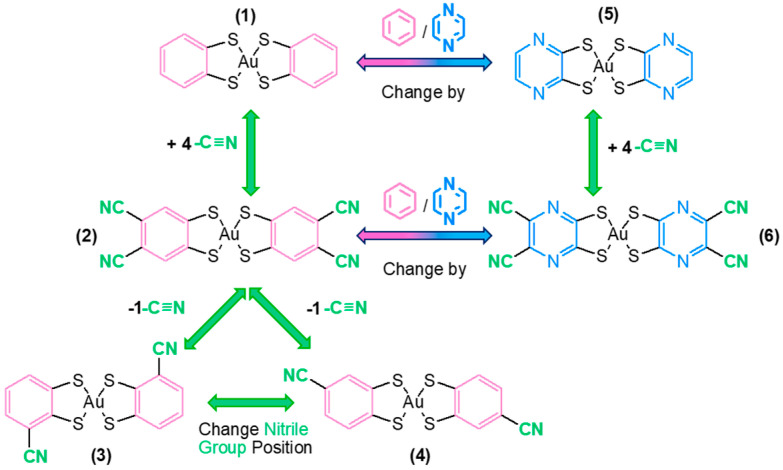 Figure 2
 Figure 3
 Figure 4
 Figure 5
 Figure 6
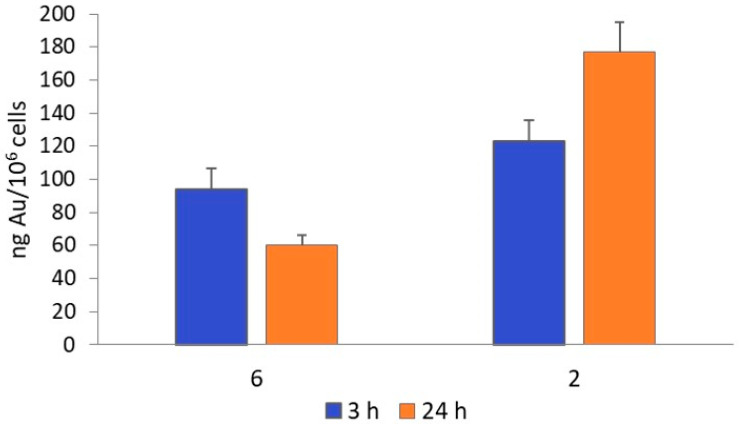 Figure 7
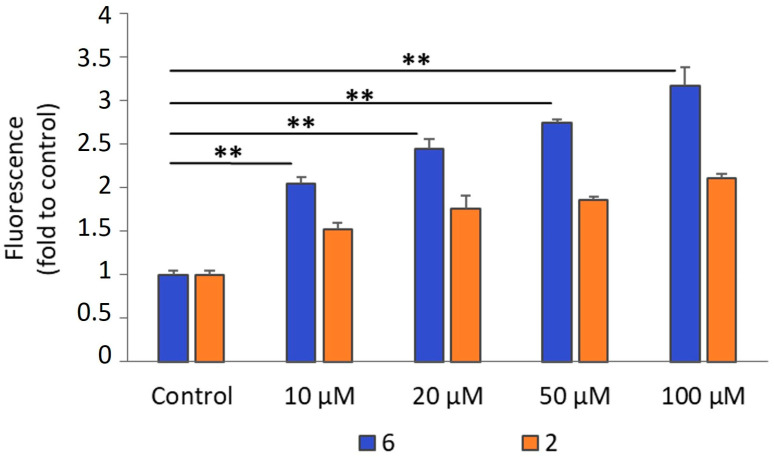 Figure 8
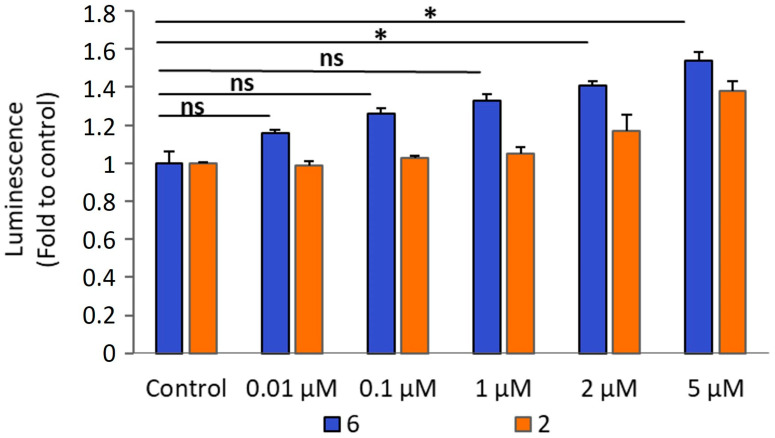 Figure 9
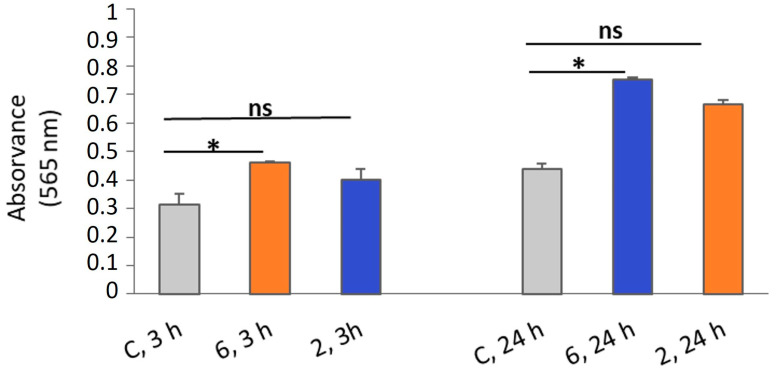 Figure 10
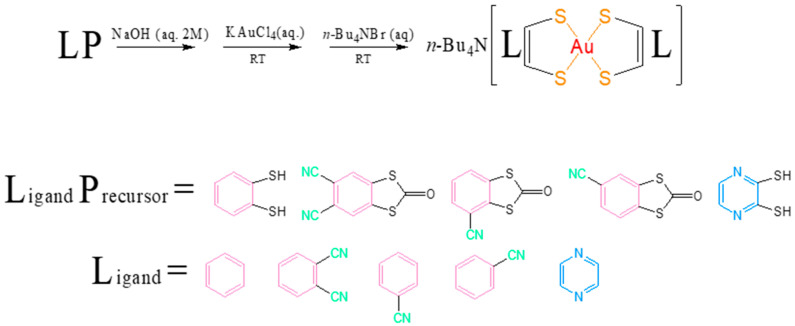 Figure 11
Peer Reviews
No public reviews on file for this paper yet. If you reviewed it on a platform where reviews are public (OpenReview, ICLR, NeurIPS, ICML), you can paste yours below so the community can read it here.
Videos
No videos yet. Explain this paper in a talk, walkthrough, or lecture? Add one.
Taxonomy
TopicsMetal complexes synthesis and properties · Click Chemistry and Applications · Computational Drug Discovery Methods