Atrial Strain Analysis Predicts Atrial Arrhythmia Recurrence Following Cavotricuspid Isthmus Ablation of Typical Atrial Flutter
Giulia Iannaccone, Roberto Scacciavillani, Francesca Graziani, Filippo Tusa, Carlo Piccinni, Francesca Augusta Gabrielli, Maria Lucia Narducci, Francesco Perna, Massimiliano Camilli, Maria Chiara Meucci, Rocco A. Montone, Gianluigi Bencardino, Gaetano Antonio Lanza

TL;DR
This study shows that measuring atrial strain before a heart procedure can predict if patients will have heart rhythm issues again.
Contribution
Atrial strain analysis is shown to be a novel predictor of atrial arrhythmia recurrence after ablation.
Findings
Lower right and left atrial strain values were strongly linked to higher recurrence rates.
RASr and LASr were independent predictors of recurrence in Cox regression analysis.
Optimal cut-off values for RASr and LASr were identified to predict recurrence effectively.
Abstract
Background: This study aimed to evaluate the effectiveness of right and left atrial strain reservoir (RASr and LASr) in predicting the recurrence of atrial arrhythmias (AAs) following cavotricuspid isthmus ablation (CTIA) for typical atrial flutter (AFL). Methods: We retrospectively enrolled consecutive patients with AFL who had undergone CTIA. Transthoracic echocardiography was conducted within one month before the procedure, and atrial two-dimensional speckle tracking analysis was performed offline. Results: Sixty-two subjects were evaluated (mean age 64.8 ± 13.2 years, 29% females). At a median follow-up of 12.1 months, AA recurrence occurred in 21 subjects (33.8%). The study endpoint occurred mainly among females (p = 0.021) and patients with lower RASr and LASr values (both p < 0.001). In Cox regression analysis, RASr and LASr remained independent predictors of AA recurrence (p =…
Genes, proteins, chemicals, diseases, species, mutations and cell lines named across the full text — each resolved to its canonical identifier and authoritative record.
Click any figure to enlarge with its caption.
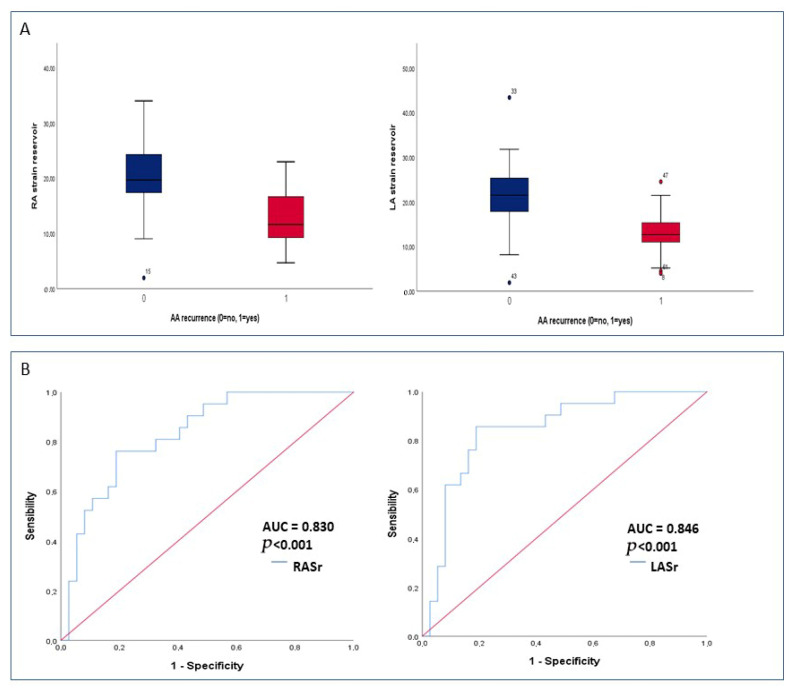 Figure 1
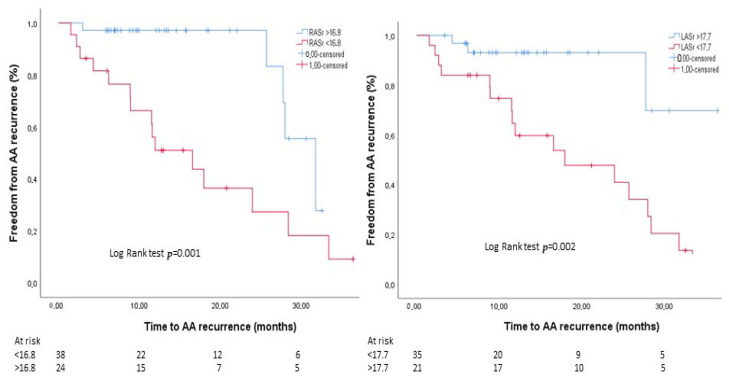 Figure 2
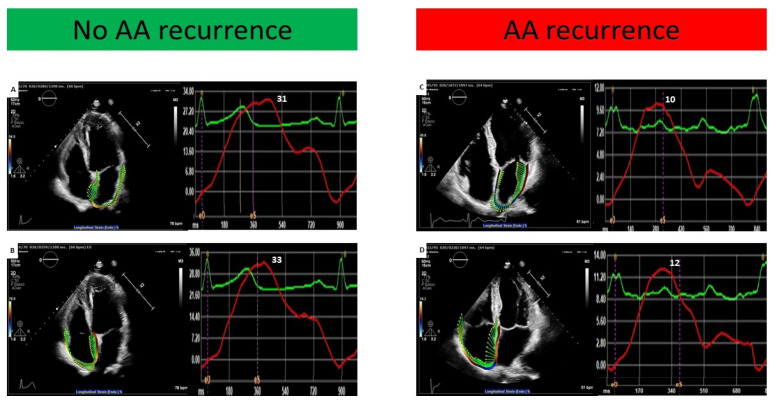 Figure 3
Peer Reviews
No public reviews on file for this paper yet. If you reviewed it on a platform where reviews are public (OpenReview, ICLR, NeurIPS, ICML), you can paste yours below so the community can read it here.
Videos
No videos yet. Explain this paper in a talk, walkthrough, or lecture? Add one.
Taxonomy
TopicsAtrial Fibrillation Management and Outcomes · Cardiac Arrhythmias and Treatments · Cardiovascular Function and Risk Factors