Enabling in vivo comparisons of different four-dimensional magnetic resonance imaging sequences for radiotherapy guidance using visual biofeedback
Katrinus Keijnemans, Tim Schakel, Bastien Lecoeur, Pim T.S. Borman, William A. Hall, Bas W. Raaymakers, Andreas Wetscherek, Eric S. Paulson, Martin F. Fast

TL;DR
This study introduces a method using visual biofeedback to improve breathing consistency during 4D-MRI scans, enabling more accurate comparisons of MRI sequences for radiotherapy.
Contribution
A novel approach combining visual biofeedback with 4D-MRI sequences to enable in vivo comparisons and reduce breathing variability.
Findings
Visual biofeedback reduced breathing variability by 37% in amplitude and 64% in period.
Motion amplitude agreement improved from 3.5 mm to 1.8 mm with biofeedback guidance.
4D-MRI-derived amplitudes were consistently smaller than breathing waveform amplitudes across sequences.
Abstract
Managing respiratory motion is essential for effective radiotherapy in the abdominothoracic regions. Respiratory-correlated four-dimensional magnetic resonance imaging (4D-MRI) can provide accurate motion estimation to help define treatment volumes for adaptive radiotherapy. However, validating and comparing 4D-MRI sequences in vivo is challenging due to the presence of breathing variability. This study combines visual biofeedback (VBF) with 4D-MRI sequences to facilitate in vivo comparisons. Fourteen healthy volunteers and one patient were scanned on a 1.5 T Unity MR-linear accelerator (Elekta AB, Stockholm, Sweden) at two institutions. A radial stack-of-stars (SoS), a simultaneous multi-slice (SMS), and a Cartesian acquisition with spiral ordering (CASPR) 4D-MRI sequence were acquired. These acquisitions were performed without and with VBF based on an interleaved one-dimensional…
Genes, proteins, chemicals, diseases, species, mutations and cell lines named across the full text — each resolved to its canonical identifier and authoritative record.
Click any figure to enlarge with its caption.
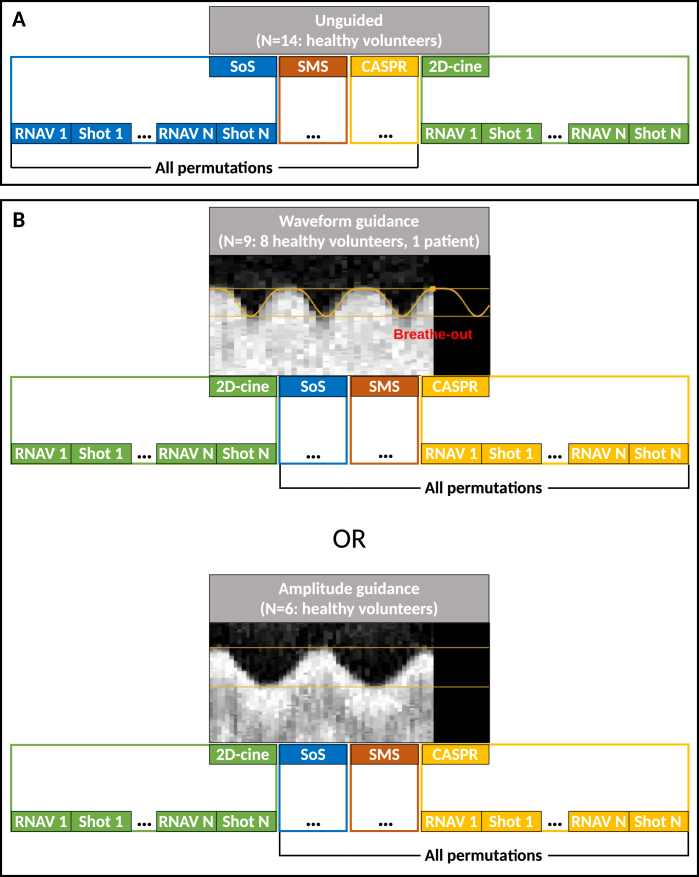 Figure 1
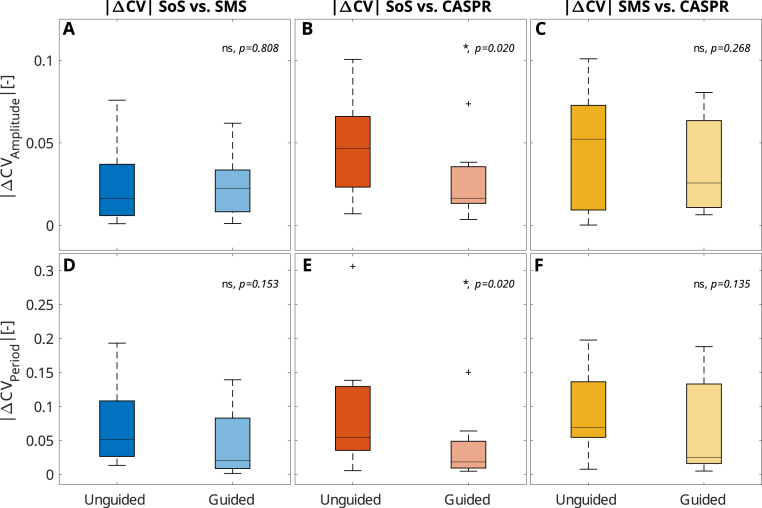 Figure 2
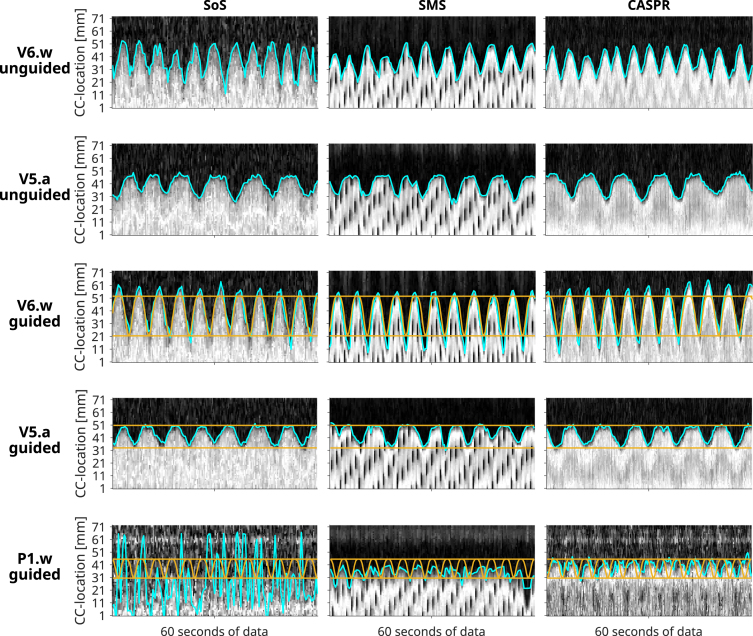 Figure 3
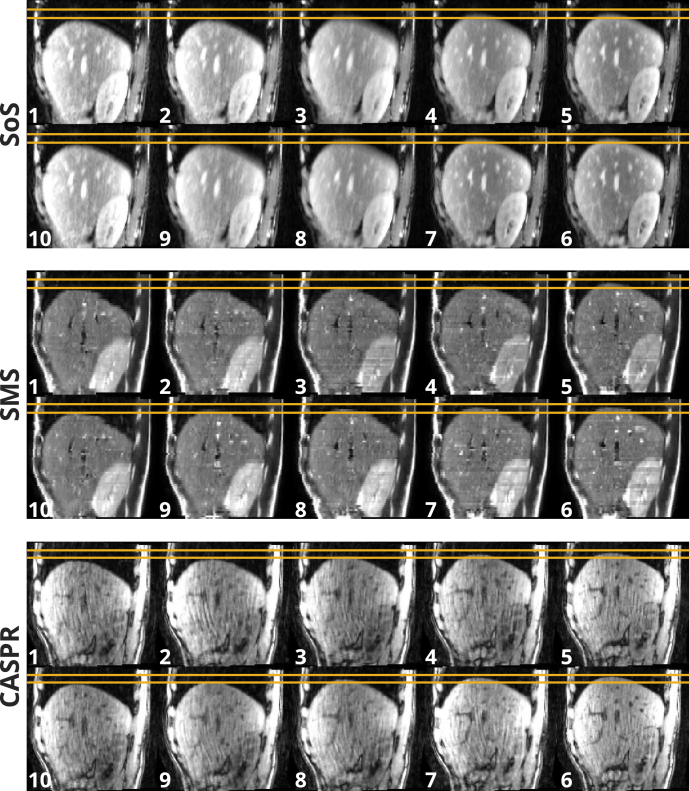 Figure 4
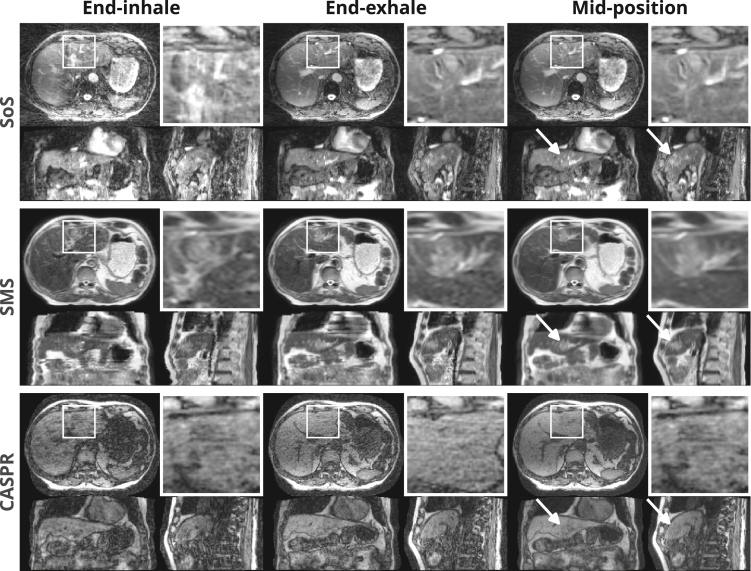 Figure 5
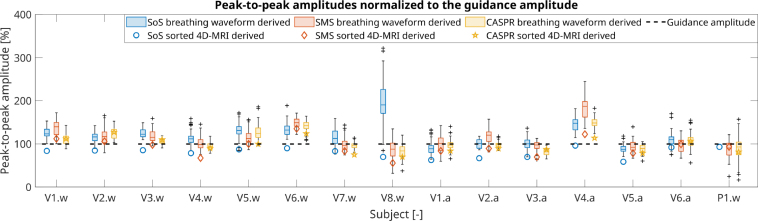 Figure 6
Peer Reviews
No public reviews on file for this paper yet. If you reviewed it on a platform where reviews are public (OpenReview, ICLR, NeurIPS, ICML), you can paste yours below so the community can read it here.
Videos
No videos yet. Explain this paper in a talk, walkthrough, or lecture? Add one.
Taxonomy
TopicsAdvanced Radiotherapy Techniques · Advanced MRI Techniques and Applications · Medical Imaging Techniques and Applications