Genetic and Metabolic Factors of Familial Dysbetalipoproteinemia Phenotype: Insights from a Cross-Sectional Study
Anastasia V. Blokhina, Alexandra I. Ershova, Anna V. Kiseleva, Evgeniia A. Sotnikova, Marija Zaicenoka, Anastasia A. Zharikova, Yuri V. Vyatkin, Vasily E. Ramensky, Elizaveta A. Novokhatskaya, Anna L. Borisova, Svetlana A. Shalnova, Alexey N. Meshkov, Oxana M. Drapkina

TL;DR
This study explores how genetic and metabolic factors contribute to the development of familial dysbetalipoproteinemia, a condition linked to high cholesterol and heart disease risk.
Contribution
The study identifies new genetic and metabolic contributors to the FD phenotype, including polygenic risk scores and metabolic syndrome components.
Findings
Age, elevated polygenic risk for hypertriglyceridemia, and metabolic syndrome components are independently associated with the FD phenotype.
Triglyceride levels are significantly linked to polygenic burden, rare lipid-related variants, and glucose metabolism disorders.
These factors together explain 30% of triglyceride variance in a cross-validated model.
Abstract
Familial dysbetalipoproteinemia (FD) is a prevalent and highly atherogenic hyperlipoproteinemia associated with the ε2/ε2 APOE genotype or rare APOE variants. The contributions of additional genetic and clinical factors to the FD phenotype remain unclear. We investigated these factors in both autosomal recessive and autosomal dominant forms of FD. Targeted (n = 4666) and exome (n = 194) sequencing were used to identify the ε2/ε2 APOE genotype or rare FD-causative APOE variants. Twenty-four lipid-related genes and forty variants included in a polygenic risk score for hypertriglyceridemia (HTG) were analyzed. FD was defined by the presence of FD variants and triglycerides (TG) ≥ 1.5 mmol/L (main study group). The comparison group consisted of patients with FD variants but TG < 1.5 mmol/L. Univariable and multivariable regression analyses were performed. A total of 71 unrelated subjects…
Genes, proteins, chemicals, diseases, species, mutations and cell lines named across the full text — each resolved to its canonical identifier and authoritative record.
Click any figure to enlarge with its caption.
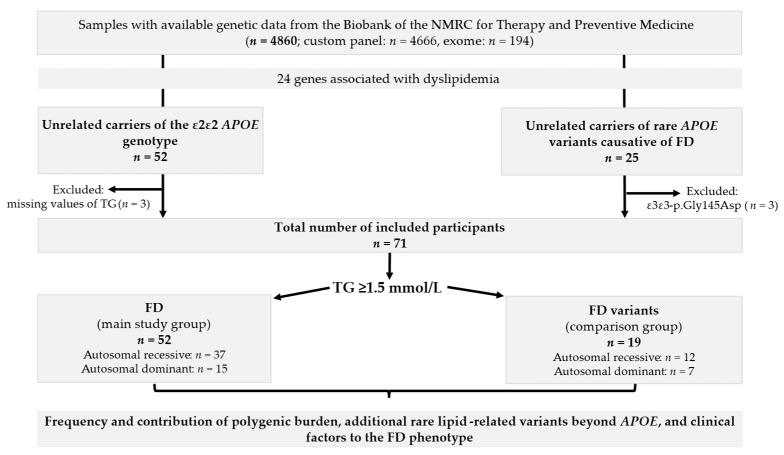 Figure 1
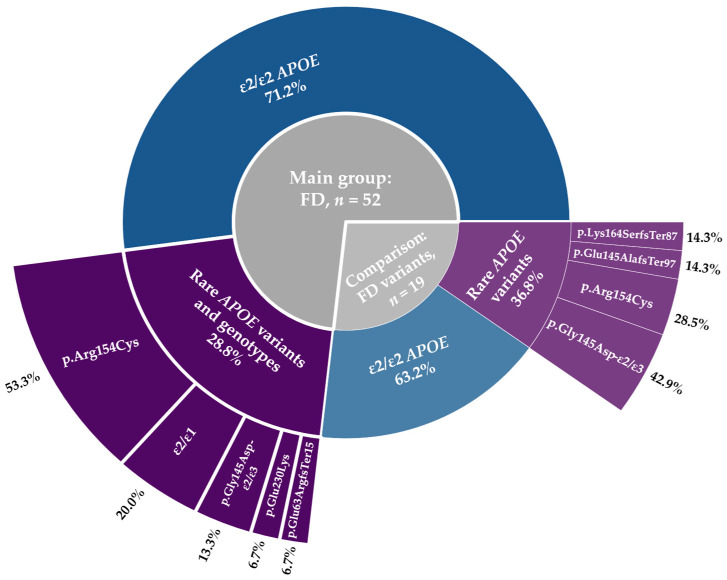 Figure 2
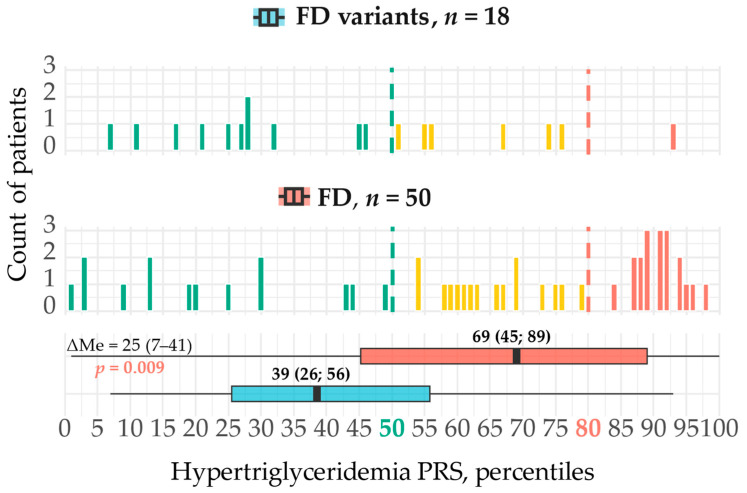 Figure 3
 Figure 4
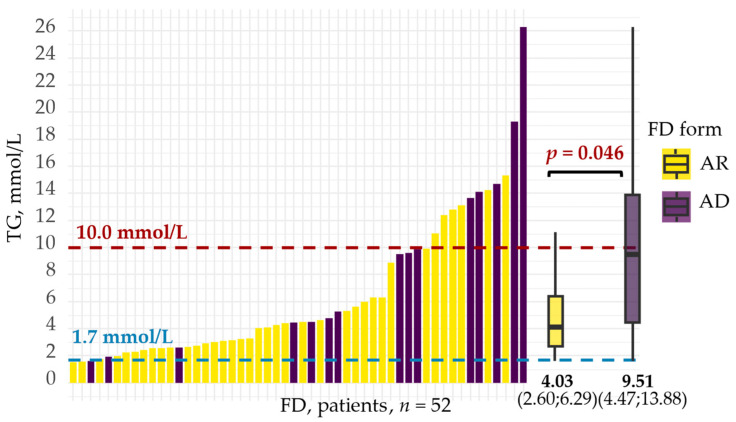 Figure 5
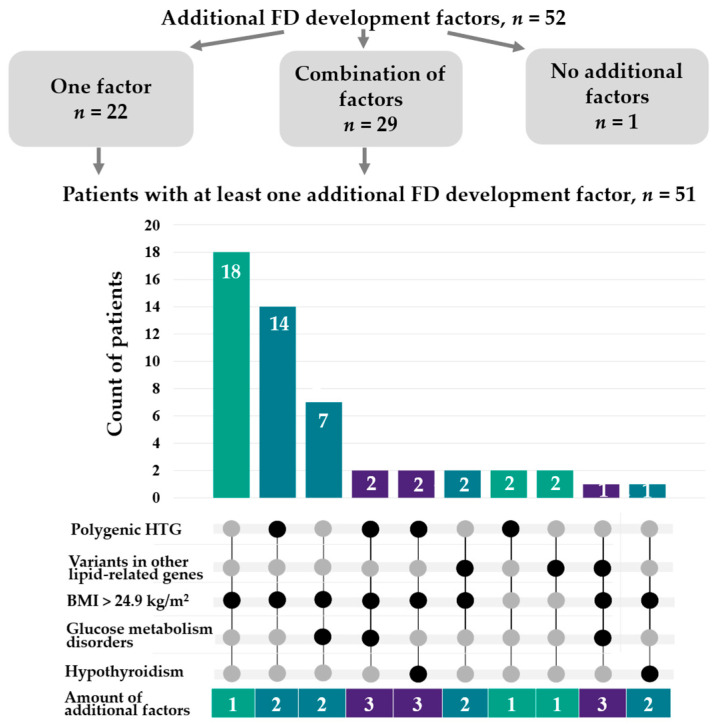 Figure 6
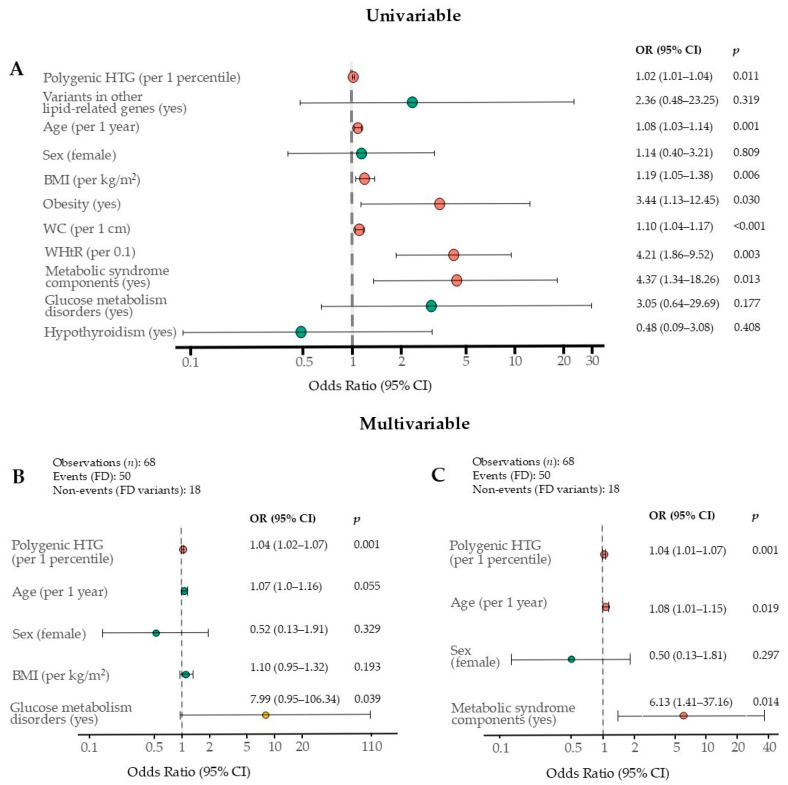 Figure 7
Peer Reviews
No public reviews on file for this paper yet. If you reviewed it on a platform where reviews are public (OpenReview, ICLR, NeurIPS, ICML), you can paste yours below so the community can read it here.
Videos
No videos yet. Explain this paper in a talk, walkthrough, or lecture? Add one.
Taxonomy
TopicsLipoproteins and Cardiovascular Health · Lipid metabolism and disorders · Diabetes, Cardiovascular Risks, and Lipoproteins