Symptom Burden, Treatment Goals, and Information Needs of Younger Women with Pelvic Organ Prolapse: A Content Analysis of ePAQ-Pelvic Floor Free-Text Responses
Georgina Forshall, Thomas J. Curtis, Ruth Athey, Rhys Turner-Moore, Stephen C. Radley, Georgina L. Jones

TL;DR
Younger women with pelvic organ prolapse experience significant symptoms and unique needs that differ from older women, according to an analysis of questionnaire responses.
Contribution
This study is the first to explore the specific symptom burden and information needs of younger women with pelvic organ prolapse using a large dataset.
Findings
Younger women reported higher symptom severity in bowel, prolapse, and sexual health domains compared to older women.
Qualitative analysis revealed six key themes, including physical health, psychosocial wellbeing, and information needs.
The study emphasizes the need for age-specific resources to address the unique challenges faced by younger women with prolapse.
Abstract
Background/Objectives: Pelvic organ prolapse (POP) is a common condition that significantly impacts quality of life. Research has focused largely on older women, while experiences of younger women remain relatively underexplored despite challenges unique to this population. Informed by the biopsychosocial model of illness, this study aims to assess the symptom burden, treatment goals, and information needs of younger women complaining of prolapse by analyzing questionnaire responses from an existing electronic Personal Assessment Questionnaire—Pelvic Floor (ePAQ-PF) dataset. Methods: Mixed-methods content analysis was conducted using free-text data from an anonymized multi-site ePAQ-PF dataset of 5717 responses collected across eight UK NHS trusts (2018–2022). A quantitative, deductive approach was first used to identify younger women (≤50 years old) with self-reported prolapse. ePAQ-PF…
Genes, proteins, chemicals, diseases, species, mutations and cell lines named across the full text — each resolved to its canonical identifier and authoritative record.
Click any figure to enlarge with its caption.
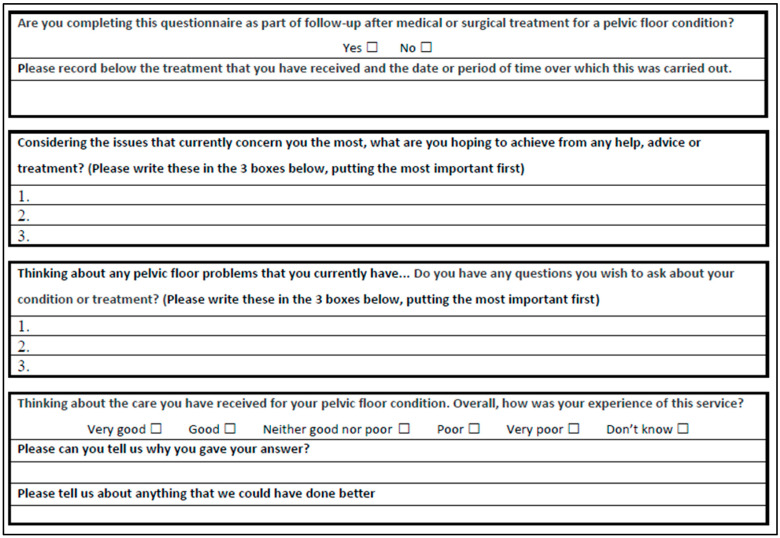 Figure 1
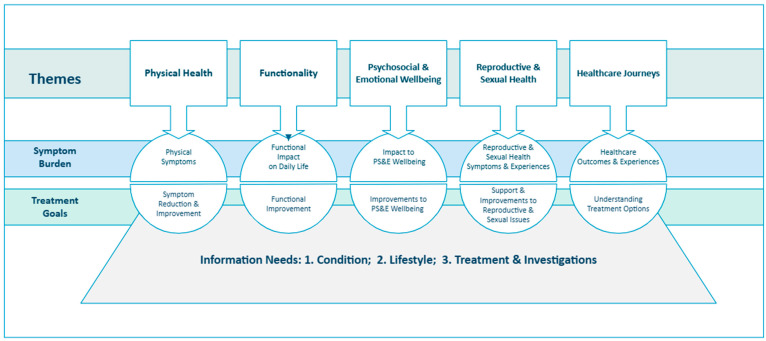 Figure 2
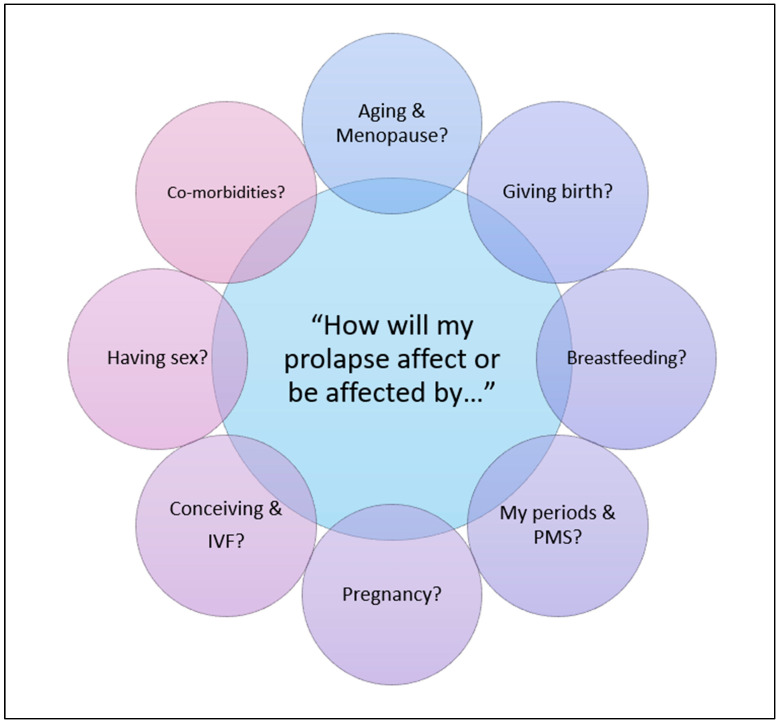 Figure 3
Peer Reviews
No public reviews on file for this paper yet. If you reviewed it on a platform where reviews are public (OpenReview, ICLR, NeurIPS, ICML), you can paste yours below so the community can read it here.
Videos
No videos yet. Explain this paper in a talk, walkthrough, or lecture? Add one.
Taxonomy
TopicsPelvic floor disorders treatments · Enhanced Recovery After Surgery · Urinary Tract Infections Management