Comparative Chloroplast Genomics, Phylogenomics, and Divergence Times of Sassafras (Lauraceae)
Zhiyuan Li, Yunyan Zhang, David Y. P. Tng, Qixun Chen, Yahong Wang, Yongjing Tian, Jingbo Zhou, Zhongsheng Wang

TL;DR
This study analyzes the chloroplast genomes of Sassafras to clarify its evolutionary history and phylogenetic position within the Lauraceae family.
Contribution
The study provides the first complete chloroplast genome analysis of Sassafras, revealing its divergence times and phylogenetic relationships.
Findings
Sassafras chloroplast genomes show conserved structure but variation in inverted repeat regions and codon usage.
Phylogenetic analysis places Sassafras as a sister group to Cinnamomum sect. Camphora.
Divergence times suggest the Bering Land Bridge and glacial refugia influenced Sassafras speciation.
Abstract
In the traditional classification system of the Lauraceae family based on morphology and anatomy, the phylogenetic position of the genus Sassafras has long been controversial. Chloroplast (cp) evolution of Sassafras has not yet been illuminated. In this study, we first sequenced and assembled the complete cp genomes of Sassafras, and conducted the comparative cp genomics, phylogenomics, and divergence time estimation of this ecological and economic important genus. The whole length of cp genomes of the 10 Sassafras ranged from 151,970 bp to 154,011 bp with typical quadripartite structure, conserved gene arrangements and contents. Variations in length of cp were observed in the inverted repeat regions (IRs) and a relatively high usage frequency of codons ending with T/A was detected. Four hypervariable intergenic regions (ccsA-ndhD, trnH-psbA, rps15-ycf1, and petA-psbJ) and 672 cp…
Genes, proteins, chemicals, diseases, species, mutations and cell lines named across the full text — each resolved to its canonical identifier and authoritative record.
Click any figure to enlarge with its caption.
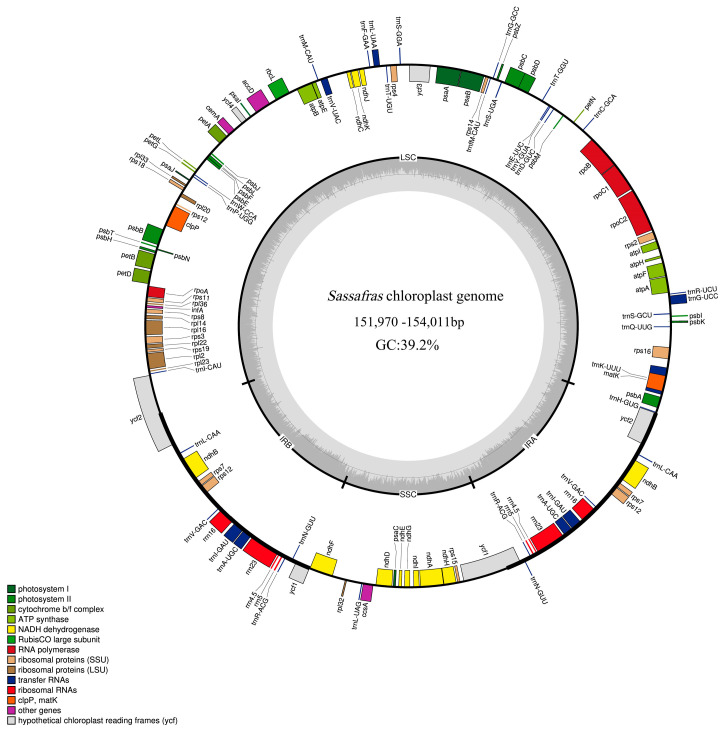 Figure 1
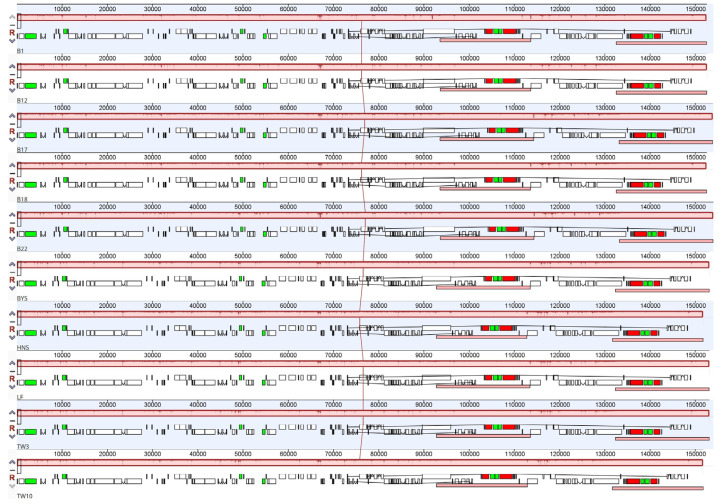 Figure 2
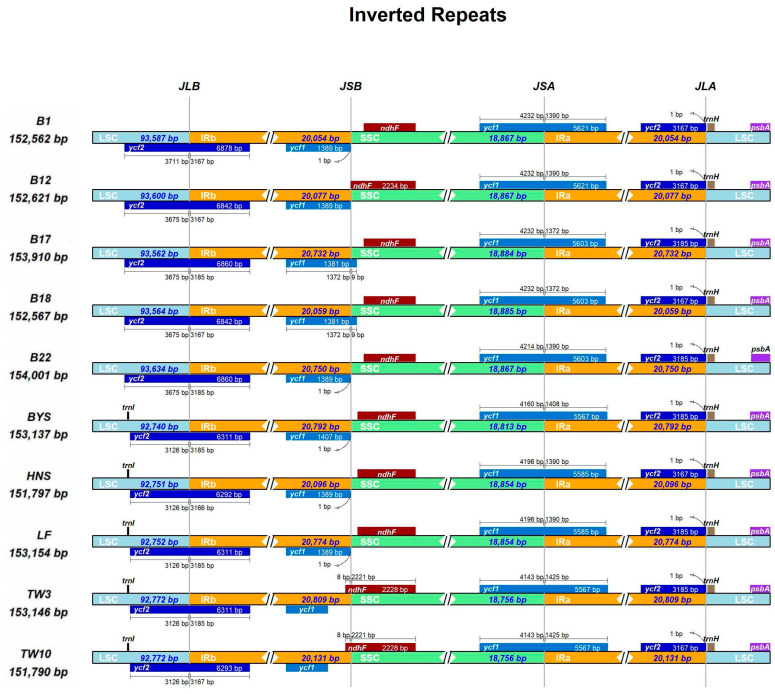 Figure 3
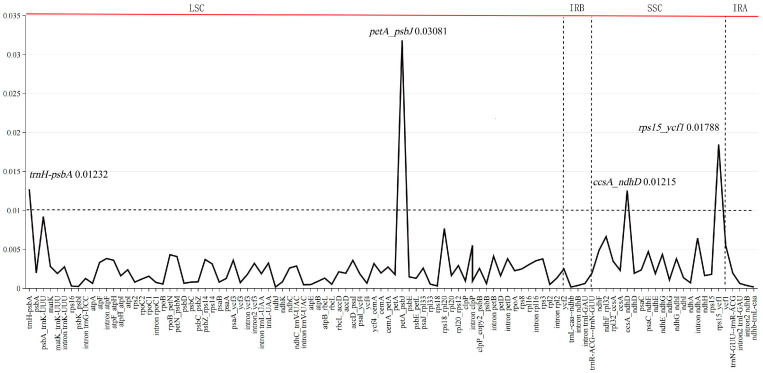 Figure 4
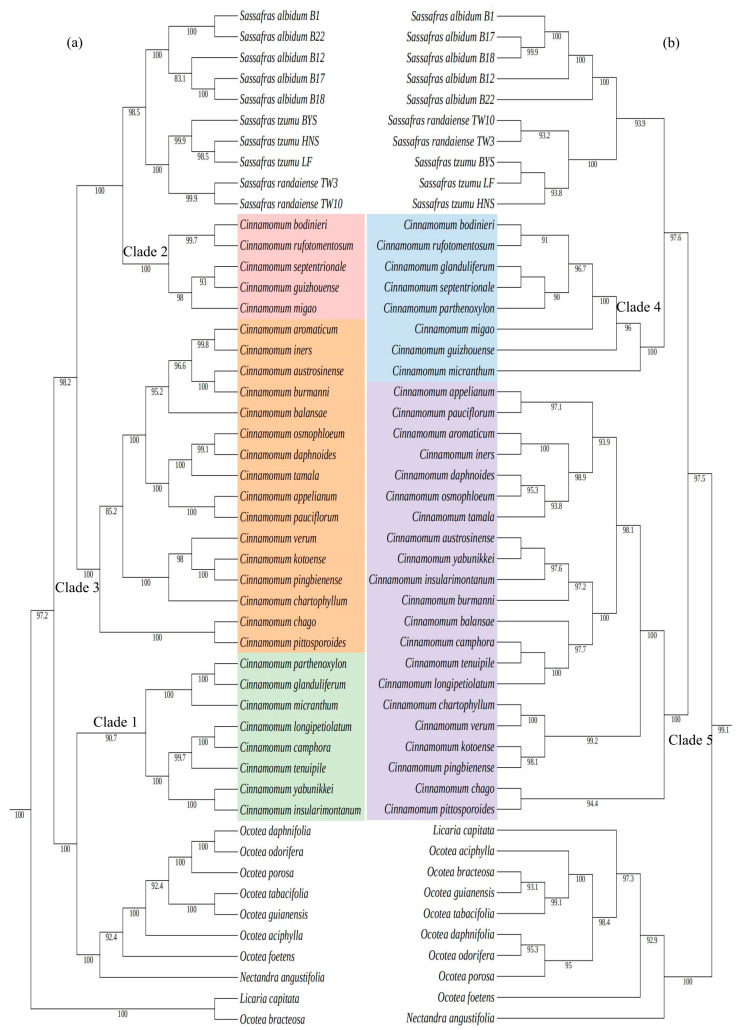 Figure 5
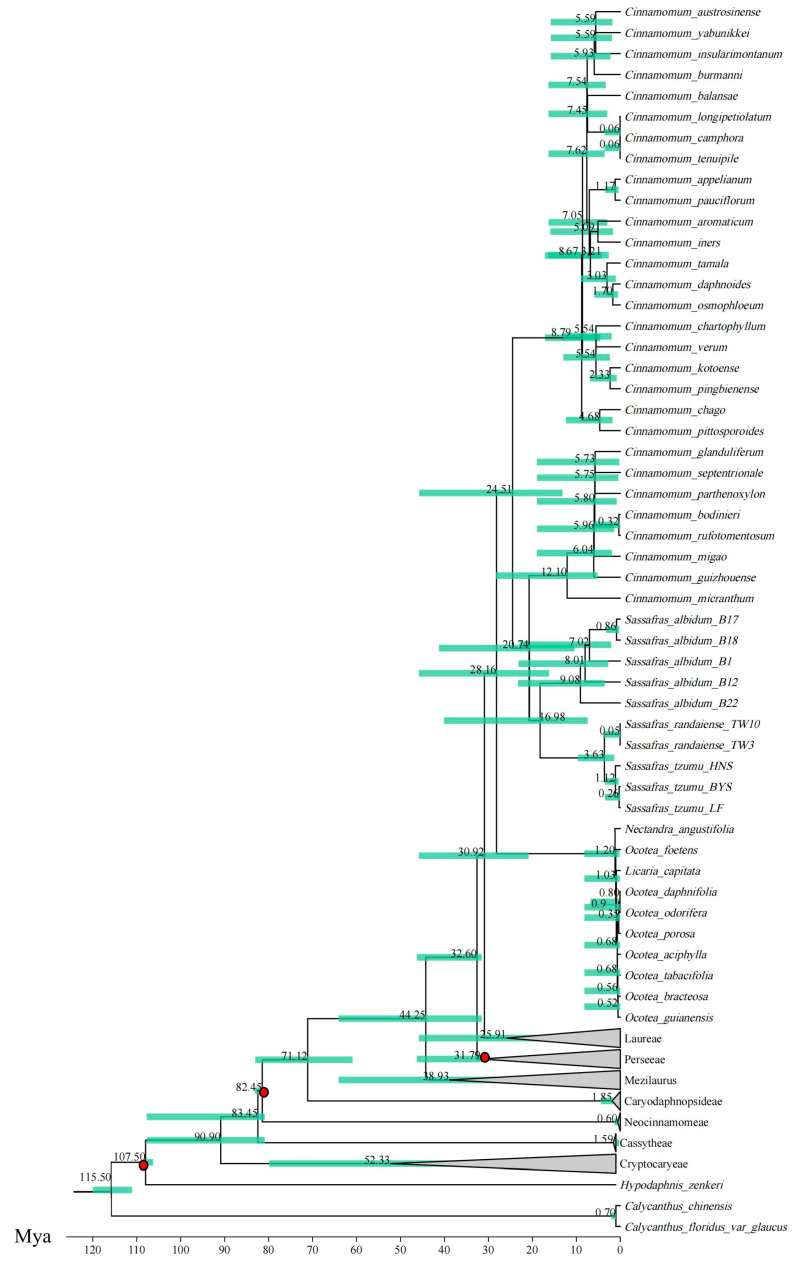 Figure 6
Peer Reviews
No public reviews on file for this paper yet. If you reviewed it on a platform where reviews are public (OpenReview, ICLR, NeurIPS, ICML), you can paste yours below so the community can read it here.
Videos
No videos yet. Explain this paper in a talk, walkthrough, or lecture? Add one.
Taxonomy
TopicsPlant and Fungal Species Descriptions · Genomics and Phylogenetic Studies · Plant Diversity and Evolution