Combining Time-Restricted Wheel Running and Feeding During the Light Phase Increases Running Intensity Under High-Fat Diet Conditions Without Altering the Total Amount of Daily Running
Ayano Shiba, Roberta Tandari, Ewout Foppen, Chun-Xia Yi, Joram D. Mul, Dirk Jan Stenvers, Andries Kalsbeek

TL;DR
Restricting both eating and running to the light phase increases running intensity on a high-fat diet without changing total daily running in rats.
Contribution
Demonstrates that time-restricted feeding and activity during the light phase can counteract some negative effects of a high-fat diet.
Findings
High-fat diet increased running intensity in the light-phase group but not in the dark-phase group.
Light-phase restriction improved muscle clock rhythms more effectively than chow-fed conditions.
Liver clock gene expression was protected against high-fat diet effects in the light-phase group.
Abstract
Excess caloric intake and insufficient physical activity are the two major drivers underlying the global obesity and type 2 diabetes mellitus epidemics. However, circadian misalignment of caloric intake and physical activity, as commonly experienced by nightshift workers, can also have detrimental effects on body weight and glucose homeostasis. We have previously reported that combined restriction of eating and voluntary wheel running to the inactive phase (i.e., a rat model for circadian misalignment) shifted liver and muscle clock rhythms by ~12 h and prevented the reduction in the amplitude of the muscle clock oscillation otherwise induced by light-phase feeding. Here, we extended on these findings and investigated how a high-fat diet (HFD) affects body composition and liver and muscle clock gene rhythms in male Wistar rats while restricting both eating and exercise to either the…
Genes, proteins, chemicals, diseases, species, mutations and cell lines named across the full text — each resolved to its canonical identifier and authoritative record.
Click any figure to enlarge with its caption.
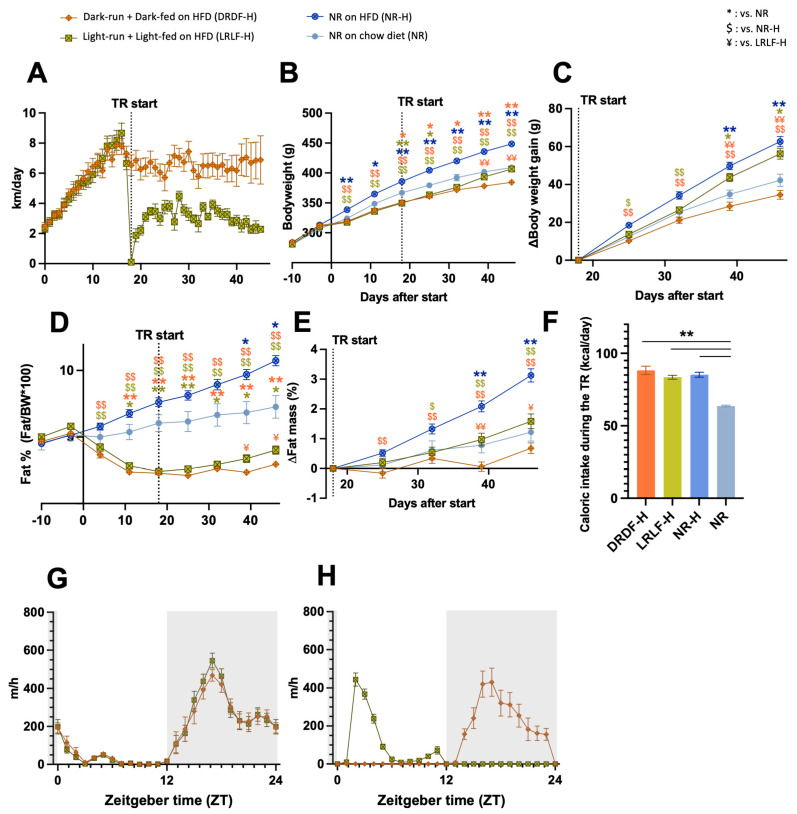 Figure 1
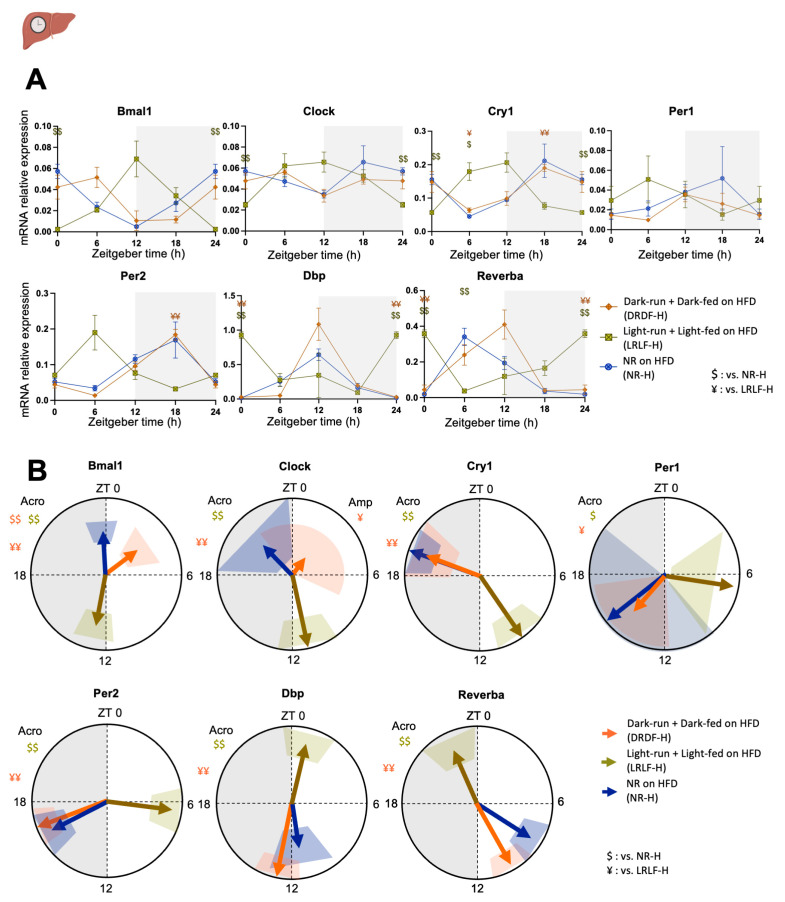 Figure 2
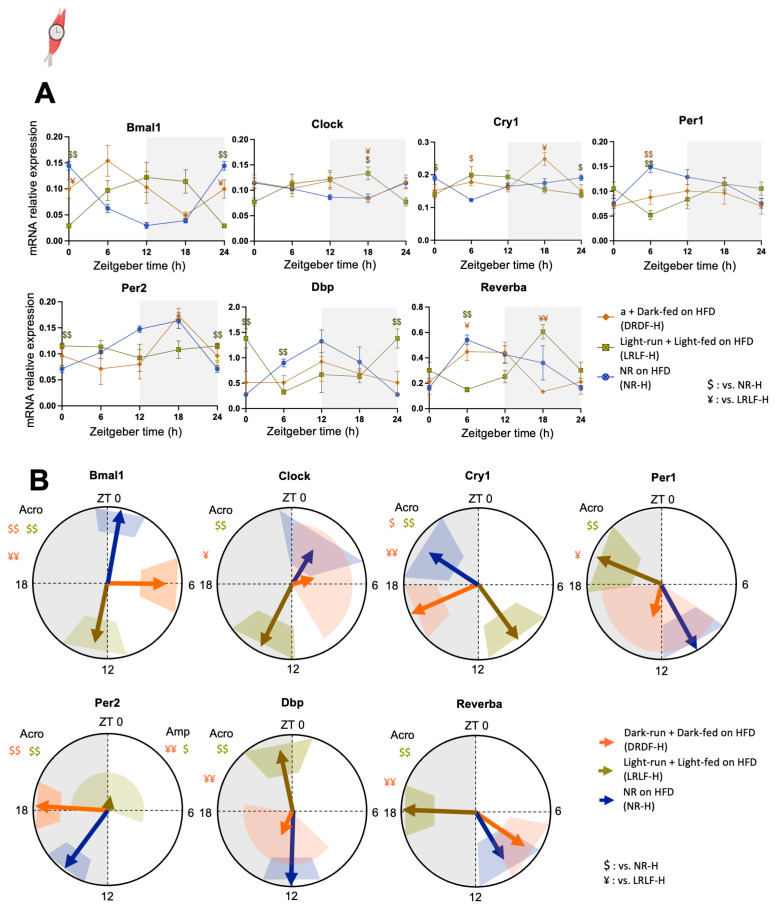 Figure 3
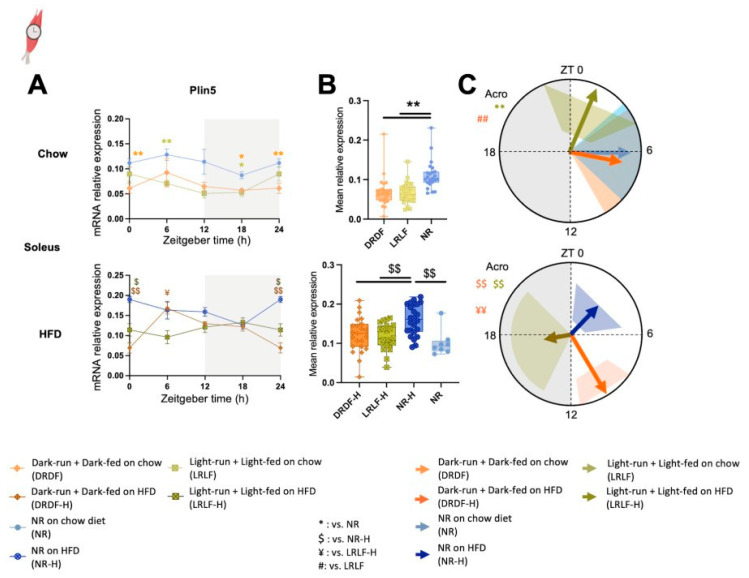 Figure 4
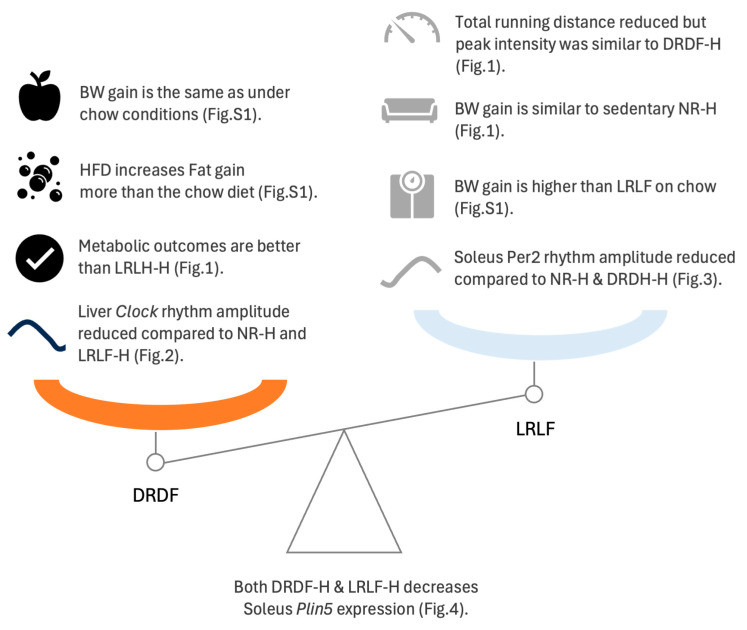 Figure 5
Peer Reviews
No public reviews on file for this paper yet. If you reviewed it on a platform where reviews are public (OpenReview, ICLR, NeurIPS, ICML), you can paste yours below so the community can read it here.
Videos
No videos yet. Explain this paper in a talk, walkthrough, or lecture? Add one.
Taxonomy
TopicsCircadian rhythm and melatonin · Dietary Effects on Health