The Effect of Heterogeneous Definitions of Massive Transfusion on Using Blood Component Thresholds to Predict Futility in Severely Bleeding Trauma Patients
Samuel J. Thomas, Vraj S. Patel, Connor P. Schmitt, Aleksey T. Zielinski, Mia N. Aboukhaled, Christopher A. Steinberg, Ernest E. Moore, Hunter B. Moore, Scott G. Thomas, Dan A. Waxman, Joseph B. Miller, Connor M. Bunch, Michael W. Aboukhaled, Emmanuel J. Thomas

TL;DR
This paper reviews how inconsistent definitions of massive transfusion affect the ability to predict futility in trauma patients and proposes a unified approach to improve accuracy.
Contribution
The paper proposes combining transfusion cut-points with STOP and FoRM criteria to create a more accurate futility prediction method.
Findings
Inconsistent definitions of massive transfusion complicate futility prediction in trauma care.
Current guidelines like STOP and FoRM have limitations in accurately declaring futility at the bedside.
Combining transfusion thresholds with STOP and FoRM could improve futility determination accuracy.
Abstract
In the trauma resuscitation literature, there are inconsistent definitions of what constitutes massive transfusion and a unit of blood, complicating the use of transfusion cut-points to declare futility. This is problematic as it can lead to the inefficient use of blood products, further exacerbating current blood product shortages. Previous studies have used various transfusion cut-points per hour to define futility in retrospective analyses but have not accurately defined futility at the bedside due to patient survival even at large rates and volumes of blood transfused. In an attempt to use transfusion cut-points as a marker to help define futility, guidelines have been proposed to limit blood product waste in transfusions for severely bleeding trauma patients, such as Suspension of Transfusion and Other Procedures (STOP) for patients older than 15 and the Futility of Resuscitation…
Genes, proteins, chemicals, diseases, species, mutations and cell lines named across the full text — each resolved to its canonical identifier and authoritative record.
Click any figure to enlarge with its caption.
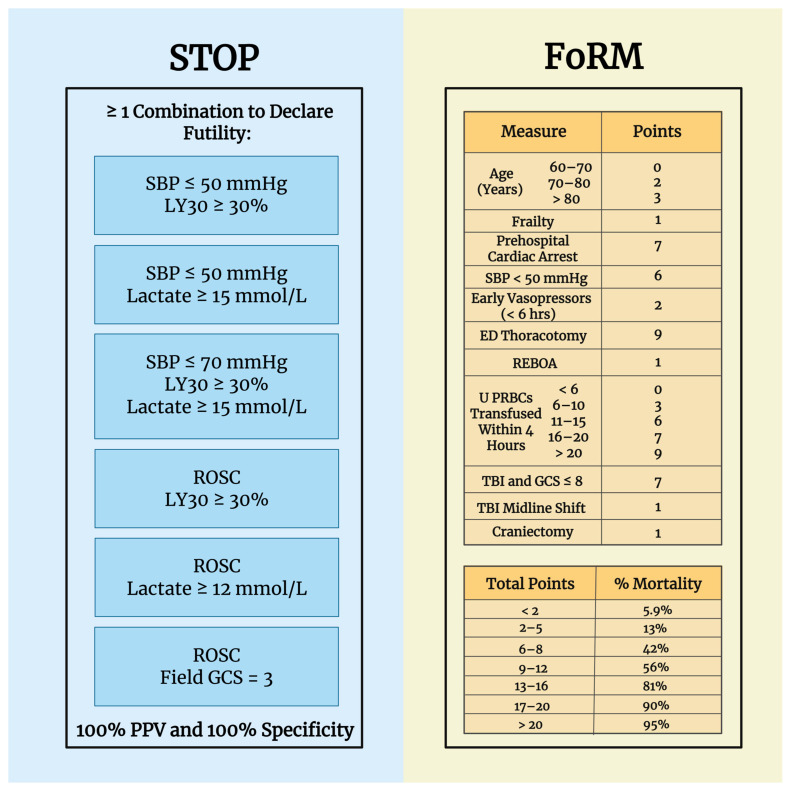 Figure 1
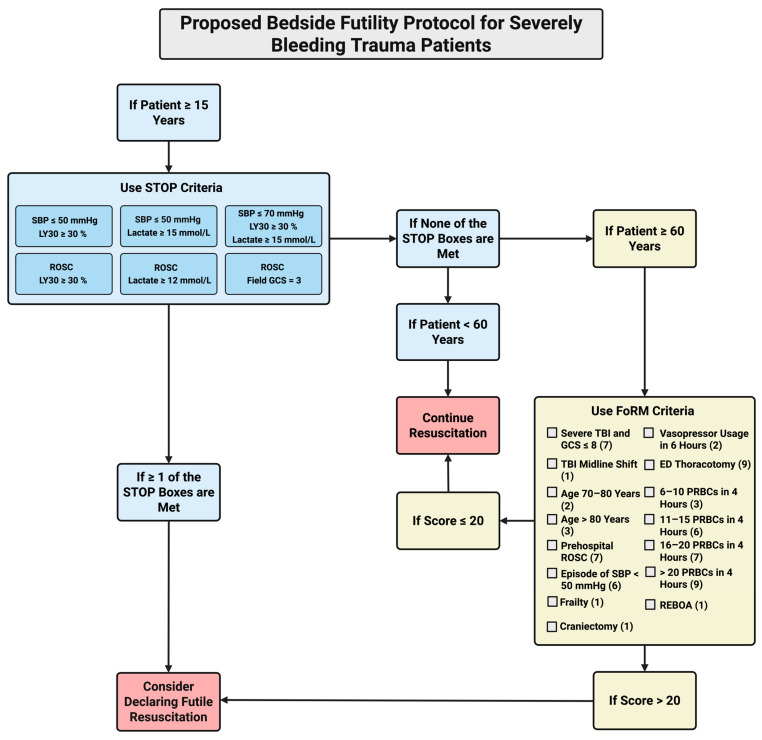 Figure 2
Peer Reviews
No public reviews on file for this paper yet. If you reviewed it on a platform where reviews are public (OpenReview, ICLR, NeurIPS, ICML), you can paste yours below so the community can read it here.
Videos
No videos yet. Explain this paper in a talk, walkthrough, or lecture? Add one.
Taxonomy
TopicsTrauma, Hemostasis, Coagulopathy, Resuscitation · Trauma and Emergency Care Studies · Abdominal Trauma and Injuries