Influence of Membrane Composition on the Passive Membrane Penetration of Industrially Relevant NSO-Heterocycles
Zsófia Borbála Rózsa, Tamás Horváth, Béla Viskolcz, Milán Szőri

TL;DR
This study explores how different membrane compositions affect the passive penetration of industrial chemicals called NSO-heterocycles.
Contribution
The study reveals how phospholipid headgroups influence membrane permeability and structural changes of NSO-HETs using molecular dynamics simulations.
Findings
DPPG bilayers showed higher membrane affinity and lower free energy barriers for NSO-HETs compared to DPPE.
OXA accumulated more in the bilayer center than in bulk water, with unique free energy profiles.
PHE and OXA caused significant bilayer thinning and reduced lipid tail order, especially in DPPE and DPPA.
Abstract
This study investigates how phospholipid headgroups influence passive membrane penetration and structural impact of four nitrogen-, sulfur-, and oxygen-containing heterocycles (NSO-HETs)—N-methyl-2-pyrrolidone (PIR), 1,4-dioxane (DIOX), oxane (OXA), and phenol (PHE). Using all-atom molecular dynamics simulations combined with Accelerated Weight Histogram free energy calculations, the passive transport of NSO-HETs across DPPC, DPPE, DPPA, and DPPG bilayers was characterized. DPPG showed the highest membrane affinity, increasing permeability (logPmemb/bulk) by 27–64% compared to DPPE, associated with the lowest permeability and tightest lipid packing. Free energy barriers are also decreased in DPPG relative to DPPE; PIR’s central barrier dropped from 19.2 kJ/mol (DPPE) to 16.6 kJ/mol (DPPG), while DIOX’s barrier decreased from 7.2 to 5.2 kJ/mol. OXA exhibited the lowest central barriers…
Genes, proteins, chemicals, diseases, species, mutations and cell lines named across the full text — each resolved to its canonical identifier and authoritative record.
Click any figure to enlarge with its caption.
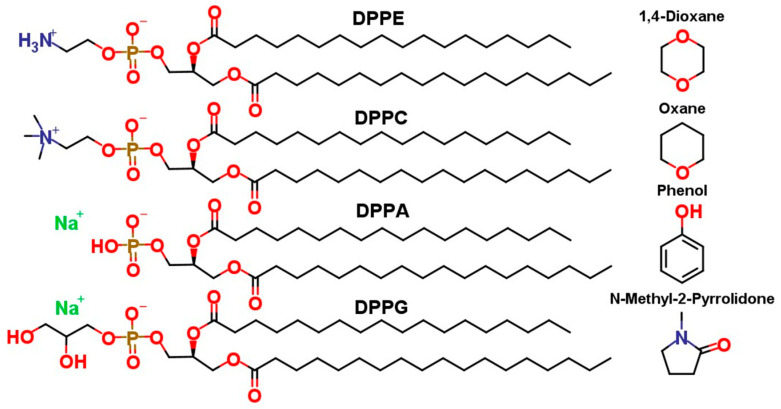 Figure 1
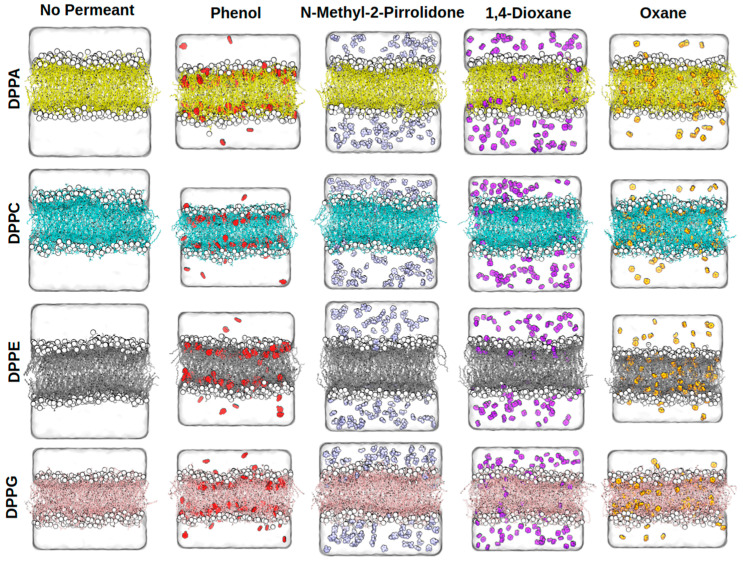 Figure 2
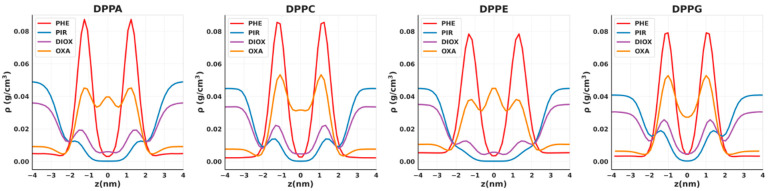 Figure 3
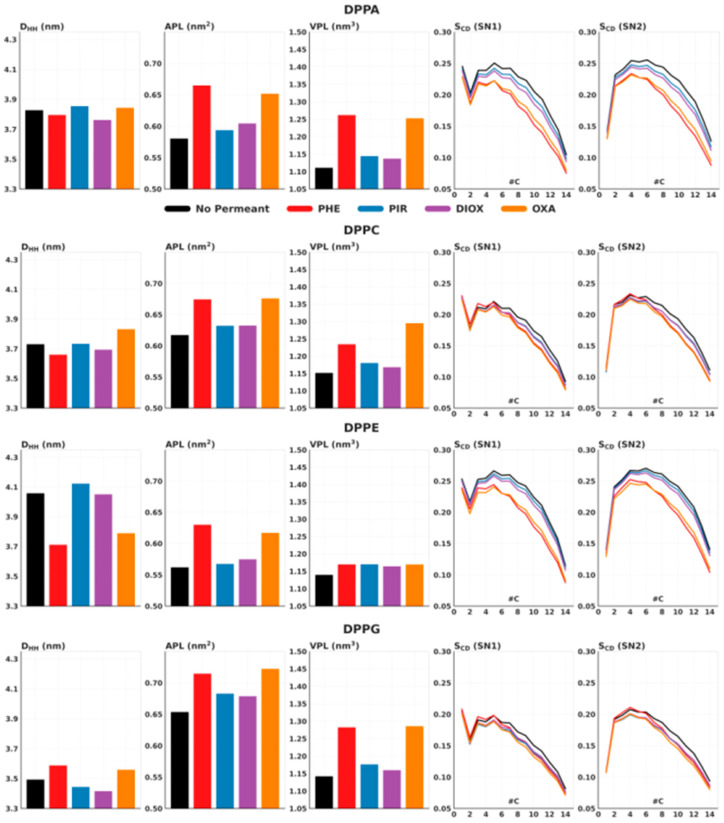 Figure 4
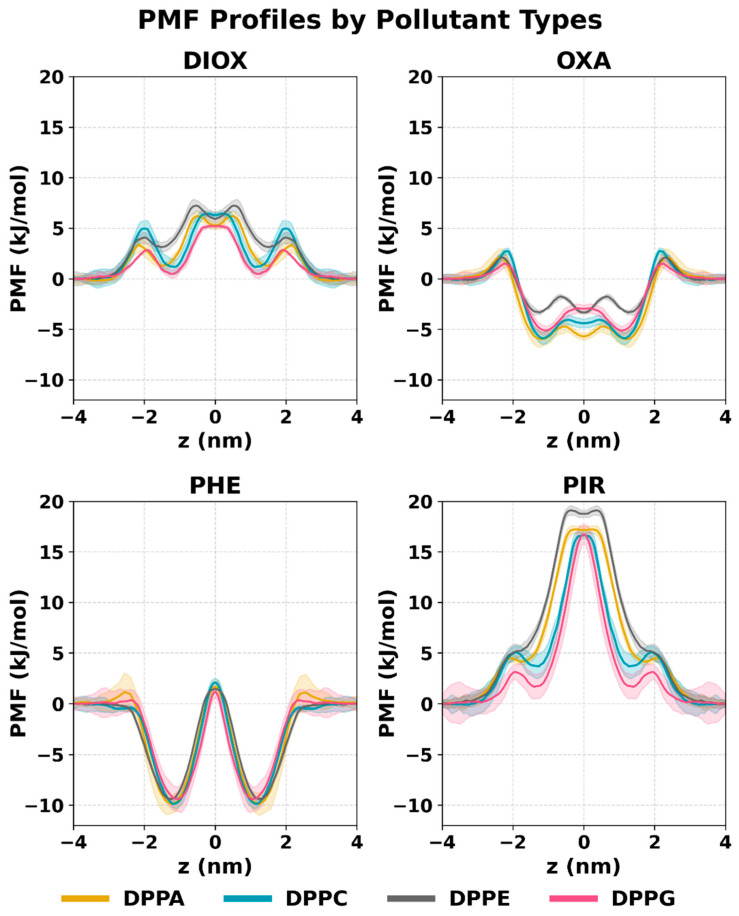 Figure 5
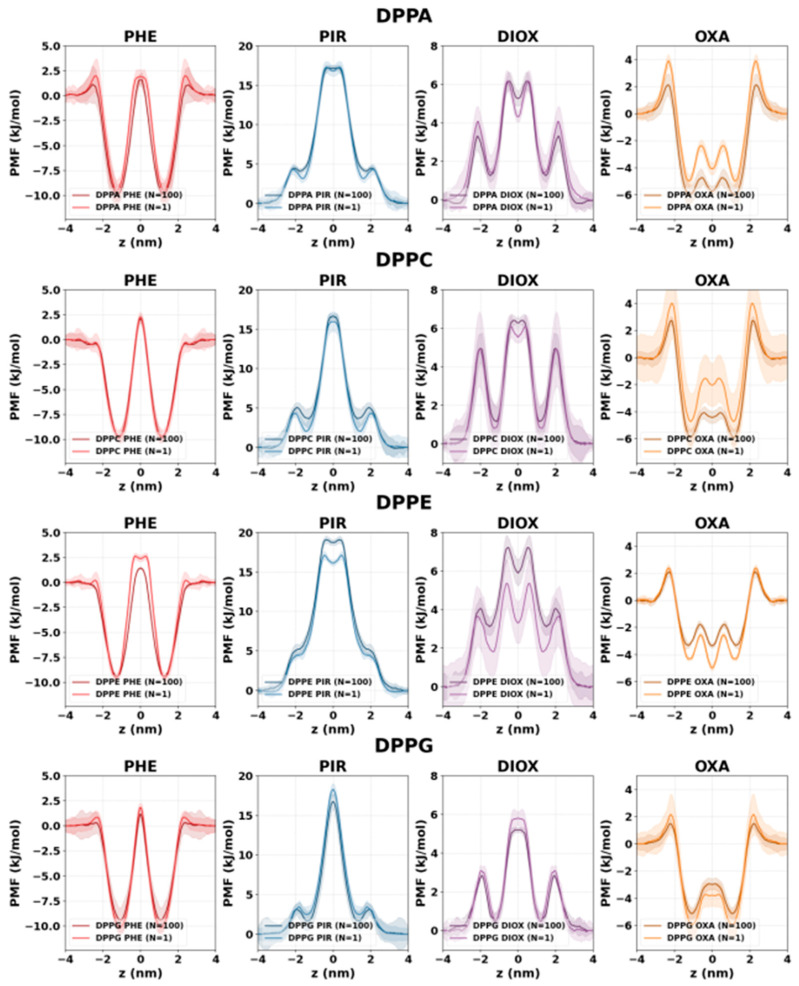 Figure 6
Peer Reviews
No public reviews on file for this paper yet. If you reviewed it on a platform where reviews are public (OpenReview, ICLR, NeurIPS, ICML), you can paste yours below so the community can read it here.
Videos
No videos yet. Explain this paper in a talk, walkthrough, or lecture? Add one.
Taxonomy
TopicsLipid Membrane Structure and Behavior · Surfactants and Colloidal Systems · Molecular Sensors and Ion Detection