Informatics-Based Design of Virtual Libraries of Polymer Nano-Composites
Qinrui Liu, Scott R. Broderick

TL;DR
This paper presents an informatics-based method to design polymer nano-composites by predicting electrical conductivity using a QSAR model.
Contribution
The study introduces a novel QSAR approach for nano-composites that integrates polymer chemistry and nano-additive interactions with UMAP for data variability analysis.
Findings
A QSAR model was developed to predict electrical conductivity based on polymer matrix and nano-additive volume.
UMAP analysis showed that data variability and information content are more important than data size for model training.
Multiple training/testing splits confirmed the statistical significance of the results.
Abstract
The purpose of this paper is to use an informatics-based analysis to develop a rational design approach to the accelerated screening of nano-composite materials. Using existing nano-composite data, we develop a quantitative structure–activity relationship (QSAR) as a function of polymer matrix chemistry and nano-additive volume, with the property predicted being electrical conductivity. The development of a QSAR for the electrical conductivity of nano-composites presents challenges in representing the polymer matrix chemistry and backbone structure, the additive content, and the interactions between the components while capturing the non-linearity of electrical conductivity with changing nano-additive volume. An important aspect of this work is designing chemistries with small training data sizes, as the uncertainty in modeling is high, and potentially the representated physics may be…
Genes, proteins, chemicals, diseases, species, mutations and cell lines named across the full text — each resolved to its canonical identifier and authoritative record.
Click any figure to enlarge with its caption.
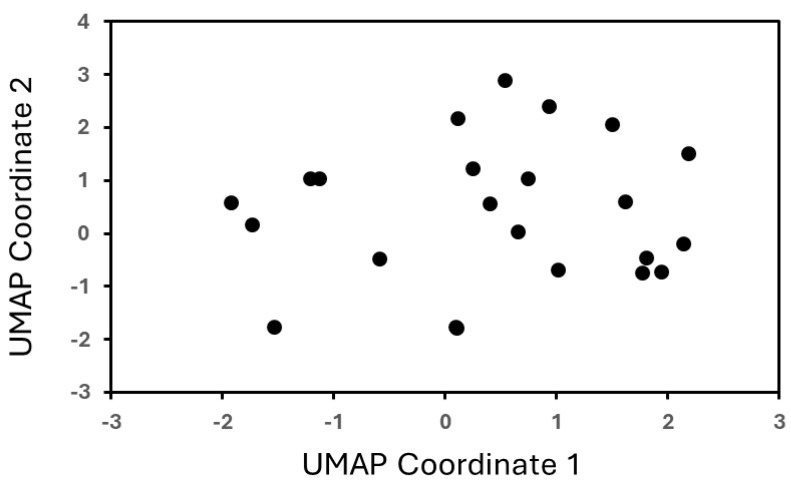 Figure 1
 Figure 2
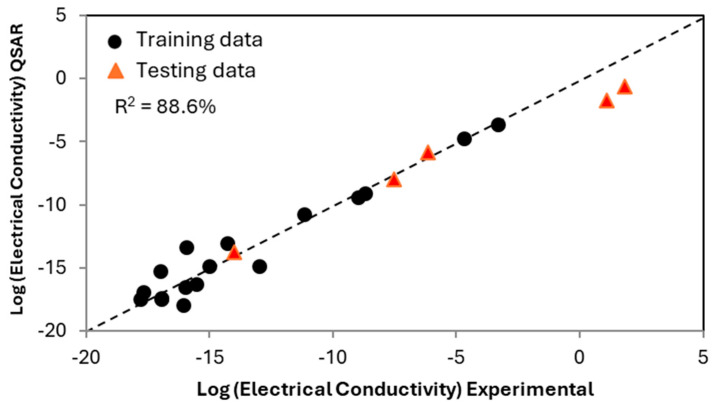 Figure 3
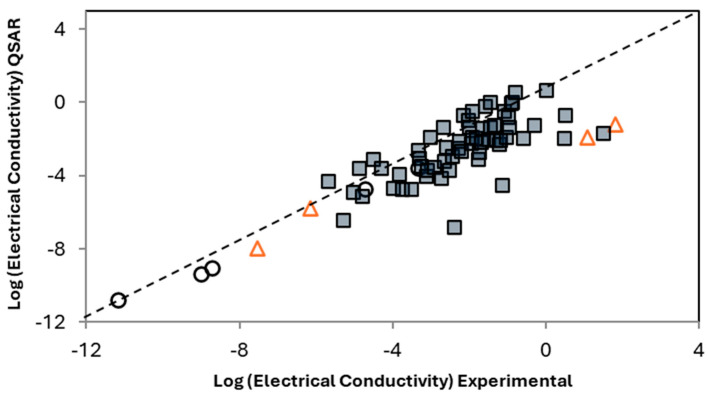 Figure 4
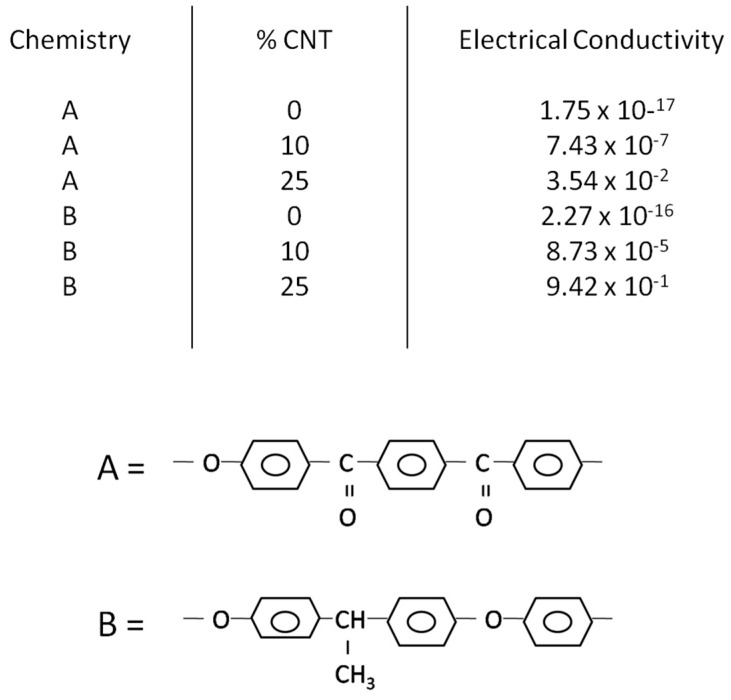 Figure 5
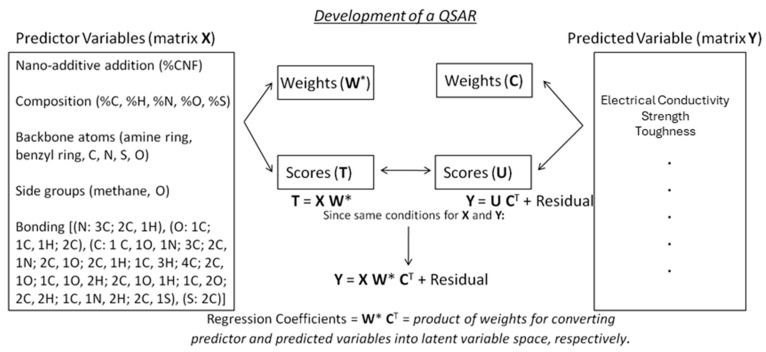 Figure 6
Peer Reviews
No public reviews on file for this paper yet. If you reviewed it on a platform where reviews are public (OpenReview, ICLR, NeurIPS, ICML), you can paste yours below so the community can read it here.
Videos
No videos yet. Explain this paper in a talk, walkthrough, or lecture? Add one.
Taxonomy
TopicsDielectric materials and actuators · Machine Learning in Materials Science · Conducting polymers and applications