Boundary Criterion Validation for Predicting Clinical DIC During Delivery in Fibrinogen–FDP Plane Using Severe Placental Abruption, and Characteristics of Clinical DIC Coagulation–Fibrinolytic Activation
Katsuhiko Tada, Yasunari Miyagi, Ichiro Yasuhi, Keisuke Tsumura, Ikuko Emoto, Maiko Sagawa, Norifumi Tanaka, Kyohei Yamaguchi, Kazuhisa Maeda, Kosuke Kawakami

TL;DR
This study validates a machine learning-based boundary criterion for predicting clinical DIC during childbirth using fibrinogen and FDP levels, and compares coagulation-fibrinolytic markers in different hemorrhage cases.
Contribution
A novel machine learning-based boundary criterion is proposed and validated for predicting clinical DIC during delivery using the fibrinogen–FDP plane.
Findings
The boundary criterion correctly predicted non-hematuria in all 13 severe placental abruption cases.
Clinical DIC cases showed significantly lower fibrinogen and higher FDP, thrombin–antithrombin complex, and plasmin-α2–plasmin inhibitor complex levels.
The study supports the potential use of the criterion for diagnosing DIC during delivery, though more data are needed.
Abstract
Background/Objectives: We define severe postpartum hemorrhage (PPH) with macroscopic hematuria as clinical disseminated intravascular coagulation (DIC), a life-threatening condition. We also report a methodology using machine learning, a subtype of artificial intelligence, for developing the boundary criterion for predicting hematuria on the fibrinogen–fibrin/fibrinogen degradation product (FDP) plane. A positive FDP–fibrinogen/3–60 (mg/dL) value indicates hematuria; otherwise, non-hematuria is observed. We aimed to validate this criterion using severe placental abruption (PA), and to examine the activation of the coagulation–fibrinolytic system in clinical DIC. Methods: Of 17,285 deliveries across nine perinatal centers in Japan between 2020 and 2024, 13 had severe PA without hematuria, 18 had severe PPH without hematuria, and 3 had severe PPH with hematuria, i.e., clinical DIC. We…
Genes, proteins, chemicals, diseases, species, mutations and cell lines named across the full text — each resolved to its canonical identifier and authoritative record.
Click any figure to enlarge with its caption.
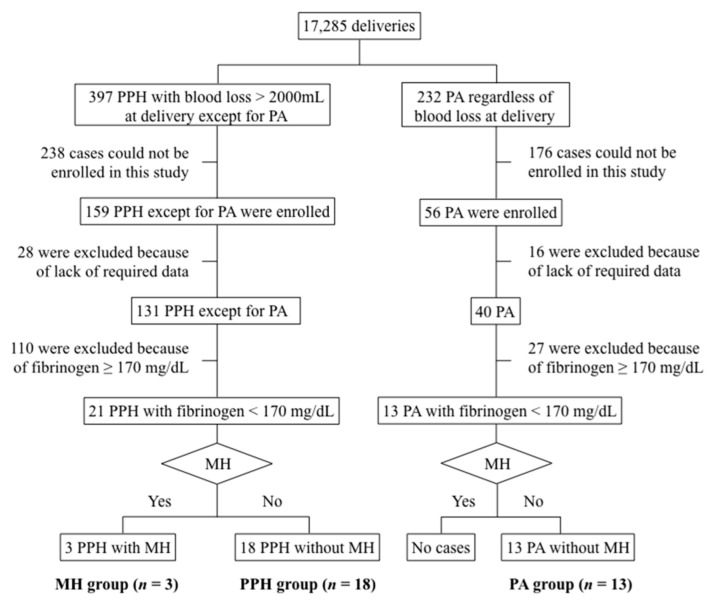 Figure 1
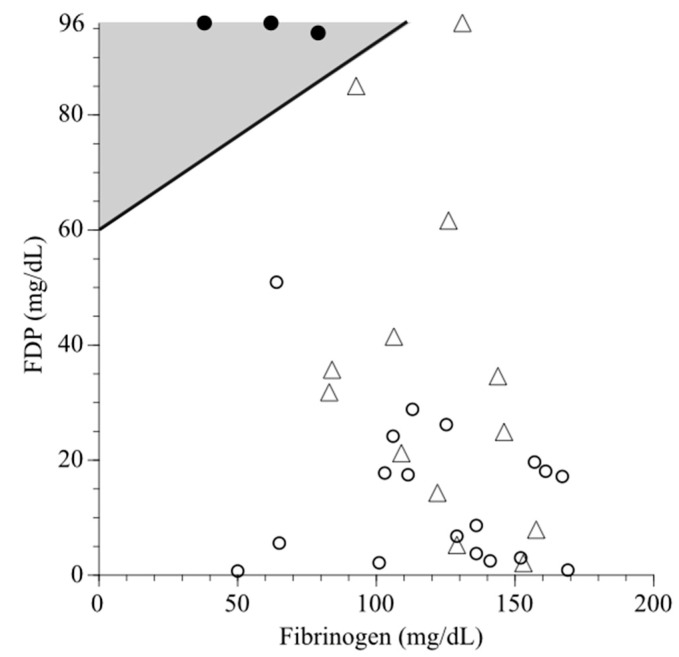 Figure 2
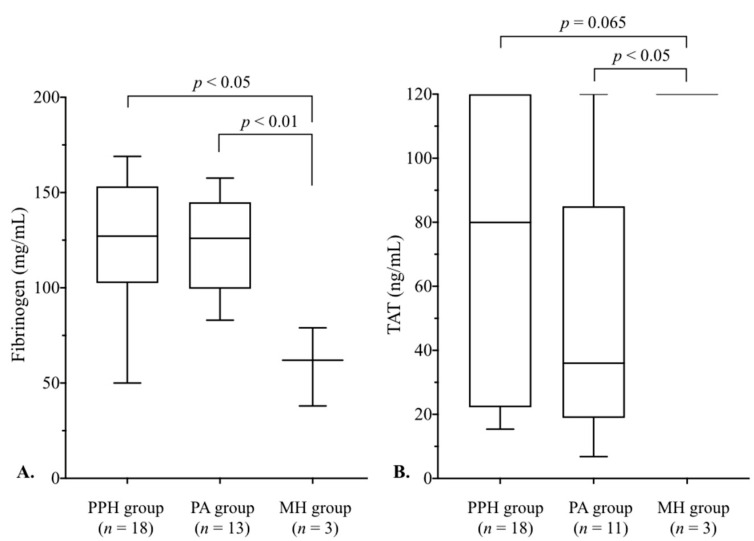 Figure 3
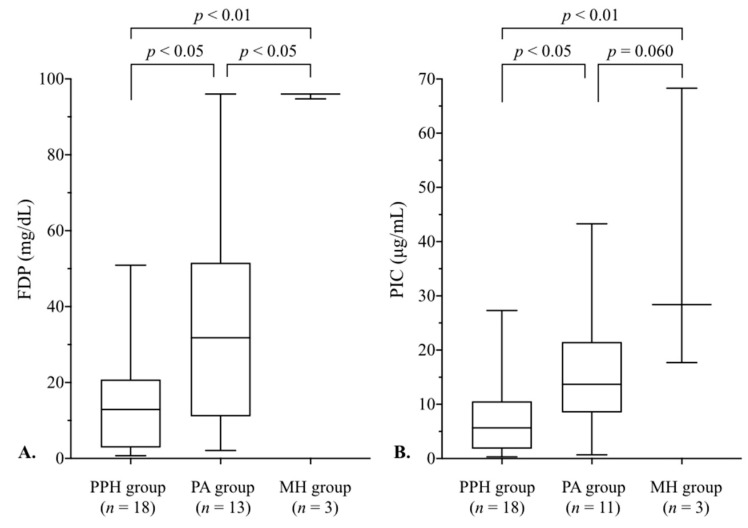 Figure 4
Peer Reviews
No public reviews on file for this paper yet. If you reviewed it on a platform where reviews are public (OpenReview, ICLR, NeurIPS, ICML), you can paste yours below so the community can read it here.
Videos
No videos yet. Explain this paper in a talk, walkthrough, or lecture? Add one.
Taxonomy
TopicsMaternal and fetal healthcare · Pregnancy and preeclampsia studies · Trauma and Emergency Care Studies