Differential Associations of PIVKA-II with Epithelial and Mesenchymal Features in HCC and PDAC
Antonella Farina, Gaia Cicolani, Valentina Viggiani, Matteo Maini, Antonio Angeloni, Emanuela Anastasi

TL;DR
This study explores how PIVKA-II relates to EMT features in HCC and PDAC, suggesting it may play a role in tumor progression and could be a useful diagnostic marker.
Contribution
The study reveals a context-dependent role for PIVKA-II in EMT processes in HCC and PDAC, offering new insights into tumor biology and diagnostics.
Findings
PIVKA-II shows dual roles in HCC and PDAC, linking to EMT markers and tumor invasiveness.
E-cadherin is selectively detected in HCC, indicating limited EMT activation.
Vimentin is more highly expressed in PDAC, reflecting a stronger EMT shift.
Abstract
Hepatocellular carcinoma (HCC) and pancreatic ductal adenocarcinoma (PDAC) are aggressive malignancies characterized by a poor prognosis and resistance to conventional therapies. Mounting evidence suggests the pivotal role of epithelial–mesenchymal transition (EMT) in tumor progression, metastasis, and therapeutic resistance in these cancers. Protein induced by vitamin K absence II (PIVKA-II)—a valuable HCC detector—has ultimately emerged as a potentially relevant biomarker in PDAC, serving as both a serum biomarker and a prognostic indicator. This study investigates the putative link between PIVKA-II expression and the EMT process in HCC and PDAC. Using a Western blot analysis and electrochemiluminescence immunoassay (ECLIA), we quantified PIVKA-II serum levels alongside two canonical EMT markers—Vimentin and E-cadherin—in selected cohorts. Emerging data suggest a dual,…
Genes, proteins, chemicals, diseases, species, mutations and cell lines named across the full text — each resolved to its canonical identifier and authoritative record.
Click any figure to enlarge with its caption.
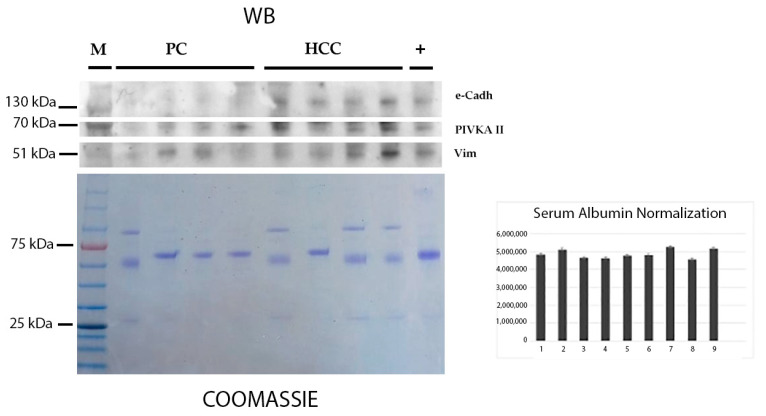 Figure 1
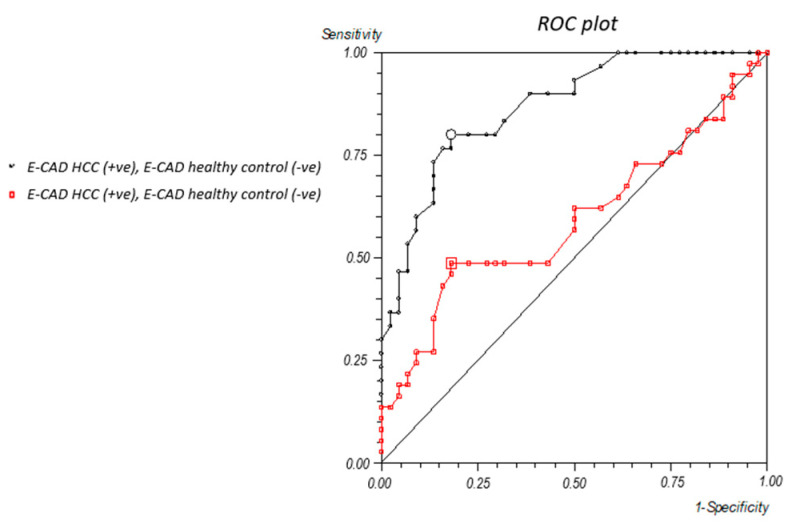 Figure 2
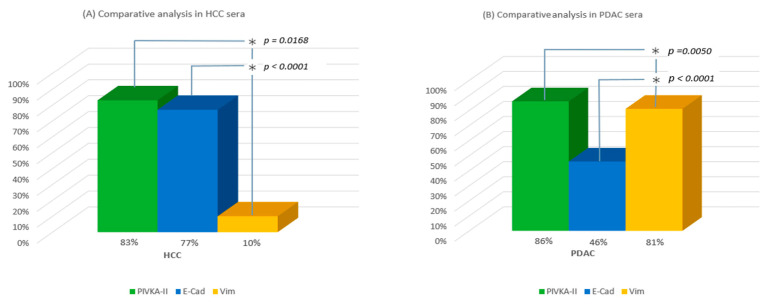 Figure 3
Peer Reviews
No public reviews on file for this paper yet. If you reviewed it on a platform where reviews are public (OpenReview, ICLR, NeurIPS, ICML), you can paste yours below so the community can read it here.
Videos
No videos yet. Explain this paper in a talk, walkthrough, or lecture? Add one.
Taxonomy
TopicsCancer, Hypoxia, and Metabolism · Pancreatic and Hepatic Oncology Research · Fibroblast Growth Factor Research