Effects of NMES-Guided Scapular Retraction Exercise Program in Amateur Female Handball Players with Scapular Dyskinesis Without Shoulder Pain: A Randomized Controlled Clinical Trial
Luis Espejo-Antúnez, Javier Gutiérrez-Coronado, Carlos Fernández-Morales, Manuel Albornoz-Cabello, Luis Fernando Prato, María de los Ángeles Cardero-Durán

TL;DR
This study found that combining electrical stimulation with scapular exercises improved shoulder positioning and strength in female handball players with scapular issues.
Contribution
The study introduces a novel combination of NMES with scapular retraction exercises for treating scapular dyskinesis in athletes.
Findings
NMES combined with scapular retraction improved scapular positioning and external rotation strength significantly.
The number needed to treat was 2 for upper scapular positioning and 4 for external rotation strength.
Results were statistically significant across multiple measured parameters.
Abstract
Objective: This study aimed to evaluate the effect of simultaneously combining therapeutic scapular retraction exercise with and without Neuromuscular Electrical Stimulation (NMES) in amateur female handball players with scapular dyskinesis. Methods: In a randomized, single-blind, controlled trial, the sample (n = 34) was randomized into two groups (Group 1 (n = 17) and Group 2 (n = 17)). The intervention consisted of applying a supervised scapular retraction exercise (SRE) program alone or combined with NMES for 4 weeks (2 ss/week). Scapular Static Positioning Assessment parameters (upper and lower horizontal distance of the scapula from the spine (mm)), internal rotation range of motion (degrees), and external rotation strength (newtons and BW%) were measured. Results: A significant interaction was found to favor the group that received the supervised SRE program + NMES (Group 1) in…
Genes, proteins, chemicals, diseases, species, mutations and cell lines named across the full text — each resolved to its canonical identifier and authoritative record.
Click any figure to enlarge with its caption.
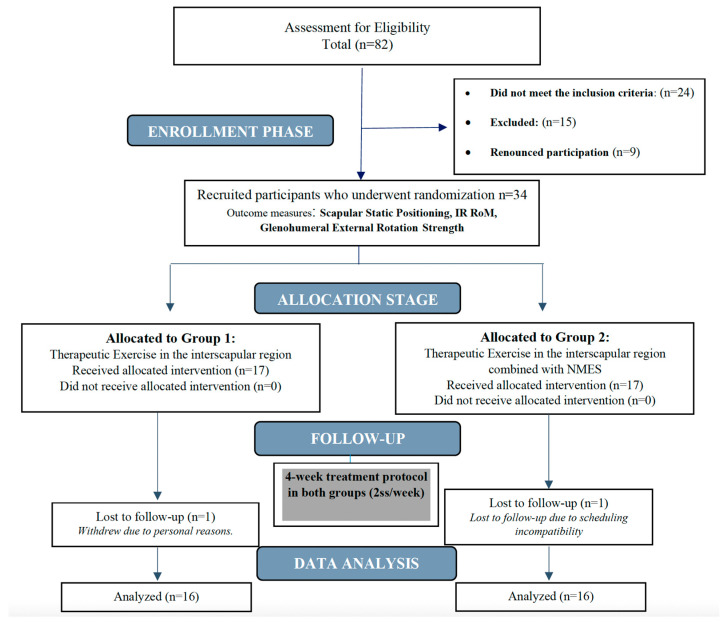 Figure 1
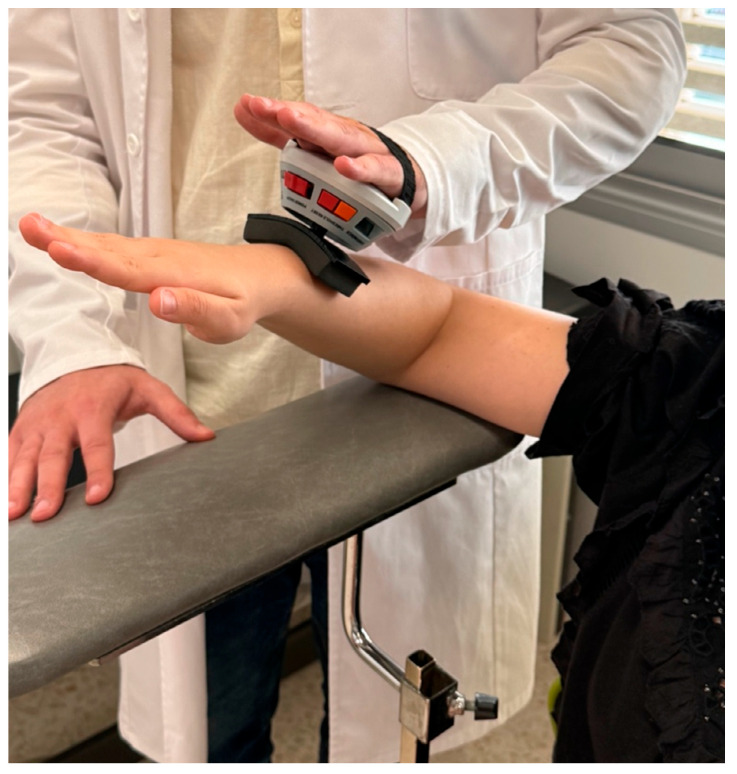 Figure 2
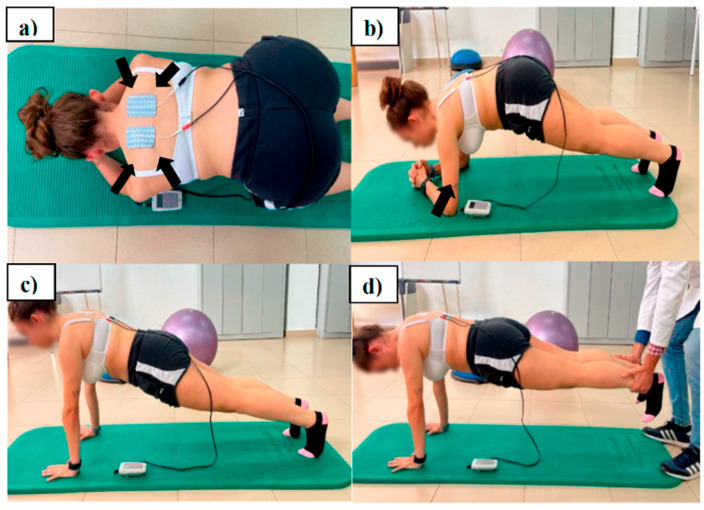 Figure 3
Peer Reviews
No public reviews on file for this paper yet. If you reviewed it on a platform where reviews are public (OpenReview, ICLR, NeurIPS, ICML), you can paste yours below so the community can read it here.
Videos
No videos yet. Explain this paper in a talk, walkthrough, or lecture? Add one.
Taxonomy
TopicsShoulder Injury and Treatment · Shoulder and Clavicle Injuries · Nerve Injury and Rehabilitation