The Olfactory System of Dolichogenidea gelechiidivoris (Marsh) (Hymenoptera: Braconidae), a Natural Enemy of Tuta absoluta (Meyrick) (Lepidoptera: Gelechiidae)
Shu-Yan Yan, He-Sen Yang, Cong Huang, Gui-Fen Zhang, Judit Arnó, Jana Collatz, Chuan-Ren Li, Fang-Hao Wan, Wan-Xue Liu, Yi-Bo Zhang

TL;DR
This study explores how male and female wasps of Dolichogenidea gelechiidivoris use their sense of smell differently, which could help in controlling the invasive pest Tuta absoluta.
Contribution
The study reveals sex-specific olfactory differentiation through morphological and molecular analyses in a parasitoid wasp.
Findings
Males have significantly longer antennae than females, showing sexual dimorphism.
Transcriptomic analysis identified 11 OBPs and 20 ORs, with sex-specific gene expression patterns.
Sex-specific olfactory specialization may influence the use of volatile cues for biological control.
Abstract
The parasitoid wasp Dolichogenidea gelechiidivoris is a key koinobiont solitary endoparasitoid of the invasive agricultural pest Tuta absoluta. This study investigates both the morphological and molecular foundations of sex-specific olfactory differentiation in this species. Morphological analysis revealed that males possess significantly longer antennae (2880.8 ± 20.36 μm) than females (2137.23 ± 43.47 μm), demonstrating pronounced sexual dimorphism. Scanning electron microscopy identified similar sensilla types on both sexes, but differences existed in the length and diameter of specific sensilla. Transcriptomic analysis of adult antennae uncovered molecular differentiation, identifying 11 odorant-binding proteins (OBPs) and 20 odorant receptors (ORs), with 27 chemosensory genes upregulated in females and 4 enriched in males. Integrating morphological and molecular evidence…
Genes, proteins, chemicals, diseases, species, mutations and cell lines named across the full text — each resolved to its canonical identifier and authoritative record.
Click any figure to enlarge with its caption.
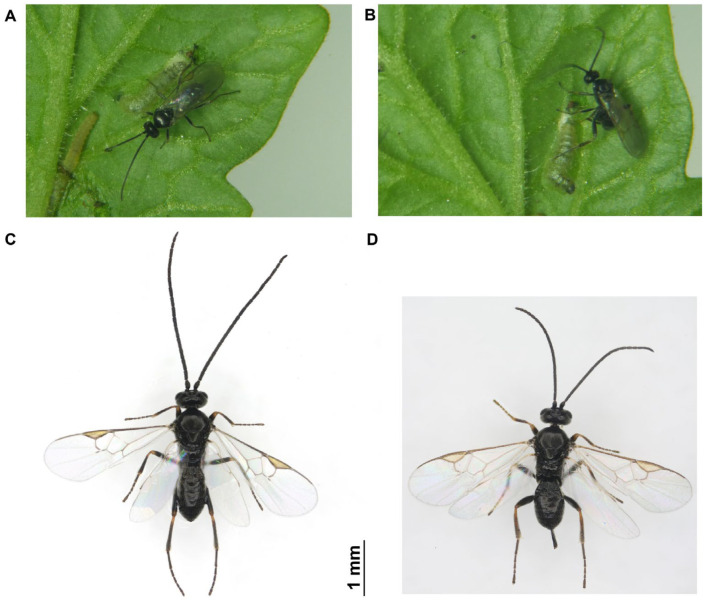 Figure 1
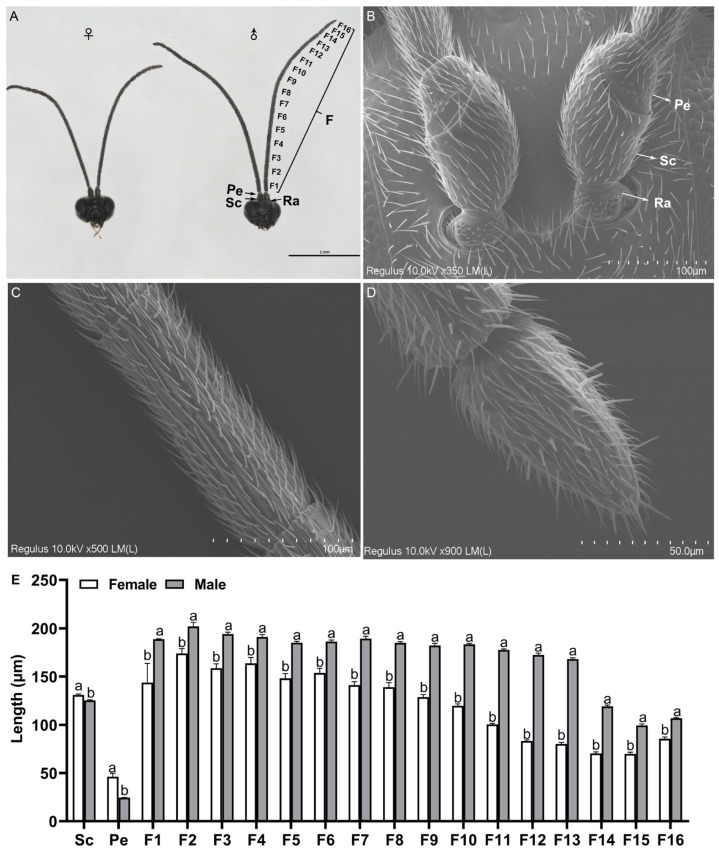 Figure 2
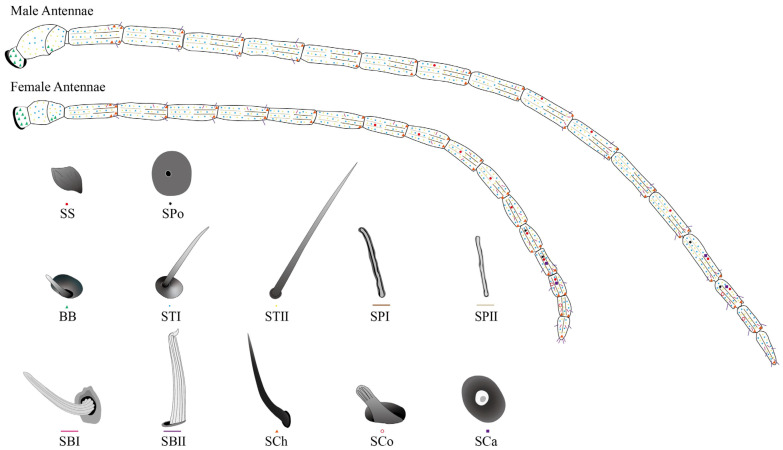 Figure 3
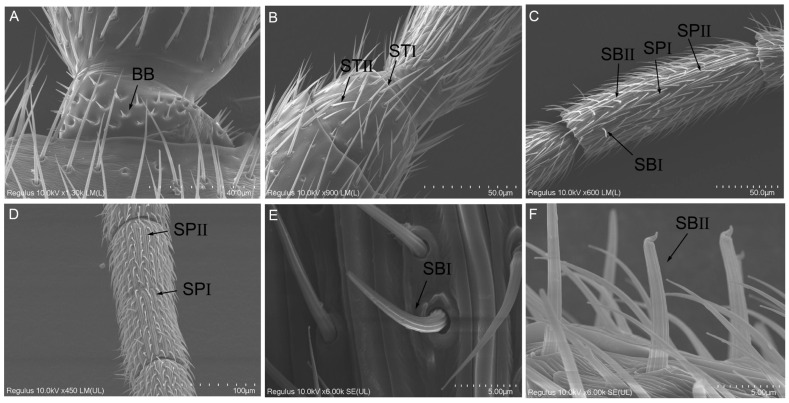 Figure 4
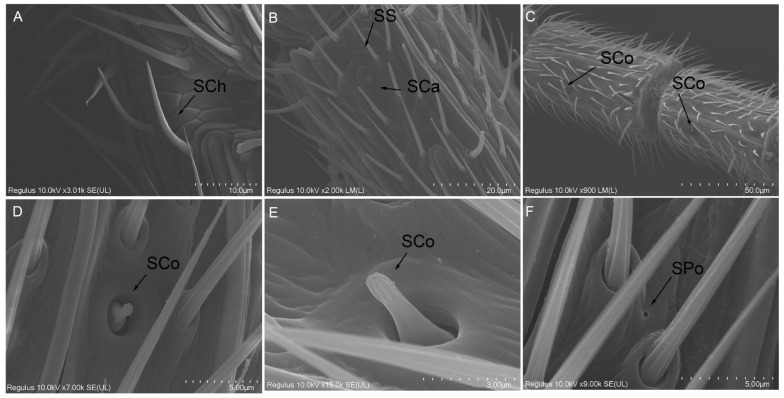 Figure 5
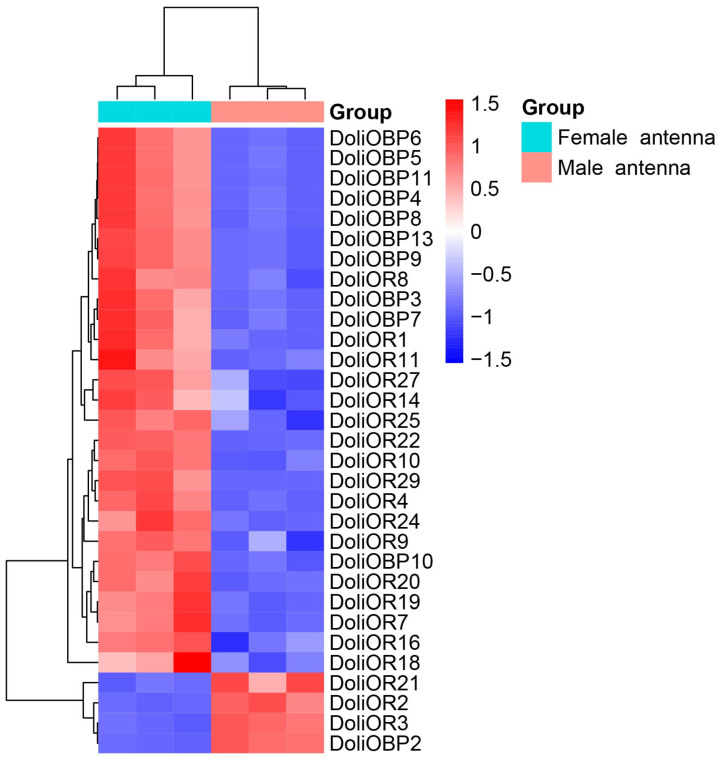 Figure 6
Peer Reviews
No public reviews on file for this paper yet. If you reviewed it on a platform where reviews are public (OpenReview, ICLR, NeurIPS, ICML), you can paste yours below so the community can read it here.
Videos
No videos yet. Explain this paper in a talk, walkthrough, or lecture? Add one.
Taxonomy
TopicsNeurobiology and Insect Physiology Research · Insect and Arachnid Ecology and Behavior · Insect-Plant Interactions and Control