Temporal Dynamics of Fecal Microbiome and Short-Chain Fatty Acids in Sows from Early Pregnancy to Weaning
Sui Liufu, Xin Xu, Qun Lan, Bohe Chen, Kaiming Wang, Lanlin Xiao, Wenwu Chen, Wu Wen, Caihong Liu, Lei Yi, Jingwen Liu, Xianchuang Fu, Haiming Ma

TL;DR
This study tracks gut microbes and fatty acids in sows from pregnancy to weaning, showing how diet and microbes influence weight and health.
Contribution
The study reveals dynamic shifts in gut microbiota and SCFAs across gestation and lactation in sows, linking them to maternal weight changes.
Findings
High-fiber diets during gestation influence gut microbiota composition in sows.
Prevotella species dominate during pregnancy, while Eubacterium and Lachnospiraceae groups dominate during lactation.
Fecal propionate levels negatively correlate with body weight change, while acetate positively correlates.
Abstract
The gut microbiota and its metabolites, particularly short-chain fatty acids (SCFAs), play crucial roles in maternal metabolism and health during pregnancy. However, the dynamic changes in fecal microbiota and SCFAs across the entire reproductive cycle—from pregnancy to weaning—in sows remain poorly understood. In this study, we systematically characterized the gut microbial composition and SCFA profiles of 25 sows at four key time points: early pregnancy (T1), late pregnancy (T2), early lactation (T3), and weaning (T4). We found that high-fiber diets during gestation may influence the composition of the gut microbiota. During pregnancy, Prevotella species are the predominant microbes in the sow gut, while Eubacterium_coprostanoligenes_group and Lachnospiraceae_NK4A136_group became dominant in the microbiota during lactation. Notably, fecal propionate levels were negatively correlated…
Genes, proteins, chemicals, diseases, species, mutations and cell lines named across the full text — each resolved to its canonical identifier and authoritative record.
Click any figure to enlarge with its caption.
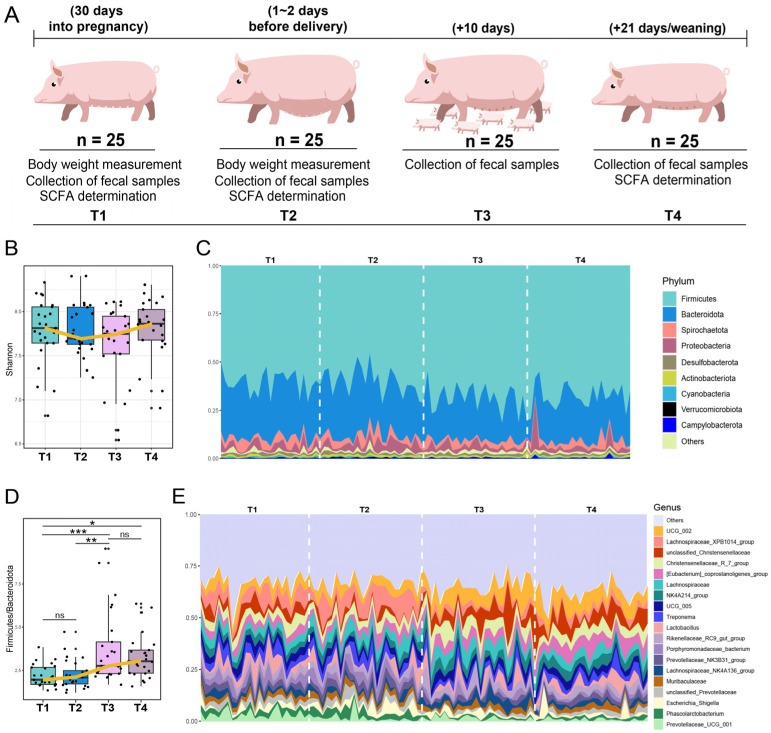 Figure 1
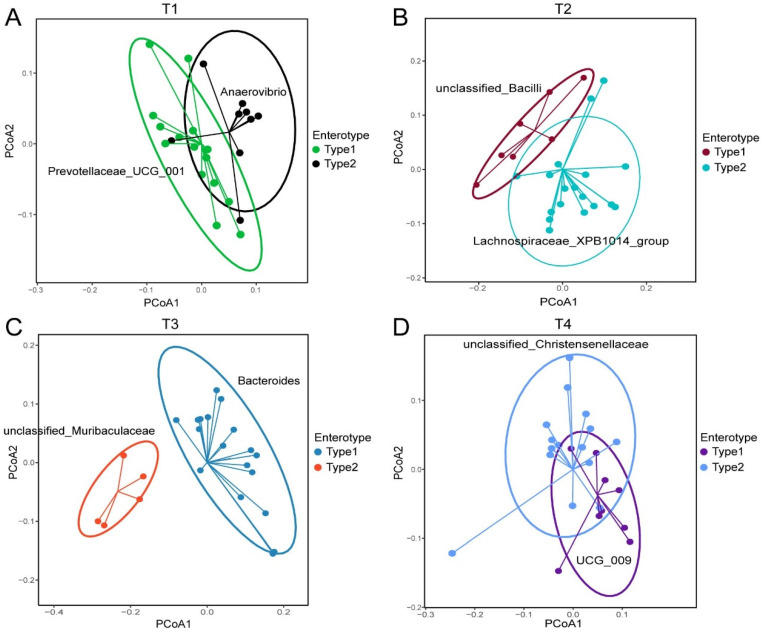 Figure 2
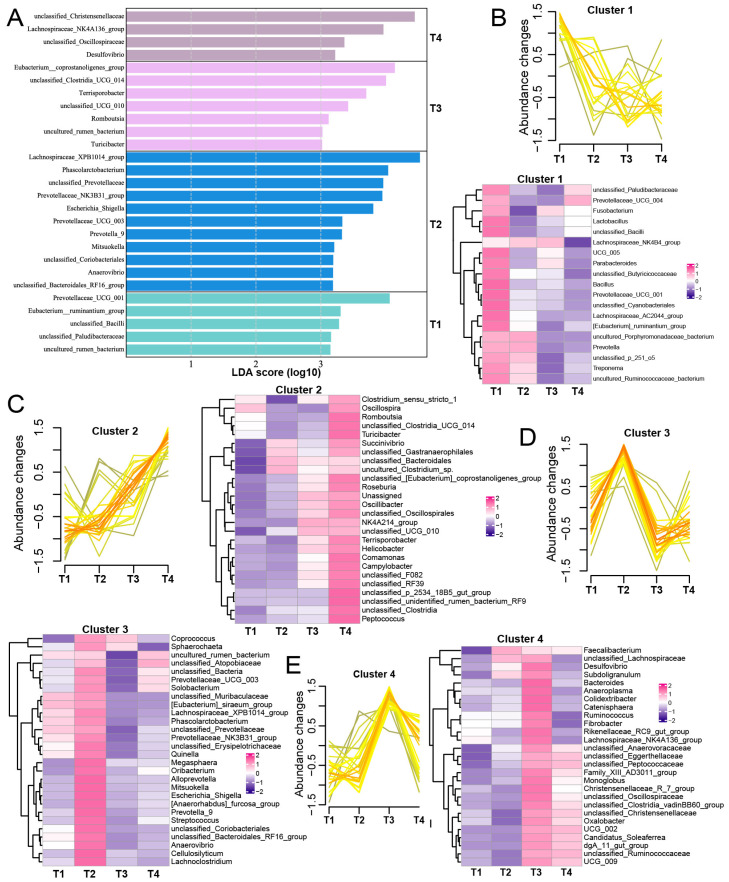 Figure 3
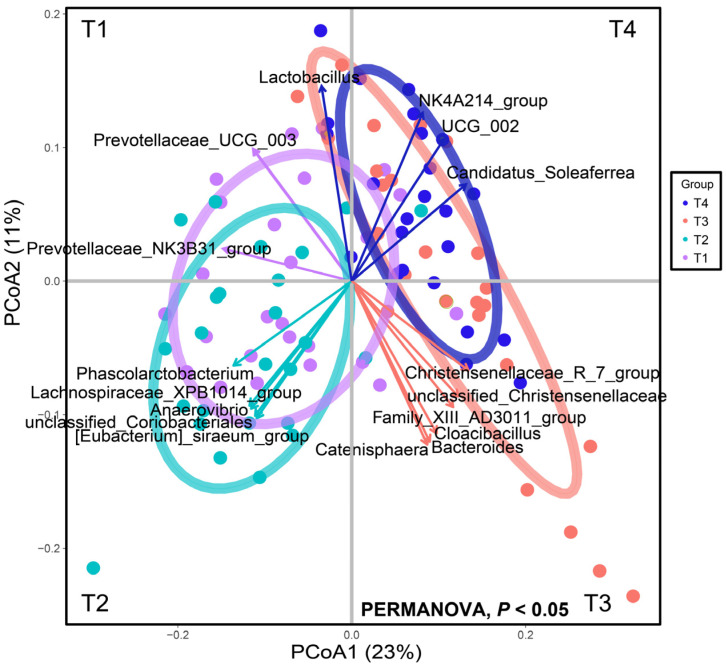 Figure 4
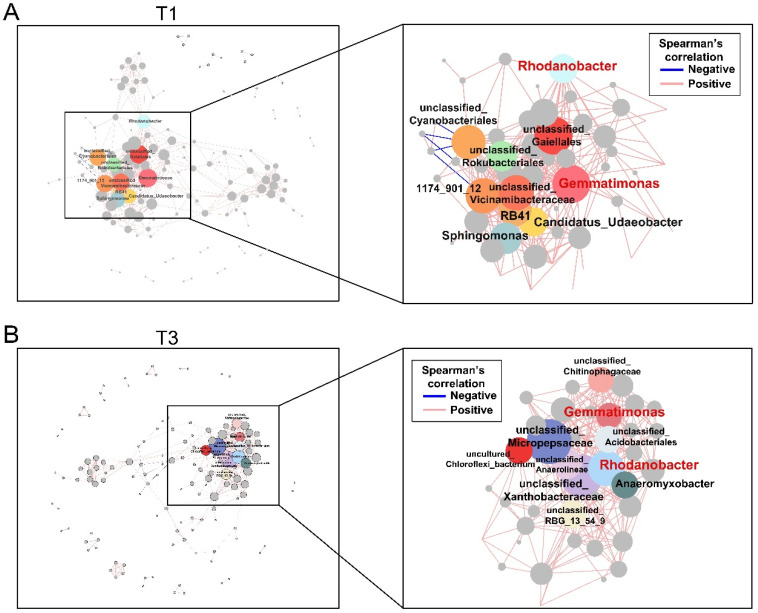 Figure 5
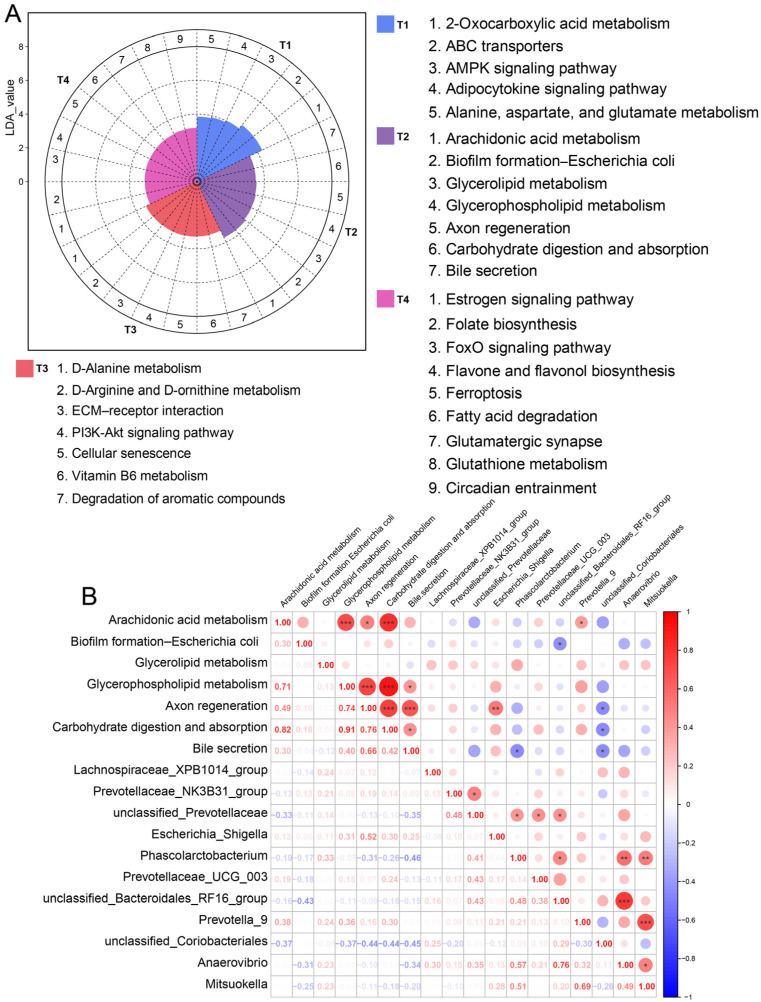 Figure 6
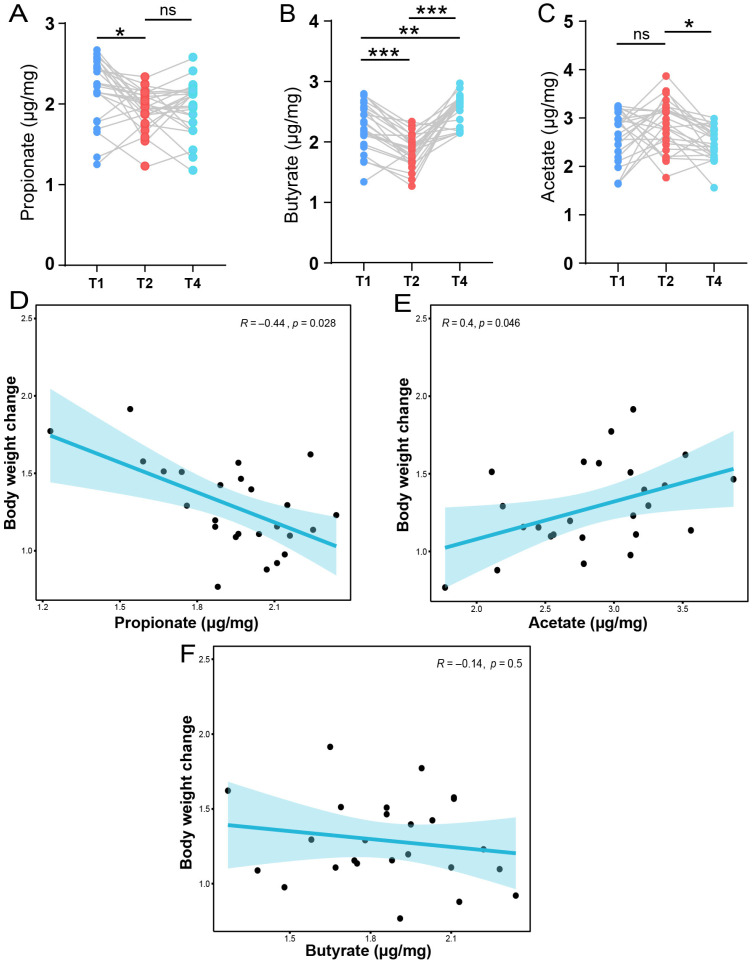 Figure 7
- —National Natural Science Foundation of China
- —Major Science and Technology Special Plan of Yunnan Province
- —program of talent of science and technology and platforms of Yunnan Province
- —Postgraduate Scientific Research Innovation Project of Hunan Province
- —Postgraduate Scientific Research Innovation Project of Hunan Agriculture University
Peer Reviews
No public reviews on file for this paper yet. If you reviewed it on a platform where reviews are public (OpenReview, ICLR, NeurIPS, ICML), you can paste yours below so the community can read it here.
Videos
No videos yet. Explain this paper in a talk, walkthrough, or lecture? Add one.
Taxonomy
TopicsGut microbiota and health · Clostridium difficile and Clostridium perfringens research · Ruminant Nutrition and Digestive Physiology
1. Introduction
The symbiotic relationship between the host and microbiota plays a crucial role throughout the entire life cycle. Notably, dynamic changes in maternal microbial communities profoundly affect host and offspring health [1,2]. In recent years, there has been growing interest in elucidating the developmental patterns of mammalian gut microbiota and their interplay with host physiological conditions [3]. During pregnancy, the dramatic shifts in host hormone levels, metabolic demands, and immune responses are associated with structural changes in the gut microbiota [2,4,5]. In females, the structure and function of intestinal microbial communities may experience systematic reorganization during the transition from pregnancy to lactation. However, most existing studies have focused on microbial characteristics within specific developmental windows, lacking comprehensive analyses that span the early pregnancy through the end of lactation [6]. This limitation hinders a holistic understanding of the mechanisms underlying microbe–host interactions.
The domestic pig (Sus scrofa) plays a crucial role in global agriculture and is responsible for more than 40% of total meat output worldwide [7]. Animal breeding is a highly profitable industry and is considered an important means of improving national economies [8]. The performance of sows during the gestation-to-weaning period is a key focus for breeders, as this stage is closely linked to their productivity. In recent years, alongside advancements in breeding techniques, the gut microbiome has received widespread attention as the so-called “second genome” [9]. Microbial-produced metabolites play a vital role in modulating maternal metabolic homeostasis [10]. The gut contains high millimolar (mM) concentrations of SCFAs, which are generated by gut bacteria through the anaerobic fermentation of soluble fiber [11]. During the course of pregnancy, SCFAs are absorbed into the maternal circulation and subsequently transported across the placental barrier, where they play a role in supporting fetal organ development and growth [12]. Researchers indicated that elevated maternal serum SCFA levels have been linked to positive effects on weight gain, glucose metabolism, and the regulation of various metabolic hormones [13]. Serum acetic acid levels were found to be positively associated with maternal weight gain and adiponectin concentrations, whereas serum propionate levels exhibited a negative correlation with maternal leptin levels [13]. Adipokines, such as adiponectin and leptin, are hormones secreted by adipocytes and play a critical role in metabolic adaptations during pregnancy. These hormones contribute to the regulation of satiety, insulin sensitivity, and the development of obesity [14]. A recent study revealed that maternal levels of propionic acid tend to decline as pregnancy progresses, whereas its levels were elevated in obese pregnant women [15]. Another investigation in rats revealed that pregnancy is accompanied by elevated levels of acetic and propionic acid, along with a potential increase in butyric and straight-chain hexanoic acid concentrations [16]. These findings from previous studies suggest that the changes in SCFAs during pregnancy may be influenced by genetic background and other physiological or environmental factors.
Human studies often face challenges related to time span, environmental control, and ethical restrictions. In this context, pigs provide distinct advantages as a monogastric animal model because of their remarkable similarities to humans in terms of intestinal structure and fat deposition [17], rendering them highly suitable for investigating host–microbiome interactions. In addition, the gut microbiome is a critical component of human and animal metabolism and overall health. The composition of the maternal gut microbiome contributes to obstetric outcomes and has long-term health implications for both the mother and her offspring. In intensive swine farming, the gut health of sows is crucial for the well-being of their offspring and may ultimately influence the overall economic performance of the farm. In this study, we collected fecal samples from 25 sows at four time points, ranging from early pregnancy to the weaning stage, and the fecal concentrations of SCFAs were also determined. Our study focuses on the following critical issues: (1) the main enterotypes across the four critical stages from pregnancy to lactation; (2) the core gut microbes during these four critical stages; (3) the dynamic changes in fecal SCFAs from pregnancy to weaning; (4) exploration of the associations among microbial taxa, SCFAs, and body weight change during pregnancy. The relatively large sample size of sows in this study represents a major advantage, contributing to a more representative and statistically robust analysis. Moreover, this study, for the first time, characterized the dynamic changes in SCFAs from pregnancy to weaning in sows. We hypothesize that the unique gut microbial composition and SCFA levels observed across the gestation and postpartum periods may reflect underlying shifts in overall maternal metabolism, with potential implications for maternal pregnancy and offspring developmental outcomes. Our findings are intended to support the development of microbiome- and metabolite-based interventions for improving sow pregnancy outcomes and postpartum health, offering potential insights and a theoretical foundation for research in human pregnancy.
2. Materials and Methods
2.1. Experimental Animals and Sampling
The animals and experimental protocols used in this study followed the guidelines of the Ministry of Agriculture of China and the Committee of Animal Care at Hunan Agricultural University (Changsha, China) (Permit Number: CACAHU 20230630; Approval Date: 30 June 2023). To investigate the dynamic changes in the fecal microbiota of sows from pregnancy to weaning, we selected 25 Yorkshire sows (average age: 220 days ± 5.5; body weight: 132 kg ± 10.8) for fecal sample collection. All sows were housed in a large-scale pig farm in Fujian Province, China, under the same environmental and dietary conditions. The primary nutrient components of the diets are enumerated in Table S1. A total of 100 fecal samples were obtained from four key stages: (T1) day 30 of pregnancy, (T2) 1–2 days before delivery, (T3) day 10 after delivery, (T4) weaning stage (day 21). All stool samples were stored in 2 mL sterilized plastic sampling tubes and then immersed in liquid nitrogen for future DNA extraction and SCFA determination. All experimental pigs were healthy and had not been fed with probiotics or drugs within at least 2 months. Moreover, we measured the body weights of sows at the T1 and T2 stages to calculate the body weight change during the pregnancy stage. Considering the effects of age and parity on body weight, we used a residual-based linear model to correct the phenotype (body weight) and used it to calculate the body weight change. The formula was as follows: body weight change = [(corrected body weight at the T2 stage) − (corrected body weight at the T1 stage)/pregnancy days].
2.2. Bacterial DNA Isolation, 16S rRNA Gene Sequencing, and Bioinformatics
DNA extraction was conducted using the QIAamp^®^ stool mini kit (QIAGEN, Hilden, Germany) according to the operating protocols. All subsequent steps adhered to the operating manual, except for the final step, where the columns were eluted using 30 μL of diethyl pyrocarbonate (DEPC)-treated water. The DNA solution was quantified with NanoDrop One (Thermo Fisher Scientific, Waltham, MA, USA) and stored at −80 °C for follow-up sequencing. Then, microbial DNA amplification was carried out using the primer pair 338F (5′-ACTCCTACGGGAGGCAGCA-3′) and 806R (5′-GGACTACHVGGGTWTCTAAT-3′), targeting the V3-V4 region of the 16S rRNA gene. Both of the primers were added with Illumina sequencing adapters. The PCR amplification steps were as detailed below: initial denaturation (95 °C for 5 min), primer annealing (25 cycles of 95 °C 30 s, 50 °C 30 s, and 72 °C 40 s), and a final extension step for 7 min at 72 °C. Amplicon sequencing was performed on a MiSeq platform (Illumina, San Diego, CA, USA) according to the standard paired-end instructions (2 × 250 bp).
Raw sequence data, including barcode and primer information, were first removed using Cutadapt (v4.7). Using DADA2, paired-end sequences were denoised, and chimeras were also discarded (method = “consensus”). The representative sequences for each Amplicon Sequence Variant (ASV) were annotated to taxonomies using DADA2 with a naive Bayesian classifier against the Silva v138 (version 2) database. The above steps were performed in Quantitative Insights Into Microbial Ecology (QIIME, v1.80) software. Alpha diversity was assessed using the Shannon index, while beta diversity was measured with unweighted UniFrac distances, visualized through principal coordinates analysis (PCoA). ASVs at the genus level that appeared in at least 20% of individuals were retained. Permutational multivariate analysis of variance (PERMANOVA) based on the microbial dataset was performed to detect significant differences among different stages. The ‘vegan’ package in the R environment (v4.2.3) was used for statistical analysis.
2.3. Enterotype Analysis
Gut microbial enterotypes were identified through an integrated computational approach. Samples were clustered using the Jensen–Shannon Divergence (JSD) metric and Partitioning Around Medoids (PAM) algorithm [18], based on genus-level relative abundance profiles. The optimal number of clusters was determined by maximizing the Calinski–Harabasz (CH) index [19], which evaluates the ratio of between-cluster to within-cluster variance. To ensure statistical robustness, the silhouette coefficient of the observed clusters was compared against a null distribution generated from simulated datasets. This pipeline combines rigorous statistical validation with robust clustering to delineate distinct enterotypes.
2.4. Biomarker Discovery Using 16S rRNA Dataset
To identify the microbial biomarkers and significantly enriched KEGG pathways at each stage, linear discriminant analysis effect size (LEfSe) was performed using a normalized ASV relative abundance matrix. As a powerful tool for high-dimensional biomarker discovery, the LEfSe algorithm employs the non-parametric Kruskal–Wallis test to detect features with significant differences among groups, and it performs linear discriminant analysis (LDA) to estimate the effect size of each feature. In this study, the LDA score threshold and significance level were set at 2 and 0.05, respectively.
2.5. Cluster Pattern of Gut Microbial Profiles
Fuzzy clustering of gut microbial abundance data (top 500) was performed using the Mfuzz package (v3.62) in the R environment [20]. Prior to analysis, microbial abundance profiles (at the genus level) were normalized using variance-stabilizing transformation (VST) to mitigate compositional bias. The optimal number of clusters was determined by evaluating the minimum centroid distance and cluster validity indices (e.g., silhouette coefficient). Fuzzy c-means clustering was applied, with the c (number of clusters) and m (fuzzification coefficient) parameters optimized through iterative grid search. To assess statistical robustness, cluster stability was validated via bootstrapping (1000 iterations), and significant clusters were defined as those with membership scores > 0.7 and adjusted p-values < 0.05 (Benjamini–Hochberg correction). Cluster centroids and membership probabilities were visualized using heatmaps and 3D ordination plots to depict microbial co-abundance patterns.
2.6. Determination of Fecal SCFAs
To visualize the correlations among different gut microbial taxa, we constructed a correlation network using Cytoscape (v3.7.2). First, pairwise Spearman correlation coefficients were calculated between the relative abundances of ASVs (top 500) based on their normalized abundance profiles. ASVs were retained for network construction based on a predefined threshold at |r| > 0.7 and FDR < 0.001. The correlation matrix was then exported in a tab-delimited edge list format, where each row represented a pair of nodes (microbial taxa) and their associated correlation value. This edge list was imported into Cytoscape, and a network graph was generated, with nodes representing microbial taxa and edges representing significant correlations (positive or negative).
2.7. Statistical Analysis
All statistical analyses were performed in the R environment (v4.2.3). The Shannon index was used to compare the α-diversity among the four groups. The β-diversity was assessed through principal coordinates analysis (PCoA) using Bray–Curtis distances, implemented with the “vegan” package [21]. We performed a multiple-stage comparison of fecal SCFAs using one-way ANOVA to evaluate stage-specific differences. The normality of distribution for body weight change and SCFA levels was assessed using the Shapiro–Wilk test. Spearman’s rank correlation was employed to evaluate the associations between body weight change and SCFA concentrations. Analysis of functional pathway was performed using PICRUSt based on the Kyoto Encyclopedia of Genes and Genomes (KEGG) database. The p-values from the correlation analysis among ASVs were adjusted for multiple testing using the Benjamini–Hochberg procedure (FDR correction). Results with a p-value <0.05 were considered statistically significant.
3. Results
3.1. Temporal Dynamics of Fecal Bacterial Community from Pregnancy to Weaning
Fecal samples were obtained sequentially from 25 female pigs across four key stages: (T1) day 30 of pregnancy, (T2) 1–2 days before delivery, (T3) day 10 after delivery, (T4) weaning stage (day 21) (Figure 1A). A total of 9.01 million reads (average: 90.13 K; range: 73.36–142.62 K) were generated from the 100 samples (Table S2). The average raw read counts varied significantly across different age points, with samples collected at the T1, T2, and T3 stages exhibiting significantly lower read counts than those collected at the weaning stage (T4) (Figure S1, p < 0.05). Following the removal of low-quality reads using DADA2, a total of 8.09 million high-quality sequencing reads were retained. Finally, a total of 2409 ASVs were included in the downstream analysis.
The Shannon index showed no significant differences across the four stages, while we found that the lowest level of the Shannon index was observed at the T2 stage, with a subsequent progressive increase after piglet delivery (Figure 1B, Table S3). In addition, we found that the proportion of Firmicutes increased from T1 (mean 60.4%) to T4 (mean 67.4%), while the proportion of Bacteroidota decreased from T1 (mean 28.8%) to T4 (mean 22.6%) (Figure 1C). After comparing the Firmicutes to Bacteroidota (F/B) ratio across the four stages, we found that the F/B values were significantly higher at T3 and T4 compared to T1 (p < 0.05, Figure 1D). Moreover, the overall trend of F/B value showed an increase over time. At the genus level, the bacteria UCG_002, Lachnospiraceae_XPB1014_group, unclassified_Christensenellaceae, Christensenellaceae_R-7_group, and Eubacterium_coprostanoligenes_group were ranked as the top five (Figure 1E). Particularly, the relative abundances of four genera, including UCG_002, unclassified_Christensenellaceae, Christensenellaceae_R-7_group, and Eubacterium_coprostanoligenes_group, showed a progressive increase after delivery. In addition, a high proportion of bran is a key feature of the gestation diet, while the lactation diet is primarily characterized by a high content of soybean meal and corn (Table S1).
3.2. Enterotype Changes from Gestation to Weaning
Enterotype analysis enables the identification of distinct microbial community structures and their associations with host health. The optimal number of enterotypes at each stage was determined based on the Calinski–Harabasz (CH) index (Figure S2). The microbial communities of the sows at T1 were dominated by two enterotypes (Prevotellaceae_UCG_001 and Anaerovibrio) (Figure 2A). As the pigs progressed to T2, the enterotype shifted to another two ASVs, namely Lachnospiraceae_XPB1014_group and Unclassified_bacilli (Figure 2B). Ten days after delivery, we found that Bacteroides and unclassified_ Muribaculaceae were the dominant enterotypes (Figure 2C). At the time of litter weaning, the enterotype shifted to unclassified_Christensenellaceae and UCG_009 (Figure 2D).
3.3. Identification of Gut Microbial Biomarkers in Sows from Gestation to Weaning
We used LEfSe analysis to further identify microbial biomarkers across different stages (Figure 3A). The genera Prevotellaceae_UCG_001 and Eubacterium_ruminantium_group were specifically found in T1. For the T2 stage, the microbial biomarkers included Lachnospiraceae_XPB1014_group, Phascolarctobacterium, and four ASVs belonging to Prevotellaceae, including Prevotellaceae_NK3B31_group, Prevotellaceae_UCG_003, unclassified_Prevotellaceae, and Prevotella_9. Ten days after delivery, we found that Eubacterium_coprostanoligenes_group, unclassified_Clostridia_UCG_014, and Terrisporobacter were the dominant bacteria, while for the T4 stage, we found that unclassified_Christensenellaceae and Lachnospiraceae_NK4A136_group were highly enriched.
Next, we used the R package “Mfuzz” to analyze the trends of gut microbiota based on the relative abundance of ASVs (top 100). We found that Lactobacillus, Bacillus, unclassified_Cyanobacteriales, Lachnospiraceae_AC2044_group, and UCG_005 in cluster 1 showed a gradual decrease in abundance with time (Figure 3B). Moreover, bacteria, including Turicibacter, Romboutsia, Roseburia, and Peptococcus in cluster 2 exhibited a progressively increasing abundance (Figure 3C). In cluster 3, Cellulosilyticum, Lachnoclostridium, Streptococcus, and Escherichia_Shigella showed upregulated abundance at the T2 stage (Figure 3D). Finally, we found that cluster 4 was mainly characterized by ASVs at the T3 stage (e.g., Colidextribacter and Catenisphaera) (Figure 3E).
3.4. Gut Microbial Interaction Networks
First, we found significant differences in the clustering of gut microbiota across the four stages (PERMANOVA, p < 0.05, Figure 4). Similarly to the LEfSe results, we found that ASVs belonging to Prevotellaceae contributed greatly to microbial profiles of the T1 stage, while microbial profiles of the T3 stage were driven by Family_Xll_AD3011_group, Catenisphaera, and Cloacibacillus, etc., ASVs, including NK4A214_group, UCG_002, Candidatus_Soleaferrea, which were the “driver” bacteria in the T4 stage.
Next, we aimed to explore the interaction among different bacteria via performing a correlation analysis using the ASVs (top 500) in each stage (|r| > 0.7 and p < 0.001). In the T1 stage, we found that several bacteria possessed higher degrees of positive correlation, including Candidatus_udaeobacter, Gemmatimonas, Sphingomonas, and Rhodanobacter (Figure 5A). In the T2 stage, Candidatus_udaeobacter, Flavobacterium, Mucispirillum, and Vicinamibacteraceae were positively associated with each other and displayed higher degrees of correlation (Figure S3A). Regarding the T3 stage, we observed that two genera, Rhodanobacter and Gemmatimonas, exhibited a higher degree of correlation, a pattern also observed in the T1 stage (Figure 5B). This suggests that these two ASVs may play important roles during the postpartum recovery period. At the T4 stage, we noticed that Prevotellaceae_Ga6A1_group, Hydrocarboniphaga, Taibaiella, Mesorhizobium, and Sphingobium were positively associated with each other (Figure S3B).
3.5. The Functional Characteristics of Gut Microbiota
PICRUSt was used to predict KEGG pathways of gut bacterial communities. Here, a total of 28 differentially enriched KEGG pathways were detected in the sow gut microbiota among the four stages (Figure 6A). We identified that ABC transporters, the AMPK signaling pathway, and the adipocytokine signaling pathway were more active in the sow gut microbiome at the T1 stage. Simultaneously, at the T2 stage, the gut microbiota was more capable of arachidonic acid metabolism, glycerolipid metabolism, and carbohydrate digestion and absorption. At the T3 stage, it was mainly enriched in the pathways of ECM–receptor interaction, vitamin B6 metabolism, and degradation of aromatic compounds. For the T4 stage, we found that the estrogen signaling pathway, fatty acid degradation, glutamatergic synapse, and glutathione metabolism were more active. Next, we performed an association analysis between gut microbiota and KEGG functions at the T2 stage. We found that Prevotella_9 was positively associated with arachidonic acid metabolism (Figure 6B) and Phascolarctobacterium was negatively associated with bile secretion.
3.6. Association Among Gut Microbiota, SCFAs, and Body Weight Change During Pregnancy
By analyzing the levels of fecal SCFAs, we observed significant variations in the levels of acetate, propionate, and butyrate across different stages. Specifically, fecal propionate and butyrate levels decreased progressively from the T1 to the T2 stage, followed by an increase at the T4 stage (Figure 7A,B). Additionally, we observed significant differences in fecal propionate and butyrate levels between the T1 and T2 stages (p < 0.05). Interestingly, we observed that acetate levels were highest at the T2 stage (Figure 7C), while butyrate levels peaked at the T4 stage. Next, we aimed to explore the associations between SCFAs and body weight change during pregnancy. We found that propionate was negatively correlated with body weight change (Figure 7D), while acetate was positively associated with body weight change (Figure 7E). Butyrate showed a negative correlation with body weight change, although the association was not statistically significant (Figure 7F). Finally, we aimed to identify the correlations among microbial biomarkers, SCFAs, and body weight change (Figure S4). We found that ASVs, including Lachnospiraceae_XPB1014_group, Prevotellaceae_NK3B31_group, and Prevotellaceae_UCG_003, were positively associated with body weight change. unclassified_ Prevotellaceae and Prevotellaceae_UCG_003 were positively correlated with acetate.
4. Discussion
Although an increasing number of studies have examined how the composition and diversity of the pig fecal microbiome change with age, most of these investigations focus on either early life stages or commercial pigs bred for meat production [22,23,24]. In recent years, only a limited number of longitudinal studies have explored the dynamics of the gut microbiome in gravid hosts, including both pigs and humans [25]. Nevertheless, the results concerning the microbial composition of pregnant women remain inconsistent [26]. For instance, a study reported that the microbial communities from different body sites, including fecal samples, exhibited considerable stability throughout pregnancy [27], while another study demonstrated significant changes in the fecal microbiome during the course of gestation [28]. From pregnancy to weaning, dietary changes can significantly influence the composition of the gut microbiome. Monitoring microbial changes from pregnancy through weaning in humans is challenging due to numerous confounding factors, such as environmental influences and diet, which are difficult to control in human research.
The gut microbiota is predominantly composed of two major phyla, Firmicutes and Bacteroidetes, which collectively make up approximately 90% of the total microbial population [29]. The F/B ratio has been regarded as a pivotal index of gut microbiota health [30]. For example, a high F/B ratio has been repeatedly implicated in obesity and metabolic-related conditions [31]. In our study, we observed that the F/B ratio was highest at the T3 stage and significantly greater than the levels found at the T1 and T2 stages. Additionally, the fecal bacterial communities in sows displayed a time-driven pattern, characterized by a rapid shift in enterotypes from early pregnancy to the time of weaning. For example, the enterotype shifts from Prevotellaceae_UCG_001 at the T1 stage to Bacteroides at the T3 stage. Interestingly, we found that the T2 stage was specifically enriched with a variety of ASVs belonging to Prevotellaceae, including Prevotellaceae_NK3B31_group, Prevotella9, Prevotellaceae_UCG_003, and unclassified Prevotellaceae. In this study, the sows’ dietary composition during gestation primarily consisted of corn (60%), bran (20%), and soybean meal (8%). As the pigs transitioned into the lactation stage, the diet was gradually adjusted to include corn (69%), soybean meal (14%), and expanded soybean (5%), reflecting the higher energy and protein demands of milk production and supporting the optimal body condition of sows. Bran is commonly regarded as a significant source of dietary fiber, and its inclusion in the diet of gestating sows could increase crude fiber intake, thereby promoting gastrointestinal motility and reducing the risk of constipation [32]. Sows experience significant fluctuations in hormone levels during the prepartum and postpartum periods. For example, previous studies have shown that estradiol (E2), a type of estrogen, has a concentration of approximately 75 pg/mL prepartum, which declines to about 5.5 pg/mL postpartum [33]. Prevotella spp. have been found to participate in the degradation of pregnenolone and progesterone, thereby promoting the biosynthesis of estrogens [34]. Research has also indicated a relationship between estradiol and increased appetite [35]. Therefore, we hypothesize that Prevotella spp. may enhance appetite in pregnant sows by promoting the production of estrogens such as estradiol, which in turn may contribute to increased gestational body weight gain and support fetal development.
The Bacteroides-driven enterotype is frequently observed in individuals with a high consumption of protein and animal fat, as is characteristic of a Western diet. On the other hand, individuals with diets rich in carbohydrates and fiber are more likely to have a Prevotella-dominant enterotype [36,37,38]. In line with human studies, we found that the absence of bran (crude fiber) in the feed during lactation drives a shift in enterotypes of sows from a Prevotella_UCG_001-dominated profile during pregnancy to a Bacteroides-dominated profile during lactation. Previous studies have demonstrated that dietary fiber serves as a crucial nutritional source for Prevotella, and a high intake of dietary fiber has been shown to enhance the abundance of Prevotella [39,40].
SCFAs are mainly generated in the large intestine through the fermentation of plant-derived carbohydrates by gut microbiota [41]. Prevotella, a group of gram-negative anaerobes, ferment dietary fiber to produce acetate [42]. In our study, we found that Prevotella_UCG_003 and unclassified_Prevotellaceae were positively associated with acetate. In pregnant mice, acetate generated by the gut microbiota is capable of crossing the placenta and reducing postnatal allergic responses in offspring [43]. In addition, a positive correlation was observed between acetate levels and anthropometric measures (BMI) among overweight or obese pregnant women (prior to pregnancy) [15]. Studies have revealed that acetate plays a role in de novo lipogenesis and promotes hepatic cholesterogenesis, while Propionate has an inhibitory effect [44,45]. Thus, we conjecture that high maternal carriage of Prevotella taxa during pregnancy may be causally related to immune modulation and fat accumulation.
By performing a correlation analysis between differentially enriched KEGG pathways and microbial biomarkers at the T2 stage, we found that Prevotella_9 was positively associated with arachidonic acid metabolism. A previous study revealed that arachidonic acid metabolism was activated in obesity-prone mice [46]. Earlier research demonstrated that arachidonic acid impacted obesity via the gut–hypothalamus–adipose–liver axis; i.e., arachidonic acid was shown to aggravate obesity, increase the abundance of pro-inflammatory microbiota, exacerbate nonalcoholic steatohepatitis, and trigger insulin resistance [47]. In addition, the genes involved in arachidonic acid metabolism were found in the genome of Prevotella copri isolates [26]. Interestingly, previous studies have shown that Prevotella_9 may potentially represent Prevotella copri [48]. Therefore, we speculate that the increased abundance of Prevotella_9 during pregnancy may promote fat deposition via arachidonic acid metabolism. However, this hypothesis requires further validation.
In addition to the enrichment of certain ASVs belonging to Prevotella at the T2 stage, we found that Lachnospiraceae_XPB1014_group was the most prominently enriched ASV at this stage. Lachnospiraceae_XPB1014_group is a genus-level taxonomic group within the family Lachnospiraceae. As is known, members of the Lachnospiraceae are vital bacteria involved in fiber degradation and SCFA production [49,50]. Recently, a study found that Lachnospiraceae_XPB1014_group was positively associated with metabolites belonging to unsaturated aliphatic hydrocarbons and fatty acid metabolism [51]. Interestingly, a 20% reduction in dietary protein levels led to an increase in the abundance of Lachnospiraceae_XPB1014_group at the genus level [52]. In our study, the lower crude protein content during pregnancy (T1 and T2) compared to the lactation stage (T3 and T4) suggests that the enrichment of Lachnospiraceae_XPB1014_group during pregnancy may contribute to fiber degradation and promote host health through the production of SCFAs. However, further exploration of the molecular interactions between Lachnospiraceae_XPB1014_group and host metabolism can provide a more comprehensive understanding of the underlying mechanisms.
At the T3 stage, we found that Eubacterium_coprostanoligenes_group was significantly enriched. Eubacterium_coprostanoligenes_group contains the gene responsible for encoding IsmA, a crucial enzyme in cholesterol metabolism [53]. Working synergistically with Oscillibacter, it transforms cholesterol into coprostanol, a compound that is non-absorbable by the intestine, thereby lowering blood cholesterol levels and influencing host fat metabolism [54,55]. Earlier studies have demonstrated that Eubacterium_coprostanoligenes_group is inversely correlated with triglycerides, total cholesterol, and low-density lipoprotein cholesterol (LDL-C) [56,57]. Moreover, as a butyrate-producing bacterium, Eubacterium_coprostanoligenes_group may play a role in maintaining colonic tissue integrity, supporting a healthy mucosal layer, and mitigating intestinal inflammation [58]. We hypothesize that Eubacterium_coprostanoligenes_group may contribute to the recovery of postpartum body condition and the alleviation of intestinal inflammation in sows.
Lachnospiraceae_NK4A136_group is a member of the Lachnospiraceae family. In our study, we observed that it was significantly enriched in the T4 stage. Previous research has demonstrated that Lachnospiraceae_NK4A136_group is involved in the production of SCFAs, including acetic acid and butyric acid [59]. Additionally, Lachnospiraceae_NK4A136_group may exhibit anti-inflammatory properties [60], and its relative abundance was found to be reduced in mice with immune dysfunction induced by cyclophosphamide [61]. Furthermore, another study reported a negative correlation between Lachnospiraceae_NK4A136_group and obesity [52]. At the weaning stage, sows often exhibit a marked decline in body conditions (e.g., body weight and backfat), largely due to the physiological demands of lactation, fluctuations in feed consumption, and inflammatory processes [62]. Therefore, we speculate that the significant enrichment of Lachnospiraceae_NK4A136_group in the weaning stage may help reduce systemic inflammation and prevent excessive obesity in sows, thus favorably influencing postpartum estrus. Lastly, our study was primarily limited by the absence of metagenomic data, which restricted the further identification of differential microbial species. Future research should investigate the impacts of key bacterial species on maternal livestock during both pregnancy and postpartum stages using culturomics and animal experiments.
5. Conclusions
In this study, we tracked the dynamic changes in the gut microbiota and fecal SCFAs of sows from pregnancy to the weaning stages. We found that the gut microbiota of sows during pregnancy was predominantly composed of Prevotella, and several ASVs belonging to the family Prevotellaceae were associated with arachidonic acid metabolism and fecal acetate production. In the postpartum period, Lachnospiraceae_NK4A136_group and Eubacterium_coprostanoligenes_group were the dominant bacterial taxa. Notably, fecal propionate levels were negatively correlated with body weight change during pregnancy, whereas acetate levels showed a positive correlation. Future studies should investigate whether and how the dietary inclusion of alternative fiber sources, such as inulin, sugar beet pulp, and alfalfa meal, can exert beneficial effects on pregnant sows through improvements in gut microbiota. Moreover, the integration of culturomics and multi-omics approaches is required to elucidate the functional roles of specific microbial strains belonging to Prevotella, Lachnospiraceae_NK4A136_group, and Eubacterium_coprostanoligenes_group. Taken together, these results provide a foundation for further understanding the potential roles of gut microbiota and SCFAs in maternal health throughout the gestation and postpartum periods in sows.
The reference list from the paper itself. Each links out to its DOI / PubMed record.
- 1Tian M. Li Q. Zheng T. Yang S. Chen F. Guan W. Zhang S. Maternal microbe-specific modulation of the offspring microbiome and development during pregnancy and lactation Gut Microbes 202315220650510.1080/19490976.2023.220650537184203 PMC 10187089 · doi ↗ · pubmed ↗
- 2Hassib L. de Oliveira C.L. Rouvier G.A. Kanashiro A. Guimarães F.S. Ferreira F.R. Maternal microbiome disturbance induces deficits in the offspring’s behaviors: A systematic review and meta-analysis Gut Microbes 202315222628210.1080/19490976.2023.222628237400971 PMC 10321199 · doi ↗ · pubmed ↗
- 3Qu R. Zhang Y. Ma Y. Zhou X. Sun L. Jiang C. Zhang Z. Fu W. Role of the Gut Microbiota and Its Metabolites in Tumorigenesis or Development of Colorectal Cancer Adv. Sci.202310 e 220556310.1002/advs.202205563 PMC 1042737937263983 · doi ↗ · pubmed ↗
- 4Amato K.R. Pradhan P. Mallott E.K. Shirola W. Lu A. Host-gut microbiota interactions during pregnancy Evol. Med. Public Health 20241272310.1093/emph/eoae 00138288320 PMC 10824165 · doi ↗ · pubmed ↗
- 5Koren O. Konnikova L. Brodin P. Mysorekar I.U. Collado M.C. The maternal gut microbiome in pregnancy: Implications for the developing immune system Nat. Rev. Gastroenterol. Hepatol.202421354510.1038/s 41575-023-00864-238097774 PMC 12635954 · doi ↗ · pubmed ↗
- 6Hu J. Chen J. Xu X. Hou Q. Ren J. Yan X. Correction: Gut microbiota-derived 3-phenylpropionic acid promotes intestinal epithelial barrier function via Ah R signaling Microbiome 20231111310.1186/s 40168-023-01576-037210536 PMC 10199477 · doi ↗ · pubmed ↗
- 7Lan Q. Liufu S. Liu X. Ai N. Xu X. Li X. Yu Z. Yin Y. Liu M. Ma H. Comprehensive analysis of transcriptomic and metabolomic profiles uncovered the age-induced dynamic development pattern of subcutaneous fat in Ningxiang pig Gene 202388014762410.1016/j.gene.2023.14762437422178 · doi ↗ · pubmed ↗
- 8Bordbar F. Mohammadabadi M. Jensen J. Xu L. Li J. Zhang L. Identification of Candidate Genes Regulating Carcass Depth and Hind Leg Circumference in Simmental Beef Cattle Using Illumina Bovine Beadchip and Next-Generation Sequencing Analyses Animals 202212110310.3390/ani 1209110335565529 PMC 9102740 · doi ↗ · pubmed ↗