African Salmonella enterica serovar Typhimurium ST313 isolates prevent reactive oxygen species production by human neutrophils via elevated PgtE expression
Annica R. Stull-Lane, Lizbeth Camacho, Amber E. R. Van Hecke, Blanca Perez-Sepulveda, Eli J. Bejarano, Maria G. Winter, Sebastian E. Winter, Jay C. D. Hinton, Andreas J. Bäumler, Hirotaka Hiyoshi, Renée M. Tsolis

TL;DR
African Salmonella ST313 strains avoid immune attack by reducing reactive oxygen production in neutrophils through increased PgtE protease expression.
Contribution
Discovery that elevated PgtE expression in ST313 strains helps evade neutrophil oxidative bursts, contributing to invasive disease.
Findings
ST313 isolates with high PgtE expression trigger reduced reactive oxygen species in neutrophils.
Increased PgtE reduces complement deposition and promotes disseminated infection in mice.
PgtE-mediated complement interference helps Salmonella evade innate immune responses.
Abstract
A recently emerged Salmonella enterica serotype Typhimurium variant, ST313, is a frequent cause of bloodstream infections associated with high mortality rates in sub-Saharan Africa. While the interaction of ST313 strains with macrophages has been studied extensively, interactions with other innate immune effectors such as neutrophils have been largely ignored. We found that a subset of ST313 strains induces an attenuated neutrophil oxidative burst, which can facilitate increased bacterial survival within human neutrophils. The ST313 isolates that avoid triggering potent reactive oxygen species production by neutrophils express elevated levels of the protease PgtE. Increased pgtE expression promotes decreased complement deposition on S. Typhimurium and a concomitant increase in disseminated infection in mice. Our results show that high-level PgtE expression contributes to evasion of the…
Genes, proteins, chemicals, diseases, species, mutations and cell lines named across the full text — each resolved to its canonical identifier and authoritative record.
Click any figure to enlarge with its caption.
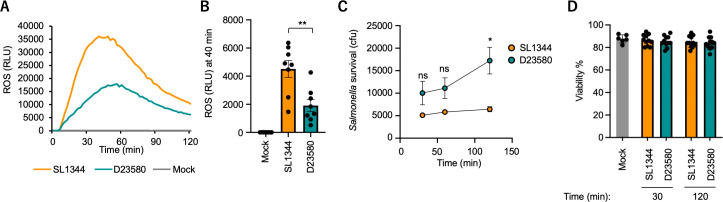 Figure 1
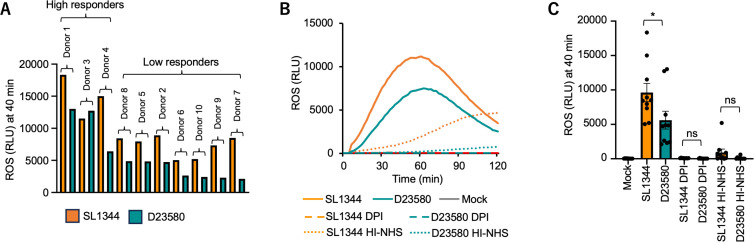 Figure 2
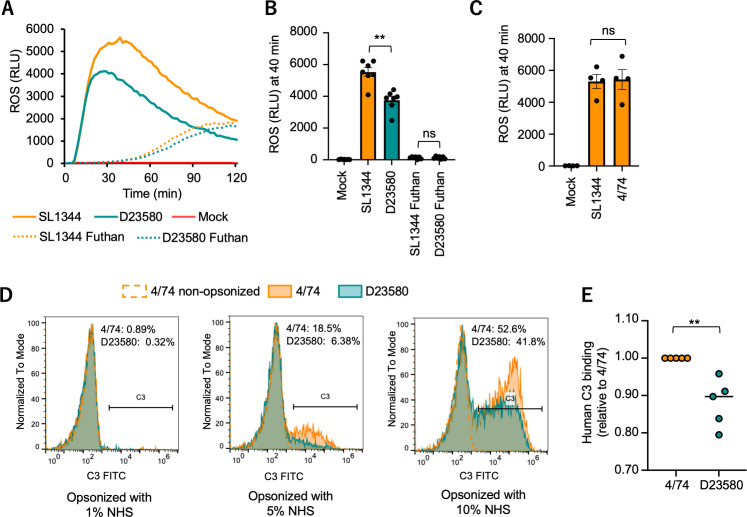 Figure 3
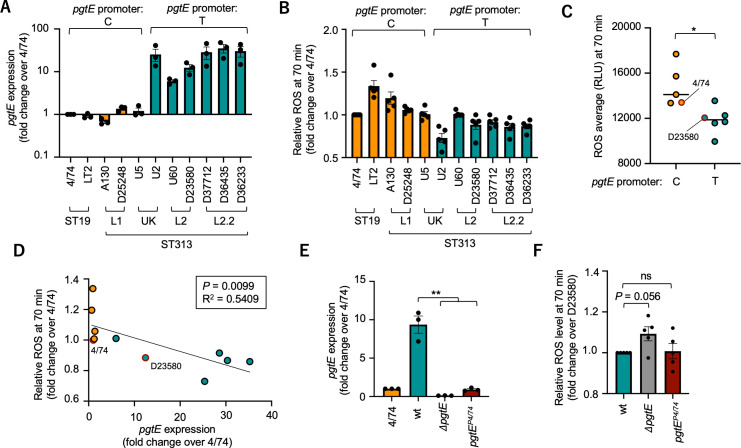 Figure 4
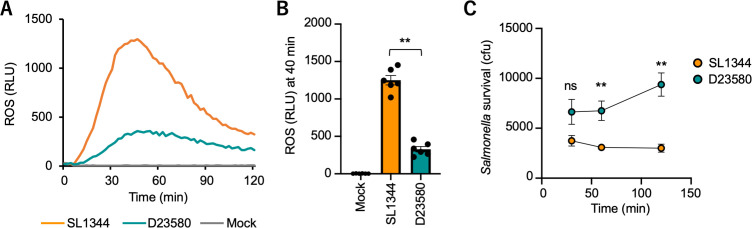 Figure 5
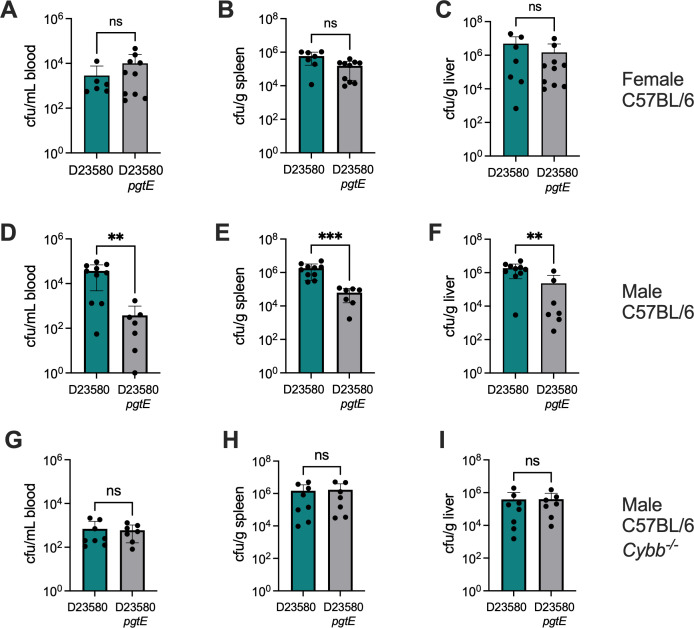 Figure 6
Peer Reviews
No public reviews on file for this paper yet. If you reviewed it on a platform where reviews are public (OpenReview, ICLR, NeurIPS, ICML), you can paste yours below so the community can read it here.
Videos
No videos yet. Explain this paper in a talk, walkthrough, or lecture? Add one.
Taxonomy
TopicsSalmonella and Campylobacter epidemiology · Vibrio bacteria research studies · Burkholderia infections and melioidosis