Validation and multi-site deployment of a lyophilized qRT-PCR reagent for the molecular diagnosis of avian influenza and rabies in Sub-Saharan African regions
Petra Drzewnioková, Irene Brian, Marzia Mancin, Andrea Fortin, Morgane Gourlaouen, Angélique Angot, Mamadou Niang, Isaac Dah, Kouramoudou Berete, Adama Diakite, Fatou Tall Lo, Clement Meseko, Emilie Go-Maro, Valeria D’Amico, Viviana Valastro, Baba Soumare, Paola De Benedictis

TL;DR
This study shows that freeze-dried reagents can replace traditional liquid reagents for diagnosing avian influenza and rabies in Sub-Saharan Africa, even without a reliable cold chain.
Contribution
The study validates a lyophilized reagent as a reliable alternative to liquid reagents for diagnosing avian influenza and rabies in resource-limited settings.
Findings
Lyophilized reagents showed analytical and diagnostic performance comparable to standard liquid master mixes.
The lyophilized reagent was successfully deployed in four veterinary labs across Sub-Saharan Africa.
Sensitivity was reduced for divergent lyssaviruses due to suboptimal oligonucleotide complementarity.
Abstract
Molecular methods are widely accepted as gold-standard techniques for the laboratory diagnosis of most human and animal pathogens. However, most molecular protocols rely on reagents that need to be transported and stored at a freezing temperature, a requirement that might affect their reliability in areas where the cold chain cannot be guaranteed. Over the years, several lyophilized molecular products have been marketed to circumvent this issue. We therefore evaluated the feasibility of replacing liquid reagents with freeze-dried formulations for the molecular diagnosis of avian influenza (AIV) and rabies (RABV) viruses, two priority zoonotic pathogens widely spread in Sub-Saharan Africa. Among six different commercial freeze-dried kits, we selected one reagent due to its easy-to-use features, single-reaction format, and preliminary performance assessment. Through a more in-depth…
Genes, proteins, chemicals, diseases, species, mutations and cell lines named across the full text — each resolved to its canonical identifier and authoritative record.
Click any figure to enlarge with its caption.
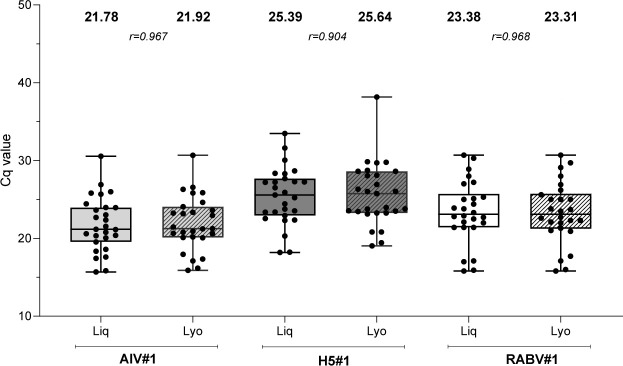 Figure 1
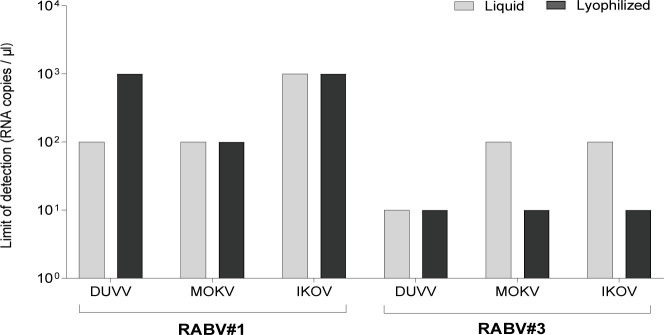 Figure 2
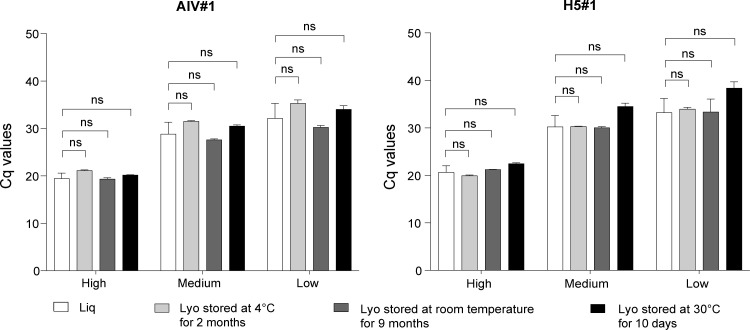 Figure 3
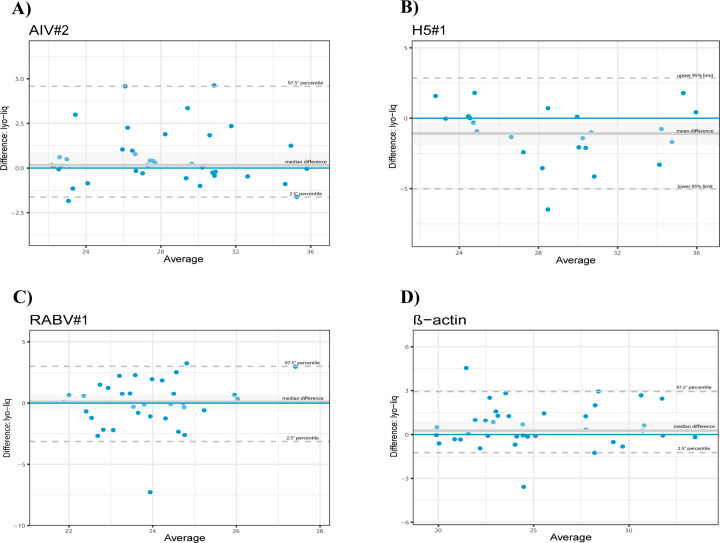 Figure 4
Peer Reviews
No public reviews on file for this paper yet. If you reviewed it on a platform where reviews are public (OpenReview, ICLR, NeurIPS, ICML), you can paste yours below so the community can read it here.
Videos
No videos yet. Explain this paper in a talk, walkthrough, or lecture? Add one.
Taxonomy
TopicsRabies epidemiology and control · Microbial infections and disease research · Virology and Viral Diseases