Evolutionary dynamics of heparan sulfate utilization by SARS-CoV-2
Shuhei Higuchi, Yafei Liu, Jun Shimizu, Chikako Ono, Yumi Itoh, Wataru Nakai, Hui Jin, Kazuki Kishida, Kazuo Takayama, Toru Okamoto, Yoshiko Murakami, Taroh Kinoshita, Yoshiharu Matsuura, Tatsuo Shioda, Hisashi Arase

TL;DR
The Omicron variant of SARS-CoV-2 has evolved to bind more strongly to heparan sulfate on cell surfaces, which helps it infect cells even when ACE2 levels are low.
Contribution
This study reveals that Omicron's enhanced infectivity is due to mutations that increase heparan sulfate binding and shift binding sites over time.
Findings
Omicron spike proteins bind heparan sulfate more strongly than wild-type SARS-CoV-2.
Mutations in Omicron increase positive charges, enhancing heparan sulfate interaction.
Recent Omicron subvariants show shifted heparan sulfate binding sites compared to earlier ones.
Abstract
Severe acute respiratory syndrome coronavirus 2 (SARS-CoV-2) Omicron variants have acquired enhanced infectivity compared to earlier variants. To elucidate the underlying molecular mechanisms, we conducted CRISPR library screening to identify cell surface molecules that interact with the Omicron spike protein. Our findings revealed a significantly higher affinity between the Omicron spike and cell surface heparan sulfate compared to the wild-type spike. This increased binding affinity enables Omicron variants to infect cells expressing low levels of ACE2, which are minimally infected by the wild-type virus. Mutational analysis of heparan sulfate binding sites on the Omicron spike protein, coupled with electrostatic potential mapping, suggested that the accumulation of positively charged mutations has contributed to the enhanced heparan sulfate binding. Comparative analysis of heparan…
Genes, proteins, chemicals, diseases, species, mutations and cell lines named across the full text — each resolved to its canonical identifier and authoritative record.
Click any figure to enlarge with its caption.
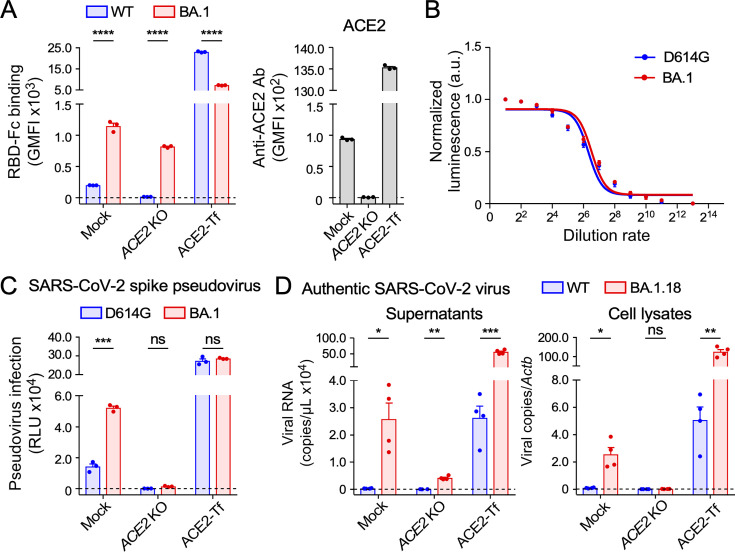 Figure 1
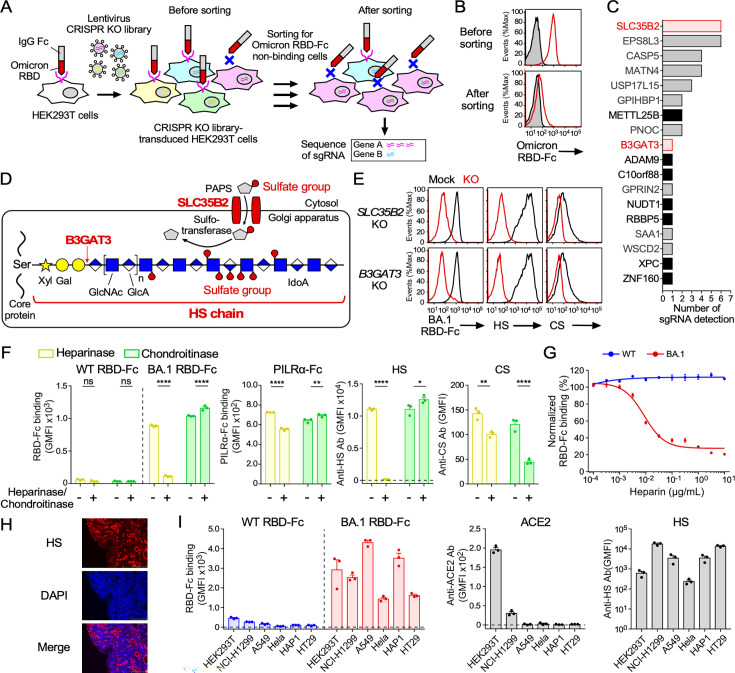 Figure 2
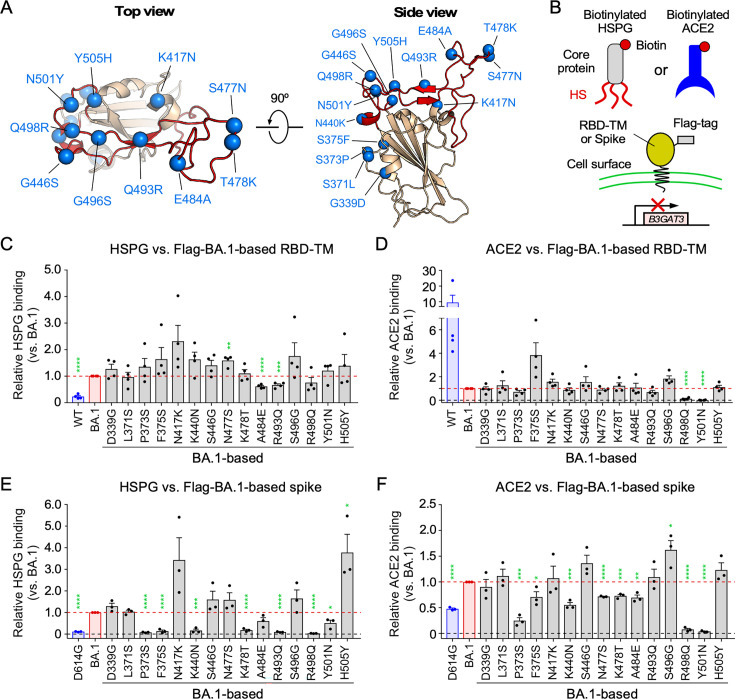 Figure 3
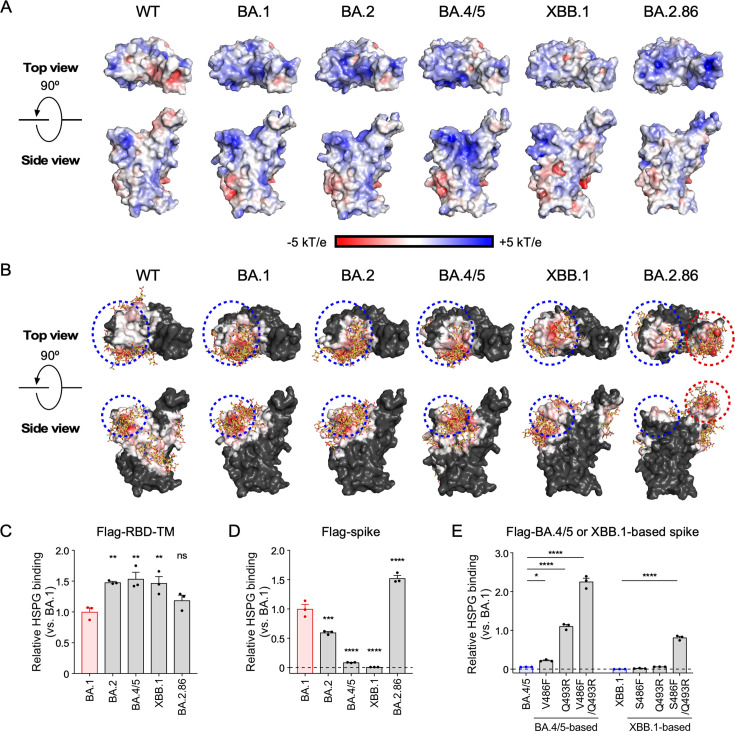 Figure 4
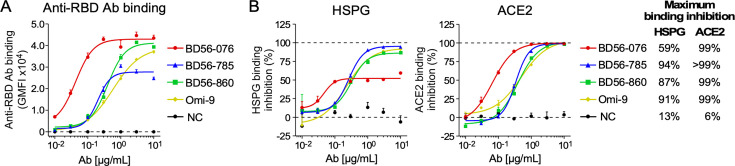 Figure 5
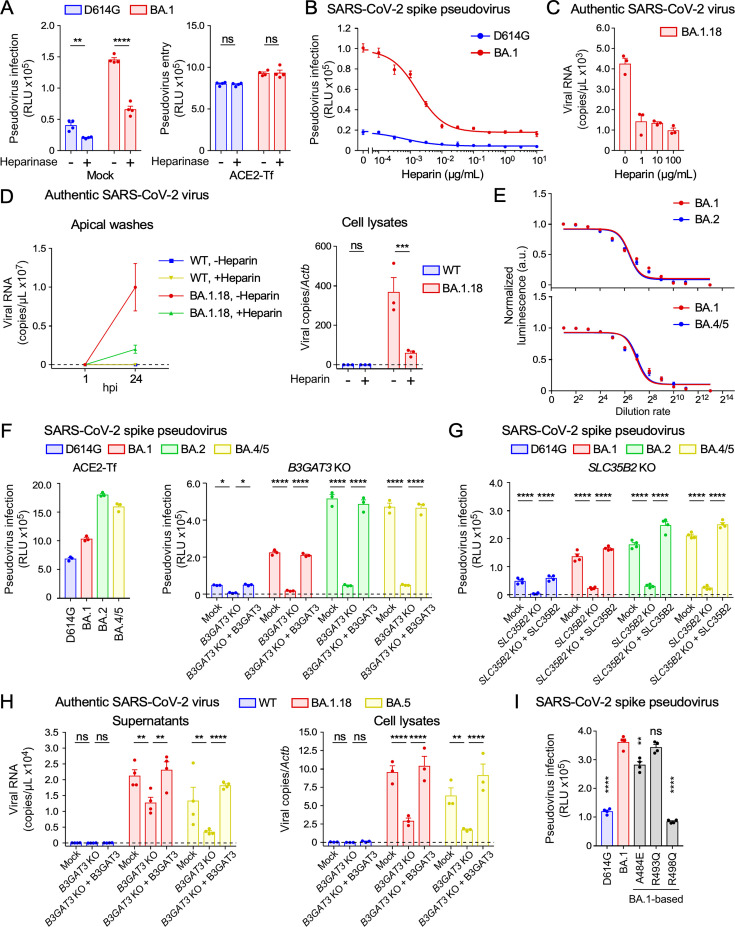 Figure 6
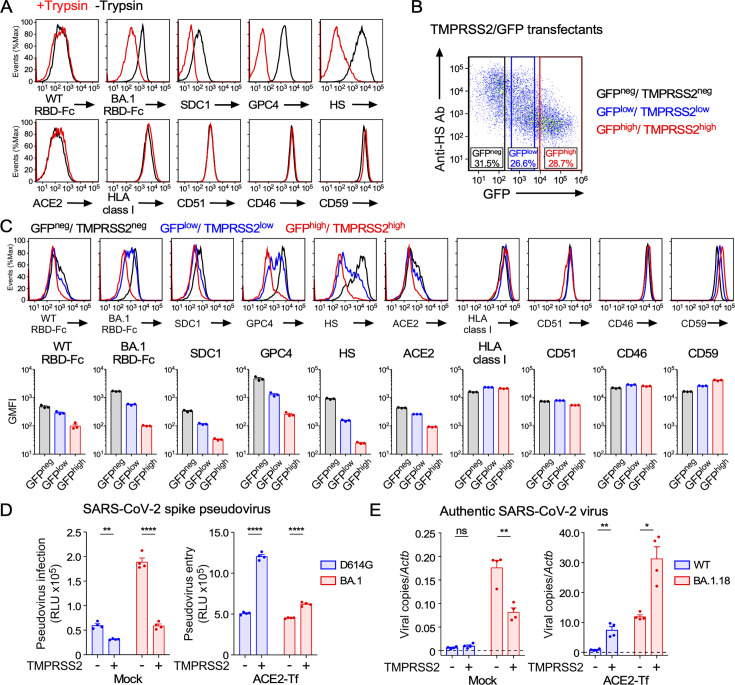 Figure 7
Peer Reviews
No public reviews on file for this paper yet. If you reviewed it on a platform where reviews are public (OpenReview, ICLR, NeurIPS, ICML), you can paste yours below so the community can read it here.
Videos
No videos yet. Explain this paper in a talk, walkthrough, or lecture? Add one.
Taxonomy
TopicsCOVID-19 Clinical Research Studies · Liver Disease Diagnosis and Treatment · SARS-CoV-2 and COVID-19 Research