Antibiotic-persistent bacterial cells exhibiting low-level ROS are eradicated by ROS-independent membrane disruption
Yanghui Ye, Yuanqing Tian, Mingxin Duan, Weiwei Zhu, Jingyun Wu, Yilin Chen, Feng Xu, Xilin Zhao, Karl Drlica, Yuzhi Hong

TL;DR
This study shows how to kill antibiotic-persistent bacteria by disrupting their cell membranes, independent of reactive oxygen species.
Contribution
A new ROS-independent method using aminoglycoside-polymyxin combinations to eradicate persister and tolerant bacterial cells.
Findings
Persistent cells like hipA7 and metG2 mutants are insensitive to nutrient changes and resistant to multiple antibiotics.
Aminoglycoside-polymyxin combinations rapidly kill persister and tolerant cells at clinically achievable concentrations.
The method works on both lab and clinical isolates, including biofilm and pan-tolerant E. coli strains.
Abstract
Bacterial persistence increases therapy duration, disease relapse, and antibiotic resistance. Mechanisms underlying persistence and feasible ways to rapidly eliminate persister cells are largely unknown. The present work examined genetic and environmental perturbations to identify anti-death events occurring in Escherichia coli persister and phenotypically tolerant cells. The quiescent status of hipA7 and metG2 persister cells, which were protected from killing by multiple antibiotics, was insensitive to the presence/absence of exogenous nutrients. In contrast, stationary-phase and nutrient-starved wild-type cultures, which displayed tolerance rather than the subpopulation status of persistence, were readily killed by ciprofloxacin upon restoration of nutrients, thereby indicating that tolerance was phenotypic. Both persistent and tolerant cells suppressed accumulation of reactive…
Genes, proteins, chemicals, diseases, species, mutations and cell lines named across the full text — each resolved to its canonical identifier and authoritative record.
Click any figure to enlarge with its caption.
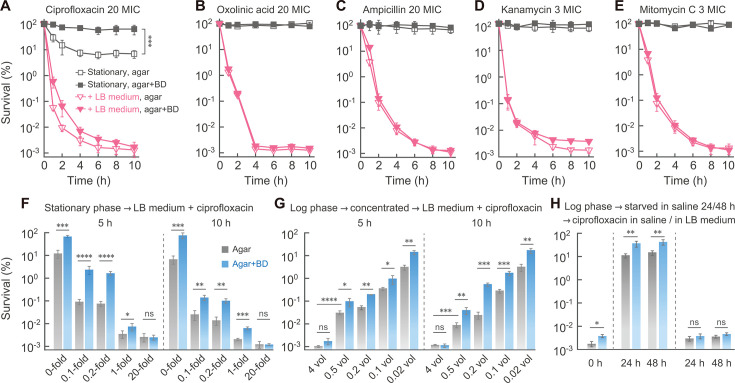 Figure 1
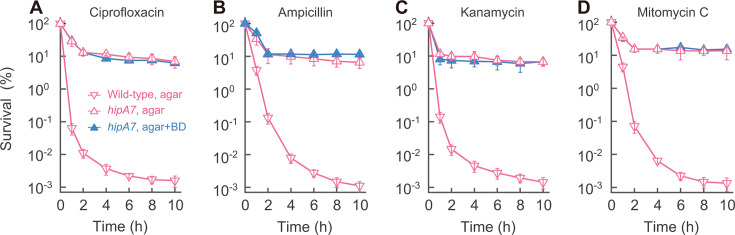 Figure 2
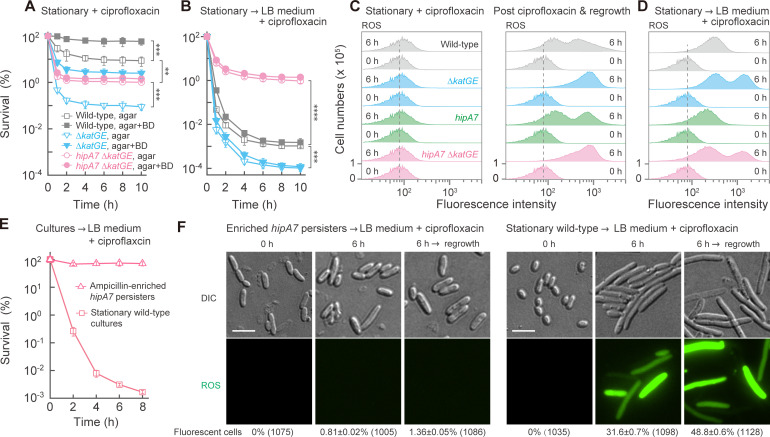 Figure 3
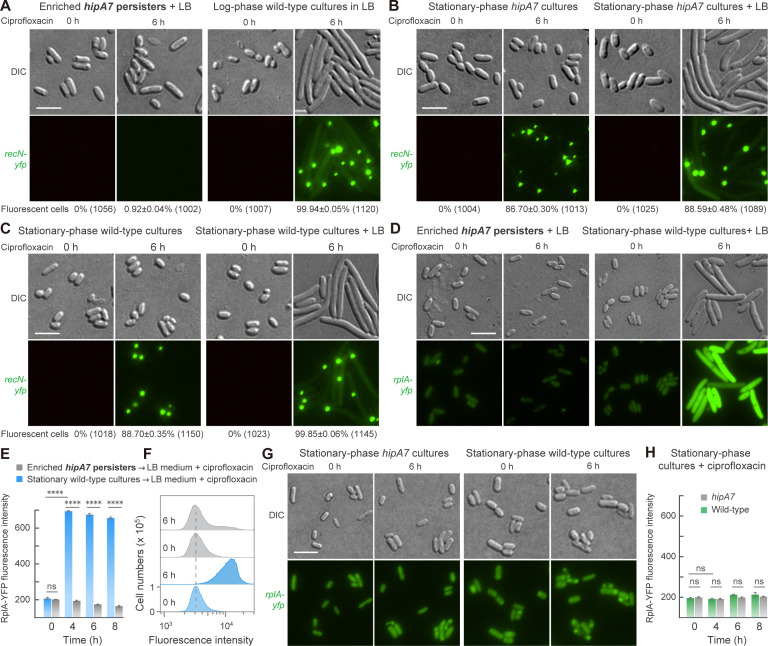 Figure 4
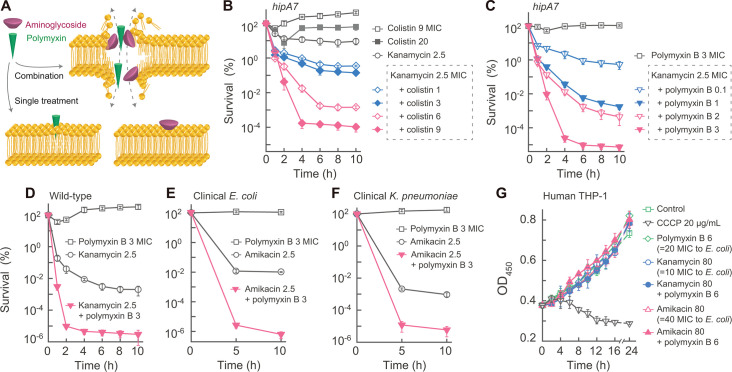 Figure 5
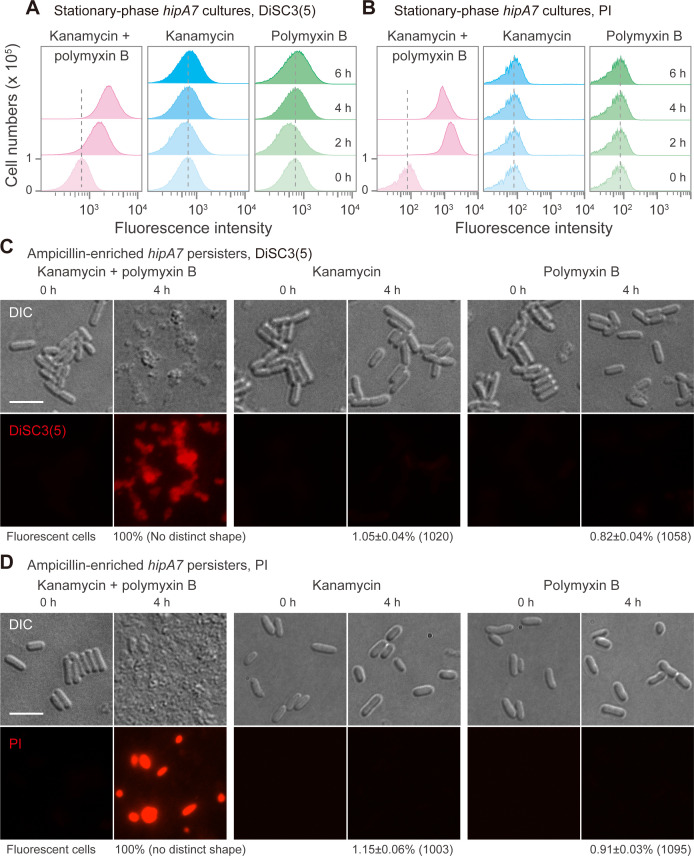 Figure 6
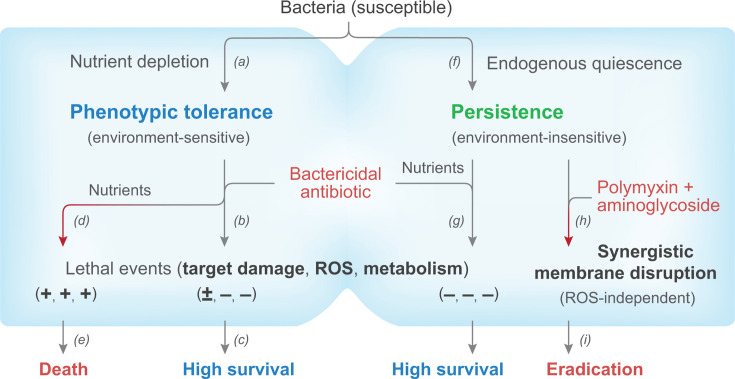 Figure 7
Peer Reviews
No public reviews on file for this paper yet. If you reviewed it on a platform where reviews are public (OpenReview, ICLR, NeurIPS, ICML), you can paste yours below so the community can read it here.
Videos
No videos yet. Explain this paper in a talk, walkthrough, or lecture? Add one.
Taxonomy
TopicsAntibiotic Resistance in Bacteria · Bacterial Genetics and Biotechnology · Vibrio bacteria research studies