Development of selective culture media for efficient isolation of Avibacterium paragallinarum from chickens
Mariela E. Srednik, Mostafa M. S. Shelkamy, Amro Hashish, Nubia R. De Macedo, Yuko Sato, Mohamed M. El-Gazzar, Orhan Sahin, Qijing Zhang

TL;DR
Researchers developed new selective culture media to efficiently isolate Avibacterium paragallinarum from chickens, improving diagnosis and vaccine development for infectious coryza.
Contribution
Development of selective media (MSNV and MSCV) that eliminate the need for nurse bacteria and improve isolation efficiency and purity of Avibacterium paragallinarum.
Findings
Selective media MSNV and MSCV increased AvP isolation rates to 59.4% and 46.9%, significantly higher than the conventional 37.7%.
The new media successfully isolated non-pathogenic AvP variants previously difficult to obtain.
MSNV and MSCV reduced background bacteria and improved the purity of AvP isolates.
Abstract
Infectious coryza (IC) caused by Avibacterium paragallinarum (AvP) is an upper respiratory disease in chickens and incurs a significant economic impact on laying hens. Control of IC requires reliable bacterial isolation, but AvP is a fastidious bacterium, and the currently used methods yield poor isolation. To address this need, we developed selective media for the efficient growth and isolation of AvP. Several basal media supplemented with various growth factors were explored, and Mueller Hinton agar (MHA) supplemented with fetal bovine serum (FBS) plus NAD yielded optimal AvP growth, eliminating the need for nurse bacteria. This medium (named MSN) was further supplemented with vancomycin and crystal violet to produce two selective media, named MSNV and MSCV, respectively, to inhibit commensal Gram-positive bacteria that reside in the upper respiratory tract of chickens. MSNV and MSCV…
Genes, proteins, chemicals, diseases, species, mutations and cell lines named across the full text — each resolved to its canonical identifier and authoritative record.
Click any figure to enlarge with its caption.
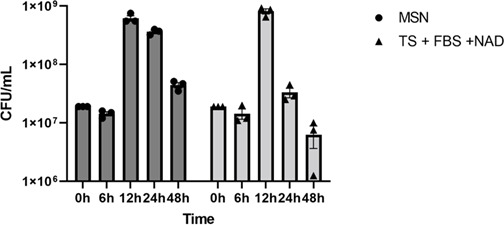 Figure 1
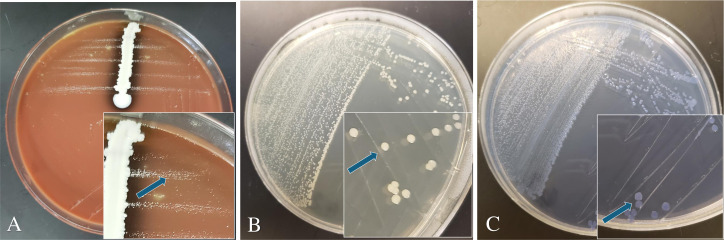 Figure 2
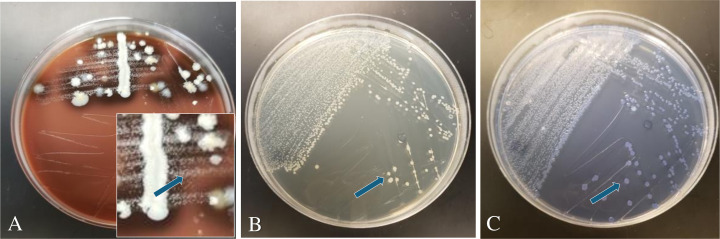 Figure 3
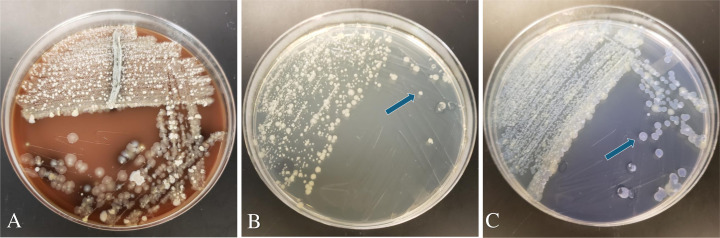 Figure 4
Peer Reviews
No public reviews on file for this paper yet. If you reviewed it on a platform where reviews are public (OpenReview, ICLR, NeurIPS, ICML), you can paste yours below so the community can read it here.
Videos
No videos yet. Explain this paper in a talk, walkthrough, or lecture? Add one.
Taxonomy
TopicsMicrobial infections and disease research · Plant Pathogenic Bacteria Studies · Aquaculture disease management and microbiota