Performance evaluation of early growth isolates for automated and manual broth microdilution antimicrobial-susceptibility testing
Lucas J. Osborn, Lindsay Osborn, Irvin Ibarra-Flores, Marisol Garcia, Kaitlyn Perez, Ali Farhadiayoubloo, Melissa Mitrou, Cristina Costales, Jennifer Dien Bard

TL;DR
This study shows that using early growth isolates for antimicrobial testing can significantly reduce waiting times without compromising accuracy.
Contribution
The study introduces a cost-effective method to reduce AST turnaround times by using early growth isolates with existing commercial systems.
Findings
Early growth AST showed high concordance with standard methods for both gram-positive and gram-negative bacteria.
Using early growth isolates reduced incubation time by up to 18 hours without additional costs.
The method is practical for clinical labs and maintains high accuracy with minimal errors.
Abstract
Prolonged turnaround times (TAT) represent a major limitation to current automated susceptibility testing systems and manual susceptibility-testing methods such as broth microdilution. As a result, targeted therapy for patients may be delayed, portending suboptimal clinical outcomes. One contributing factor is the 18–24 h of incubation prior to antimicrobial-susceptibility testing (AST) recommended by the Clinical Laboratory Standards Institute (CLSI) and some automated AST manufacturers. This study evaluates the performance of AST by manual broth microdilution (Thermo Fisher Sensititre) and an automated AST system (BD Phoenix) on isolates incubated for 6 h (early growth AST, egAST) compared with 18–24 h (standard growth AST, sgAST). An initial proof-of-concept study conducted on gram-negative (n = 5) and gram-positive (n = 2) quality control strains incubated for 6 or 24 h prior to…
Genes, proteins, chemicals, diseases, species, mutations and cell lines named across the full text — each resolved to its canonical identifier and authoritative record.
Click any figure to enlarge with its caption.
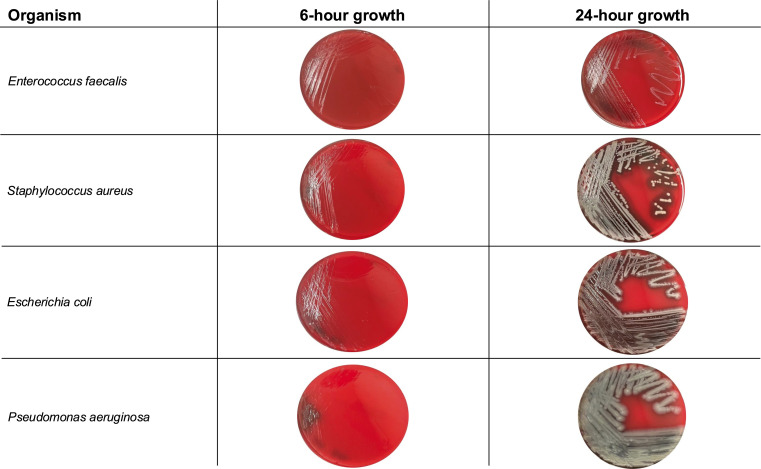 Figure 1
Peer Reviews
No public reviews on file for this paper yet. If you reviewed it on a platform where reviews are public (OpenReview, ICLR, NeurIPS, ICML), you can paste yours below so the community can read it here.
Videos
No videos yet. Explain this paper in a talk, walkthrough, or lecture? Add one.
Taxonomy
TopicsBacterial Identification and Susceptibility Testing · Antibiotic Resistance in Bacteria · Antibiotic Use and Resistance