Re-entry catheter-guided in situ fenestration to preserve the left subclavian artery during thoracic endovascular aortic repair for subacute type B aortic dissection
Diego Ardiles, Marcelo Lagos, Jeison Peñuela, Allan Vera, Rocío Castro, Manuel Espíndola

TL;DR
A new technique using a re-entry catheter preserves the left subclavian artery during aortic repair in a patient with aortic dissection.
Contribution
The BeBack re-entry catheter is proposed as an effective tool for in situ fenestration during thoracic endovascular aortic repair.
Findings
The BeBack re-entry catheter successfully created a fenestration in the thoracic endograft.
The target vessel remained patent, and the false lumen was excluded after the procedure.
The technique was performed via percutaneous access with precise angiographic guidance.
Abstract
We describe the use of the BeBack re-entry catheter as an alternative tool for in situ fenestration during thoracic endovascular aortic repair in a patient with subacute type B aortic dissection requiring zone 2 landing. A 69-year-old woman with high-risk imaging features underwent thoracic endovascular aortic repair with intentional coverage of the left subclavian artery. Via percutaneous left brachial access, a deflectable 7F introducer was positioned against the outer curvature of the thoracic endograft. Retrograde puncture was performed using a 4F × 120 cm BeBack re-entry catheter under angiographic guidance in orthogonal projections to ensure precise orientation and penetration. After successful crossing of the endograft fabric, an 0.018″ guidewire was advanced into the ascending aorta, followed by sequential dilation and deployment of a balloon-expandable stent. Final angiography…
Genes, proteins, chemicals, diseases, species, mutations and cell lines named across the full text — each resolved to its canonical identifier and authoritative record.
Click any figure to enlarge with its caption.
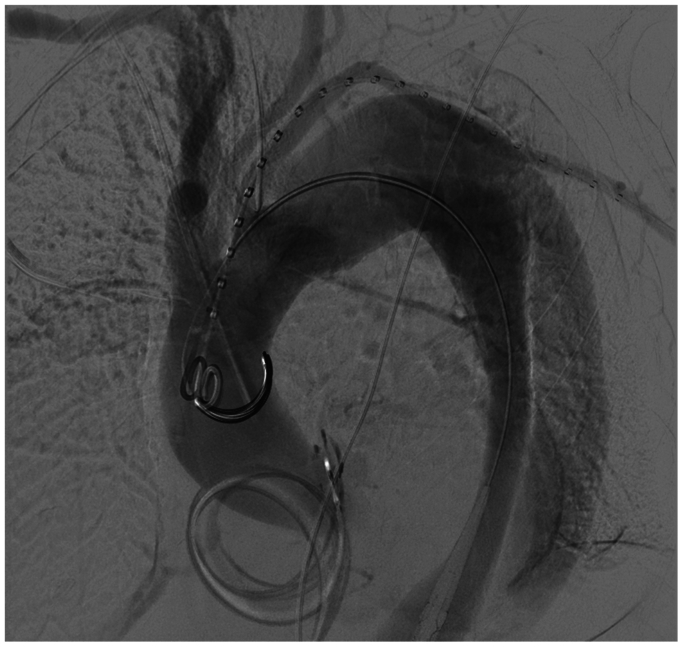 Figure 1
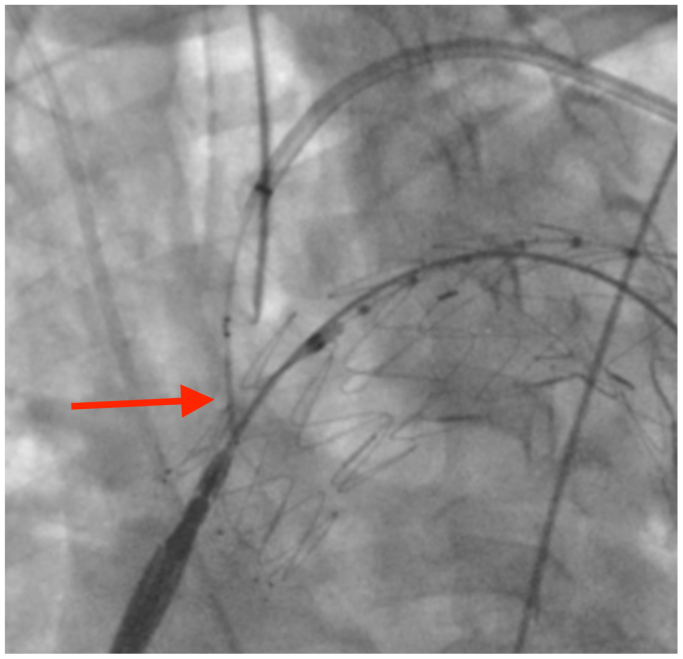 Figure 2
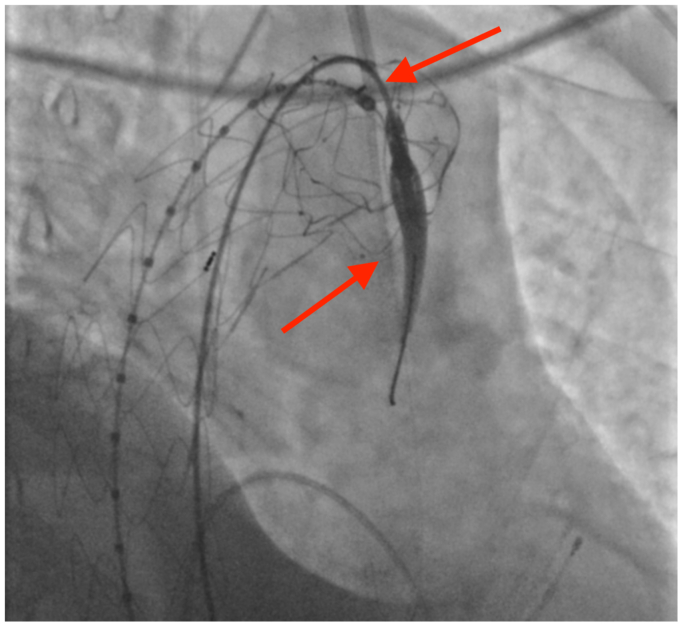 Figure 3
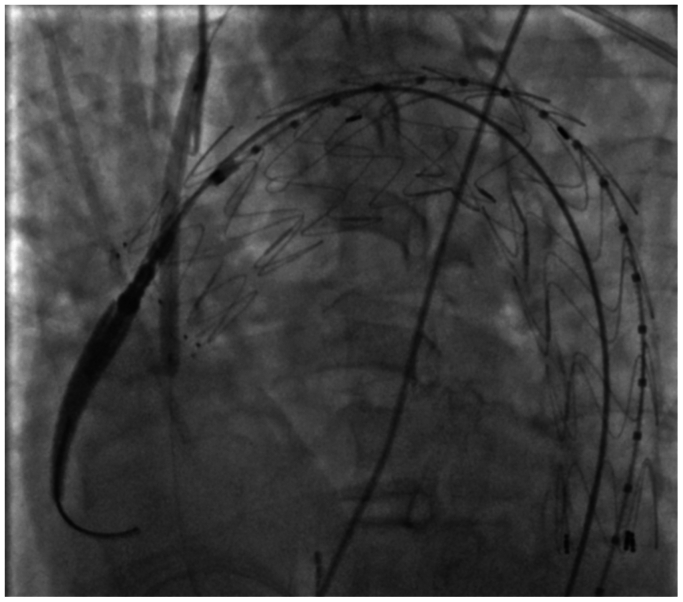 Figure 4
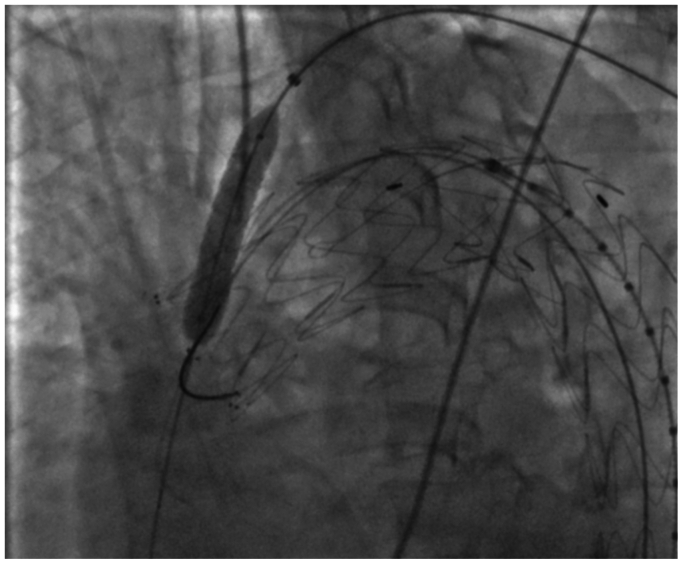 Figure 5
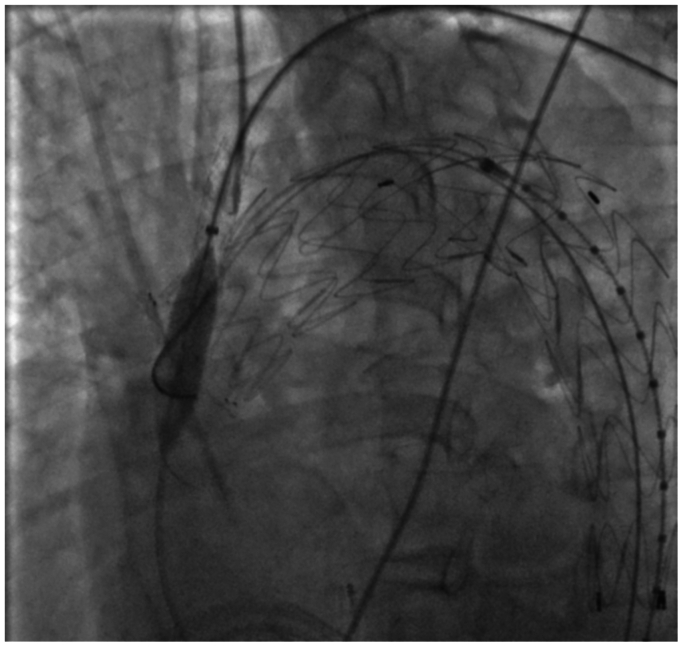 Figure 6
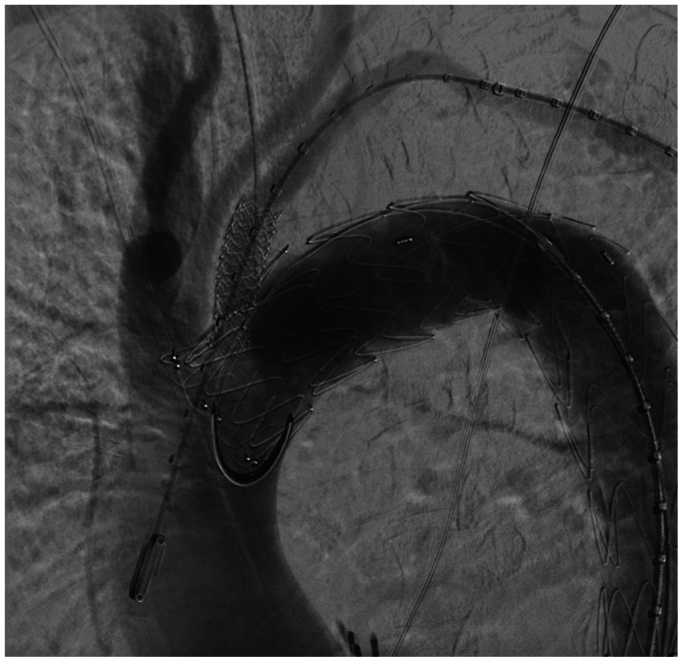 Figure 7
Peer Reviews
No public reviews on file for this paper yet. If you reviewed it on a platform where reviews are public (OpenReview, ICLR, NeurIPS, ICML), you can paste yours below so the community can read it here.
Videos
No videos yet. Explain this paper in a talk, walkthrough, or lecture? Add one.
Taxonomy
TopicsAortic Disease and Treatment Approaches · Aortic aneurysm repair treatments · Cardiac, Anesthesia and Surgical Outcomes