Magnetospectroscopic Studies of a Series of Fe(II) Scorpionate Complexes: Assessing the Relationship between Halide Identity and Zero-Field Splitting
Daniel J. SantaLucia, Laxmi Devkota, Sergey V. Lindeman, Andrew Ozarowski, J. Krzystek, Mykhaylo Ozerov, Samuel M. Greer, Daniel C. Cummins, Klaus H. Theopold, Mihail Atanasov, Joshua Telser, Adam T. Fiedler

TL;DR
This study explores how different halides affect the magnetic properties of iron complexes using advanced spectroscopic and theoretical methods.
Contribution
The paper provides a detailed electronic-structure analysis of Fe(II) scorpionate complexes with varying halides using advanced experimental and theoretical tools.
Findings
Halide identity significantly influences zero-field splitting in Fe(II) complexes.
Jahn–Teller distortions reduce symmetry in both solution and solid states.
Zero-field splitting arises from combined Jahn–Teller and ligand field effects, not spin–orbit coupling.
Abstract
Ferrous ions in four-coordinate environments are common in protein structures, synthetic catalysts, and molecular magnets. The 3d 6 configuration of high-spin Fe(II) imparts an S = 2 ground state, whose analysis using conventional spectroscopic methods is often hindered by substantial zero-field splitting (ZFS). Herein, we provide detailed electronic-structure descriptions for [FeIIX(Tp tBu,Me)] (1-X; X = F, Cl, Br, I), where (Tp tBu,Me)− is hydrotris(3-tert-butyl-5-methyl-pyrazol-1-yl)borate. The three pyrazolyl N-donors of the “scorpionate” ligand facially coordinate to Fe(II), giving idealized C 3v symmetry with the halide occupying the axial position. Although originally reported by Theopold and co-workers, this series is revisited herein using advanced experimental and theoretical tools. Ground-state transitions were probed by high-frequency and -field electron paramagnetic…
Genes, proteins, chemicals, diseases, species, mutations and cell lines named across the full text — each resolved to its canonical identifier and authoritative record.
Click any figure to enlarge with its caption.
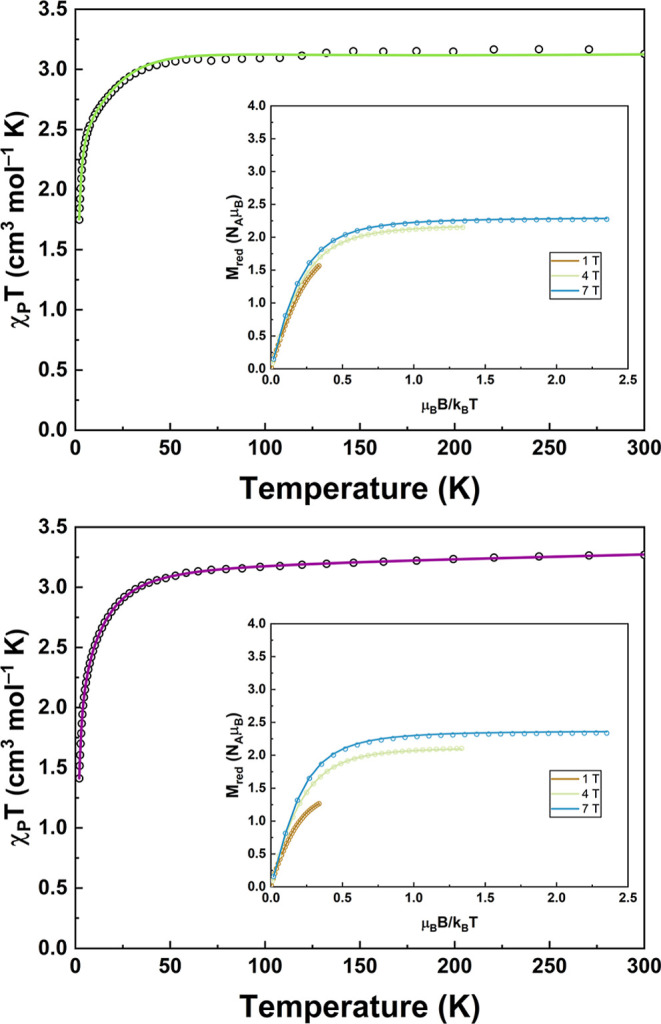 Figure 1
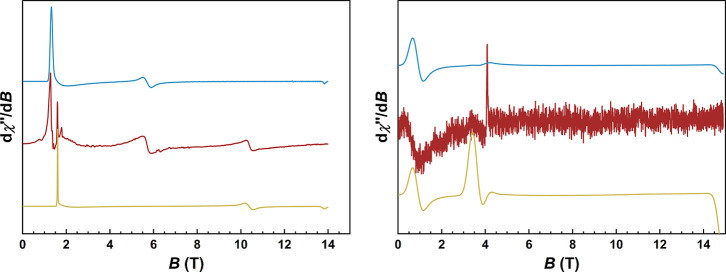 Figure 2
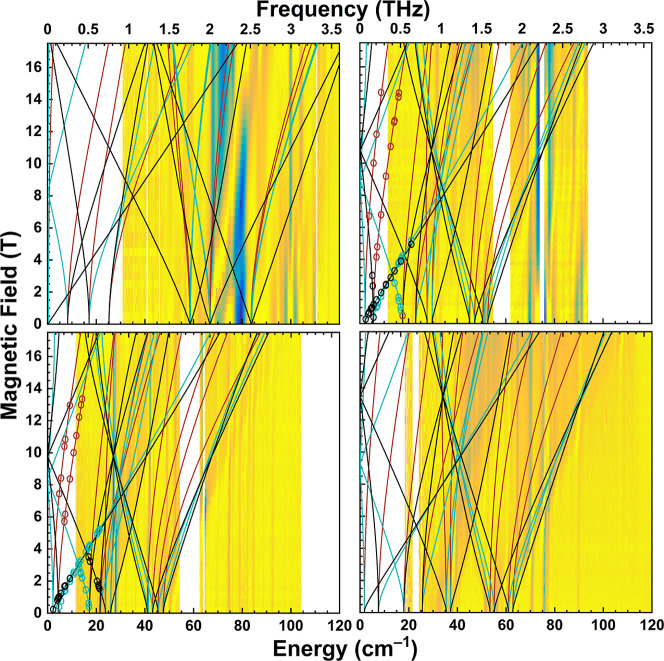 Figure 3
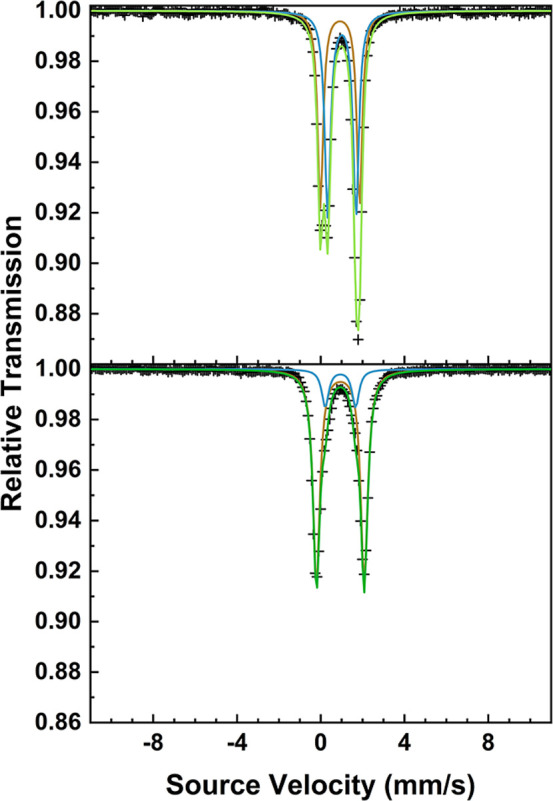 Figure 4
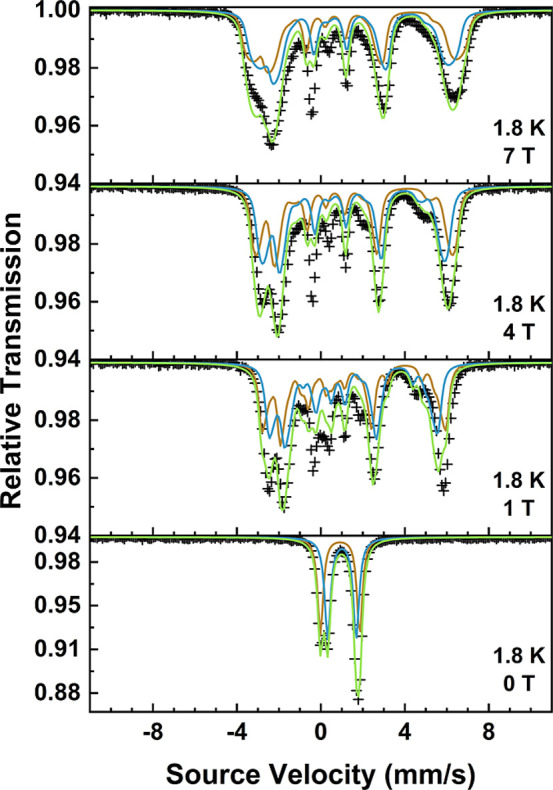 Figure 5
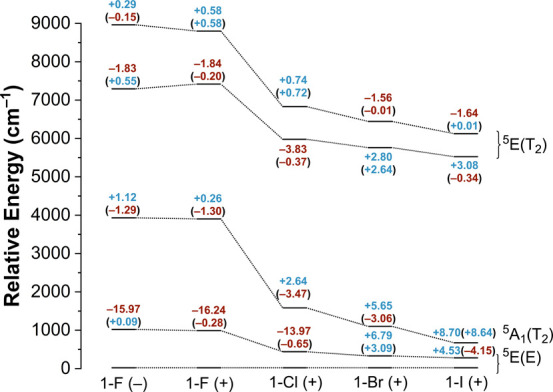 Figure 6
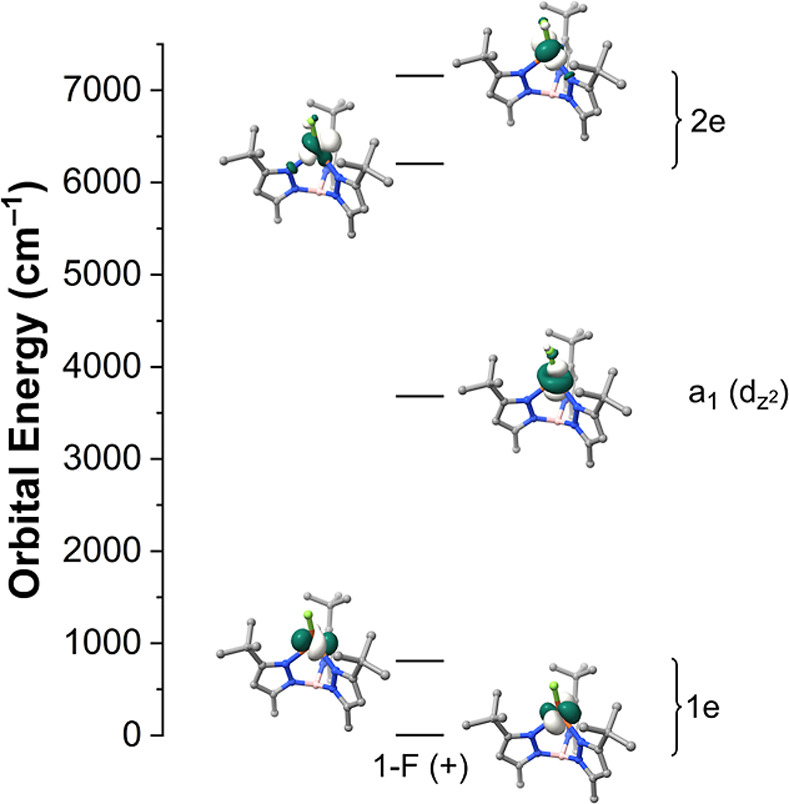 Figure 7
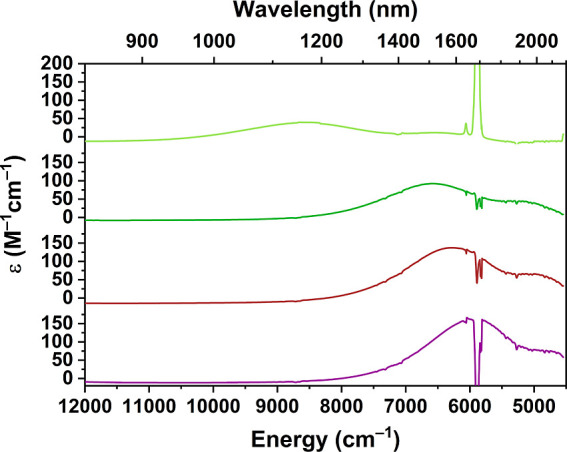 Figure 8
 Figure 9
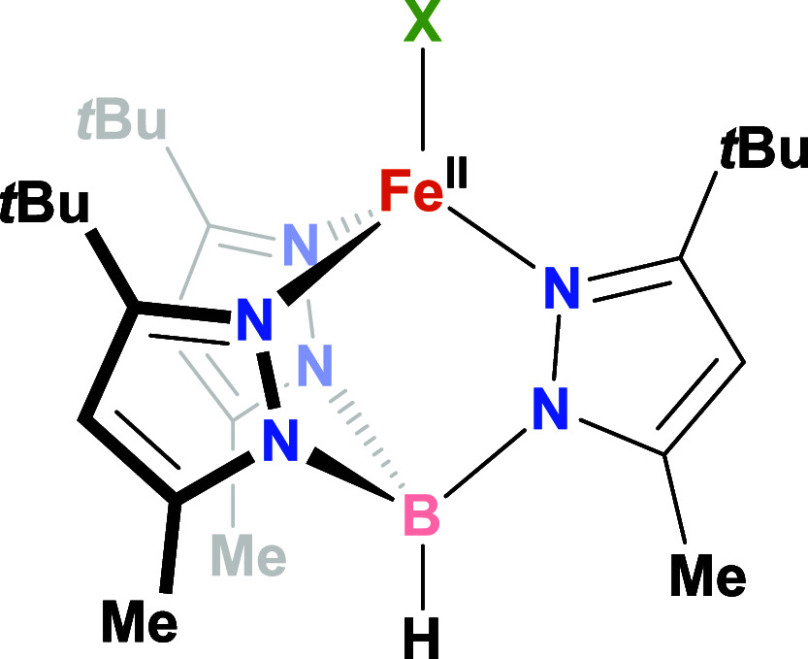 Figure 10
 Figure 11
 Figure 12
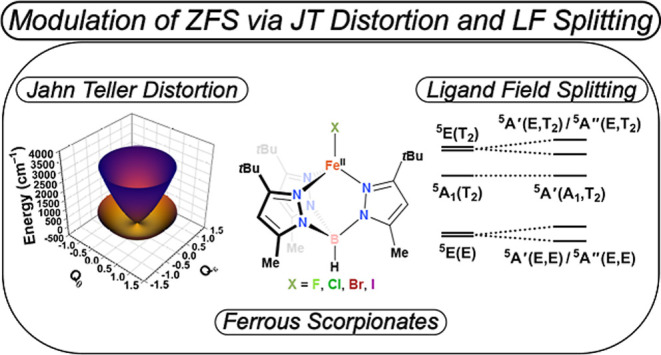 Figure 13
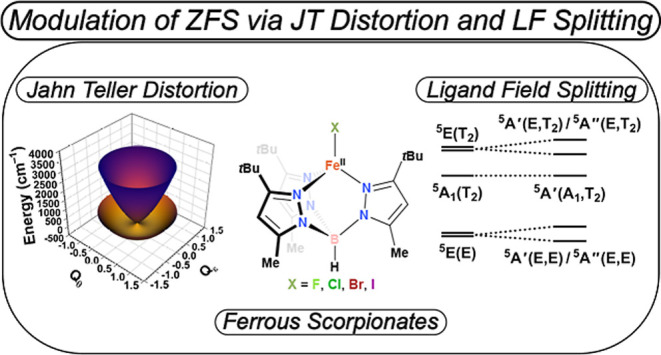 Figure 14
 Figure 15
 Figure 16
 Figure 17
 Figure 18
 Figure 19
 Figure 20
 Figure 21
 Figure 22
 Figure 23
 Figure 24
 Figure 25
 Figure 26
 Figure 27
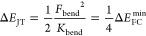 Figure 28
 Figure 29
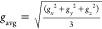 Figure 30
 Figure 31
Peer Reviews
No public reviews on file for this paper yet. If you reviewed it on a platform where reviews are public (OpenReview, ICLR, NeurIPS, ICML), you can paste yours below so the community can read it here.
Videos
No videos yet. Explain this paper in a talk, walkthrough, or lecture? Add one.
Taxonomy
TopicsMagnetism in coordination complexes · Metal-Catalyzed Oxygenation Mechanisms · Metal complexes synthesis and properties