Dynamic Training Enhances Machine Learning Potentials for Long-Lasting Molecular Dynamics
Ivan Žugec, Tin Hadži Veljković, Maite Alducin, J. Iñaki Juaristi

TL;DR
Dynamic training improves machine learning models for long-term molecular simulations, offering better accuracy and broader applicability.
Contribution
Dynamic training is introduced as an architecture-independent method to enhance accuracy in long-lasting molecular dynamics simulations.
Findings
Dynamic training applied to an EGNN improved prediction accuracy for a hydrogen-palladium system on graphene.
The method is architecture-independent, making it applicable to various machine learning potentials.
DT offers a practical tool for advancing molecular dynamics simulations with enhanced accuracy.
Abstract
Molecular dynamics (MD) simulations are vital for exploring complex systems in computational physics and chemistry. While machine learning methods dramatically reduce computational costs relative to ab initio methods, their accuracy in long-lasting simulations remains limited. Here we propose dynamic training (DT), a method designed to enhance accuracy of a model over extended MD simulations. Applying DT to an equivariant graph neural network (EGNN) on the challenging system of a hydrogen molecule interacting with a palladium cluster anchored to a graphene vacancy demonstrates a superior prediction accuracy compared to conventional approaches. Crucially, the DT architecture-independent design ensures its applicability across diverse machine learning potentials, making it a practical tool for advancing MD simulations.
Genes, proteins, chemicals, diseases, species, mutations and cell lines named across the full text — each resolved to its canonical identifier and authoritative record.
Click any figure to enlarge with its caption.
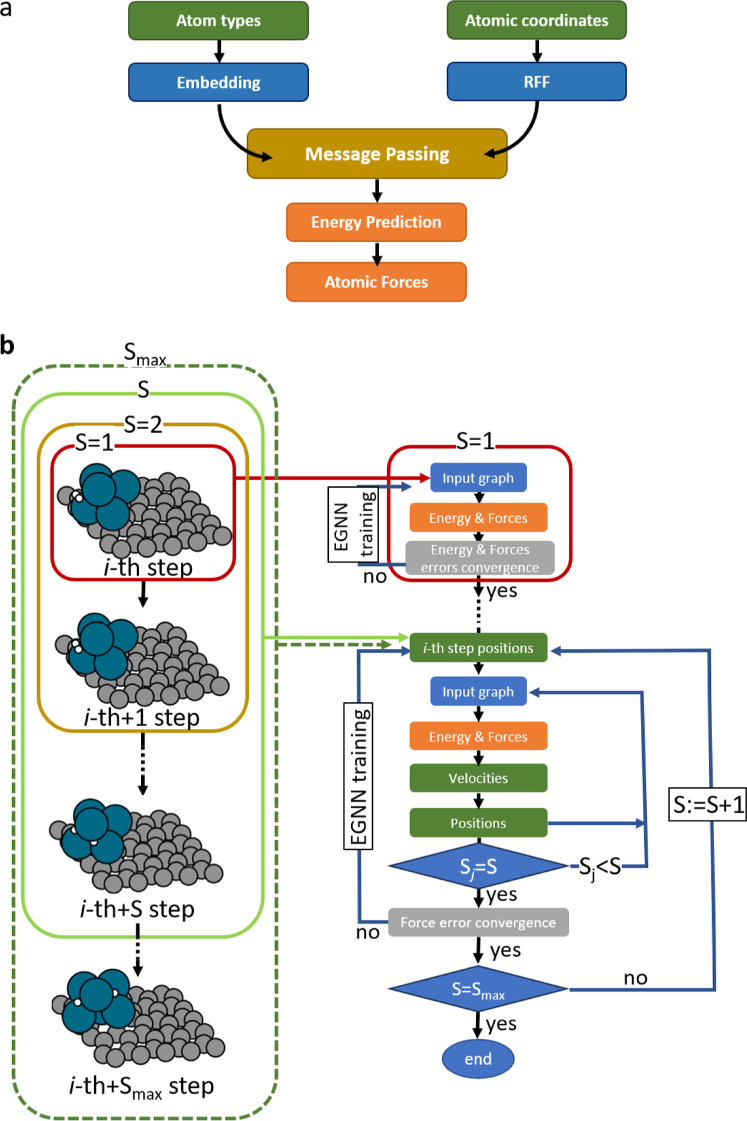 Figure 1
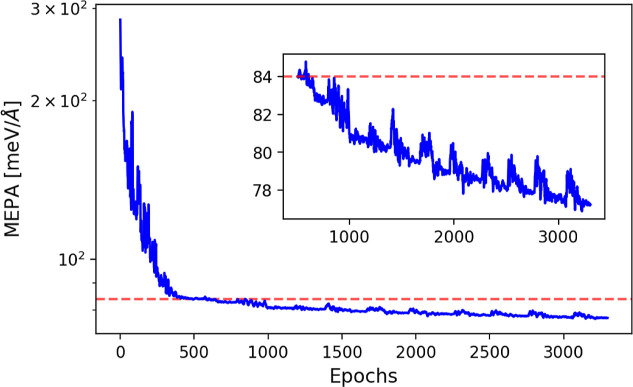 Figure 2
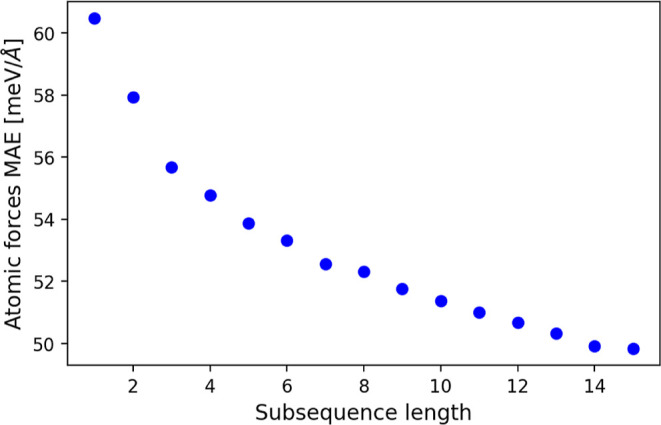 Figure 3
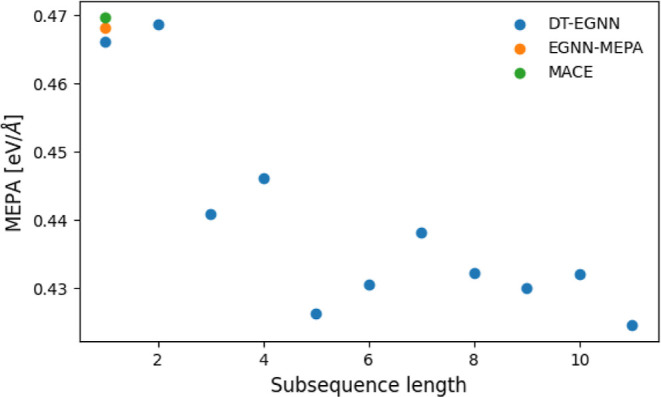 Figure 4
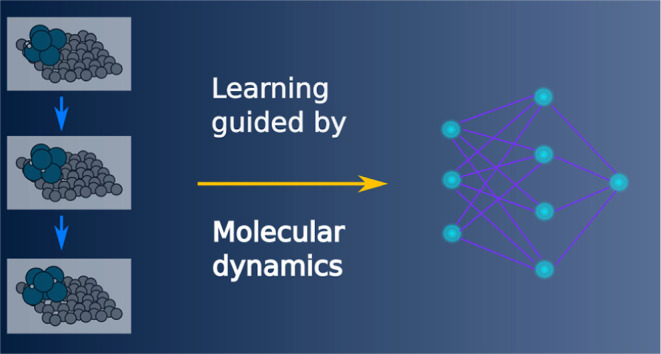 Figure 5
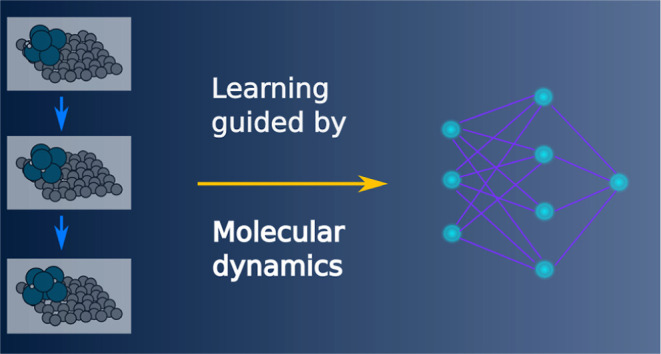 Figure 6
 Figure 7
 Figure 8
 Figure 9
 Figure 10
 Figure 11
 Figure 12
 Figure 13
 Figure 14
 Figure 15
 Figure 16
 Figure 17
 Figure 18
 Figure 19
 Figure 20
 Figure 21
 Figure 22
 Figure 23
 Figure 24
 Figure 25
 Figure 26
 Figure 27
 Figure 28
Peer Reviews
No public reviews on file for this paper yet. If you reviewed it on a platform where reviews are public (OpenReview, ICLR, NeurIPS, ICML), you can paste yours below so the community can read it here.
Videos
No videos yet. Explain this paper in a talk, walkthrough, or lecture? Add one.
Taxonomy
TopicsMachine Learning in Materials Science · Computational Drug Discovery Methods · Protein Structure and Dynamics