Spontaneous Crimping of Gelatin Methacryloyl Nanofibrils Induced by Limited Hydration
Chien-Wei Wu, Tzu-Yin Huang, Liang-Jie Huang, Yi-Wei Kuo, Chin-Lin Guo, Po-Ling Kuo

TL;DR
Researchers developed a method to create crimped nanofibrils that mimic natural collagen, improving cell behavior and offering new tools for tissue engineering.
Contribution
A novel method to induce spontaneous, tunable crimping in gelatin methacryloyl nanofibrils using limited hydration.
Findings
Crimped nanofibrils matched the size and crimping of native collagen fibrils.
Crimping reduced network stiffness but increased stretchability, similar to native tissues.
Crimped fibrils promoted cell translocation and altered fibroblast protein expression.
Abstract
The crimped appearance of native collagen fibrils in youthful tissues serves as a mechanical buffer and phenotype determinant for resident cells. In vitro platforms emulating these native crimped networks facilitate the study of cell-matrix dynamics in various pathophysiological contexts. However, creating fibrillar networks with sizes and crimping matching native tissues using collagen-derived substrates remains challenging. We present an innovative approach to produce spontaneous, tunable crimping of electrospun, aligned gelatin methacryloyl nanofibrils using limited hydration. The diameter of the synthesized fibrils approximated that of native fibrils. Beyond individual fibril crimping, the network exhibited large-scale, periodic crimping with wavelengths matching native collagen networks. Tensile stress tests revealed that crimping reduced network stiffness but enhanced…
Genes, proteins, chemicals, diseases, species, mutations and cell lines named across the full text — each resolved to its canonical identifier and authoritative record.
Click any figure to enlarge with its caption.
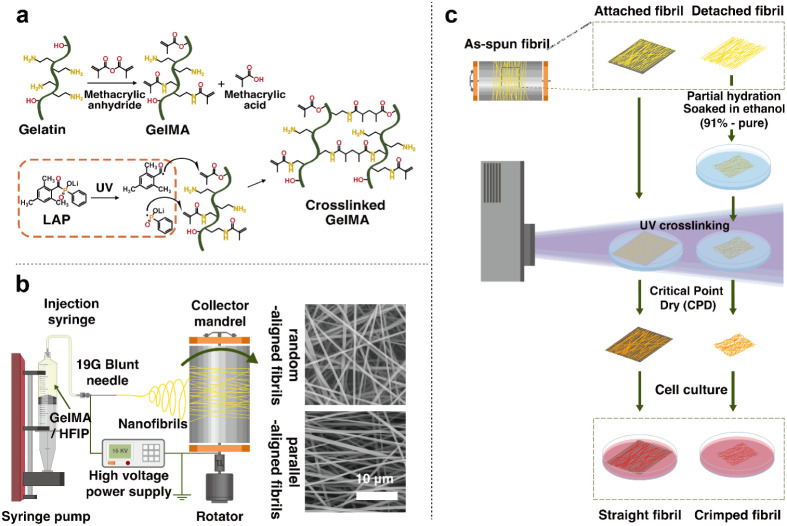 Figure 1
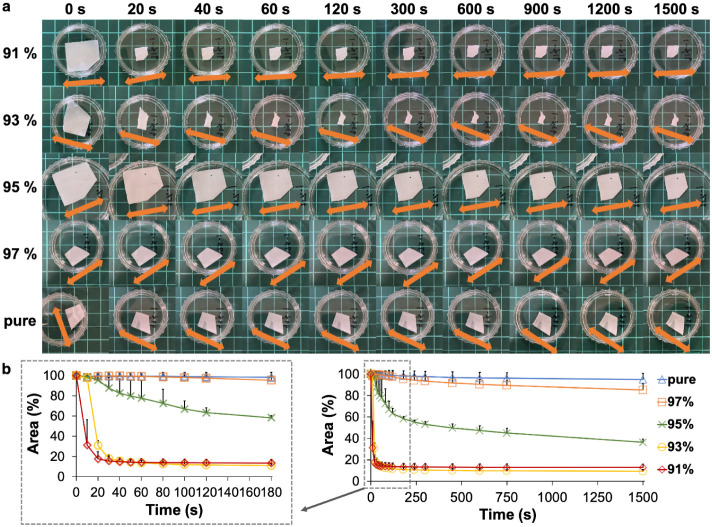 Figure 2
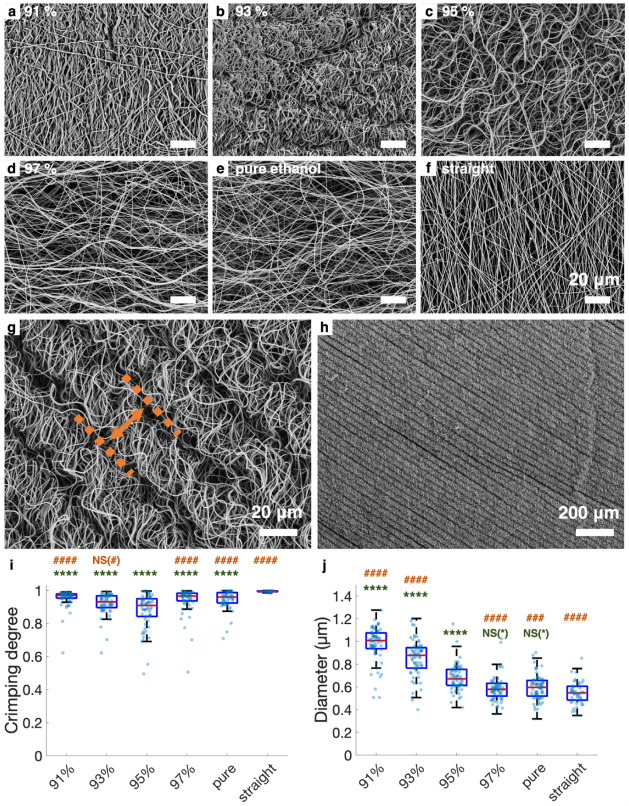 Figure 3
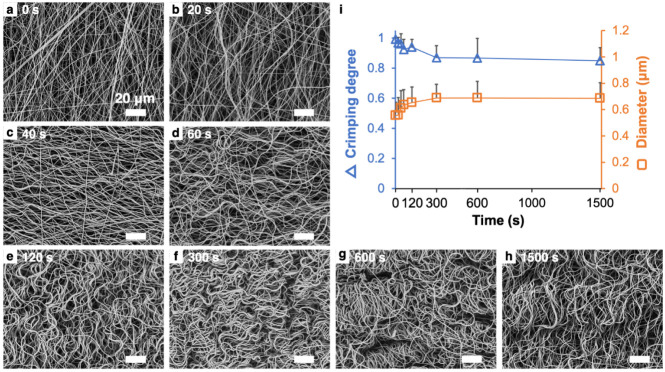 Figure 4
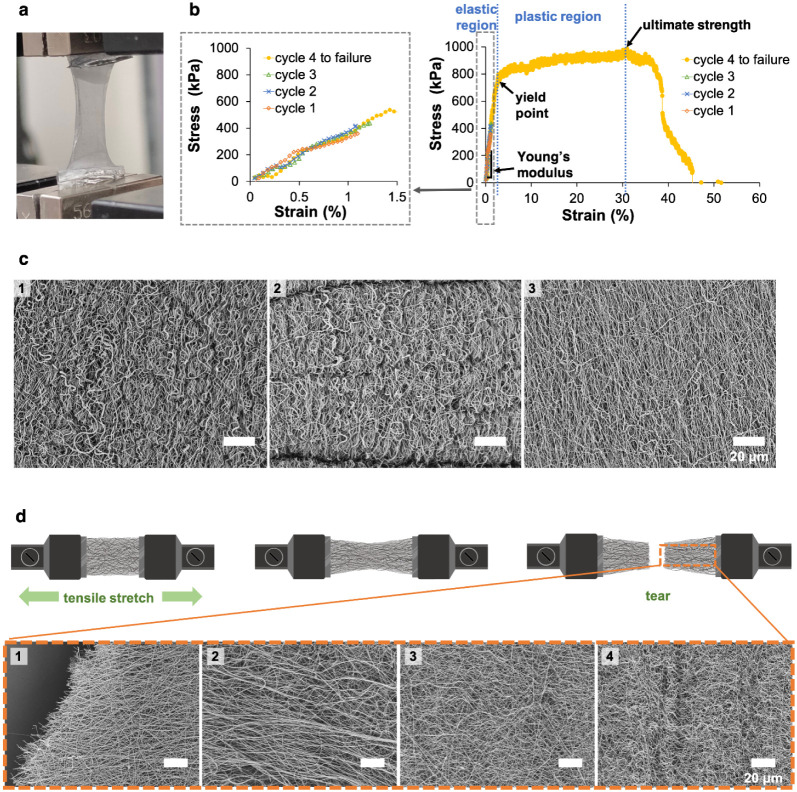 Figure 5
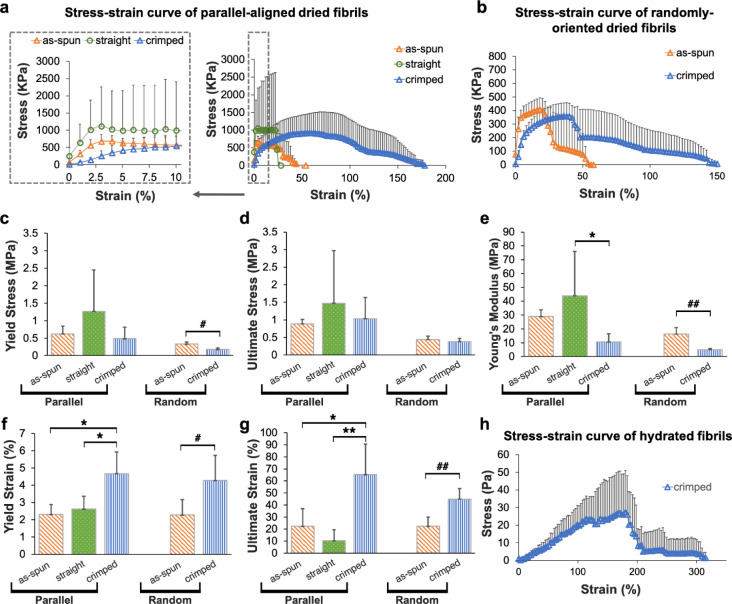 Figure 6
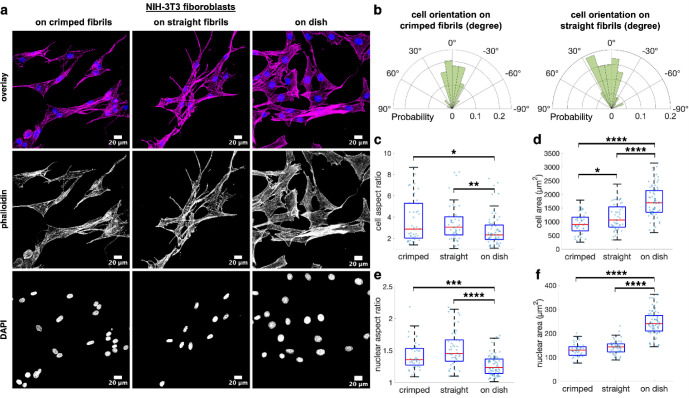 Figure 7
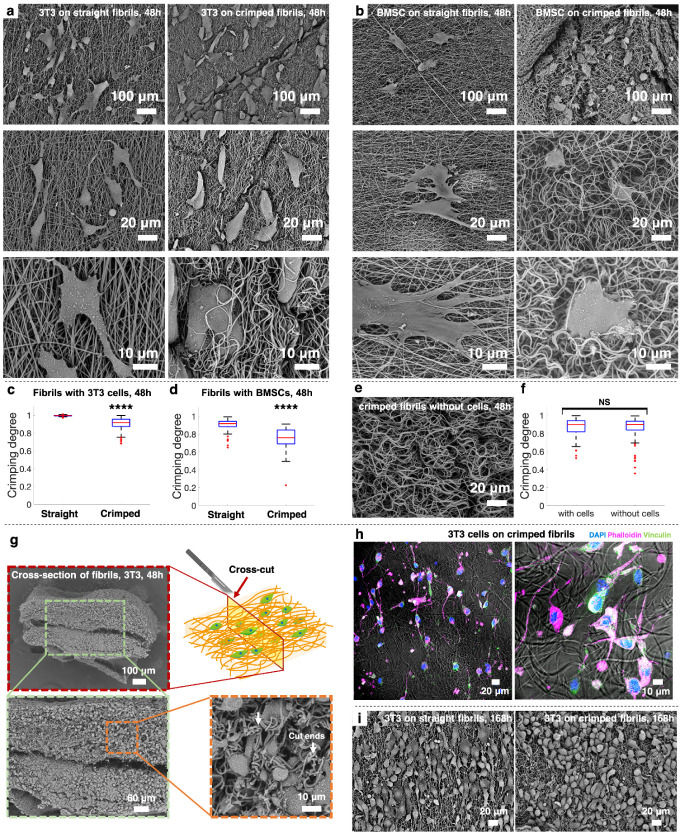 Figure 8
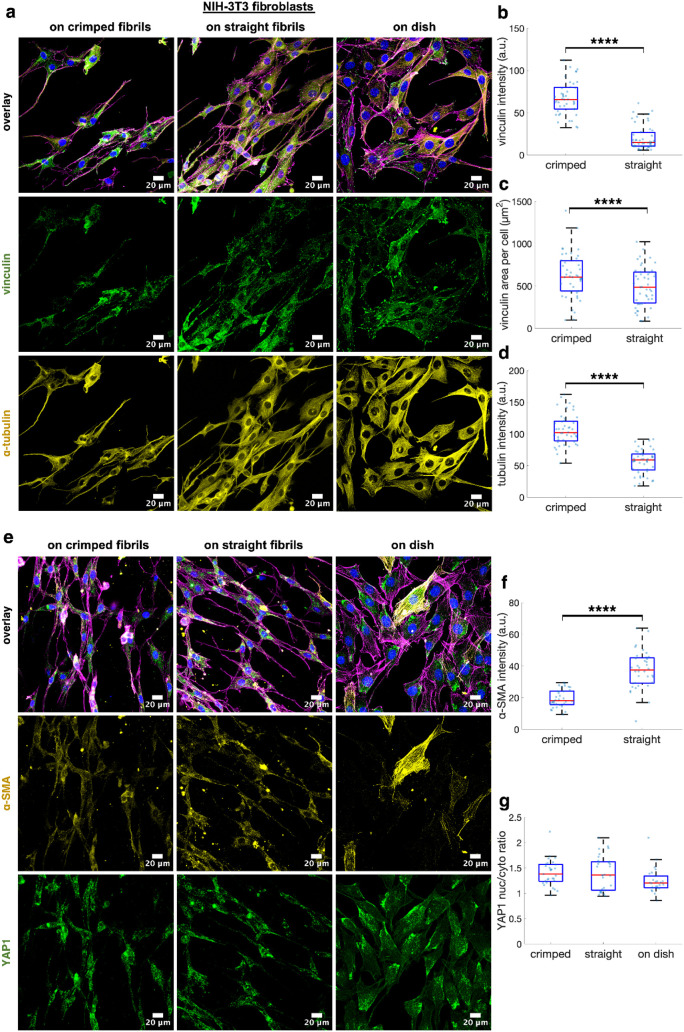 Figure 9
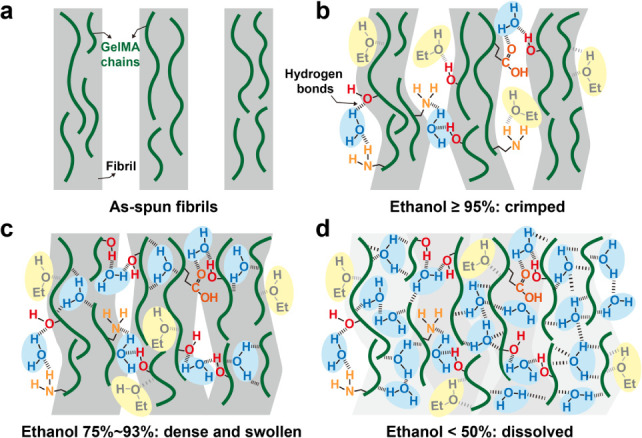 Figure 10
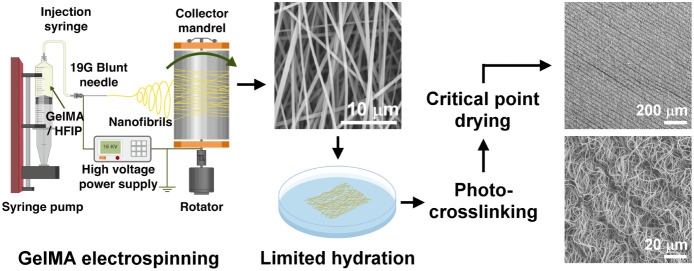 Figure 11
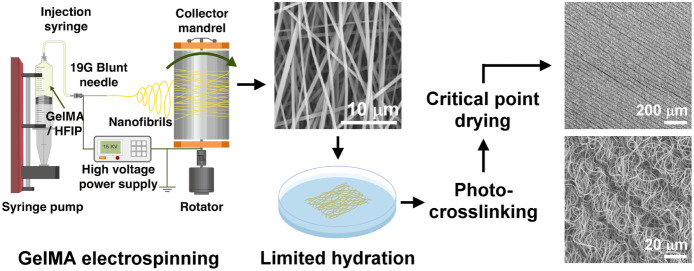 Figure 12
Peer Reviews
No public reviews on file for this paper yet. If you reviewed it on a platform where reviews are public (OpenReview, ICLR, NeurIPS, ICML), you can paste yours below so the community can read it here.
Videos
No videos yet. Explain this paper in a talk, walkthrough, or lecture? Add one.
Taxonomy
TopicsCellular Mechanics and Interactions · 3D Printing in Biomedical Research · Electrospun Nanofibers in Biomedical Applications