Biomolecule Conjugation Strategy for HAGM Cryogels to Create 3D Immune Niches that Induce Multifunctional T Cells
Marjolein Schluck, Jorieke Weiden, Roel Hammink, Lea Weiss, M. Eloisa Vega Quiroz, Maren Pfirrmann, Laia Junquera Guinovart, Vincent van der Steen, Chadia Archidi, Leanne H. Minall, René Classens, Mahboobeh Rezaeeyazdi, Thibault Colombani, Sidi A. Bencherif, Carl G. Figdor

TL;DR
This paper introduces a 3D biomaterial scaffold that activates T cells more effectively than traditional 2D methods, offering a new tool for cancer immunotherapy.
Contribution
A post-cryogelation conjugation strategy for immune-activating biomolecules on HAGM cryogels, preserving scaffold injectability and biomolecule integrity.
Findings
HAGM scaffolds induce higher levels of multifunctional T cells with a less exhausted phenotype compared to 2D cultures.
The scaffolds retain up to 60% of highly proliferative T cells after injection.
The conjugation strategy allows covalent attachment of biomolecules without exposing them to harmful conditions.
Abstract
Recently, biomaterials have emerged as tools to activate and expand T cells in the context of cancer immunotherapy. Most designs accommodate T cells with a stimulatory two-dimensional (2D) environment. In contrast, three-dimensional (3D) scaffolds, mimicking the complex architecture of the lymph node, have been shown to outperform 2D synthetic constructs, resulting in a more optimal T-cell expansion and phenotype. Here, we used injectable glycidyl methacrylated hyaluronic acid (HAGM)-based cryogel scaffolds to create a modular biodegradable 3D stimulatory immune niche. We developed a strategy to achieve highly specific and efficient covalent linking of immune-activating biomolecules, such as T-cell-activating peptide MHC complexes and antibodies, to HAGM scaffolds without compromising the injectable properties of the cryogels. Importantly, because our conjugation strategy is carried out…
Genes, proteins, chemicals, diseases, species, mutations and cell lines named across the full text — each resolved to its canonical identifier and authoritative record.
Click any figure to enlarge with its caption.
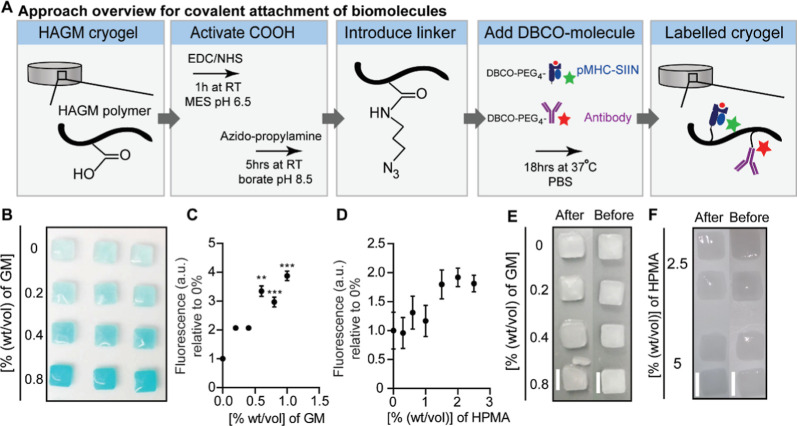 Figure 1
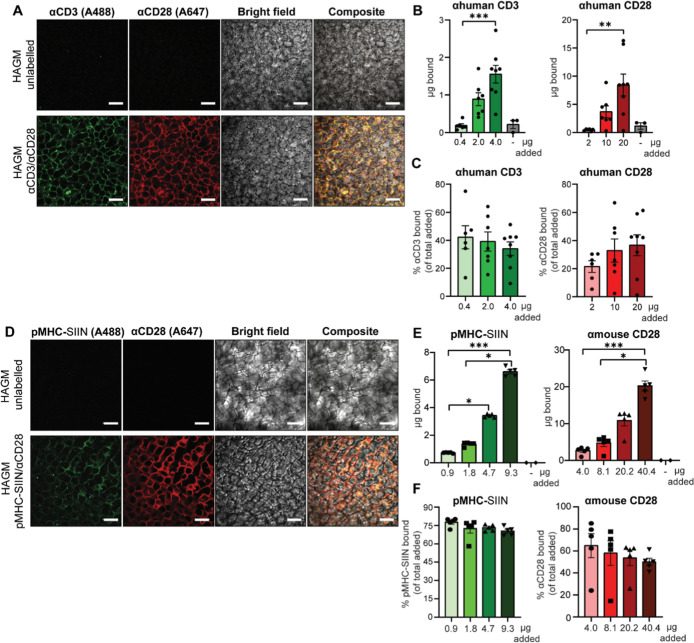 Figure 2
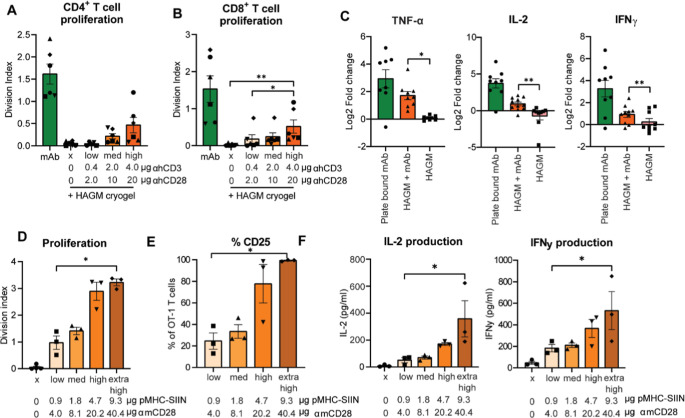 Figure 3
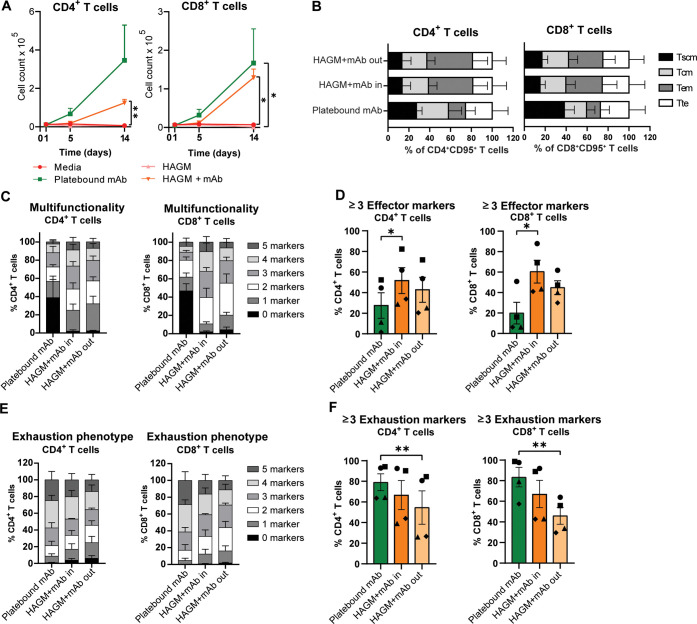 Figure 4
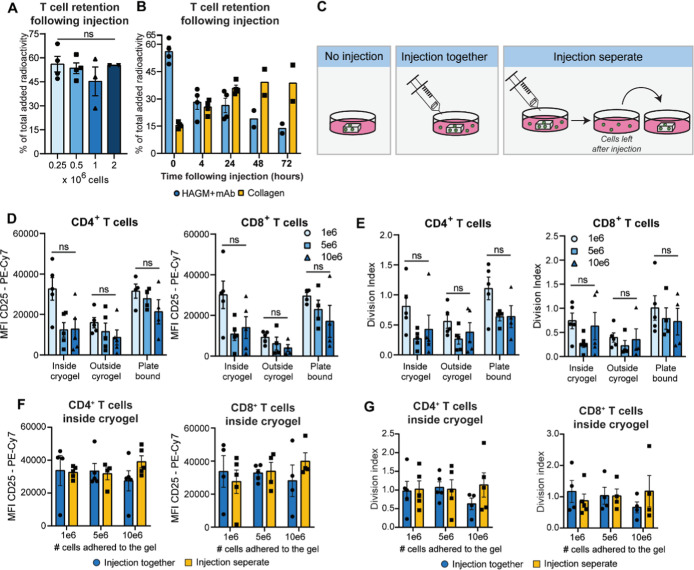 Figure 5
 Figure 6
 Figure 7
 Figure 8
 Figure 9
Peer Reviews
No public reviews on file for this paper yet. If you reviewed it on a platform where reviews are public (OpenReview, ICLR, NeurIPS, ICML), you can paste yours below so the community can read it here.
Videos
No videos yet. Explain this paper in a talk, walkthrough, or lecture? Add one.
Taxonomy
TopicsCAR-T cell therapy research · Immunotherapy and Immune Responses · Immune Cell Function and Interaction