Pre-Loading of Cells via Vapor Sublimation and the Deposition Polymerization Process with a 3D Porous Scaffold for Cell Cultures
Chung-Ju Chen, Chin-Yun Lee, Mei-Yu Chen, Ying-Hsuan Shi, Yu-Chih Chiang, Chen-Chi Wu, Hsien-Yeh Chen

TL;DR
A new method creates 3D porous scaffolds for cell cultures using vapor sublimation and polymerization, enabling high cell viability and compatibility for tissue regeneration.
Contribution
A novel fabrication method that preloads cells into 3D scaffolds using vapor sublimation and deposition polymerization, avoiding traditional limitations.
Findings
The method produces scaffolds with interconnected pores and high porosity, supporting cell migration and nutrient diffusion.
The scaffolds maintain structural integrity for at least 21 days and support multiple cell lineages like adipogenic, osteogenic, and neurogenic.
Anisotropic directional scaffolds were created, mimicking native tissue architecture and enhancing cell attachment.
Abstract
In this study, we fabricate a three-dimensional (3D) porous poly-p-xylylene scaffold via a preloading technique and tailor it for cell culture. The fabrication process utilizes vapor sublimation and deposition polymerization, which exploits an ice template for sublimation and subsequent deposition of poly-p-xylylene under lower pressure and room temperature conditions. During this process, living cells are incorporated within a protective oil-in-water emulsion system, which facilitates high cell viability, and this construction forms a poly-p-xylylene scaffold with multiscale pores in the scaffold architecture that can be maintained for a tested time frame of 21 days in the current study. This reported fabrication method addresses inherent limitations of traditional methods, such as restricted biocompatibility, the need for modification procedures to achieve adequate porosity, and…
Genes, proteins, chemicals, diseases, species, mutations and cell lines named across the full text — each resolved to its canonical identifier and authoritative record.
Click any figure to enlarge with its caption.
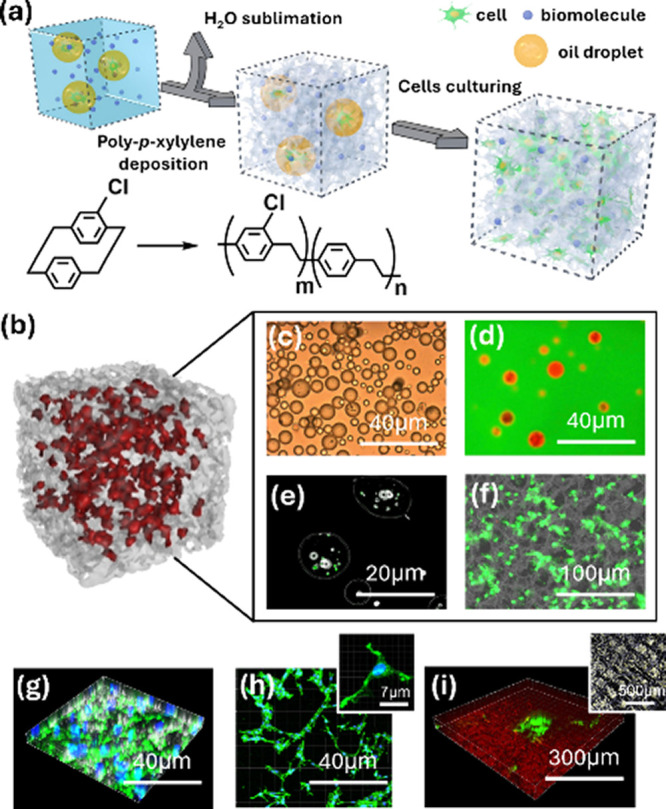 Figure 1
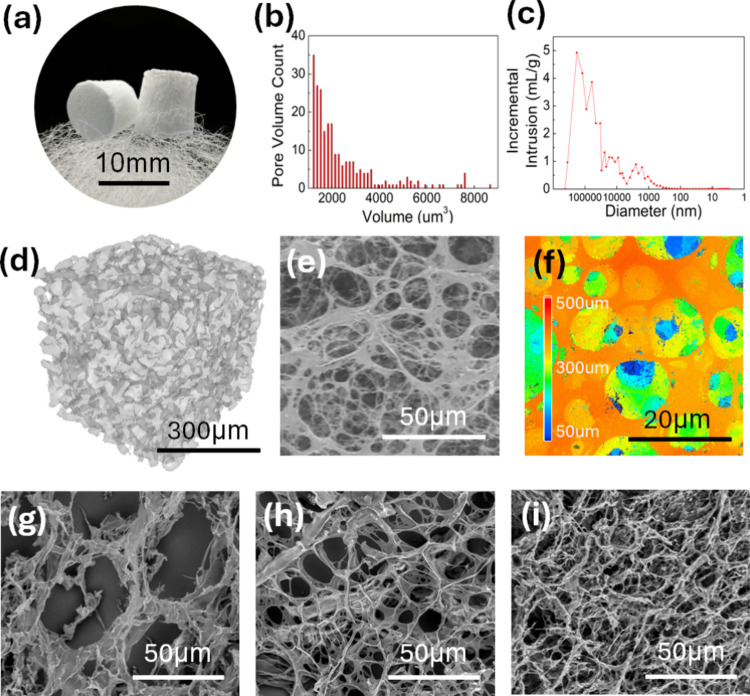 Figure 2
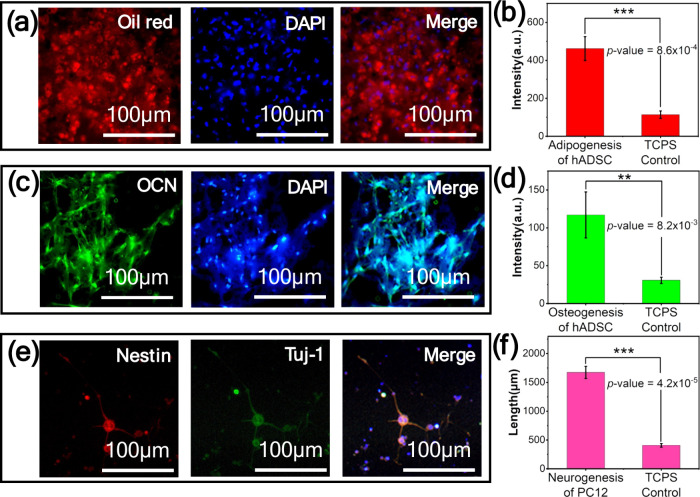 Figure 3
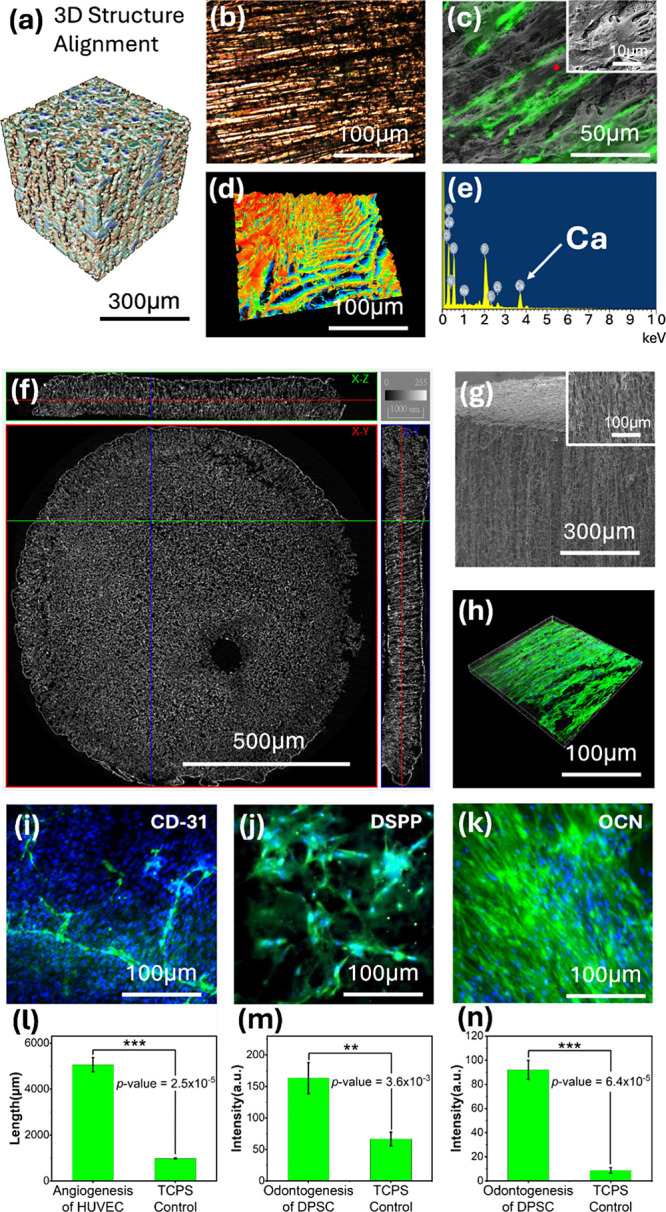 Figure 4
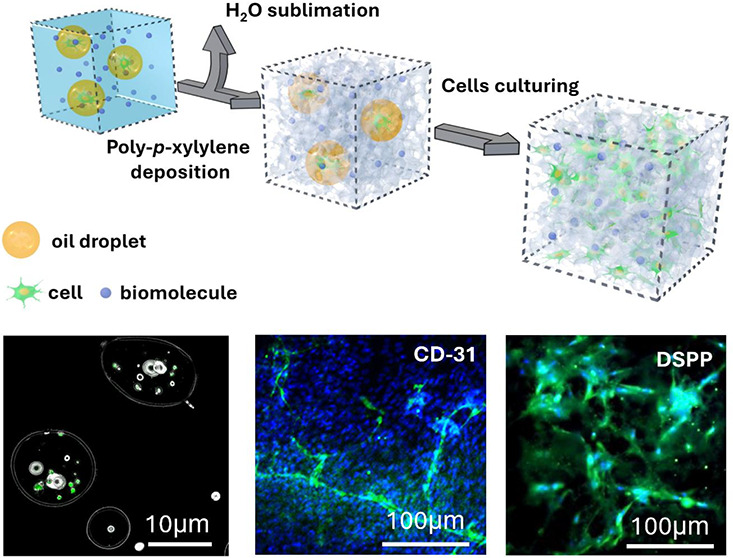 Figure 5
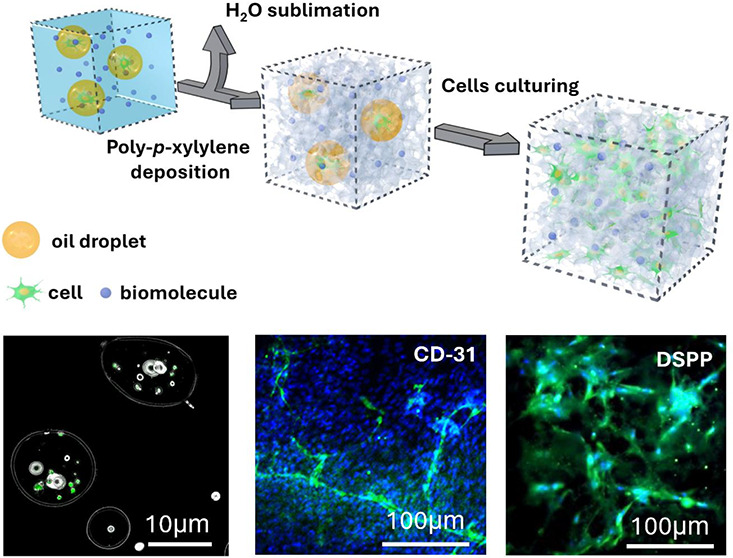 Figure 6
Peer Reviews
No public reviews on file for this paper yet. If you reviewed it on a platform where reviews are public (OpenReview, ICLR, NeurIPS, ICML), you can paste yours below so the community can read it here.
Videos
No videos yet. Explain this paper in a talk, walkthrough, or lecture? Add one.
Taxonomy
TopicsAdditive Manufacturing and 3D Printing Technologies · Bone Tissue Engineering Materials · 3D Printing in Biomedical Research