Non-pharmacological Approaches to Managing Attention-Deficit Hyperactivity Disorder in Pediatric Populations: A Scoping Review
Nisarg Shah, Harshita Nadella, Shane Williams

TL;DR
This review explores non-drug treatments like exercise and diet for managing ADHD in children, finding exercise and certain diets helpful.
Contribution
The study provides a focused review of non-pharmacological interventions for ADHD, emphasizing exercise and dietary strategies.
Findings
Exercise is cost-effective and beneficial for managing ADHD symptoms, particularly reducing hyperactivity and aggressive behavior.
A diet rich in vegetables, fish, and PUFAs is recommended for ADHD symptom management.
Omega-3, zinc, and iron supplements showed no consistent effect on reducing ADHD symptoms.
Abstract
Attention-deficit hyperactivity disorder (ADHD) is the most common neurocognitive disorder diagnosed in children, with an estimation of six million children aged 3-17 diagnosed with ADHD. Stimulants are the first-line treatment for children with ADHD but may cause adverse effects. This study aims to shed light on non-pharmacological approaches to treating children with ADHD, specifically exercise and dietary modifications. This literature-based review evaluated current research on PubMed focusing on the impact of exercise and dietary modifications as forms of treatment for ADHD. Though studies differ on what symptoms are most improved, exercise was found to be cost-effective and beneficial in ADHD symptom management. Of note, hyperactivity and aggressive behavior improved in children with ADHD after a yoga regimen was implemented in one study. In addition to exercise, the literature…
Genes, proteins, chemicals, diseases, species, mutations and cell lines named across the full text — each resolved to its canonical identifier and authoritative record.
Click any figure to enlarge with its caption.
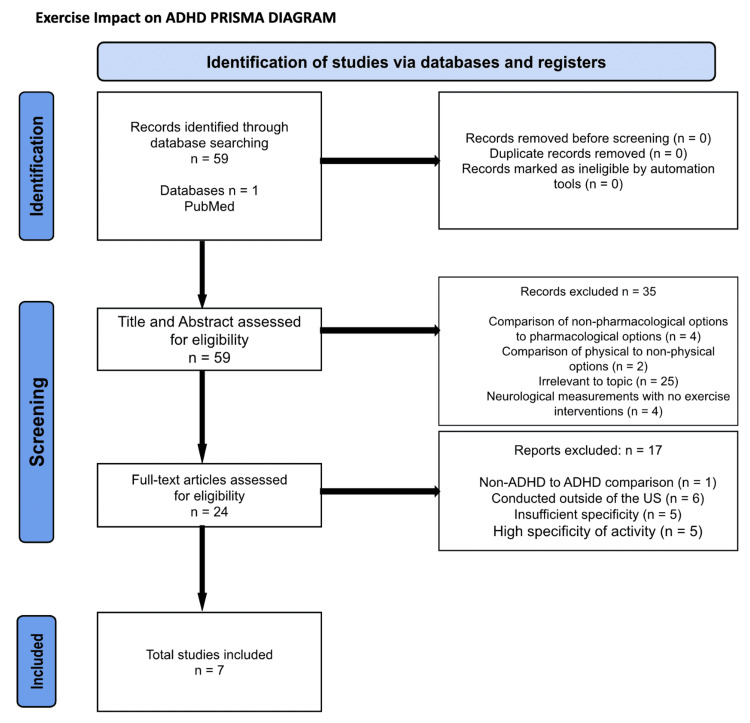 Figure 1
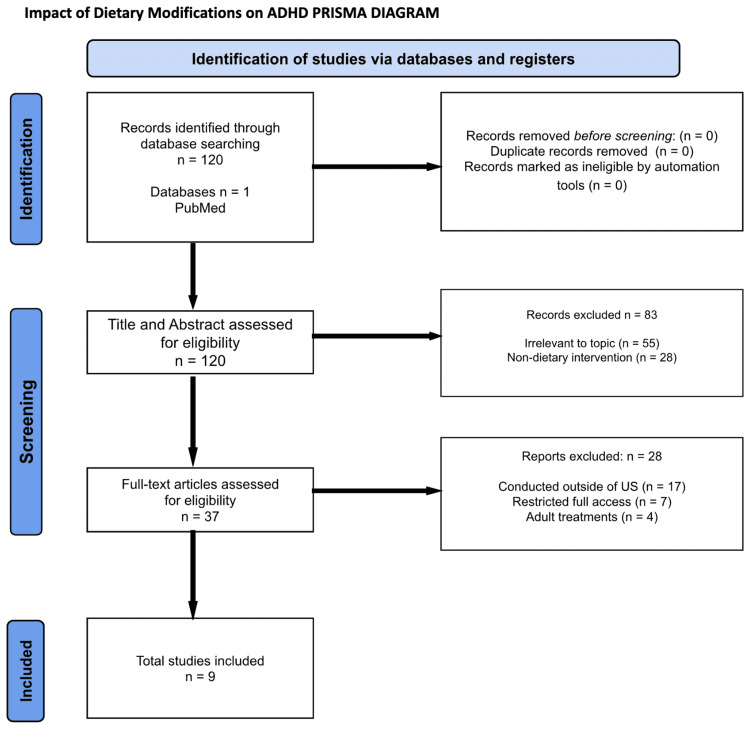 Figure 2
Peer Reviews
No public reviews on file for this paper yet. If you reviewed it on a platform where reviews are public (OpenReview, ICLR, NeurIPS, ICML), you can paste yours below so the community can read it here.
Videos
No videos yet. Explain this paper in a talk, walkthrough, or lecture? Add one.
Taxonomy
TopicsAttention Deficit Hyperactivity Disorder