Quantifying and explaining the rise of fiction
Edgar Dubourg, Valentin Thouzeau, Quentin Borredon, Nicolas Baumard

TL;DR
This paper analyzes how fiction has become more common and imaginative over time, using a large dataset of narratives from different cultures and time periods.
Contribution
The study introduces a new method to quantify fictiveness in narratives using large language models and reveals a long-term global trend of increasing fictiveness.
Findings
Fictiveness has steadily increased over time, especially in the 20th and 21st centuries.
Ancient narratives also show a gradual rise in fictiveness, with peaks during affluent historical periods.
The trend is consistent across different narrative forms and cultures.
Abstract
We present a comprehensive analysis of the rise of fictions across human narratives, using large-scale datasets that collectively span over 65,000 works across various media (movies, literary works), cultures (over 30 countries, Western and non-Western), and time periods (2000 BCE to 2020 CE). We measured fictiveness – defined as the degree of departure from reality – across three narrative dimensions: protagonists, events, and settings. We used automatic annotations from large language models (LLMs) to systematically score fictiveness and ensured the robustness and validity of our measure, specifically by demonstrating predictable variations in fictiveness across different genres, in all media. Statistical analyses of the changes in fictiveness over time revealed a steady increase, culminating in the 20th and 21st centuries, across all narrative forms. Remarkably, this trend is also…
Genes, proteins, chemicals, diseases, species, mutations and cell lines named across the full text — each resolved to its canonical identifier and authoritative record.
Click any figure to enlarge with its caption.
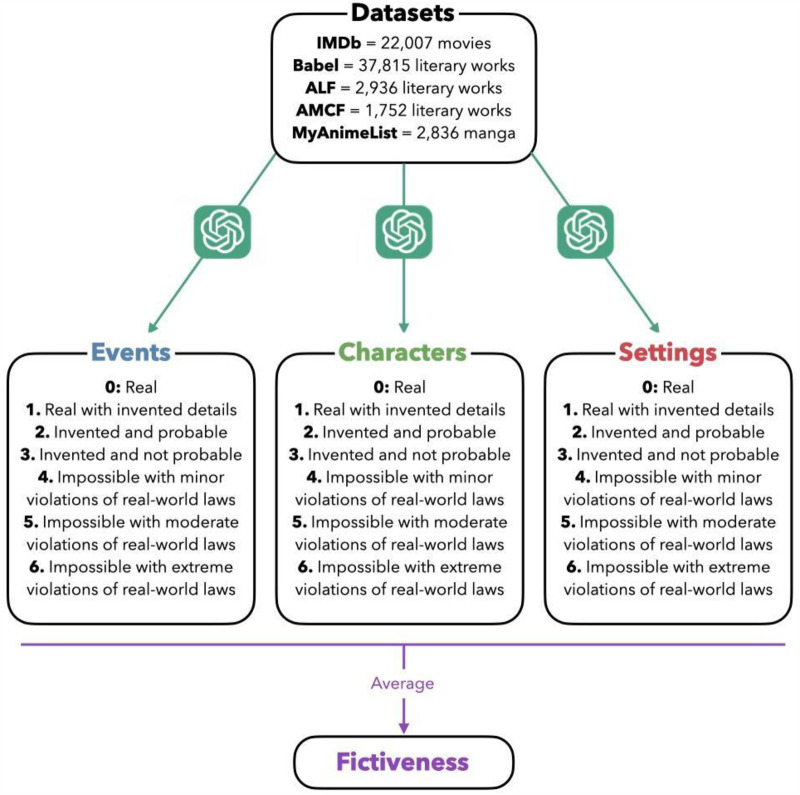 Figure 1
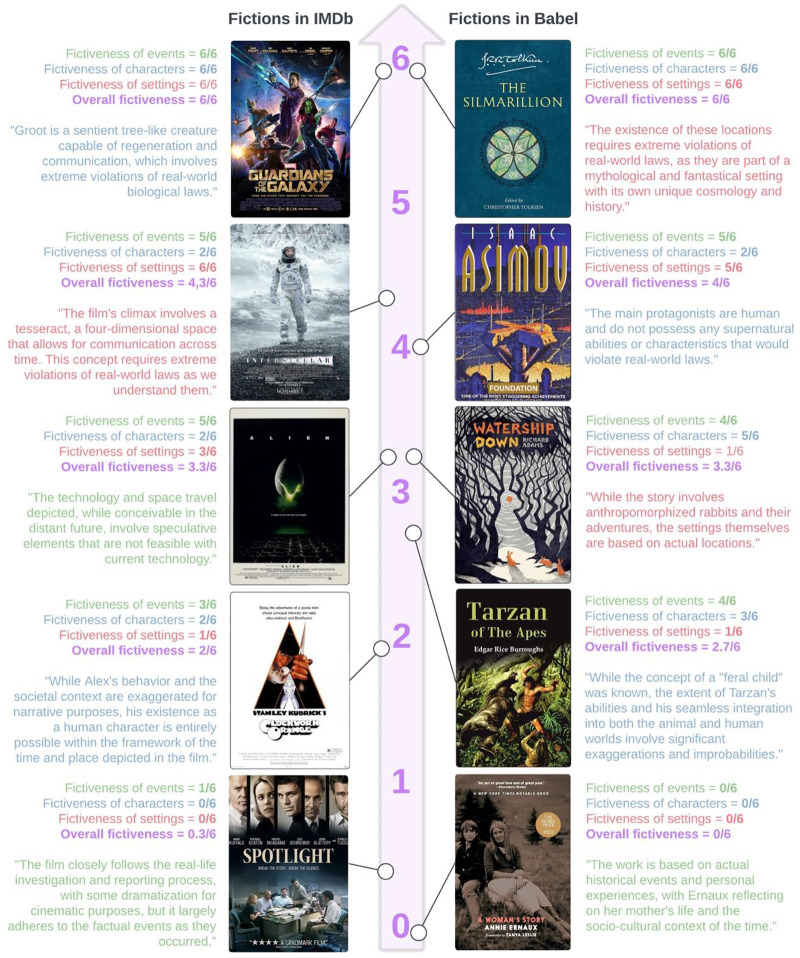 Figure 2
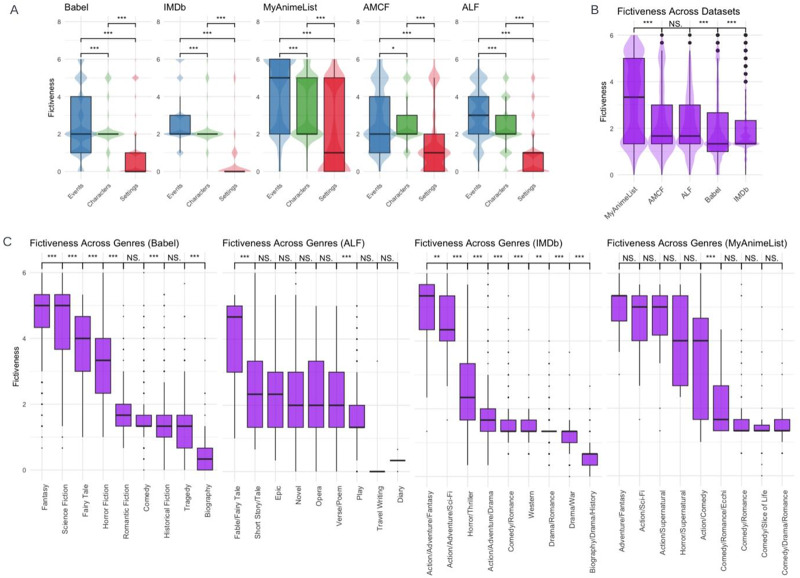 Figure 3
 Figure 4
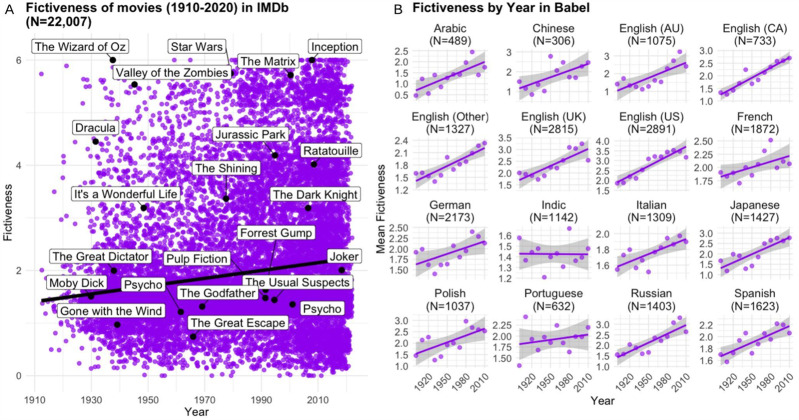 Figure 5
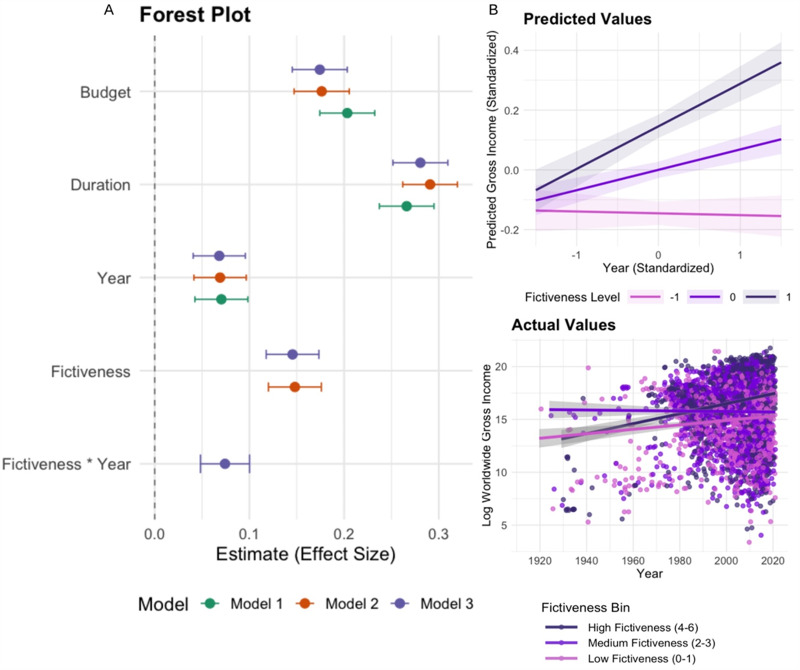 Figure 6
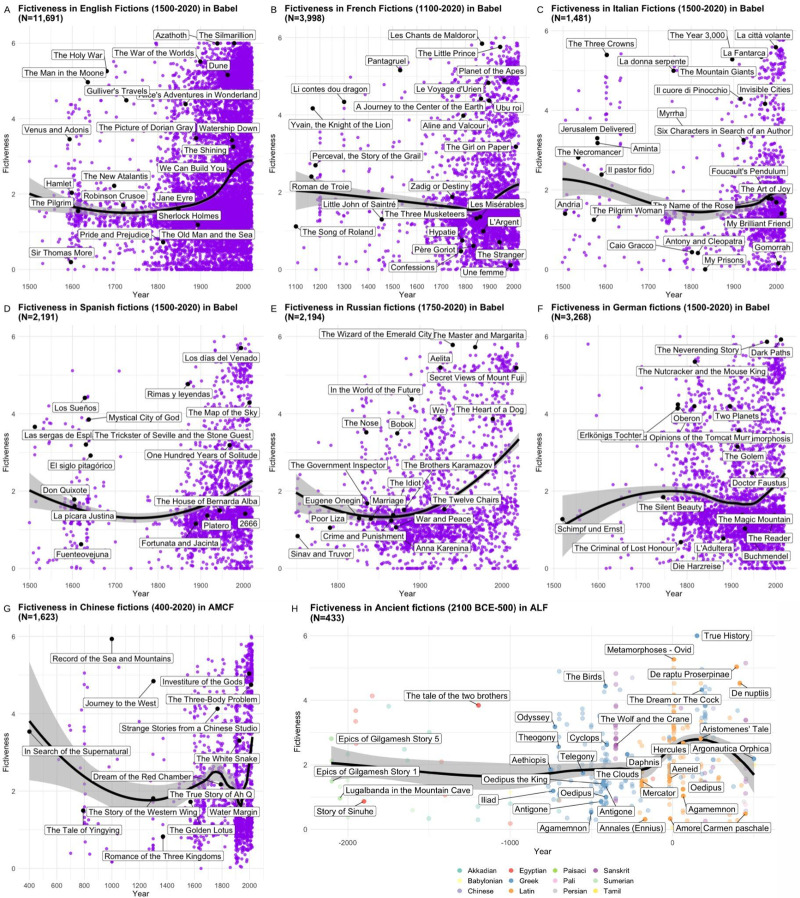 Figure 7
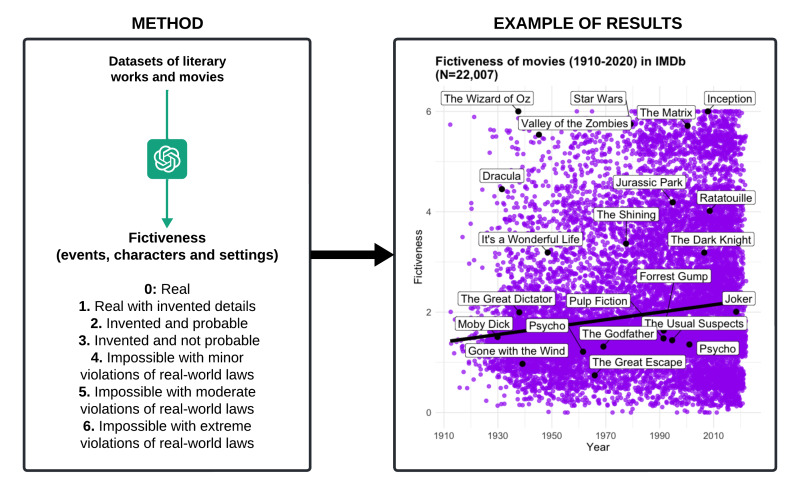 Figure 8
Peer Reviews
No public reviews on file for this paper yet. If you reviewed it on a platform where reviews are public (OpenReview, ICLR, NeurIPS, ICML), you can paste yours below so the community can read it here.
Videos
No videos yet. Explain this paper in a talk, walkthrough, or lecture? Add one.
Taxonomy
TopicsData Analysis with R · scientometrics and bibliometrics research