Early cerebrospinal fluid elevations of pTau-217 in severe traumatic brain injury subjects
Hamad Yadikar, Firas H. Kobeissy, Claudia Robertson, Spyridoula Tsetsou, John B. Williamson, Damon G. Lamb, Amy K. Wagner, Todd Kibaugh, Shih-Han Kao, Zhifeng Kou, Robert D. Welch, Jose-Miguel Yamal, Luis Leon-Novelo, Richard Rubenstein, Kevin K. W. Wang

TL;DR
This study shows that pTau-217 in cerebrospinal fluid rises early after severe traumatic brain injury and could help diagnose and predict outcomes.
Contribution
The study demonstrates pTau-217 as an early and sensitive biomarker for acute tau pathology in severe TBI.
Findings
pTau-217 levels in CSF were significantly higher in severe TBI patients within 6–48 hours post-injury.
High pTau-217 levels correlated with worse outcomes and diffuse axonal injury.
ROC analysis showed good diagnostic performance for pTau-217 in detecting severe TBI.
Abstract
Tauopathies, including Alzheimer’s disease (AD), feature abnormal accumulations of hyperphosphorylated Tau protein; however, their biomarker potential in traumatic brain injury (TBI) is not well-defined. This study investigated whether cerebrospinal fluid (CSF) phosphorylated Tau at threonine-217 (pTau-217) could serve as an early biomarker for severe TBI (sTBI). CSF samples from 26 sTBI patients, collected between 6 and 240 h post-injury, and 19 healthy controls were analyzed using an optimized direct enzyme-linked immunosorbent assay (ELISA; sensitivity <4.7 pg/mL) for pTau-217 detection, complemented by Western blot validation. Temporal analysis, ROC curves, and trajectory clustering were used for interpretation. CSF pTau-217 levels were significantly elevated in sTBI patients at 6, 12, 18, 24, and 48 h post-injury compared to controls (p < 0.05–p < 0.001), peaking around 18 h (~65…
Genes, proteins, chemicals, diseases, species, mutations and cell lines named across the full text — each resolved to its canonical identifier and authoritative record.
Click any figure to enlarge with its caption.
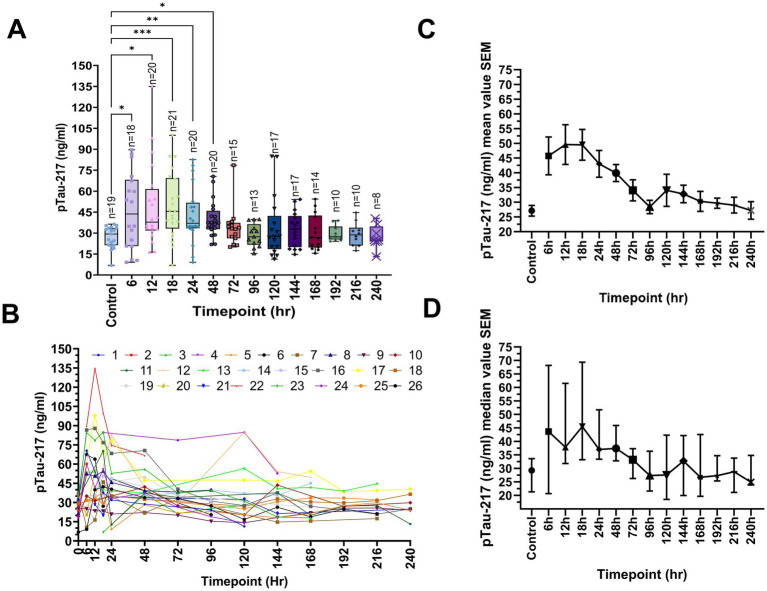 Figure 1
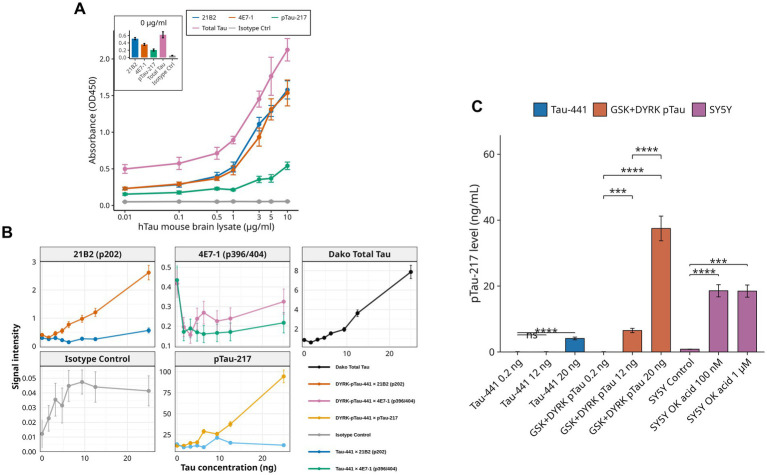 Figure 2
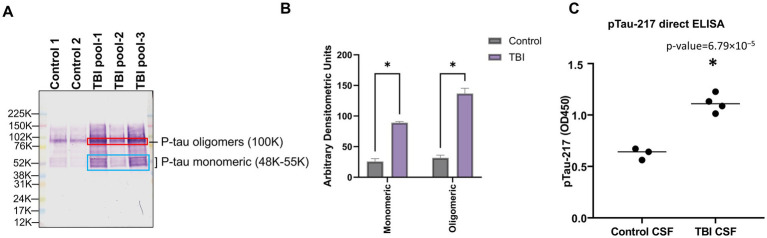 Figure 3
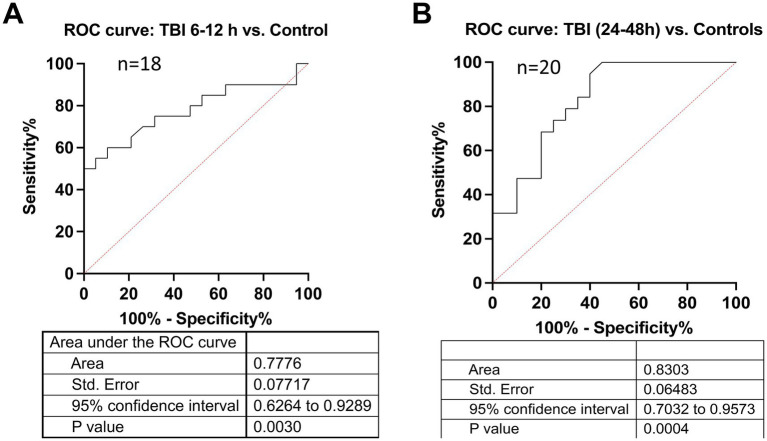 Figure 4
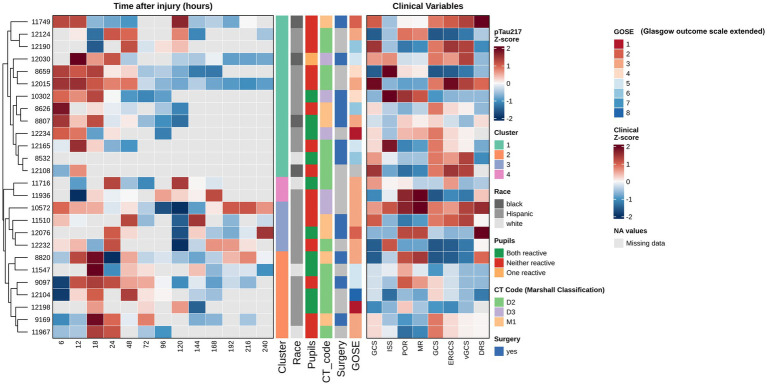 Figure 5
Peer Reviews
No public reviews on file for this paper yet. If you reviewed it on a platform where reviews are public (OpenReview, ICLR, NeurIPS, ICML), you can paste yours below so the community can read it here.
Videos
No videos yet. Explain this paper in a talk, walkthrough, or lecture? Add one.
Taxonomy
TopicsTraumatic Brain Injury and Neurovascular Disturbances · Traumatic Brain Injury Research · S100 Proteins and Annexins