A queen’s tale: Assessing the hidden potential of beeswax specimens in Natural History Museum collections
Tuuli Kasso, Meaghan Mackie, Max Ramsøe, Lars Vilhelmsen, Carsten Gundlach, Sina Baier-Stegmaier, Alberto J. Taurozzi, Matthew J. Collins, Richard Bernstein, Tuuli Kasso, Simon Hammann, Tuuli Kasso, Luca Fontanesi, Tuuli Kasso, Nelson Enrique Arenas, Tuuli Kasso

TL;DR
This study shows that 19th-century beeswax queen cells can reveal preserved bees and proteins, offering insights into historical bee rearing and diet.
Contribution
The study demonstrates the potential of beeswax specimens as a new source for palaeoproteomic analysis and historical bee biology.
Findings
A 19th-century queen cell contained a perfectly preserved queen bee.
Proteins, including major royal jelly proteins, were successfully extracted from the cell.
The findings provide insights into historical queen rearing and diet practices.
Abstract
Natural history museum specimens of historical honeybees have been successfully used to explore the species’ genomic past, indicating fast and rapid changes between historical and modern specimens, possibly as a response to current challenges. In our study we explore a potential new untapped archive from natural history collections - specimens of historical beeswax. We examine an intact and closed Apis mellifera mellifera queen cell specimen from the 19th century. In our study, we examine the queen cell by X-ray Computed Tomography (CT). Subsequently, a micro-destructive approach was used to explore the possibility of protein extraction from the cell for a palaeoproteomic analysis. Our results to reveal a perfectly preserved queen bee inside her cell. We were successful in extracting proteins from the residual material inside the queen cell, and were able to identify the material as…
Genes, proteins, chemicals, diseases, species, mutations and cell lines named across the full text — each resolved to its canonical identifier and authoritative record.
Click any figure to enlarge with its caption.
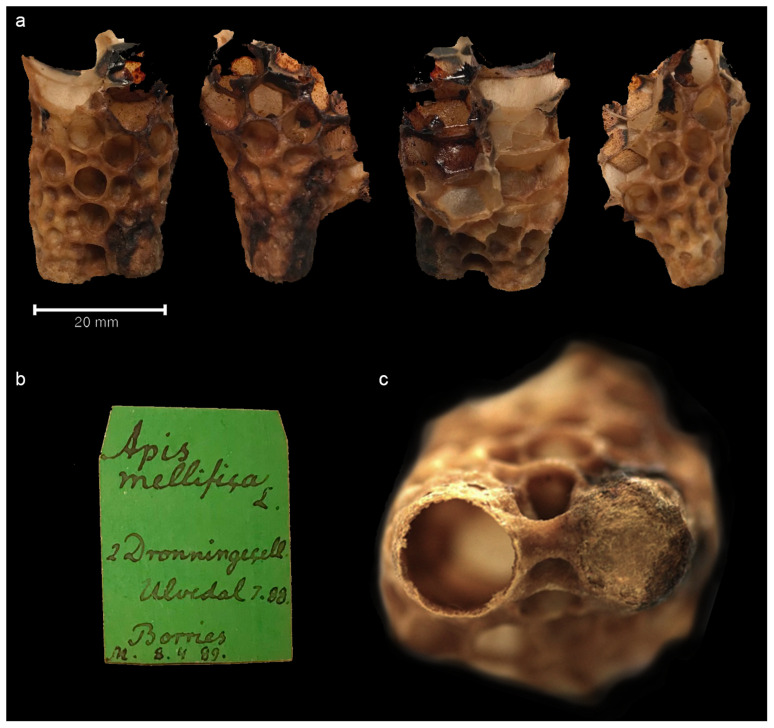 Figure 1
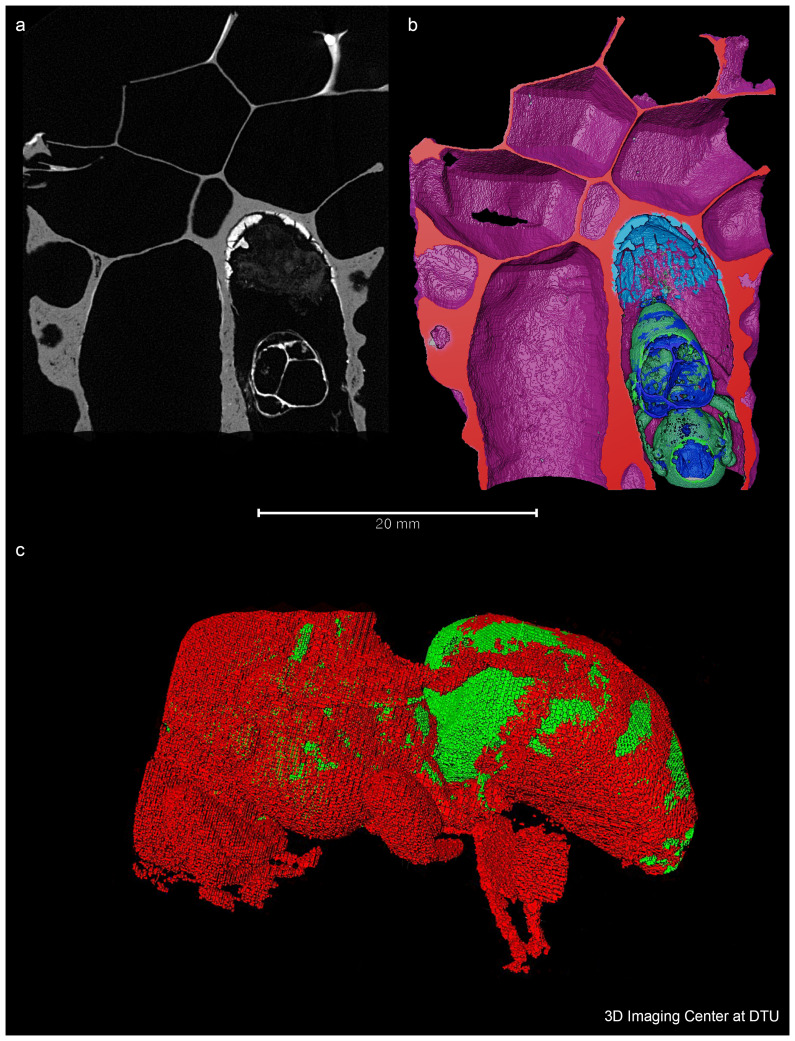 Figure 2
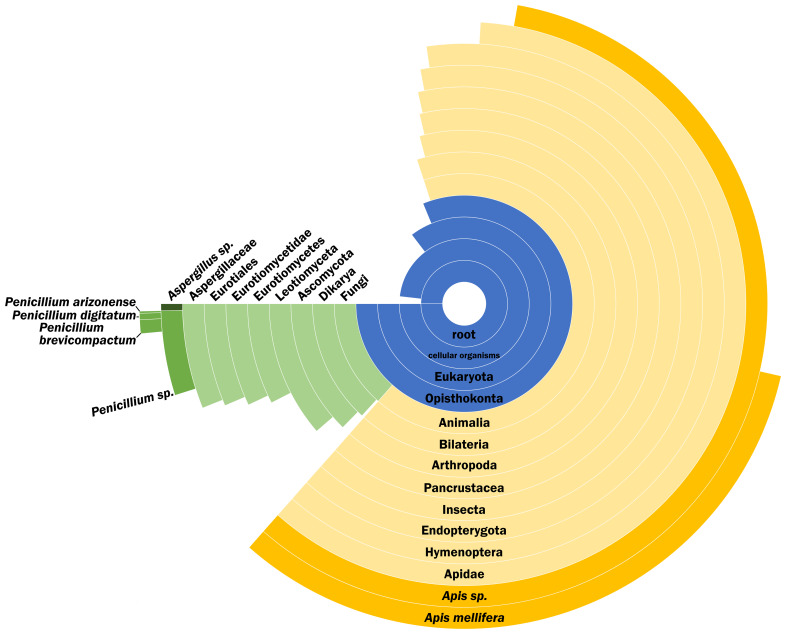 Figure 3
Peer Reviews
No public reviews on file for this paper yet. If you reviewed it on a platform where reviews are public (OpenReview, ICLR, NeurIPS, ICML), you can paste yours below so the community can read it here.
Videos
No videos yet. Explain this paper in a talk, walkthrough, or lecture? Add one.
Taxonomy
TopicsPlant and animal studies · Species Distribution and Climate Change · Wildlife Ecology and Conservation