“Uterine Dehiscence: A Diagnostic Conundrum in Repeat Cesarean Deliveries”
Pamela Sarue, Nicholas Eynon, Reine A. Zbeidy

TL;DR
Uterine dehiscence is a hidden risk in women with previous cesarean births and can lead to serious complications, requiring better diagnostic methods.
Contribution
The paper emphasizes the need for improved antenatal imaging to distinguish uterine dehiscence from placenta accreta.
Findings
Uterine dehiscence is often asymptomatic and underdiagnosed.
Improved diagnostic protocols can enhance patient outcomes and reduce complications.
Abstract
Uterine dehiscence (UD), often asymptomatic and underdiagnosed, is a significant risk in patients with prior cesarean deliveries. Serious complications include uterine rupture; increasing maternal and neonatal morbidity. Improved diagnostic protocols, particularly antenatal imaging, are essential to differentiate UD from placenta accreta spectrum, optimize resource utilization, and enhance patient outcomes.
Genes, proteins, chemicals, diseases, species, mutations and cell lines named across the full text — each resolved to its canonical identifier and authoritative record.
Click any figure to enlarge with its caption.
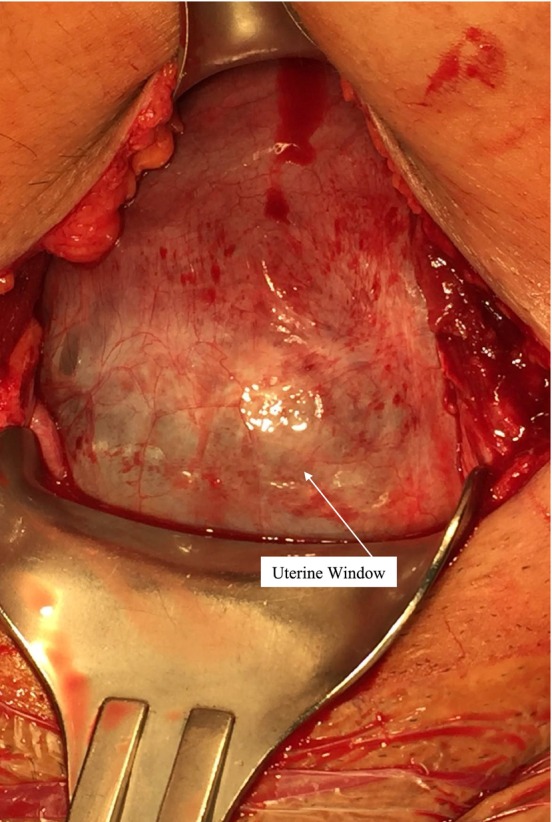 Figure 1
 Figure 2
Peer Reviews
No public reviews on file for this paper yet. If you reviewed it on a platform where reviews are public (OpenReview, ICLR, NeurIPS, ICML), you can paste yours below so the community can read it here.
Videos
No videos yet. Explain this paper in a talk, walkthrough, or lecture? Add one.
Taxonomy
TopicsMaternal and Perinatal Health Interventions · Maternal and fetal healthcare · Reproductive Health and Contraception