Microwave-assisted graphene oxide/carbon spheres with silver nanoparticles: dual catalyst for peroxide detection and antibacterial use
Thanh Long Phan, Thanh Tho Le, Van-Dat Doan, Huynh Anh Vu Truong, Van Tan Le

TL;DR
A new nanocomposite with silver nanoparticles was created to detect hydrogen peroxide and fight bacteria, using a fast microwave method.
Contribution
A microwave-assisted synthesis of AgNPs@Cs-TA@GO nanocomposite for dual peroxidase-like catalytic and antibacterial applications.
Findings
The nanocomposite detected hydrogen peroxide in a range of 0.6–9.0 ppm with a detection limit of 0.2 ppm.
It showed strong antibacterial activity against both Gram-negative and Gram-positive bacteria with inhibition zones of 46.1 and 49.3 mm.
Microwave-assisted synthesis improved catalytic performance and reduced nanoparticle coagulation.
Abstract
In this study, a novel nanocomposite was rationally engineered by embedding silver nanoparticles (AgNPs) into tannic acid-derived carbon spheres (Cs), followed by their distribution on graphene oxide (GO) sheets (AgNPs@Cs-TA@GO), aiming to enhance catalytic and antibacterial performance. The fabrication process was expedited using a microwave-assisted technique. The AgNPs@Cs-TA@GO nanocomposite with the core based on AgNPs with an average diameter of 21 nm showed significant peroxidase-like activity by oxidizing 3,3′,5,5′-tetramethylbenzidine to its oxidized form in the presence of H2O2. This compassionate H2O2 colorimetric detection allowed for quick identification of H2O2 in a broad range (0.6–9.0 ppm) with a low detection limit of 0.2 ppm (S/N = 3). The viability of this method was confirmed by qualitatively detecting H2O2 residual in aquaculture water samples. Additionally, the…
Genes, proteins, chemicals, diseases, species, mutations and cell lines named across the full text — each resolved to its canonical identifier and authoritative record.
Click any figure to enlarge with its caption.
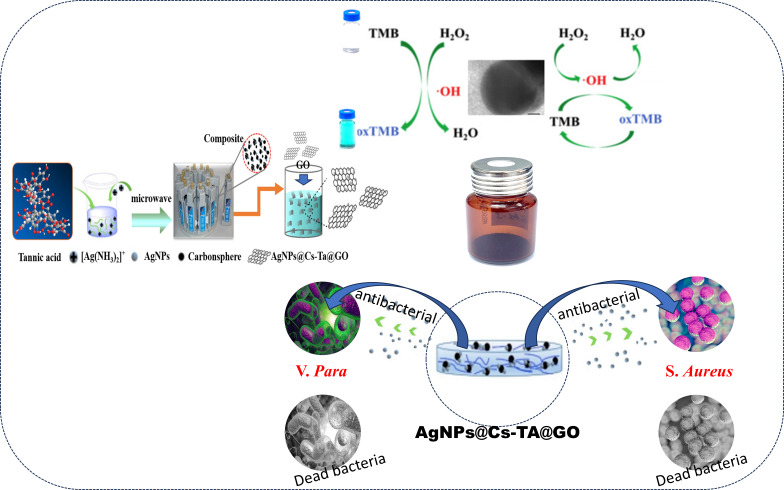 Figure 1
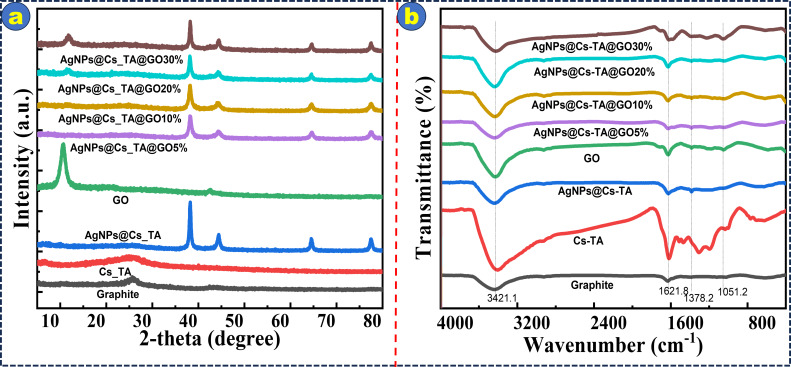 Figure 2
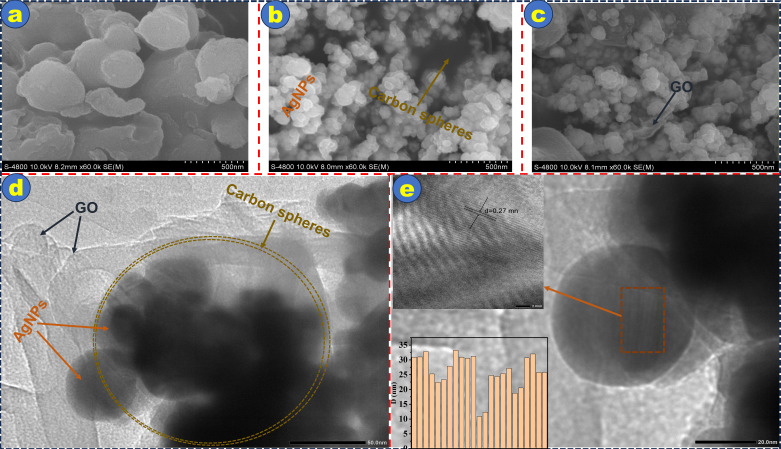 Figure 3
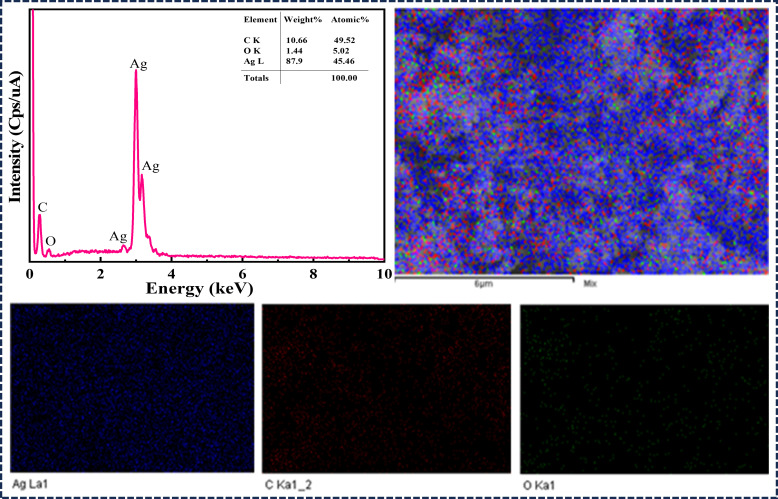 Figure 4
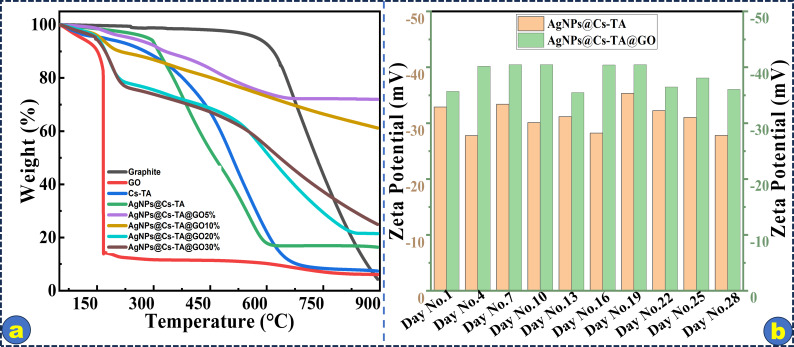 Figure 5
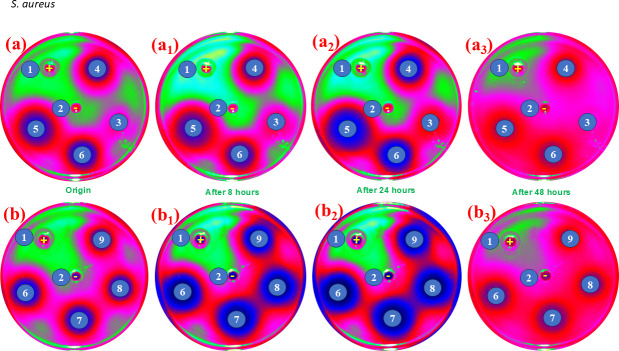 Figure 6
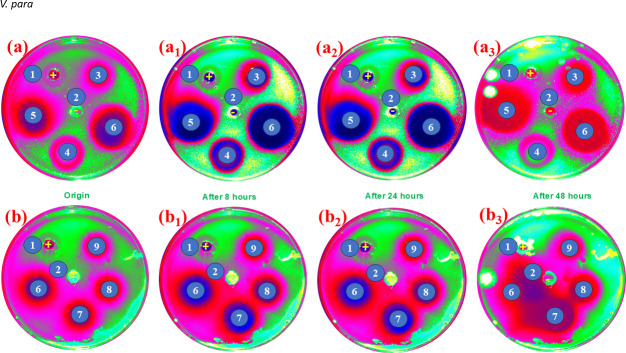 Figure 7
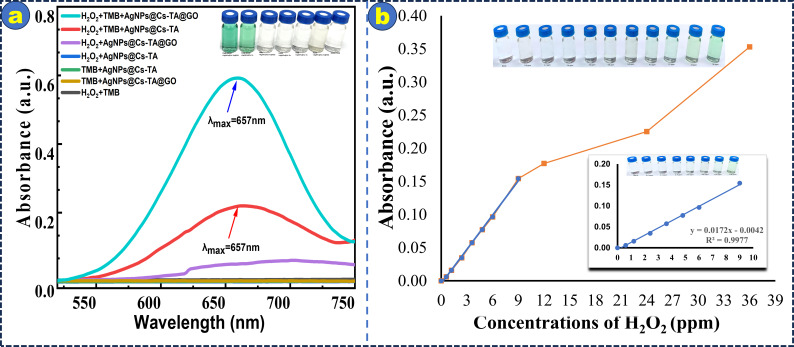 Figure 8
Peer Reviews
No public reviews on file for this paper yet. If you reviewed it on a platform where reviews are public (OpenReview, ICLR, NeurIPS, ICML), you can paste yours below so the community can read it here.
Videos
No videos yet. Explain this paper in a talk, walkthrough, or lecture? Add one.
Taxonomy
TopicsGraphene and Nanomaterials Applications · Advanced Nanomaterials in Catalysis · Carbon and Quantum Dots Applications