Neural markers of social dominance: A female-focused perspective
Wei-Hsiang Lin, Janir Ramos da Cruz, Carmen Sandi, Michael H. Herzog

TL;DR
This study shows that neural markers of social dominance are similar in dominant females and males, challenging previous assumptions about gender differences in social hierarchies.
Contribution
The study reveals that neural markers of dominance in females mirror those in males, suggesting shared neurobiological traits.
Findings
Dominant females show higher N2/P2 EEG components similar to dominant males.
N2/P2 is a stable trait marker of dominance, not influenced by social context.
Findings suggest shared neural mechanisms of dominance across genders.
Abstract
Social interactions are fundamental to human life, with social dominance being a key factor in these interactions. Previous studies have shown that dominant males are faster in decision-making tasks compared to non-dominant ones, even in the absence of a social context such as competition. Additionally, dominant males exhibit a significantly higher N2/P2 EEG component, which is an inherent trait rather than a state marker of dominance. While it has been suggested that social hierarchies are more pronounced among males, recent findings challenge this notion. Here, we show that the N2/P2 component is also higher in dominant than in less dominant females, with similar amplitude and latency as their male counterparts. Our results suggest that women exhibit dominance-related neurobiological traits similar to men. Our findings underscore the importance of further investigating the…
Genes, proteins, chemicals, diseases, species, mutations and cell lines named across the full text — each resolved to its canonical identifier and authoritative record.
Click any figure to enlarge with its caption.
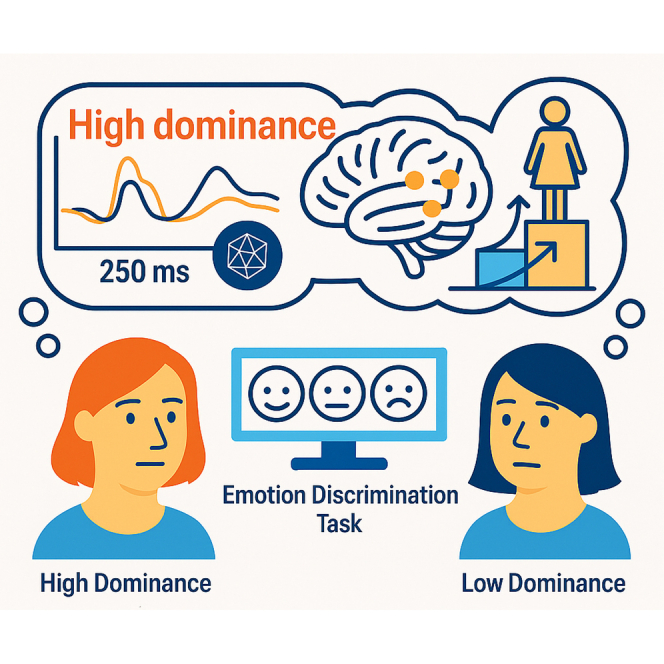 Figure 1
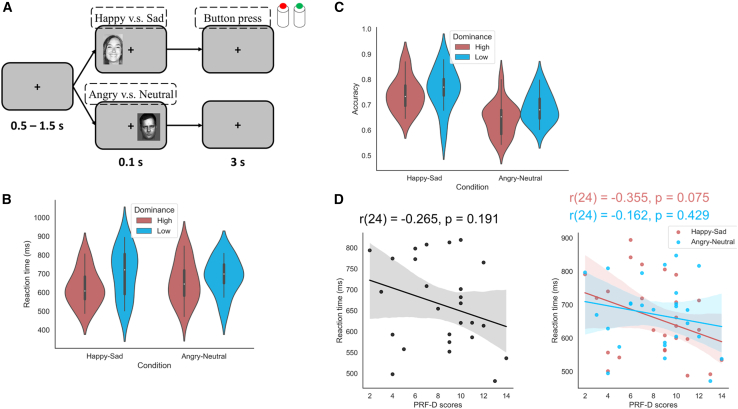 Figure 2
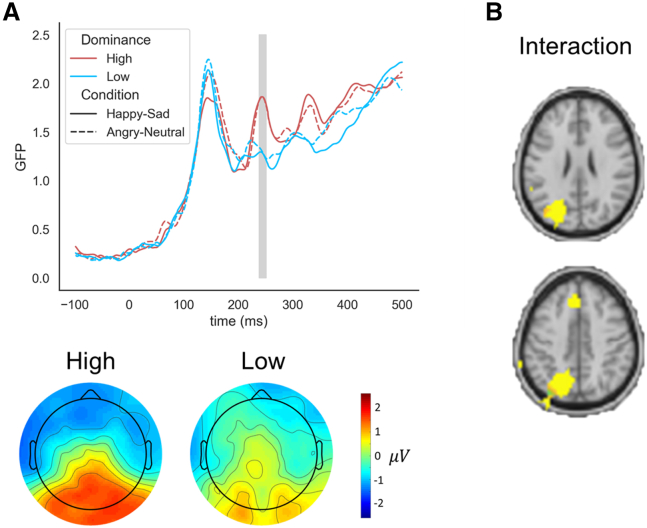 Figure 3
 Figure 4
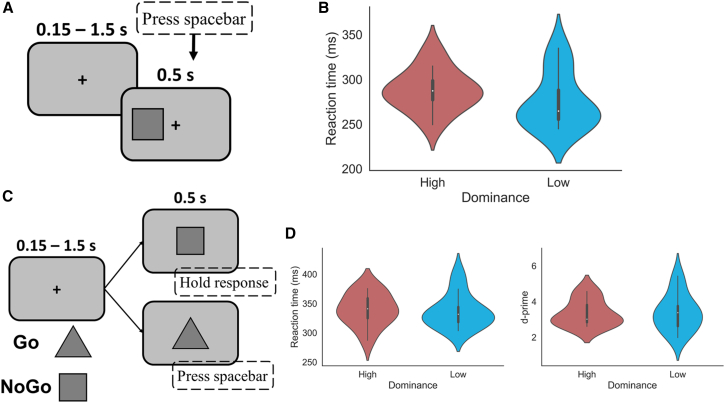 Figure 5
Peer Reviews
No public reviews on file for this paper yet. If you reviewed it on a platform where reviews are public (OpenReview, ICLR, NeurIPS, ICML), you can paste yours below so the community can read it here.
Videos
No videos yet. Explain this paper in a talk, walkthrough, or lecture? Add one.
Taxonomy
TopicsNeuroendocrine regulation and behavior · Evolutionary Psychology and Human Behavior · Cultural Differences and Values