Strengthening the Application of the DAIDS GCLP Guidelines: The Implementation of an Integrated Laboratory Oversight Framework
Loc Nguyen, Anne Leach, Estelle Piwowar-Manning, Mark Marzinke, Allan Levesque, Claudine Gregorio, Kristen Skinner, Tiri Towindo, Heidi Hanes, Kwabena Sarpong, Christian Kasongo, Natasha Samsunder, Grace Aldrovandi, Kathie G. Ferbas, Andries Engelbrecht, Michael Stirewalt

TL;DR
This paper explains how the DAIDS GCLP Guidelines are being implemented to improve laboratory oversight in clinical trials, ensuring data reliability and regulatory compliance.
Contribution
The paper introduces an integrated laboratory oversight framework that harmonizes DAIDS GCLP Guidelines with other global standards to strengthen clinical research compliance.
Findings
The Framework includes four components: Quality Assurance Oversight, GCLP Audits, GCLP Training, and Laboratory Quality Improvement.
Over 175 laboratories worldwide have successfully participated in audits using the DAIDS GCLP Guidelines and oversight workflows.
Collaborative oversight processes have promoted knowledge-sharing and accountability across multiple laboratories.
Abstract
The Division of AIDS (DAIDS) Good Clinical Laboratory Practice (GCLP) Guidelines establish a framework to guide the oversight of laboratories supporting DAIDS-sponsored clinical research or trials. Compliance with these guidelines promotes data reliability, validity, and safety of the clinical research or trial participants and laboratory staff and ensures adherence to regulatory requirements. Acknowledgment and adoption of the DAIDS GCLP Guidelines are critical in building laboratory capacity and preparedness for conducting clinical trials. In collaboration with DAIDS, laboratory experts support the implementation of the DAIDS Integrated Laboratory Oversight Framework (Framework) activities. This article describes the implementation of the GCLP Guidelines, the Framework activities, and the coordinated efforts to strengthen laboratory performance. The Framework activities include four…
Genes, proteins, chemicals, diseases, species, mutations and cell lines named across the full text — each resolved to its canonical identifier and authoritative record.
Click any figure to enlarge with its caption.
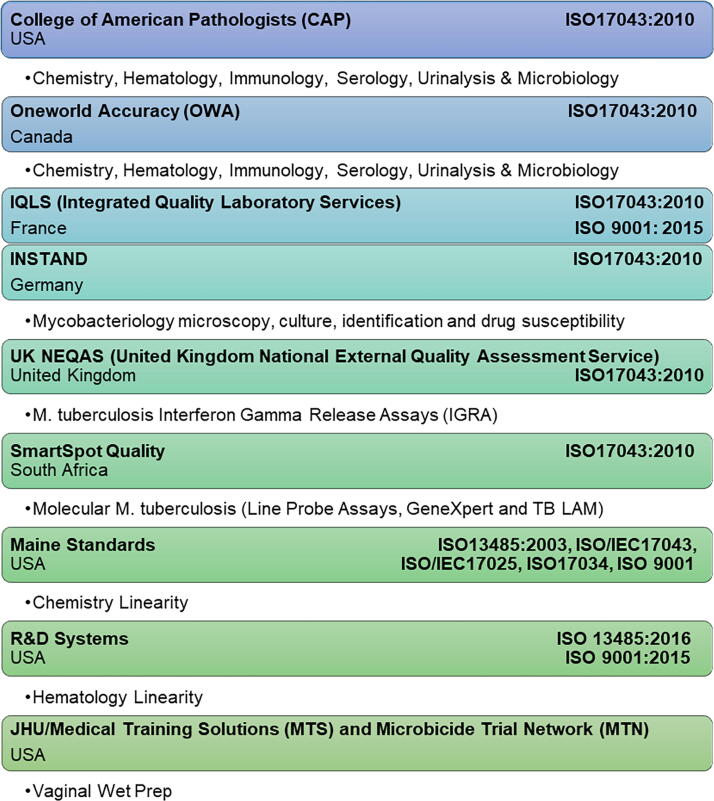 Figure 1
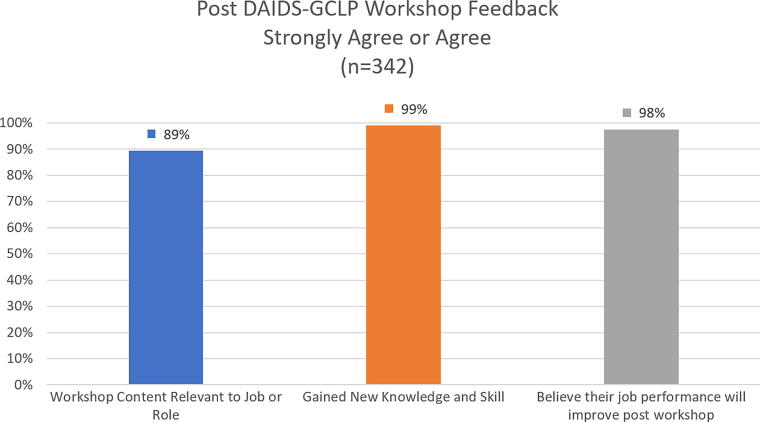 Figure 2
Peer Reviews
No public reviews on file for this paper yet. If you reviewed it on a platform where reviews are public (OpenReview, ICLR, NeurIPS, ICML), you can paste yours below so the community can read it here.
Videos
No videos yet. Explain this paper in a talk, walkthrough, or lecture? Add one.
Taxonomy
TopicsEthics in Clinical Research · Clinical Laboratory Practices and Quality Control · Health Sciences Research and Education