Impact of three‐dimensional prostate models during robot‐assisted radical prostatectomy on surgical margins and functional outcomes
Nawal Khan, Davide Prezzi, Nicholas Raison, Andrew Shepherd, Michela Antonelli, Nick Byrne, Maia Heath, Christopher Bunton, Carlo Seneci, Eoin Hyde, Andres Diaz‐Pinto, Findlay Macaskill, Benjamin Challacombe, Jonathan Noel, Christian Brown, Ata Jaffer, Paul Cathcart

TL;DR
This study explores how using 3D prostate models during surgery can improve cancer removal and patient recovery outcomes.
Contribution
The study introduces a feasibility protocol using 3D virtual and printed prostate models during robot-assisted prostatectomy.
Findings
The study will assess the impact of 3D models on reducing positive surgical margins.
Functional outcomes like incontinence and sexual function will be evaluated over 12 months.
Deep learning methods will automate prostate and lesion segmentation for model creation.
Abstract
Robot‐assisted radical prostatectomy (RARP) is the standard surgical procedure for the treatment of prostate cancer. RARP requires a trade‐off between performing a wider resection in order to reduce the risk of positive surgical margins (PSMs) and performing minimal resection of the nerve bundles that determine functional outcomes, such as incontinence and potency, which affect patients’ quality of life. In order to achieve favourable outcomes, a precise understanding of the three‐dimensional (3D) anatomy of the prostate, nerve bundles and tumour lesion is needed. This is the protocol for a single‐centre feasibility study including a prospective two‐arm interventional group (a 3D virtual and a 3D printed prostate model), and a prospective control group. The primary endpoint will be PSM status and the secondary endpoint will be functional outcomes, including incontinence and sexual…
Genes, proteins, chemicals, diseases, species, mutations and cell lines named across the full text — each resolved to its canonical identifier and authoritative record.
Click any figure to enlarge with its caption.
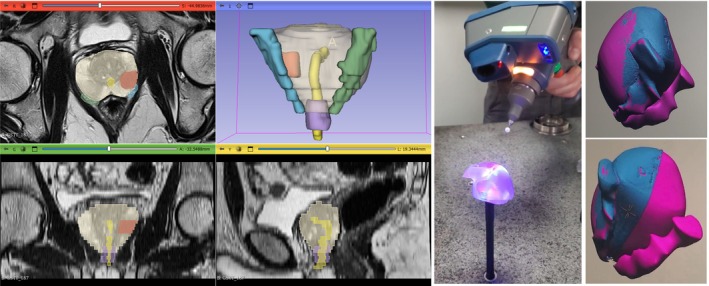 Figure 1
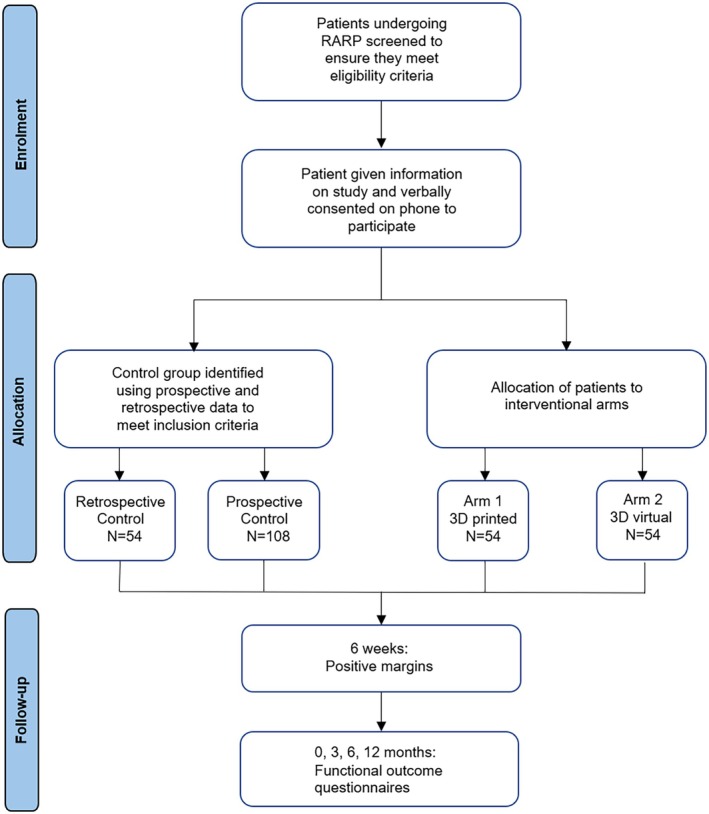 Figure 2
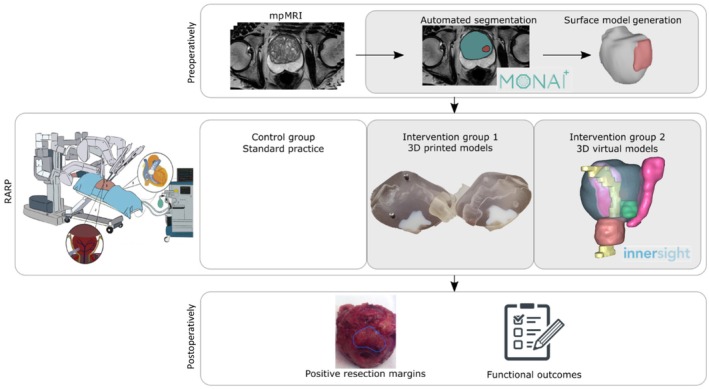 Figure 3
Peer Reviews
No public reviews on file for this paper yet. If you reviewed it on a platform where reviews are public (OpenReview, ICLR, NeurIPS, ICML), you can paste yours below so the community can read it here.
Videos
No videos yet. Explain this paper in a talk, walkthrough, or lecture? Add one.
Taxonomy
TopicsProstate Cancer Diagnosis and Treatment · Surgical Simulation and Training · Pelvic and Acetabular Injuries