Predictability of a Mandibular Corpus Length Multivariate Model Integrating Björk-Jarabak Measurements and the Cephalometric Norm
María Eugenia Balderas-González, Luis Pablo Cruz-Hervert, Silvia Paulina Martínez-Contreras, Valentina García-Lee, José David Ortiz-Sánchez, Jacqueline Adelina Rodríguez-Chávez, María Eugenia Jiménez-Corona, Gisel García-García, Jeta Kiseri-Kubati, Sergio Sánchez-García

TL;DR
This study shows that a multivariate model using linear craniofacial measurements predicts mandibular corpus length better than traditional methods in adults.
Contribution
A new multivariate model integrating linear and angular measurements improves MCL prediction accuracy in adults.
Findings
Linear measurements like ACBL, PCBL, and RH significantly correlate with MCL.
The multivariate model outperformed individual models with an R² of 0.8689.
Angular measurements and the cephalometric norm had low predictive value.
Abstract
Introduction The cephalometric norm of the mandibular corpus length (MCL) or the one-to-one ratio of the MCL to the anterior cranial base length (ACBL) are cephalometric indicators with unknown predictive capacity and clinical utility. Multivariate regression models enable the use of two or more variables to estimate an expected value, in this case, for MCL. This study compares three approaches to predicting MCL in adults by applying Björk-Jarabak measurements: (i) conventional angular norms, which have limited standalone value; (ii) simple linear‐proportion indices of craniofacial structures; and (iii) a multivariate model that integrates both linear and angular measurements. Methods A cross-sectional study was conducted using 100 adult cone beam computed tomography (CBCT) scans (63% female, mean age 29.5 ± 8.4 years) who met strict inclusion criteria. Seven simple linear regression…
Genes, proteins, chemicals, diseases, species, mutations and cell lines named across the full text — each resolved to its canonical identifier and authoritative record.
Click any figure to enlarge with its caption.
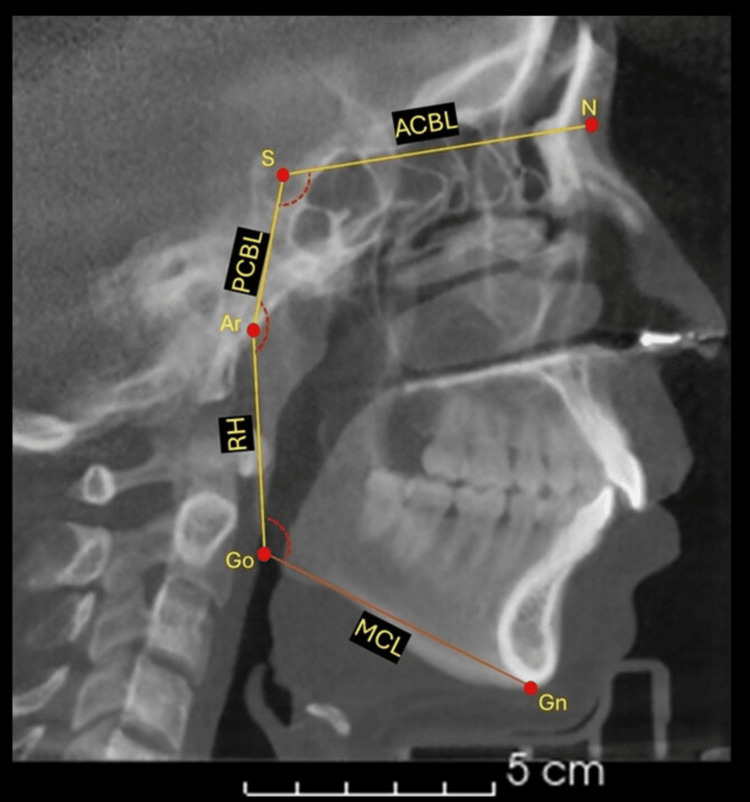 Figure 1
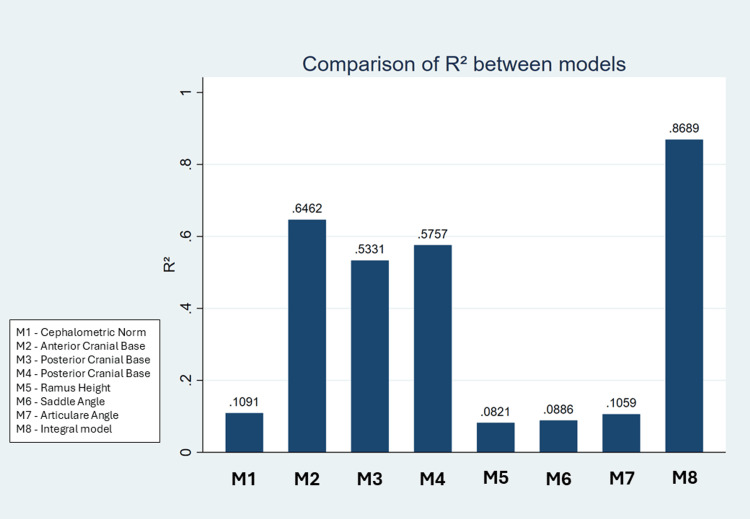 Figure 2
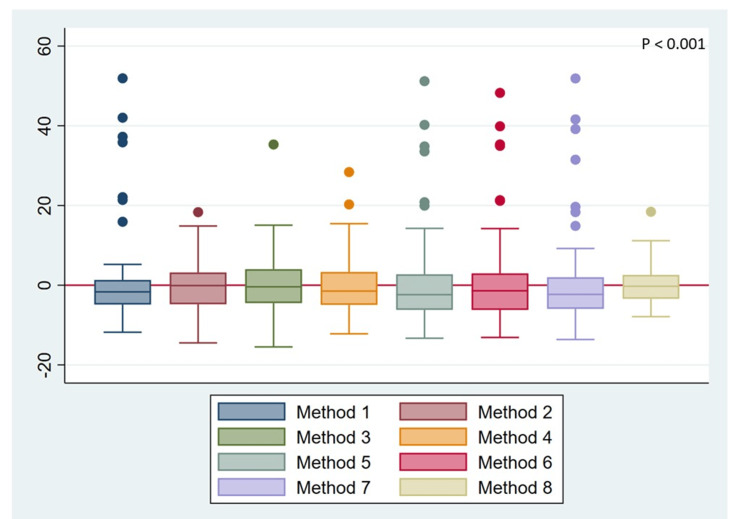 Figure 3
Peer Reviews
No public reviews on file for this paper yet. If you reviewed it on a platform where reviews are public (OpenReview, ICLR, NeurIPS, ICML), you can paste yours below so the community can read it here.
Videos
No videos yet. Explain this paper in a talk, walkthrough, or lecture? Add one.
Taxonomy
TopicsDental Radiography and Imaging · Orthodontics and Dentofacial Orthopedics · Morphological variations and asymmetry