RB1 expression and HR proficiency define a poor prognosis subtype of high grade serous ovarian cancer
Kyle C. Strickland, Zachary D. Wallen, Heidi C. Ko, Michelle F. Green, Alicia Dillard, Sarabjot Pabla, Stephanie Hastings, Alison Roos, Taylor J. Jensen, Marcia Eisenberg, Brian J. Caveney, Shakti Ramkissoon, Eric A. Severson, Rebecca A. Previs

TL;DR
This study identifies a high-risk subtype of ovarian cancer defined by high RB1 expression and HR proficiency, which is linked to poor survival and distinct molecular features.
Contribution
The study introduces a novel combined HR and RB1-based molecular subtyping approach for high-grade serous ovarian cancer.
Findings
HRP-RBH tumors show significantly worse overall and progression-free survival compared to other subgroups.
HRP-RBH tumors exhibit higher aneuploidy scores and a distinct immune gene signature in clinical cohorts.
The HRP-RBH subtype is associated with aggressive molecular profiles and highlights the need for targeted therapies.
Abstract
High-grade serous ovarian carcinoma (HGSOC) is a molecularly heterogeneous and lethal malignancy, with late-stage diagnosis contributing to high risk of recurrence and poor clinical outcomes. Although homologous recombination (HR) deficiency and retinoblastoma gene (RB1) expression have been implicated in prognosis, their combined role in shaping tumor biology and survival outcomes is not well defined. To investigate the relationship between HR status and RB1 expression and explore their potential as a combined prognostic marker, we analyzed data from two cohorts: (1) 272 HGSOC cases from The Cancer Genome Atlas (TCGA) with RB1 mRNA expression data and HR status previously annotated by Takaya et al. (HR-deficient, HRD; HR-proficient, HRP), and (2) 226 clinical HGSOC cases profiled by comprehensive genomic and immune profiling (CGIP) at OmniSeq, categorized as either HR-intact (HRi) or…
Genes, proteins, chemicals, diseases, species, mutations and cell lines named across the full text — each resolved to its canonical identifier and authoritative record.
Click any figure to enlarge with its caption.
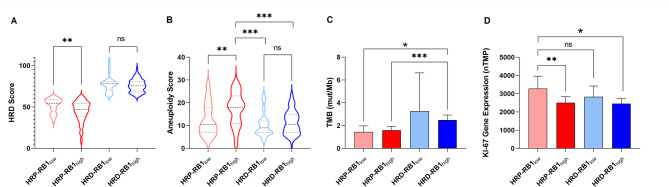 Figure 1
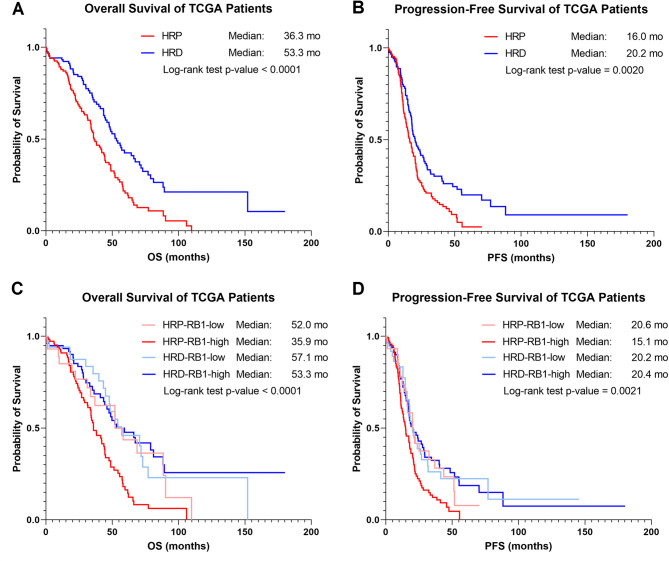 Figure 2
 Figure 3
 Figure 4
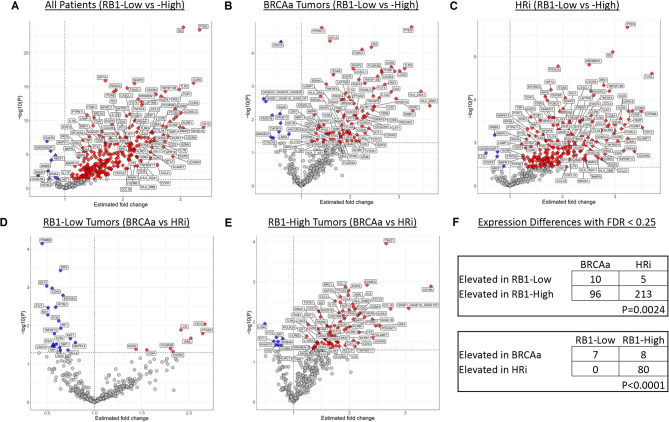 Figure 5
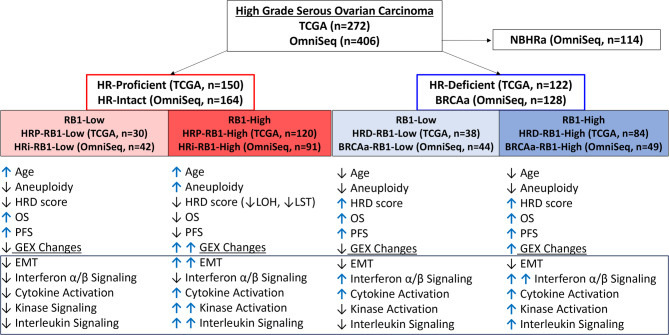 Figure 6
Peer Reviews
No public reviews on file for this paper yet. If you reviewed it on a platform where reviews are public (OpenReview, ICLR, NeurIPS, ICML), you can paste yours below so the community can read it here.
Videos
No videos yet. Explain this paper in a talk, walkthrough, or lecture? Add one.
Taxonomy
TopicsPARP inhibition in cancer therapy · Ovarian cancer diagnosis and treatment · FOXO transcription factor regulation