Distinct bacterial community structures and arsenic biotransformation gene profiles in dust
Yi Yin, Yu-Ting Lin, Gong-Ren Hu, Rui-Lian Yu, Xiao-Hui Sun, Yu Yan

TL;DR
This study explores how dust contains unique bacterial communities and arsenic-related genes, with soil being their main source, and highlights the role of Acetobacteraceae in arsenic transformation.
Contribution
The study reveals distinct bacterial and arsenic gene profiles in dust and identifies Acetobacteraceae as a key player in arsenic biotransformation.
Findings
Dust samples showed significantly different bacterial community structures and ABG profiles compared to soil and seawater.
Soil was identified as the primary source of bacterial communities and ABGs in dust using FEAST analysis.
Acetobacteraceae was found to be a keystone taxon in dust and harbored multiple arsenic biotransformation genes.
Abstract
Microorganisms, which are ubiquitous in the environment, have evolved a diverse array of arsenic biotransformation genes (ABGs). Dust harbors a wide range of microorganisms. However, the distinct characteristics of bacterial community structures and ABG profiles in dust, compared with those in other environments such as soil and water, remain poorly understood. In this study, dust samples were simultaneously collected alongside surrounding soil and seawater samples in Xiamen, a coastal city of China, to investigate the distinct profiles and potential sources of bacterial communities and ABGs in dust using 16S rRNA gene amplicon sequencing and metagenomic sequencing. Abundant and diverse bacterial communities and ABGs were detected in dust, revealing significant differences in community structures and ABG profiles compared with those in soil and seawater. Soil was identified as the…
Genes, proteins, chemicals, diseases, species, mutations and cell lines named across the full text — each resolved to its canonical identifier and authoritative record.
Click any figure to enlarge with its caption.
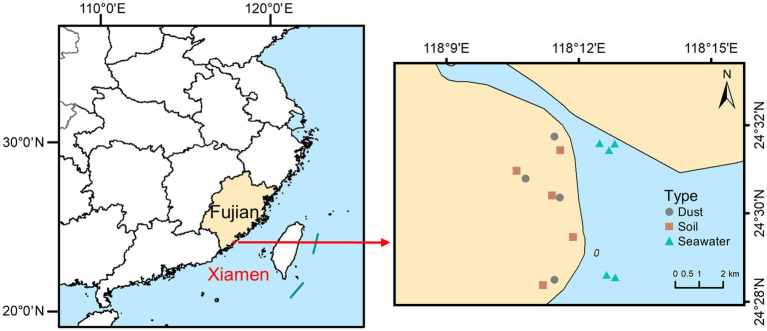 Figure 1
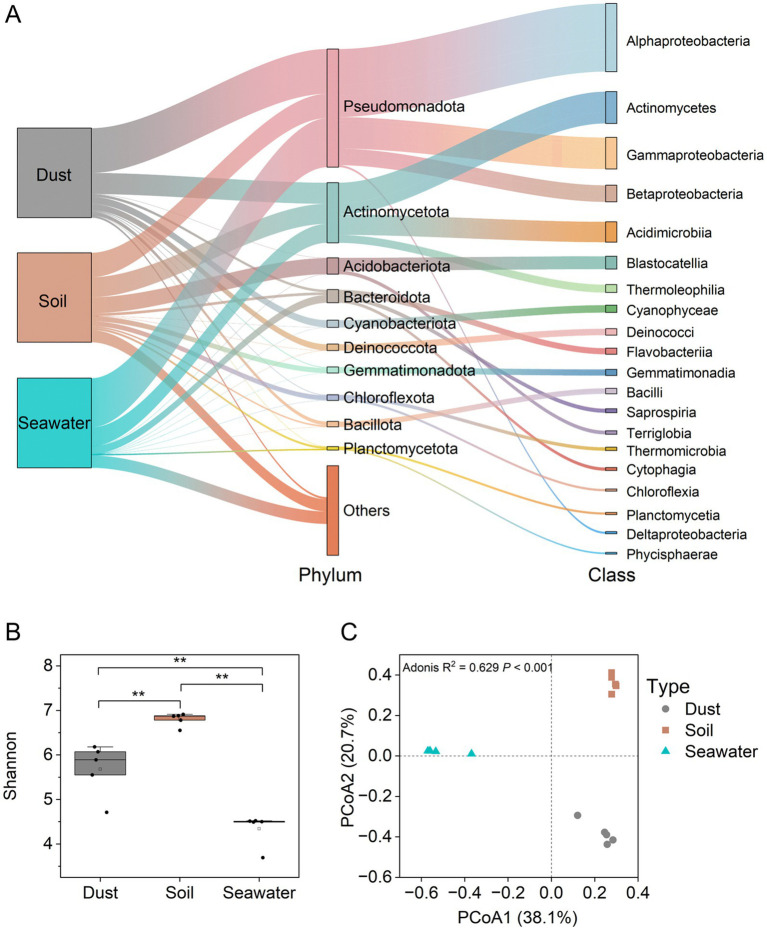 Figure 2
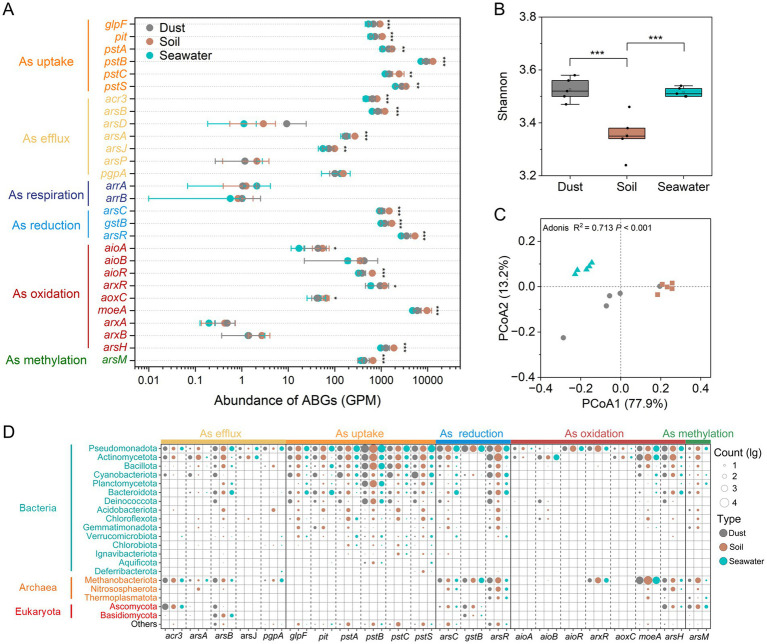 Figure 3
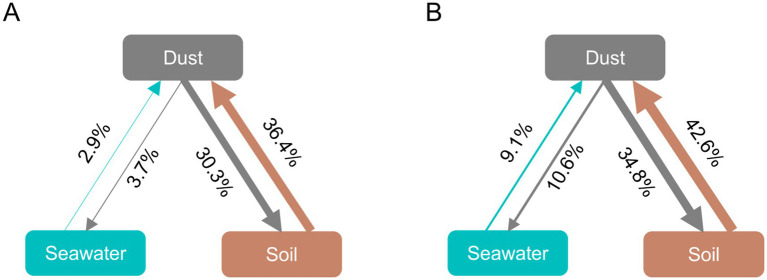 Figure 4
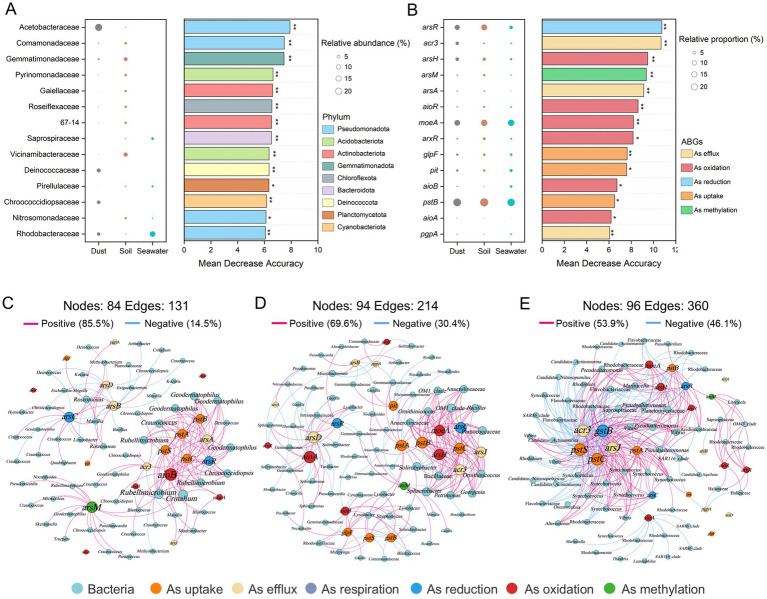 Figure 5
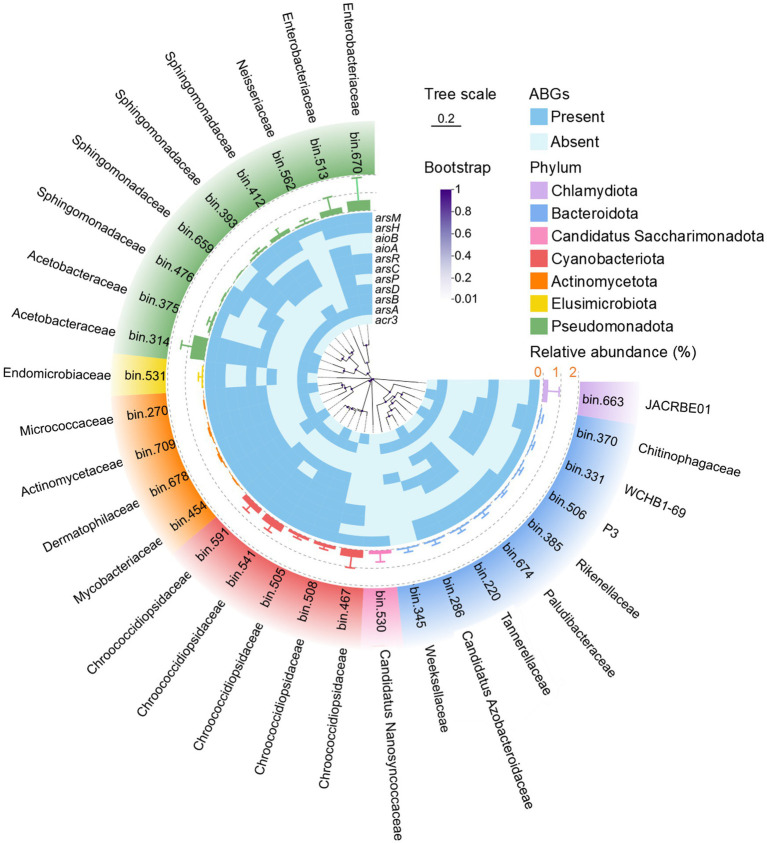 Figure 6
Peer Reviews
No public reviews on file for this paper yet. If you reviewed it on a platform where reviews are public (OpenReview, ICLR, NeurIPS, ICML), you can paste yours below so the community can read it here.
Videos
No videos yet. Explain this paper in a talk, walkthrough, or lecture? Add one.
Taxonomy
TopicsArsenic contamination and mitigation · Heavy metals in environment · Chromium effects and bioremediation