Linear and nonlinear multidimensional functional connectivity methods reveal similar networks for semantic processing in EEG/MEG data
Setareh Rahimi, Rebecca L. Jackson, Olaf Hauk

TL;DR
This paper introduces a new nonlinear method for analyzing brain connectivity in EEG/MEG data and compares it to a linear approach, finding that linear methods may be sufficient for most practical purposes.
Contribution
The paper introduces nTL-MDPC, a novel nonlinear functional connectivity method for EEG/MEG data, and compares it to linear approaches.
Findings
Nonlinear TL-MDPC achieves up to 15% higher explained variance than linear TL-MDPC with sufficient trial numbers.
Real EEG/MEG data showed only subtle increases in nonlinear connectivity strength with no significant differences between methods.
Linear methods may be sufficient for practical brain connectivity analysis due to their lower computational demands.
Abstract
Investigating task- and stimulus-dependent connectivity is key to understanding how the interactions between brain regions underpin complex cognitive processes. Yet, the connections identified depend on the assumptions of the connectivity method. To date, methods designed for time-resolved electroencephalography/magnetoencephalography (EEG/MEG) data typically reduce signals in regions to one time course per region. This may fail to identify critical relationships between activation patterns across regions. Time-Lagged Multidimensional Pattern Connectivity (TL-MDPC) is a promising new EEG/MEG functional connectivity method improving previous approaches by assessing multidimensional relationships between patterns of brain activity. However, TL-MDPC remains linear and may therefore miss nonlinear interactions among brain areas. Thus, we introduce Nonlinear TL-MDPC (nTL-MDPC), a novel…
Genes, proteins, chemicals, diseases, species, mutations and cell lines named across the full text — each resolved to its canonical identifier and authoritative record.
Click any figure to enlarge with its caption.
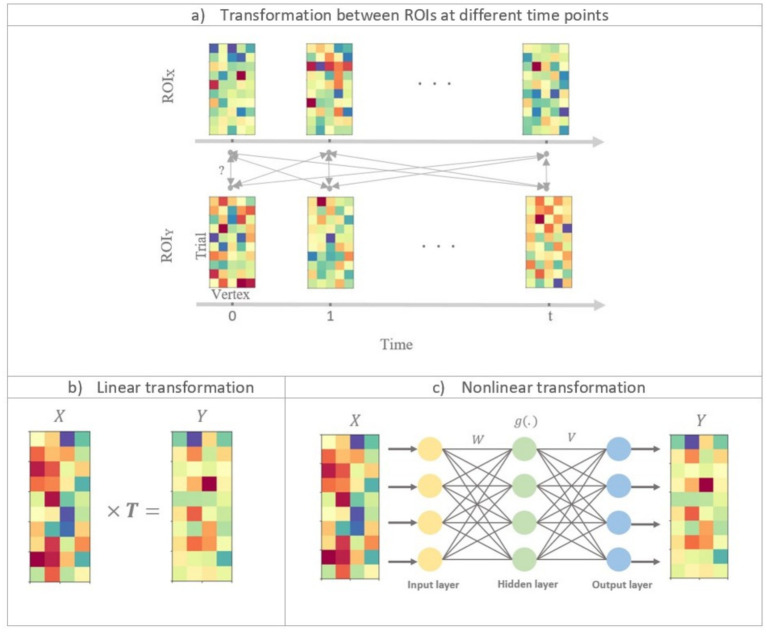 Figure 1
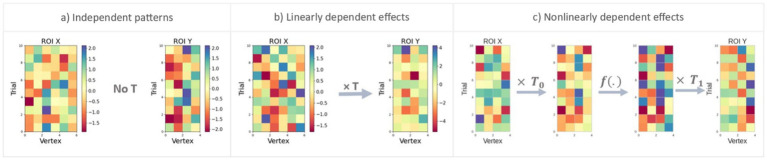 Figure 2
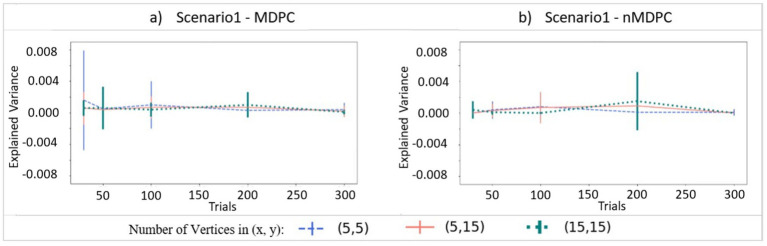 Figure 3
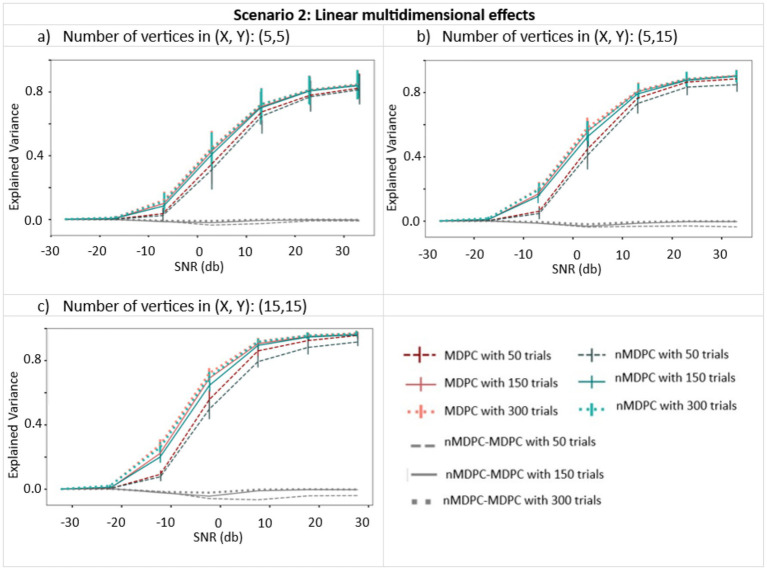 Figure 4
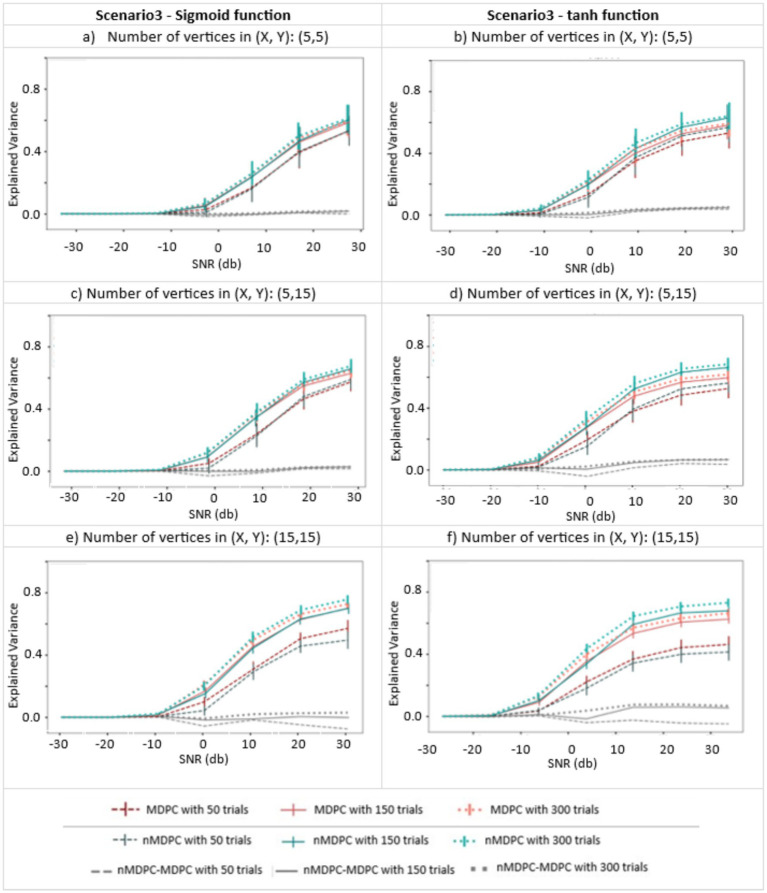 Figure 5
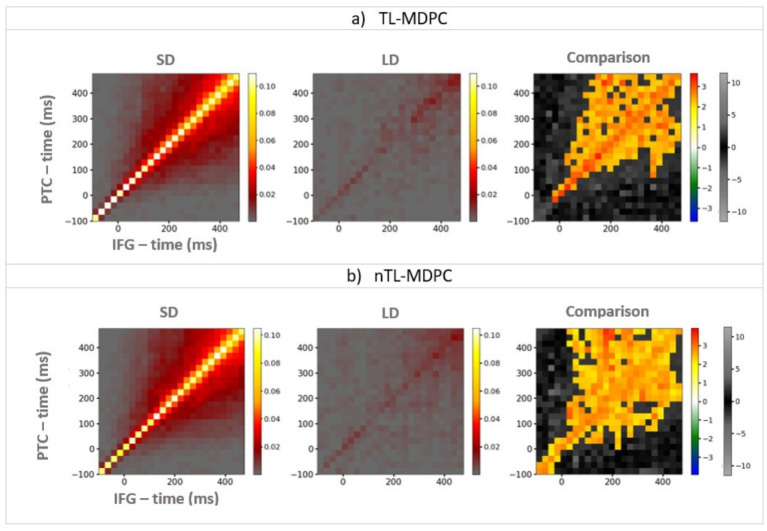 Figure 6
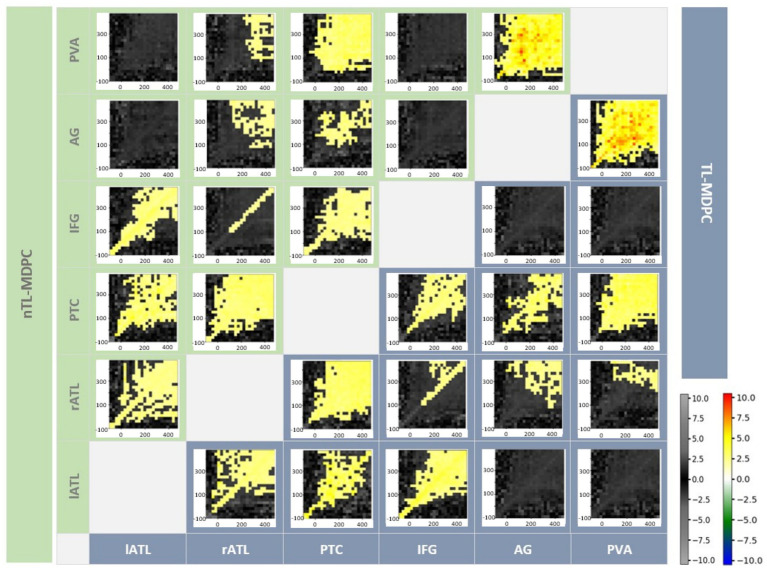 Figure 7
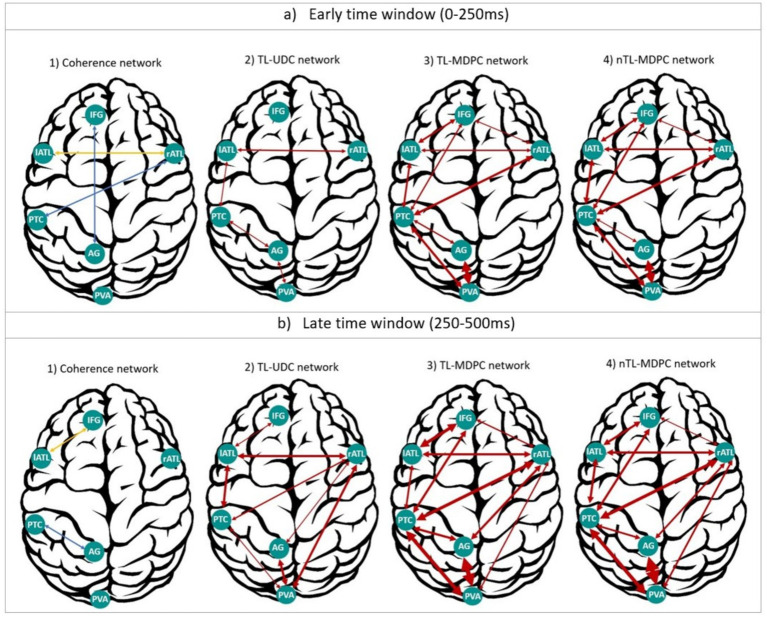 Figure 8
Peer Reviews
No public reviews on file for this paper yet. If you reviewed it on a platform where reviews are public (OpenReview, ICLR, NeurIPS, ICML), you can paste yours below so the community can read it here.
Videos
No videos yet. Explain this paper in a talk, walkthrough, or lecture? Add one.
Taxonomy
TopicsFunctional Brain Connectivity Studies · EEG and Brain-Computer Interfaces · Neural dynamics and brain function