Emergency risk stratification using the TyG index: a multi-center cohort study on nonlinear association with 28-day mortality among critically ill patients transferred from the ED to the ICU
Zhenhua Huang, Jianshe Bu, Ke Yu, Wanjie Gu, Haiyan Yin

TL;DR
This study shows that the TyG index, a marker of insulin resistance, can help predict 28-day mortality in critically ill patients transferred from the emergency department to the ICU.
Contribution
The study reveals a nonlinear relationship between the TyG index and mortality risk, identifying a critical threshold for risk stratification in ED-to-ICU patients.
Findings
The TyG index has a nonlinear association with 28-day mortality, with increased risk up to a threshold of 9.84.
Mortality risk plateaus above a TyG index of 9.84, indicating a saturation effect.
The association remains robust after adjusting for confounders and across sensitivity analyses.
Abstract
In the emergency department (ED), rapid risk stratification of critically ill patients is essential for timely intervention. The triglyceride-glucose (TyG) index, a simple marker of insulin resistance, may aid in early mortality prediction, but its utility in ED-to-ICU patients remains unexplored. Using data from the eICU Collaborative Research Database, we conducted a retrospective multicenter cohort study of 11,593 ED-to-ICU critically ill patients. The TyG index was calculated at ED presentation. The primary outcome was 28-day all-cause mortality. Multivariable Cox regression, restricted cubic splines, and sensitivity analyses were performed to assess associations. Among patients (mean age 63.6 ± 15.7 years, 57.3% male), 28-day mortality was 6.96%. The relationship between the TyG index and mortality was nonlinear, featuring a critical threshold at a TyG index value of 9.84. Below…
Genes, proteins, chemicals, diseases, species, mutations and cell lines named across the full text — each resolved to its canonical identifier and authoritative record.
Click any figure to enlarge with its caption.
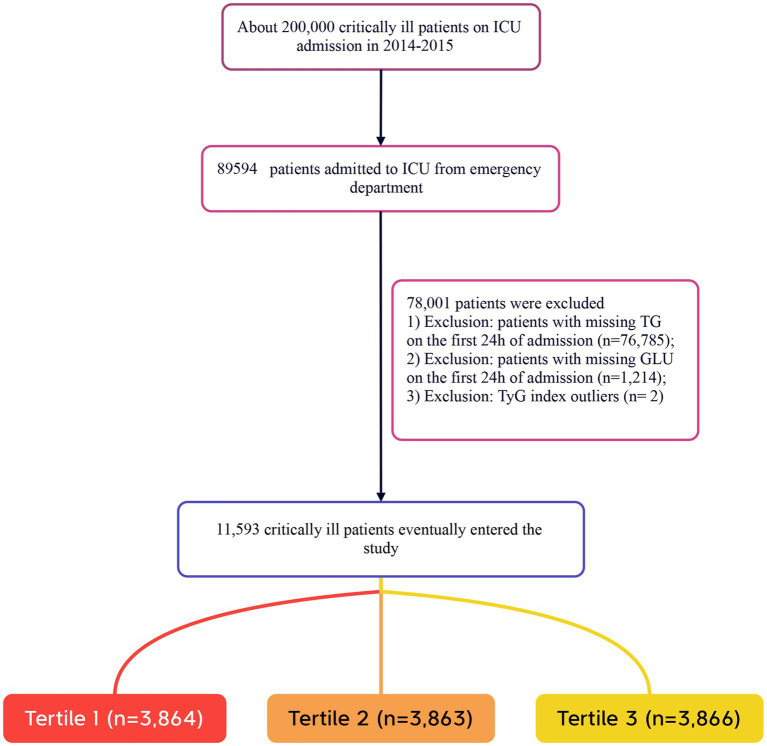 Figure 1
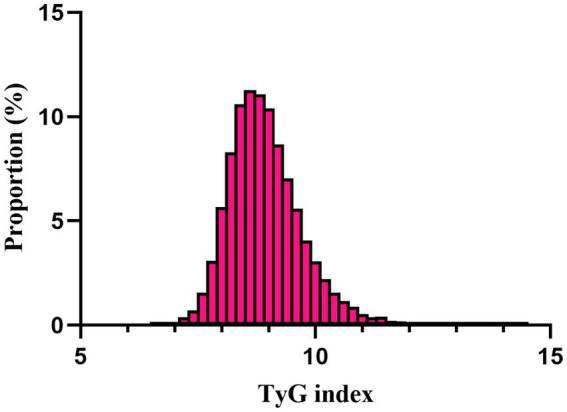 Figure 2
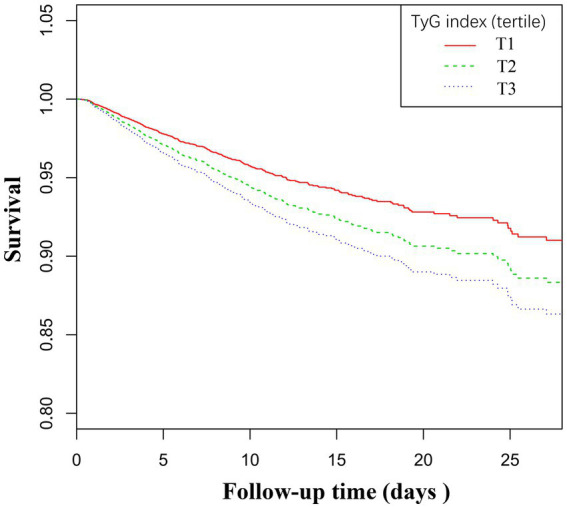 Figure 3
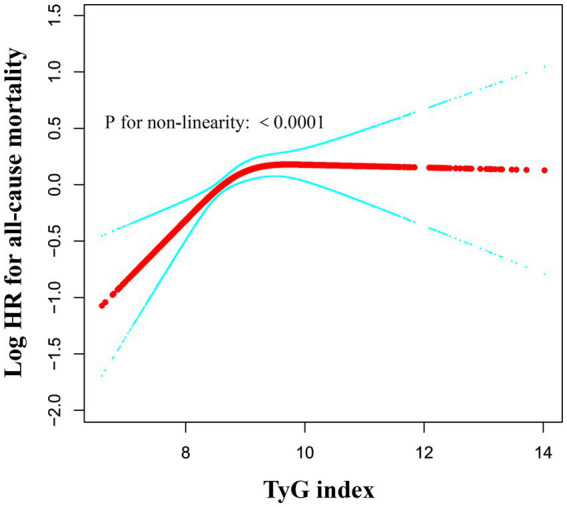 Figure 4
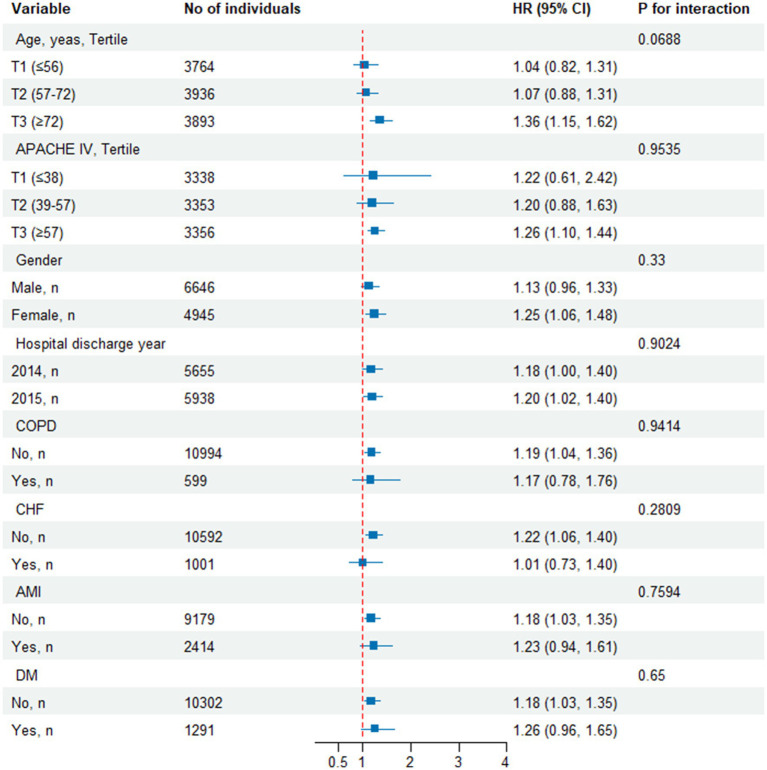 Figure 5
Peer Reviews
No public reviews on file for this paper yet. If you reviewed it on a platform where reviews are public (OpenReview, ICLR, NeurIPS, ICML), you can paste yours below so the community can read it here.
Videos
No videos yet. Explain this paper in a talk, walkthrough, or lecture? Add one.
Taxonomy
TopicsSepsis Diagnosis and Treatment · Hemodynamic Monitoring and Therapy · Cardiac, Anesthesia and Surgical Outcomes