Comparison of the therapeutic effects of three internal fixation methods for transverse fractures of the patella
Xiao-Dong Li, Kewei Du

TL;DR
This study compared three surgical methods for treating patella fractures and found that ring-pins had fewer complications and better recovery outcomes than K-wires and cannulated screws.
Contribution
The study provides a direct comparison of three internal fixation methods for patellar fractures, highlighting the clinical advantages of ring-pins.
Findings
Ring-pins and cannulated screws showed higher knee joint function scores than K-wires at 3 months post-surgery.
Ring-pins had lower postoperative complication rates and easier implant removal compared to K-wires and cannulated screws.
All methods showed reduced pain over time, with no significant differences in VAS scores between groups.
Abstract
This study aimed to evaluate the treatment effects of three internal fixation methods, including tension band with K-wires, tension band with cannulated screws and tension band with ring-pins on transverse fractures of the patella. Patellar fracture patients treated in Shanghai Yangpu District Shidong Hospital from March 2016 to January 2023 were divided into three groups based on the internal fixation method: the ring-pins group (tension band with ring-pins), the K-wires group (tension band with K-wires), and the cannulated screws group (tension band with cannulated screws). Surgery duration, hemoglobin decrease, excellent rate of knee joint function evaluation at postoperative 3 months and 12 months, VAS scores before surgery and at 3 and 12 months after surgery, postoperative complication rate, and removal rate of internal fixation were compared among the three groups of patients.…
Genes, proteins, chemicals, diseases, species, mutations and cell lines named across the full text — each resolved to its canonical identifier and authoritative record.
Click any figure to enlarge with its caption.
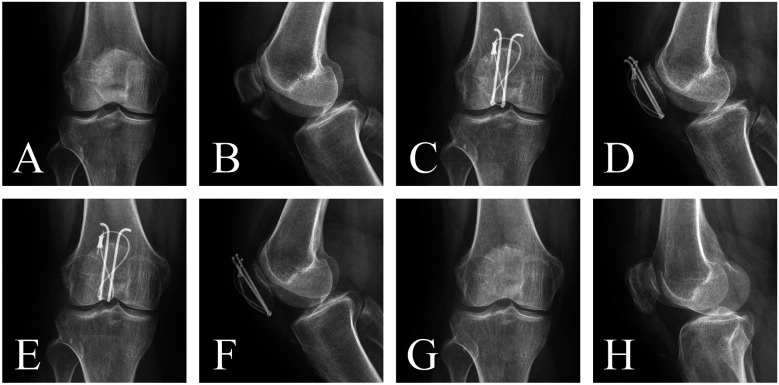 Figure 1
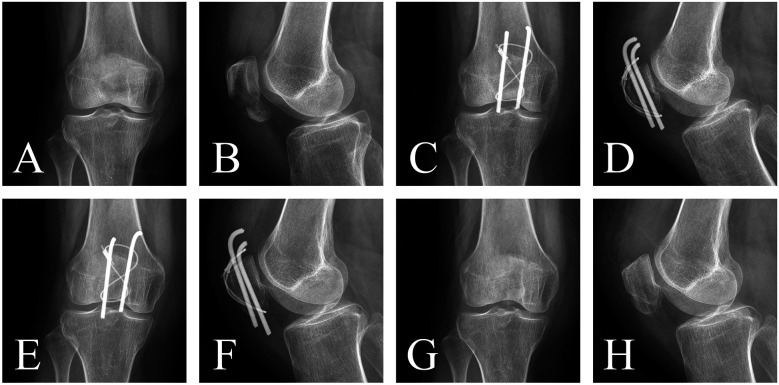 Figure 2
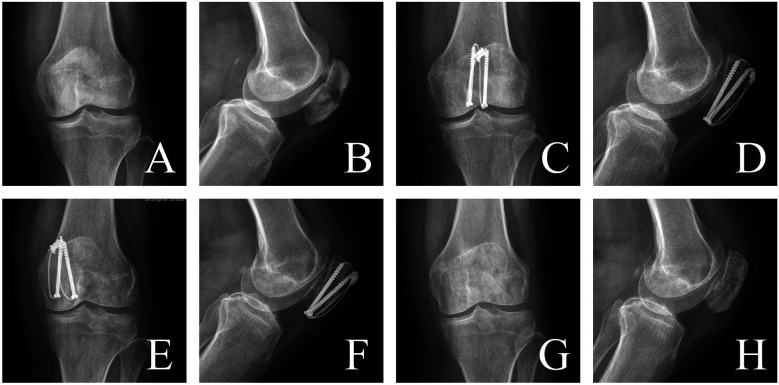 Figure 3
Peer Reviews
No public reviews on file for this paper yet. If you reviewed it on a platform where reviews are public (OpenReview, ICLR, NeurIPS, ICML), you can paste yours below so the community can read it here.
Videos
No videos yet. Explain this paper in a talk, walkthrough, or lecture? Add one.
Taxonomy
TopicsLower Extremity Biomechanics and Pathologies · Shoulder Injury and Treatment · Bone fractures and treatments