The clinical value of screening for acetaminophen in all patients with intentional overdose or altered mental status suspected to be secondary to overdose
Bader Alyahya, Abdulaziz Alalshaikh, Mohammed Almohawes, Mosaed Alnowiser, Omar Alsuliman, Rand Alrefaei, Sarah Alaidarous, Maha Alnahdi, Shadi Tamur, Musa Alfaifi, Mohammed Al Deeb, Zohair A. Al Aseri

TL;DR
This study examines the importance of screening for acetaminophen in patients with overdose or altered mental status, finding that a small number had detectable levels despite denying ingestion.
Contribution
The study highlights the clinical value of acetaminophen screening in high-risk patients and identifies deviations from current treatment guidelines.
Findings
14 out of 1517 patients had detectable acetaminophen levels despite a negative history.
Three patients had acetaminophen levels above 100 μg/mL and were treated with N-acetylcysteine.
The study found deviations from current guidelines regarding NAC administration when the time of ingestion is unknown.
Abstract
Acetaminophen (APAP) is commonly coingested in cases of suicide or intoxication because it is widely available, effectively analgesic and antipyretic, and it is often combined with other medications, such as opioids and antihistamines. APAP overdose often causes no symptoms or nonspecific symptoms in the first 12–24 h after ingestion. Delayed diagnosis is associated with a reduced response to antidote and sometimes liver failure and mortality. However, ordering unnecessary test is not cost-effective specially if it is mostly negative, and empirical therapy is associated with significant cost and possible adverse effects. This single-center retrospective study was conducted at King Saud University Medical City (KSUMC) in Riyadh, Saudi Arabia. Our population included all patients who presented to the emergency department with intentional drug overdose or altered mental status (AMS)…
Genes, proteins, chemicals, diseases, species, mutations and cell lines named across the full text — each resolved to its canonical identifier and authoritative record.
Click any figure to enlarge with its caption.
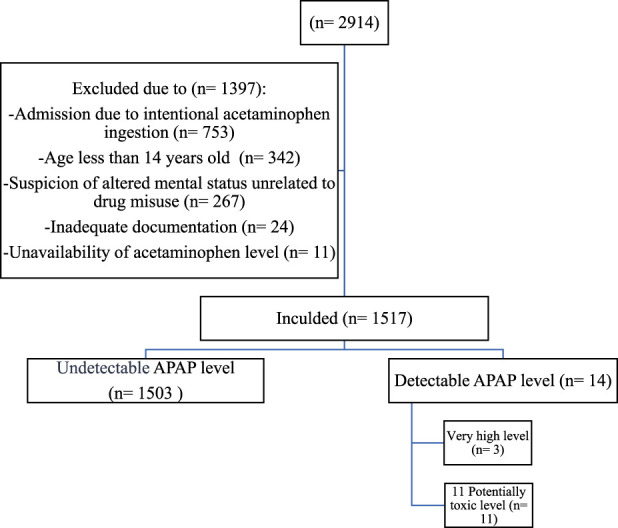 Figure 1
Peer Reviews
No public reviews on file for this paper yet. If you reviewed it on a platform where reviews are public (OpenReview, ICLR, NeurIPS, ICML), you can paste yours below so the community can read it here.
Videos
No videos yet. Explain this paper in a talk, walkthrough, or lecture? Add one.
Taxonomy
TopicsDrug-Induced Hepatotoxicity and Protection · Opioid Use Disorder Treatment · Pain Management and Opioid Use