Volumetric Integrated Classification Index: An Integrated Voxel-Based Morphometry and Machine Learning Interpretable Biomarker for Post-Traumatic Stress Disorder
Yulong Jia, Beining Yang, Haotian Xin, Qunya Qi, Yu Wang, Liyuan Lin, Yingying Xie, Chaoyang Huang, Jie Lu, Wen Qin, Nan Chen

TL;DR
This study introduces a new interpretable biomarker for PTSD using brain imaging and machine learning, showing promise for diagnosis and understanding the condition's biology.
Contribution
The study introduces the Volumetric Integrated Classification Index (VICI), an interpretable machine learning-based biomarker for PTSD diagnosis.
Findings
Random Forest achieved high accuracy in classifying PTSD patients using structural brain data.
Prefrontal brain abnormalities were prominent in PTSD patients compared to healthy controls.
VICI showed diagnostic performance comparable to top machine learning models and linked PTSD risk genes to brain structure changes.
Abstract
PTSD is a complex mental health condition triggered by individuals’ traumatic experiences, with long-term and broad impacts on sufferers’ psychological health and quality of life. Despite decades of research providing partial understanding of the pathobiological aspects of PTSD, precise neurobiological markers and imaging indicators remain challenging to pinpoint. This study employed VBM analysis and machine learning algorithms to investigate structural brain changes in PTSD patients. Data were sourced ADNI-DoD database for PTSD cases and from the ADNI database for healthy controls. Various machine learning models, including SVM, RF, and LR, were utilized for classification. Additionally, the VICI was proposed to enhance model interpretability, incorporating SHAP analysis. The association between PTSD risk genes and VICI values was also explored through gene expression data analysis.…
Genes, proteins, chemicals, diseases, species, mutations and cell lines named across the full text — each resolved to its canonical identifier and authoritative record.
Click any figure to enlarge with its caption.
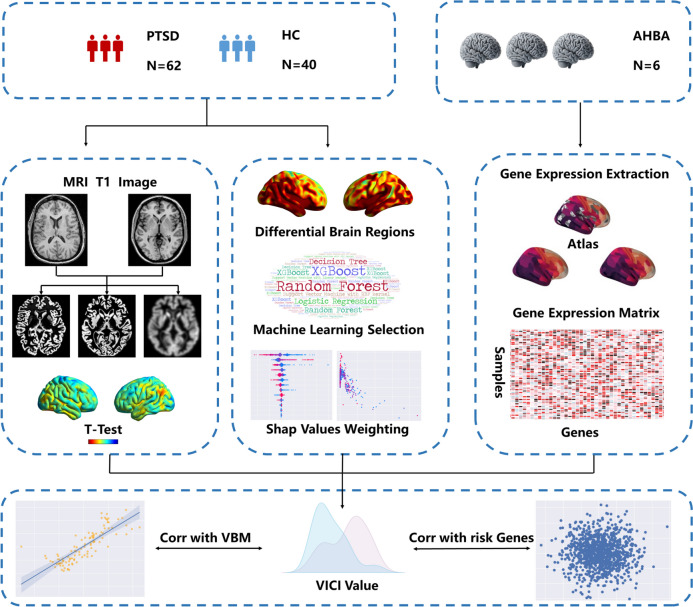 Figure 1
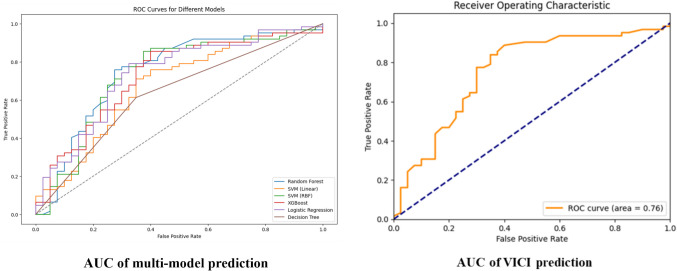 Figure 2
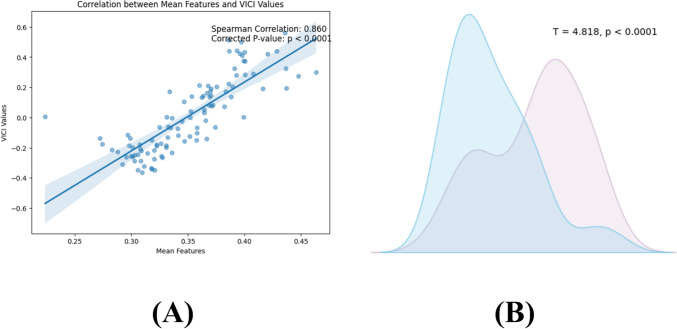 Figure 3
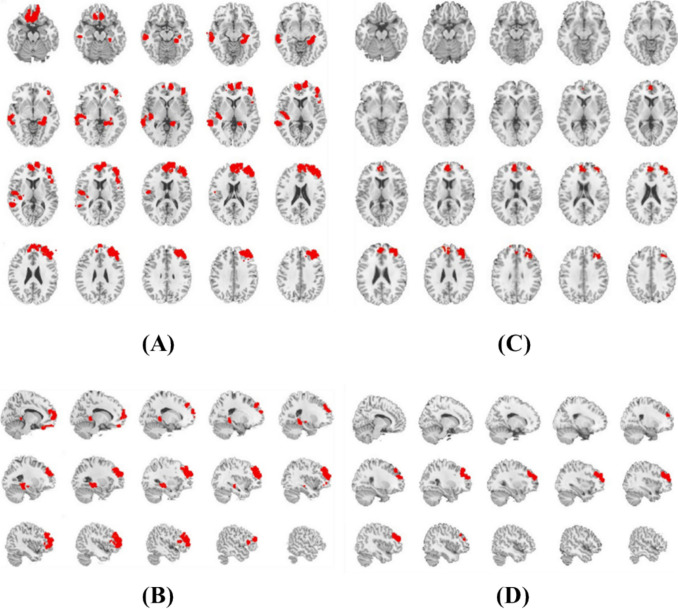 Figure 4
Peer Reviews
No public reviews on file for this paper yet. If you reviewed it on a platform where reviews are public (OpenReview, ICLR, NeurIPS, ICML), you can paste yours below so the community can read it here.
Videos
No videos yet. Explain this paper in a talk, walkthrough, or lecture? Add one.
Taxonomy
TopicsMachine Learning in Healthcare · Dementia and Cognitive Impairment Research · Traumatic Brain Injury Research