Stage‐Dependent Inhibitory Connectivity in Striatal‐Motor Circuit in Huntington's Disease
Yinghua Jing, Imis Dogan, Rena Theda Overbeck, Kathrin Reetz, Sandro Romanzetti

TL;DR
This study explores how brain connectivity changes in Huntington's disease across different stages, focusing on the striatal-motor circuit and its role in motor symptoms.
Contribution
The study identifies stage-dependent inhibitory connectivity changes in the striatal-motor circuit in Huntington's disease.
Findings
Abnormal spontaneous activity in the caudate nucleus and putamen correlates with their atrophy in Huntington's disease.
Increased inhibitory connectivity from the caudate nucleus to the motor cortex is observed in symptomatic HD patients.
Disrupted inhibitory connectivity in the striatal-motor circuit correlates with motor symptom severity in HD.
Abstract
Elucidating dysfunctional connectivity patterns among key brain regions in Huntington's disease (HD) underlying progression may have implications for developing treatment and therapeutic evaluation. Explore the relationship between abnormal spontaneous resting‐state activity and atrophy in HD‐specific brain regions and clarify effective connectivity changes among them across different stages of HD. Amplitude of low‐frequency fluctuation (ALFF) analysis was used to detect abnormal spontaneous neural activity; voxel‐based morphometry analysis was applied to assess atrophy; spectral dynamic causal model (DCM) was conducted to estimate regional effective connectivity between HD participants and healthy controls, as well as between preclinical mutation carriers and symptomatic patients. Voxel‐wise whole‐brain ALFF analysis identified the bilateral caudate nucleus, putamen, and motor…
Genes, proteins, chemicals, diseases, species, mutations and cell lines named across the full text — each resolved to its canonical identifier and authoritative record.
Click any figure to enlarge with its caption.
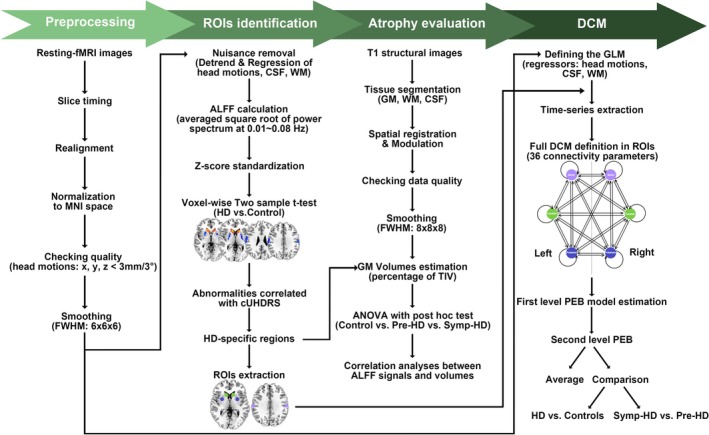 Figure 1
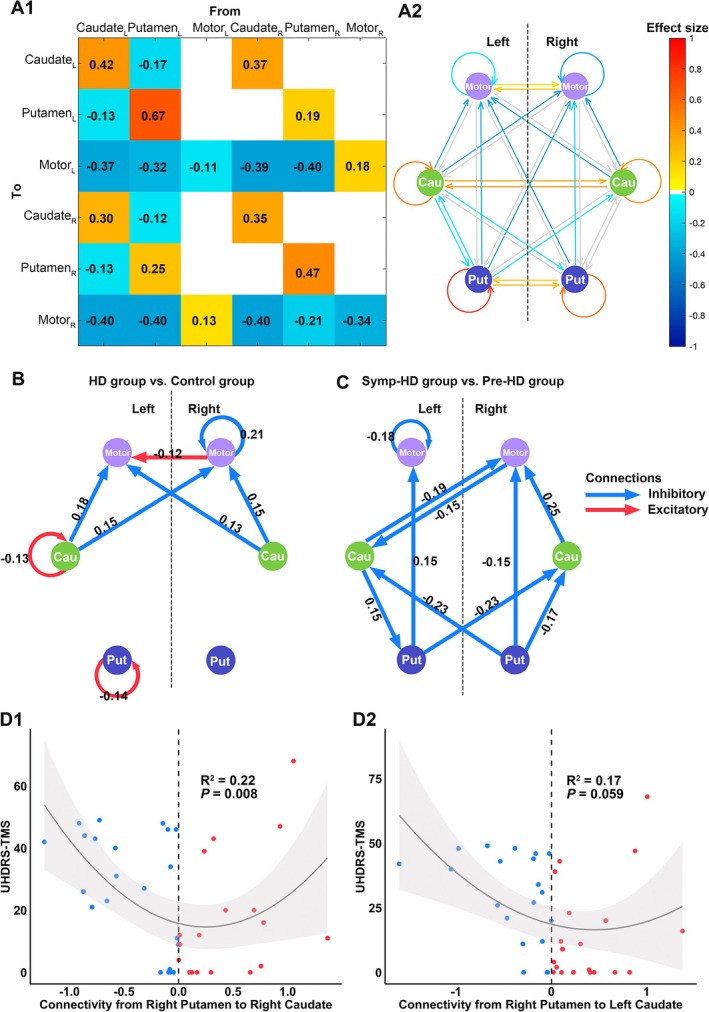 Figure 2
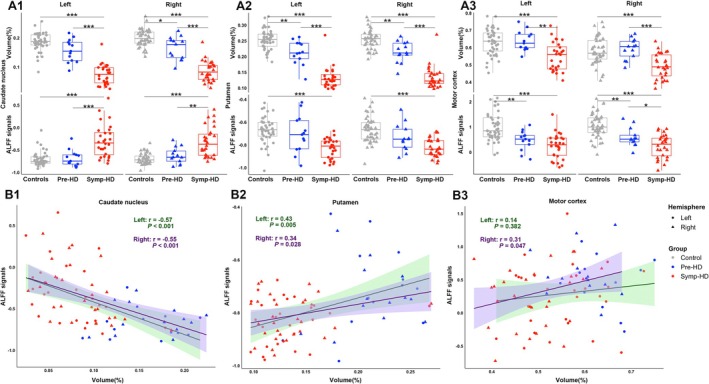 Figure 3
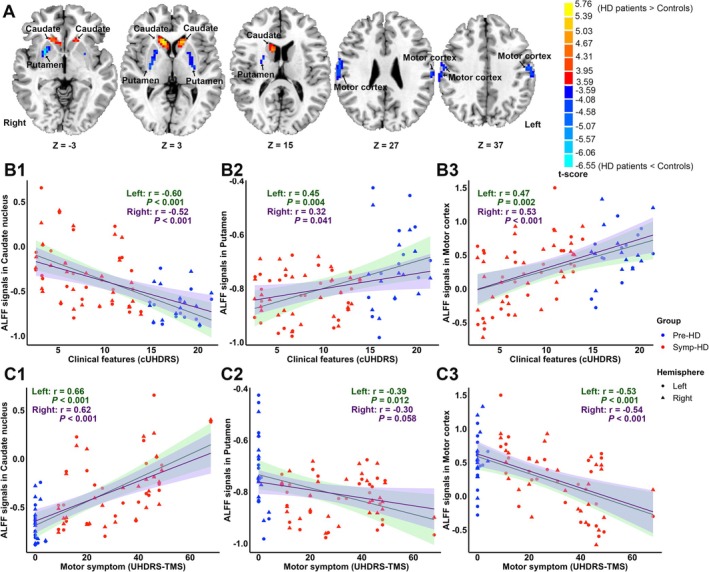 Figure 4
Peer Reviews
No public reviews on file for this paper yet. If you reviewed it on a platform where reviews are public (OpenReview, ICLR, NeurIPS, ICML), you can paste yours below so the community can read it here.
Videos
No videos yet. Explain this paper in a talk, walkthrough, or lecture? Add one.
Taxonomy
TopicsGenetic Neurodegenerative Diseases · Neurological disorders and treatments · Neuroscience and Neuropharmacology Research