Physical integrity and residual bio-efficacy of PBO-pyrethroid synergist-treated and pyrethroid-only LLINs after 1.5 years of field use in Western Kenya
Job Oyweri, Patrick O. Onyango, Maxwell G. Machani, Josephat Bungei, Yaw A. Afrane, Ming-Chieh Lee, Daibin Zhong, Guofa Zhou, Harrysone Atieli, John Githure, Guiyun Yan

TL;DR
This study compares the durability and effectiveness of two types of insecticide-treated mosquito nets in western Kenya after 1.5 years of use.
Contribution
The study provides new empirical evidence on the performance of PBO-LLINs versus pyrethroid-only LLINs in pyrethroid-resistant regions.
Findings
PBO-LLINs showed better physical integrity than pyrethroid-LLINs after 18 months of use.
Both net types lost significant bioefficacy against pyrethroid-resistant mosquitoes over time.
Torn nets were more common in households with certain wall structures.
Abstract
Long-lasting insecticidal nets (LLINs) are vital for malaria control in sub-Saharan Africa, but their durability is challenged by fabric decay and pyrethroid resistance. This study assessed the physical integrity and bioefficacy of piperonyl butoxide-LLINs (PBO-LLINs) and pyrethroid-only LLINs (pyrethroid-LLINs) after 1.5 years of use in western Kenya, where resistance is widespread. A survey on net integrity and insecticide efficacy was conducted in randomly selected households (101–107 per group per visit) from three villages per net type group in Muhoroni Sub-County, Kisumu County. Physical integrity surveys were done after every six months while residual bio-efficacy was after every three months for 18 months. Physical integrity and residual bio-efficacy studies were conducted following WHO guidelines. PBO-LLINs exhibited higher physical integrity than pyrethroid-LLINs over time.…
Genes, proteins, chemicals, diseases, species, mutations and cell lines named across the full text — each resolved to its canonical identifier and authoritative record.
Click any figure to enlarge with its caption.
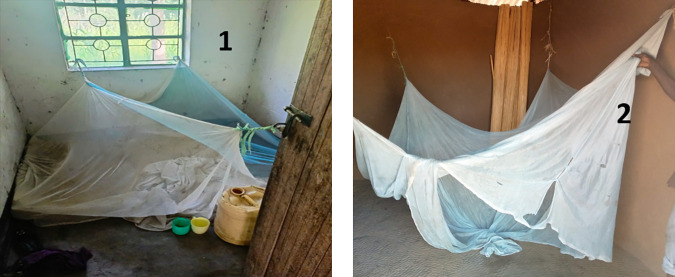 Fig 1
Fig 1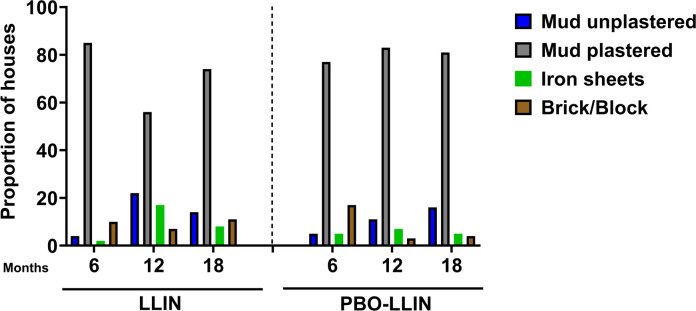 Fig 2
Fig 2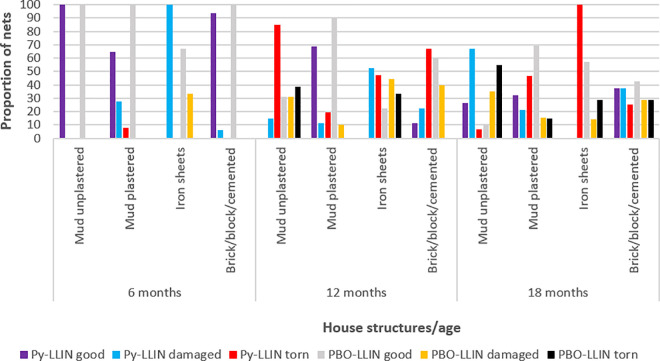 Fig 3
Fig 3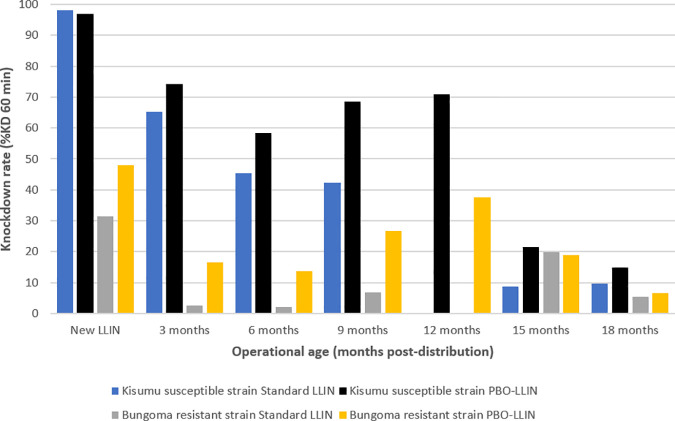 Fig 4
Fig 4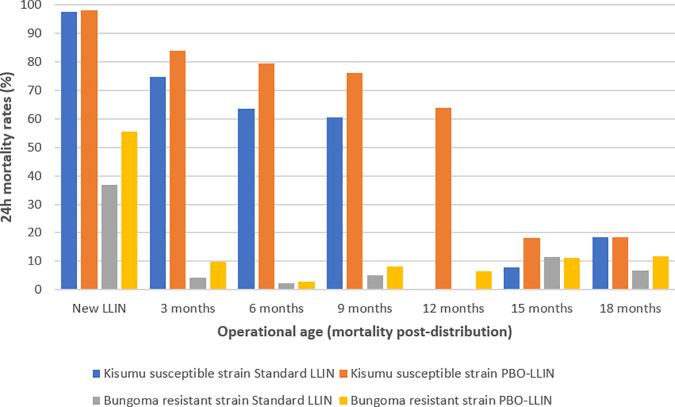 Fig 5
Fig 5- —http://dx.doi.org/10.13039/100000002National Institutes of Health
- —http://dx.doi.org/10.13039/100000002National Institutes of Health
Peer Reviews
No public reviews on file for this paper yet. If you reviewed it on a platform where reviews are public (OpenReview, ICLR, NeurIPS, ICML), you can paste yours below so the community can read it here.
Videos
No videos yet. Explain this paper in a talk, walkthrough, or lecture? Add one.
Taxonomy
TopicsChild Nutrition and Water Access
Introduction
Despite widespread pyrethroid resistance, especially in Africa, the use of pyrethroid-LLINs is the primary vector control method. However, this growing resistance has raised concerns about their long-term effectiveness in malaria prevention [1]. In western Kenya, pyrethroid-resistant malaria vectors have been identified, necessitating more effective interventions, while in Benin, such mosquitoes have demonstrated the ability to partially breach compromised LLINs [2–5].
Between 2000 and 2022, the use of LLINs had contributed to about 55.5% drop in malaria deaths in sub-Saharan Africa [6]. Long-lasting insecticidal nets physically act as a barrier to mosquito bites, knock down and kill them depending on their susceptibility [7,8]. These nets have a lifespan of three years but may continue to offer protection beyond this period if the fabric remains intact [9]. In addition to physical protection, the fabric also provides a functional surface area for the insecticides [10,11]. However, studies have reported a loss of net efficacy before the three-year mark due to both fabric deterioration and insecticidal decay, highlighting the need for continuous monitoring of these products across different regions to inform timely replacements and optimize protection [12–14].
According to the Kenya Demographic and Health Survey, 2022, Kenya recorded 54.2% LLINs ownership and a universal coverage of 37.1%. In Western Kenya, Kisumu county in particular, 76% of households owned at least one net and a 47% universal coverage [15]. The statistics suggest that, despite the national distribution efforts, there could be underlying factors such as people’s perceptions, net condition or certain behaviours that lead to people losing their nets affecting ownership and usage [16–19].
Physical integrity of nets is key in malaria control [20]. Over time, nets deteriorate gradually especially in rural areas where usage tends to be high [13]. The development of holes on nets increases human-vector interaction, increasing malaria transmission risk [16,21–23]. People’s perceptions on the effectiveness of damaged or torn nets, lead to their abandonment, affecting ownership and usage [24,25]. Thus, evaluating the effectiveness of LLINs without considering their physical integrity risks misinterpreting the results.
The WHO has recommended the use of piperonyl butoxide long lasting nets (PBO-LLINs) to mitigate pyrethroid resistance [9]. Evidence from Nigeria [26] and Uganda [27] demonstrates their effectiveness in reducing malaria transmission. These nets have been distributed in Western Kenya (a region characterized by high malaria transmission and significant pyrethroid resistance) to supplement the existing pyrethroid-LLINs [28]. Given the potential for global distribution of PBO-LLINs, extensive fabric integrity and bioefficacy are essential to understand their performance under field conditions. This study aimed to assess the physical integrity and bioefficacy of PBO-LLINs compared to pyrethroid-LLINs under field conditions in Western Kenya.
Methods
Study area
The study was conducted in Muhoroni Sub-County, Kisumu County, Western Kenya. The area occupies 425.3 km² with 154,116 residents according to the 2019 national census [29]. Sugarcane and rice farming are the main economic activities benefitting from the region’s hot and wet climate [30–32]. The main vectors responsible for malaria endemicity in Western Kenya are Anopheles gambiae sensu stricto (s.s), Anopheles funestus sensu lato (s.l.) and Anopheles arabiensis [32–35].
Study design
Repeated cross-sectional study design was used to conduct physical integrity and bioefficacy surveys. Net integrity survey and bio-efficacy studies were conducted semi-annually and quarterly for 18 months from January 2022 to July 2023 post-mass net distribution. The nets were distributed in December 2021 by International center of excellence for malaria research (ICEMR), Homabay. The nets were uniquely marked with an abbreviation “ICEMR”, followed by the code assigned to the household to distinguish them from non-study nets. The surveys were conducted in two groups; PBO-LLINs (PermaNet 3.0) and pyrethroid-LLIN (PermaNet 2.0), both from Vestergaard, Netherlands. The pyrethroid-LLIN is made of 100% polyester [36], whereas the PBO-LLIN consists of a 100% polyethylene roof and 100% polyester sides [37]. During each visit, different households were surveyed.
Sample size calculation
Sample size was calculated using Cochran’s formula [38]:
Where; S = Infinite sample size, Z = Z-score at 95% confidence level (1.96), P = percentage of households owning at least one net in Kisumu county according to the Kenya Demographic and Health Survey in 2022, (0.76) [15], d = Precision 0.05.
Application of finite correction factor formula:
Where; N refers to the number of households per group nets. Thus, at least 98 households were suitable for the study.
Fabric integrity survey
Households, population and nets surveyed across time points.
The number of households, population and the nets surveyed at different time points are summarized in table 1 below. All available study nets were surveyed.
Table 1: Households, population and nets surveyed across time points.
Potential factors that may contribute to reduced fabric integrity.
The majority of the house walls were plastered or coated with mud (>50%) and had iron corrugated sheet roofs with open eaves. A research assistant accompanied by a community health promoter (CHP), recorded house coordinates, household population, number of nets owned, net usage (previous night net usage), sleeping patterns by age groups, household structure, net type and net age into open data kit (ODK). The CHPs had a master list having households’ population and the number of nets available. To discourage non-use of nets due to their storage as demonstrated in other studies [39,40], the CHPs conducted bi-weekly house surveillance on net use and sensitizing the community on the importance of LLINs in malaria control. Households that consistently did not use their nets, were excluded from the study.
Fabric integrity measurements.
Following the WHO guidelines [41], net hole counts from seams, roof panel, upper side and lower side were recorded. The roof was defined as the topmost part of the net. The upper side was defined as the upper half of the net just below the net roof while the lower side was the bottom half closer to the bed or sleeping space. Holes were categorized as follows: size 1 (0.5–1.99 cm) smaller than a thumb, size 2 (2–9.99 cm) in between a thumb and closed fist, size 3 (10–24.99 cm) in between fist and head and size 4 (≥25 cm) bigger than a head. To categorize fabric net condition (Fig 1), the Proportional Hole Index (pHI) for each net was calculated based on the number of holes in each category multiplied by the index attributed to that size: Size 1 holes × 1, Size 2 holes × 23, Size 3 holes × 196, and Size 4 holes × 576 [41].
A good net tucked under a mattress on the floor strained to window grills and hand forged door metal lock; 2 - A torn net offering no maximum protection.
LLINs bio-efficacy.
Every three months after net distribution, two nets were collected from each house wall structure (mud-plastered, exposed mud otherwise referred as mud-unplastered, and brick/cement/block) in each LLIN group (PBO-LLIN or pyrethroid-LLIN), totalling six nets per group. New nets were issued to houses from which they were collected. Bio-efficacy studies were conducted using standard WHO cone bioassays.
Five 25 cm x 25 cm pieces of net material were cut from the roof and four sides, wrapped in aluminium foil and stored at 4^o^C before WHO cone assays. One hundred non-blood fed, 3–6-day old female Bungoma-resistant Anopheles gambiae s.s strain [42] were used to evaluate bioefficacy of the net. Each side of the net sample (one piece) was tested using four cones, each containing five mosquitoes (total 20 mosquitoes per side). After 3 minutes of exposure, mosquitoes from each side were transferred into separately labelled paper cups (one cup per side) and monitored for knockdown at 30-minute intervals for 1 hour, and mortality after 24 hours. Twenty mosquitoes per net side were also tested against the positive (new and unused nets) and negative (nets without insecticides) controls. During the 24h monitoring, the mosquitoes were fed on 10% sugar solution. The bioassay was repeated if over 20% mortality in the negative control was observed. Same procedure was repeated with the non-blood fed female lab-reared Kisumu susceptible Anopheles gambiae s.s strain mosquitoes [43]. The bioassays were conducted under controlled environmental conditions consistent with WHO guidelines at 27 ± 2 °C and 80 ± 10% relative humidity. Trained personnel conducted the tests, mosquitoes were handled with care to minimize stress and uniformity across tests was ensured (i.e., cups, cones, cotton, sugar solution etc). The bioassays were conducted in Kenya Medical Research Institute, Kisumu, Kenya at the Centre for Global Health Research (CGHR).
Ethics approval and consent to participate.
Maseno University Scientific and Ethics Review Committee (MUSEREC) approved this research under study number MUERC/00778/19. The Ministry of Health, Kisumu, Kenya provided authorization of carrying out the research in the community. From 1^st^ to 9^th^ December 2021, adults willingly consented and assented for young children (written informed consent). Study participants could withdraw from the study at any time.
Inclusivity in global research.
Further information to the ethical, cultural and scientific aspects specific to inclusivity in global research has been provided in the Supporting Information (SX Checklist).
Data analysis
All statistical analyses were performed using IBM SPSS software version 27. The normality of continuous variables was assessed using the Kolmogorov-Smirnov test [44]. Where significant deviations from normality were observed, appropriate non-parametric methods were employed. The Proportional Hole Index (pHI) for each net was computed by applying WHO-defined weights to the number of holes within each size category. Nets were classified as ‘good’ (pHI ≤ 64), ‘moderately damaged’ (pHI between 65 and 642), or ‘Torn’ (pHI > 642), following WHO criteria [41]. Net bioefficacy was assessed via WHO cone bioassays, based on knockdown and mortality outcomes. Nets were categorized as ‘Optimal’ (≥80% mortality or ≥95% knockdown), ‘Minimal’ (≥50% mortality or ≥75% knockdown), or ‘Not Effective’ (<50% mortality or <75% knockdown) [45]. Differences in net condition across time points and intervention arms (PBO-LLIN vs. pyrethroid-LLIN) were examined using Pearson’s chi-square test. Assumptions regarding the independence of observations and adequacy of expected cell counts were verified and satisfied. To identify predictors of net condition, a multinomial logistic regression model was fitted with net condition as the outcome variable. Multicollinearity assumptions were tested and verified. Statistical significance was set at p ≤ 0.05. Where applicable, 95% confidence intervals were reported alongside point estimates.
Results
Characteristics of the households surveyed
Of the houses surveyed at each time point for net integrity, the majority were made of mud plastered walls (>54.9%). At six months, 84.2% (85/101) of houses in the pyrethroid-LLIN group and 74.0% (77/104) in the PBO-LLIN group were mud-plastered. At 12 months, there were 54.9% (56/102) against 79.8% (83/104) mud plastered houses respectively. At the 18^th^ month survey, 69.2% (74/107) households in pyrethroid-LLIN group had mud-plastered walls compared to 76.4% (81/106) as shown in fig 2.
Distribution of houses by wall structures (LLIN denotes Pyrethroid-only LLIN).
In the two groups, ≥ 96.3% of the nets available in the households were used the previous night prior to the survey. Specifically, at 6 months 99.2% (123/124) of pyrethroid-LLINs and 98.8% (167/169) of PBO-LLINs were reported to be used the night before the survey. At 12 months, the usage rates slightly decreased to 97.4% (113/116) for pyrethroid-LLINs and 97.1% (133/137) for PBO-LLINs. By 18 months, the number of nets being used the night prior to the survey was still high, with 96.3% (130/135) for pyrethroid-LLINs and 96.5% (137/142) for PBO-LLINs. The usage of the available nets did not differ significantly throughout the study period (χ^2^ = 4.191, df = 2, p = 0.123).
Net integrity over time in PBO and Pyrethroid-LLIN groups
A decline in net integrity was observed over time with PBO-treated nets consistently performing better than pyrethroid-LLINs (Table 2). At 6 months, the majority of PBO nets were in good condition; 98.22% (166/169) compared to 68.55% (85/124) in the pyrethroid-LLIN group. By 12 months, the proportion of nets in good condition dropped especially for pyrethroid-LLINs, 37.07% (43/116) compared to 78.83% (108/137) of the nets in the PBO group. At 18 months, 59.15% (84/142) in the PBO arm and 28.89% (39/135) (Table 2) in the pyrethroid-LLIN arm were in good condition. The respective pHIs for the net conditions are captured in Table 3. The remainder of the nets were either moderately damaged or torn reducing their protection. Overall, there was significant differences in net integrity at each time point across the two groups (p < 0.001); (Table 2). The fabric integrity performance of the two nets at 6 months versus 12 months versus 18 months was assessed. There was significant difference in fabric integrity at 6 months versus 12 months between the individual net types; pyrethroid-LLINs (χ^2^ = 45.164, df = 2, p < 0.001) and PBO-LLINs (χ^2^ = 30.767, df = 2, p < 0.001). Significant differences in fabric integrity were also recorded at 6 months versus 18 months in pyrethroid-only LLINs (χ^2^ = 57.654, df = 2, p < 0.001) and PBO-LLINs (χ^2^ = 75.320, df = 2, p < 0.001). Considering 12 months vs 18 months, the pyrethroid-only LLINs recorded no significant difference in fabric integrity (χ^2^ = 2.343, df = 2, p = 0.310) while PBO-LLINs showed significant difference (χ^2^ = 17.230, df = 2, p < 0.001).
Table 2: Pyrethroid LLIN versus PBO-LLIN fabric integrity at each time point.
Table 3: pHI for net status.
Position of holes on LLINS
Across time points, pyrethroid-LLINs showed higher hole rates on the upper and roof sides while PBO-LLINs exhibited higher rates on the lower side of the net. Overall, across time points, there were significant differences in mean position holes across interventions with pyrethroid-LLINs showing higher hole counts than PBO-LLINs (p < 0.008); Table 4.
Table 4: LLINs hole positions over time.
Factors associated with net integrity
A multinomial logistic regression predicted net age, net type, net usage and house wall structure to be significantly associated with net integrity (Table 5). The likelihood of a net being moderately damaged increased by 13.8% [OR=1.1388 (95% CI = 1.089–1.189), P < 0.001] with increase in age. Pyrethroid-LLINs were 4.8 times more likely to be moderately damaged compared to PBO-LLINs [OR=4.8 (95% CI = 3.099–7.441), P < 0.001]. Households (Fig 3) in mud unplastered wall houses were 4.4 times more likely to have moderately damaged nets [OR=4.421 (95% CI=(1.774–11.017), P = 0.001] while those in corrugated iron walls were 8.8 times more likely [OR=8.771 (95% CI=(3.095–24.856), P < 0.001], when compared to cemented/brick/block wall households. Considering torn nets, the likelihood of a net being torn increased by 29% [OR=1.29 (95% CI = 1.222–1.361), P < 0.001] with increase in age. Pyrethroid-LLINs were 10 times more likely to be torn compared to PBO-LLINs [OR=10.013 (95% CI = 6.101–16.436), P < 0.001]. Households in mud unplastered house walls were 8.6 times more likely to have torn nets [OR=8.601 (95% CI = 3.214–23.015), P < 0.001] while those in corrugated iron walls were 14.8 times more likely [OR=14.786 (95% CI = 4.772–45.81), P < 0.001] when compared to cemented/brick/block wall households.
Table 5: Factors associated with mosquito net integrity.
Net status in regard to type of housing.Damaged represents moderately damaged, Py-LLIN represents standard LLIN.
Factors affecting pyrethroid-LLINs integrity
As shown in table 6, a multinomial logistic regression revealed that type of house wall affected pyrethroid-LLIN integrity. Nets in mud unplastered house walls had a 3.6 times higher likelihood of damage [OR=3.599 (95%CI = 1.115–11.619), p = 0.032] and 5.3 times higher likelihood [OR=5.323 (95% CI = 1.685–16.816),p = 0.004] of being torn compared to those in brick/cement/stone walled houses. Nets from corrugated iron walled houses had 4.1 times higher likelihood of damage [OR=4.12 (95% CI = 1.772–9.56), p < 0.001] and 6.3 times higher likelihood of being torn [OR=6.31(95%CI = 2.10–18.93), p < 0.001] when compared with those in brick/cement/stone walled houses. Increase in net age was significantly associated with higher torn rates [OR=1.206 (95%CI = 1.135–1.281), p < 0.001].
Table 6: Factors affecting pyrethroid-LLINs integrity.
Factors affecting PBO-LLINs integrity
A multinomial logistic regression revealed that the type of house wall affected PBO-LLIN integrity (table 7). Nets in houses with mud unplastered walls had a 9.8 times higher likelihood of being torn [OR = 9.823 (95% CI: 1.487–64.898), p = 0.018] compared to those in brick/cement/stone-walled houses. An increase in net age was significantly associated with higher rates of damage and tearing (p < 0.001).
Table 7: Factors affecting PBO-LLINs integrity.
Net bioefficacy result
As shown in Fig 4, the bioefficacy testing of pyrethroid-LLINs against the Kisumu susceptible strain showed a progressive decline in knockdown rates, from 98% at baseline to 45.5% at month 6 and 9.8% at month 18. In contrast, PBO-LLINs initially dropped from 96.9% at baseline to 58.5% at month 6, increased to 71% at month 12, before sharply declining to 14.8% at month 18. At baseline, 6 and 18 months, there was no significant (p > 0.05) difference in knockdown rates between the PBO-LLIN and pyrethroid-LLIN group.
LLINs knockdown performance over time.
When tested against the Bungoma pyrethroid-resistant strain, the knockdown rates of pyrethroid-only nets declined from 31.4% at baseline to 2.2% at month 6 and 5.4% at month 18. PBO-LLINs also showed a reduction in effectiveness, with knockdown decreasing from 48.1% at baseline to 13.6% at month 6, 37.6% at month 12, and 6.7% at month 18.
Against the Bungoma resistant strain, when new, the PBO net demonstrated 55.6% mortality against 36.9% for the pyrethroid-LLIN. However, over time, from three months to 18 months, mortality ranged between 2.8% and 11.8% for the PBO-LLIN when compared to pyrethroid-LLIN (2.3% and 11.6%); (fig 5). At baseline, mortality rates significantly differed between the two types of intervention (<p = 0.05) while at 6 and 18 months, mortality rates were not significantly different. The two types of LLINs had higher efficacy against the Kisumu susceptible strain. The PBO-LLIN showed almost similar mortality with pyrethroid-LLIN when new and unused (98.1% vs. 97.6%). The maximum mortality was 83.8% and 74.7% for the PBO-LLIN and pyrethroid-LLIN respectively, demonstrated at three months. Despite PBO-LLIN demonstrating higher mosquito killing rates across time points, at 18 months, the effect was similarly low to that of pyrethroid-LLIN (18.5% vs. 18.4%).
Graph showing LLINs mosquito mortality across time points.
Discussion
This study reports a decline in the physical and insecticidal condition of LLINs over an 18-months period. However, PBO-LLINs showed higher physical integrity and bioefficacy than pyrethroids-LLINs. A study conducted in Uganda by Mechan et al. [43] has reported significant deterioration within two years of net use. Similar to other studies in Tanzania [46,47], the current study suggests that not all nets provide maximum protection in the field due to fabric and insecticidal decay.
The pyrethroid-LLIN had higher odds of being moderately damaged or torn than the PBO net. Previous studies have shown that people’s perceptions can influence how they handle health interventions [25,48–50]. While our study did not assess perceptions, it is possible that the distinct two-colour design of the PBO net, with a blue roof panel and white sides, may make it appear special to some residents. This perception coupled with messaging during LLIN distribution [51] highlighting enhanced protection of PBO nets against resistant mosquitoes may have encouraged better PBO net care.
In contrast to Minta et al., [21], the top and roof of pyrethroid-LLINs were more vulnerable to developing holes, which are critical vector entry points [52], potentially compromising their physical protection. Similarly, Feio-dos-Santos et al., [53] observed greater damage on the upper side of rectangular LLINs. In this rural setting, with diverse house structures and varying user behaviors such as snagging on a solid [54], improper installation and strained hanging points [55,56] may have contributed to the observed damage on the top and roof of pyrethroid-LLINs unlike PBO-LLINs that is made of polyethylene material roof and perceived effective necessitating care [57]. Although the current study is limited by lack of this data, anecdotal field observations during household visits suggested variations in net hanging practices across households between the interventions, which may have influenced this pattern of damage. Future studies should consider systematically evaluating net hanging methods to better understand their role in physical integrity outcomes. Consistent with findings by Lukole et al., [47] in Tanzania, the present study observed more holes on the lower side of PBO LLINs. Differences in living conditions and net care variations play a role in net integrity [58]. For instance, careless net tucking, can cause abrasions from bed frames, bolts, or rough surfaces, eventually leading to tears [59]. In some households lacking proper beds [47], alternative sleeping arrangements, such as sleeping on floors or papyrus mats, could increase the risk of net damage on the lower side. These torn rates at different LLINs positions and variation from households highlight the need for targeted community education on proper net handling and care to prolong net physical integrity and maintain effectiveness.
Compromised LLINs fabric integrity has far-reaching implications for malaria control programs, particularly in areas with high pyrethroid resistance. First, there is increased risk of malaria infections due to continuous human-vector contact [60]. Second, perceived infectiveness will lead to net abandonment by households [46,61,62], reducing LLIN coverage [17,63]. These outcomes threaten high-resistance settings, where pyrethroid-LLINs effectiveness is compromised. Therefore, communities have to be enlightened via targeted education programme on ways of properly handling and caring for the nets to prolong lifespan. This approach not only enhances malaria prevention but also reduces operational costs by delaying premature net replacement.
The present study found that nets in mud-unplastered and iron-corrugated-walled houses were more likely to be moderately damaged or torn compared to those in brick or stone, or block houses. Similarly, Mechan et al., [43] reported that nets in traditional houses were 3.4 times more likely to be damaged. Mud-unplastered walls and rusted iron sheet walls often have rough surfaces, which may increase the risk of tears, especially if nets are abruptly yanked off. Additionally, frequent contact of nets and these rough surfaces could contribute to wear and tear over time, especially if nets are not properly handled. Individuals in these house structures may be more likely exposed to malaria infections compared to other house structures affecting entire community. Malaria control programmes should consider providing trainings on net handling practices in these challenging environments.
The majority of available nets were reported to have been used the night before the survey, consistent with findings from other settings [14,64,65]. The high LLIN usage observed in this study area aligns with its malaria endemicity [66]. The bi-weekly CHPs visits must have been a constant reminder of net use in this setting. Consistent net usage in the study area likely played a key role in physical integrity decay. A study by Smith et al., [63] demonstrating the association of net use and physical decay in Siaya, western Kenya (a malaria endemic area) showed that 309/543 (57%) of the nets in use were damaged. A study conducted by Mutuku et al., [13] in Coastal Kenya found net usage to be a stronger predictor of physical integrity with nets in use likely to be damaged. Given that net usage is essential and unavoidable, it is crucial to educate and train communities on proper net care to prolong their effectiveness as a malaria control tool. Ministries of health (MoH) introduced PBO nets to mitigate pyrethroid resistance. Despite the current study showing PBO net outperforming the pyrethroid-LLIN in killing the Bungoma resistant strain at baseline, the net fails to attain mortality threshold of ≥80%. The current study is inconsistent with that of Gichuki et al., [67] who demonstrated that the Olyset^®^ Plus net (permethrin and PBO-treated) passed the WHO mortality threshold (≥80%) against Kisumu susceptible Anopheles gambiae strain up to 18 months of use in Kenya. Similarly in Tanzania, Martin et al., [68] demonstrated that over 80% of PBO nets passed the WHO efficacy criteria against Kisumu susceptible Anopheles gambiae strain up to three years of net use. The results in the current study suggest limited additional benefits of PBO net in managing pyrethroid resistant vectors. The deterioration in fabric quality may have contributed to insecticidal decay [12,69], although this association was not determined. Additionally, human behaviors such as frequent washing [70,71], net handling [71,72], and overall care [73] may have influenced the findings. These results suggest that operational performance of the PBO nets may be insufficient in a high pyrethroid-resistant area where fabric decay co-occur. Educating communities on proper LLIN care is essential to enhance their effectiveness in malaria control. Furthermore, the results of this study highlight the need for further research on PBO nets to better understand their malaria control potential in regions with high pyrethroid resistance.
Limitations: There were a few limitations associated with this study. These are stated here:
The sources of net holes and factors affecting net bio-efficacy were not determined. Sources of net holes could elaborately inform fabric integrity. Factors affecting net bioefficacy such as washing patterns, hanging patterns, presence of proper beds, airing behaviours, among others were not documented leaving the study to rely on speculations based on existing literature. Collection of this information could supplement interpretation of our results. The use of the available nets was self-reported, lacking no proper verification. We are aware that such self-reported data may be influenced by recall bias or social desirability bias which in turn may have led to overestimation of our results. Similar studies seeking to conduct LLINs evaluations in the context of physical integrity and bioefficacy should consider optimizing ways on verification of net use patterns. We did not collect data on the use of other interventions to control malaria such as the use of mosquito coils, repellents, burning of cow dung among others. These behaviours may have led to underutilization of the nets which in turn affects interpretation of the current study findings. At 12 months, the study experienced mosquito maintenance challenges leading to missing bioefficacy data at the 12^th^ month for pyrethroid-LLINs. Future studies should optimize strategies of maintaining the lab reared and resistant mosquitoes to sustain the bioassays throughout the study period.
Conclusion
Nets in mud-unplastered and iron-sheet homes were more prone to tears, reducing their protective value. With only 28.9% of pyrethroid-LLINs and 59.2% of PBO-LLINs remaining in good condition at 18 months, the standard three-year replacement cycle appears inadequate. Additionally, PBO nets did not meet WHO-recommended efficacy thresholds against pyrethroid-resistant vectors, underscoring the need for improved net care and routine durability monitoring at 18 months to identify and replace damaged nets.
Supporting information
S1 FileSX checklist.(DOCX)
S2 FileCombined net integrity PBO and LLINs-PLOS1.(XLSX)
S3 FileNet bioefficacy data.(XLSX)
S4 FileHouse structure and status.(XLSX)
S5 FilePLOSOne_Human_Subjects_Research_Checklist-Other_upload.(DOCX)
The reference list from the paper itself. Each links out to its DOI / PubMed record.
- 1Churcher TS, Lissenden N, Griffin JT, Worrall E, Ranson H. The impact of pyrethroid resistance on the efficacy and effectiveness of bednets for malaria control in Africa. Elife. 2016;5:e 16090. doi: 10.7554/e Life.16090 27547988 PMC 5025277 · doi ↗ · pubmed ↗
- 2Ngufor C, Fagbohoun J, Agbevo A, Ismail H, Challenger JD, Churcher TS, et al. Comparative efficacy of two pyrethroid-piperonyl butoxide nets (Olyset Plus and Perma Net 3.0) against pyrethroid resistant malaria vectors: a non-inferiority assessment. Malar J. 2022;21(1):20. doi: 10.1186/s 12936-022-04041-9 35016676 PMC 8753866 · doi ↗ · pubmed ↗
- 3Kawada H, Dida GO, Ohashi K, Komagata O, Kasai S, Tomita T, et al. Multimodal pyrethroid resistance in malaria vectors, Anopheles gambiae s.s., Anopheles arabiensis, and Anopheles funestus s.s. in western Kenya. P Lo S One. 2011;6(8):e 22574. doi: 10.1371/journal.pone.0022574 21853038 PMC 3154902 · doi ↗ · pubmed ↗
- 4Ochomo E, Bayoh MN, Brogdon WG, Gimnig JE, Ouma C, Vulule JM, et al. Pyrethroid resistance in Anopheles gambiae ss and Anopheles arabiensis in western Kenya: phenotypic, metabolic and target site characterizations of three populations. Med Vet Entomol. 2013;27(2):156–64.22861380 10.1111/j.1365-2915.2012.01039.x PMC 4744475 · doi ↗ · pubmed ↗
- 5Wanjala CL, Kweka EJ. Malaria vectors insecticides resistance in different agroecosystems in Western Kenya. Front Public Health. 2018;6:55. doi: 10.3389/fpubh.2018.00055 29546039 PMC 5838019 · doi ↗ · pubmed ↗
- 6WHO. World malaria report 2023. Geneva: World Health Organization. 2023.
- 7Herrera-Bojórquez J, Trujillo-Peña E, Vadillo-Sánchez J, Riestra-Morales M, Che-Mendoza A, Delfín-González H. Efficacy of long-lasting insecticidal nets with declining physical and chemical integrity on Aedes aegypti (Diptera: Culicidae). J Med Entomol. 2020;57(2):503–10.31603517 10.1093/jme/tjz 176 · doi ↗ · pubmed ↗
- 8Kawada H, Ohashi K, Dida GO, Sonye G, Njenga SM, Mwandawiro C, et al. Insecticidal and repellent activities of pyrethroids to the three major pyrethroid-resistant malaria vectors in western Kenya. Parasit Vectors. 2014;7:208. doi: 10.1186/1756-3305-7-208 24885499 PMC 4017225 · doi ↗ · pubmed ↗