Safety evaluation of d‐α‐tocopheryl polyethylene glycol‐1000 succinate (Vitamin E TPGS) as a food additive
Laurence Castle, Monica Andreassen, Gabriele Aquilina, Maria Lourdes Bastos, Polly Boon, Biagio Fallico, Reginald FitzGerald, Maria Jose Frutos Fernandez, Bettina Grasl‐Kraupp, Ursula Gundert‐Remy, Rainer Gürtler, Eric Houdeau, Marcin Kurek, Henriqueta Louro, Patricia Morales

TL;DR
This paper evaluates the safety of Vitamin E TPGS as a food additive and concludes it is safe for use in various food categories.
Contribution
The paper provides a new safety assessment of Vitamin E TPGS as a food additive for multiple food uses.
Findings
Vitamin E TPGS is poorly absorbed and does not act as a source of Vitamin E in healthy individuals.
No genotoxicity or reproductive/developmental effects were observed at the highest tested dose.
The Panel concluded that the use of Vitamin E TPGS does not raise a safety concern at the proposed levels.
Abstract
The EFSA Panel on Food Additives and Flavourings (FAF) provides a scientific opinion on the safety of d‐α‐tocopheryl polyethylene glycol‐1000 succinate (Vitamin E TPGS) as a new food additive to be used in several food categories as emulsifier. In 2007, the EFSA AFC Panel assessed TPGS as a source of tocopherol intended to be used in foods for particular nutritional uses. The Panel considered the AFC Panel assessment relevant for the present new food additive. Compositional data showed that the proposed food additive is composed of Vitamin E TPGS monoesters (> 82% w/w of the whole preparation) and diesters (< 20% w/w of the whole preparation). Data on the hydrolysis of Vitamin E TPGS showed that the ester bond between d‐α‐tocopherol and succinic acid is stable under the tested conditions, as no increase in free d‐α‐tocopherol was observed. Vitamin E TPGS is poorly absorbed and does not…
Genes, proteins, chemicals, diseases, species, mutations and cell lines named across the full text — each resolved to its canonical identifier and authoritative record.
Click any figure to enlarge with its caption.
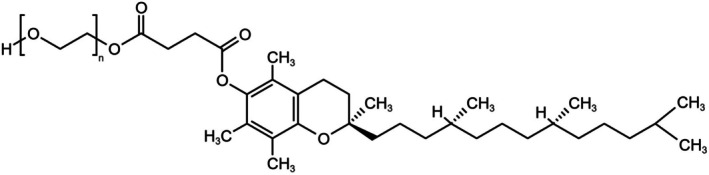 FIGURE 1
| (A) Parameter | (B) Specification as proposed by the applicant | (C) Specification as revised by the panel |
|---|---|---|
|
|
Tocopheryl polyethylene glycol succinate |
Tocopheryl polyethylene glycol succinate |
|
Vitamin E TPGS |
TPGS | |
|
TPGS |
Tocophersolan | |
|
Tocophersolan |
Tocofersolan | |
|
Tocofersolan |
α‐Tocopheryl polyethylene glycol succinate | |
|
α‐Tocopheryl polyethylene glycol succinate |
α‐Tocopherol polyethylene glycol succinate | |
|
α‐Tocopherol polyethylene glycol succinate | ||
|
| ||
| Vitamin E TPGS is prepared by esterification of the carboxylic group of crystalline | Unchanged | |
| EINECS | – | Unchanged |
| Chemical names | α‐[4‐[[(2R)‐3,4‐dihydro‐2,5,7,8‐tetramethyl‐2‐[(4R,8R)‐4,8,12‐trimethyltridecyl]‐2H‐1‐benzopyran‐6‐yl]oxy]‐1,4‐dioxobutyl]‐ω‐hydroxy‐poly(oxy‐1,2‐ethanediyl) | Unchanged |
| Chemical formula | C33O5H54(CH2CH2O)n | Unchanged |
| Molecular weight | 1513 g/mol | 1513 g/mol (nominal) |
|
| ||
| Appearance | Waxy solid; white to light yellow | Unchanged |
| Colour, gardner | < 10 | Unchanged |
|
| ||
| Gas chromatography | The retention time of the major peak of the sample solution corresponds to that of the standard alpha‐tocopherol solution. | Considered unnecessary by the Panel |
| Solubility | Soluble in water (up to 20 weight % in water) and in alcohols. | Unchanged |
| Specific rotation | ≥ +24 degrees | ≥ +24 degrees |
|
| ||
| Assay | Vitamin E TPGS: ≥ 82% weight basis by HPLC | Vitamin E TPGS (monoester) |
| D‐α‐Tocopherol | ≥ 25% | Percentage unchanged. Name of the parameter should be changed to ‘Total D‐α‐Tocopherol content (esterified and free)’ |
| PEG 1000 | < 15% | Percentage unchanged. Name of the parameter should be changed to ‘Free PEG 1000’ |
| Tocopheryl Succinate | < 1.5% | Percentage unchanged. Name of the parameter should be changed to ‘Free |
| Free tocopherols | < 1.5% | Percentage unchanged. Name of the parameter should be changed to ‘Free D‐α‐tocopherol’ |
| Acid value | ≤ 1.5 mg/g | Unchanged |
| ■■■■■ | ■■■■■ | Maximum limit to be lowered on the basis of the information provided in the dossier and on the considerations of the Panel (Table |
| Heavy metals/other elements | < 10 ppm | Not needed. The Panel considers this terminology obsolete |
| Arsenic | ≤ 0.5 ppm | Maximum limit to be lowered on the basis of the information provided in the dossier and on the considerations of the Panel (Table |
| Lead | ≤ 0.5 ppm | Maximum limit to be lowered on the basis of the information provided in the dossier and on the considerations of the Panel (Table |
| Mercury | ≤ 0.5 ppm | Maximum limit to be lowered on the basis of the information provided in the dossier and on the considerations of the Panel (Table |
| Cadmium | ≤ 0.5 ppm | Maximum limit to be lowered on the basis of the information provided in the dossier and on the considerations of the Panel (Table |
| Chromium | ≤ 0.5 ppm | Not needed, taking into account the analytical data and the manufacturing process |
| Barium | ≤ 0.5 ppm | Not needed, taking into account the analytical data and the manufacturing process |
| Nickel | ≤ 0.5 ppm | Not needed, taking into account the analytical data and the manufacturing process |
| Vanadium | ≤ 0.5 ppm | Not needed, taking into account the analytical data and the manufacturing process |
| Cobalt | ≤ 0.5 ppm | Not needed, taking into account the analytical data and the manufacturing process |
| Selenium | ≤ 0.5 ppm | Not needed, taking into account the analytical data and the manufacturing process |
| ■■■■■ | ■■■■■ | Unchanged |
| ■■■■■ | ■■■■■ | Unchanged |
|
| ||
| Aerobic plate count (TAMC) | < 10 CFU/g | Unchanged |
| Yeasts and moulds (TYMC) | < 10 CFU/g | Unchanged |
|
| Negative/10 g | Unchanged |
|
| Negative/10 g | Unchanged |
| Staphylococcus aureus | Negative/10 g | Unchanged |
| Pseudomonas | Negative/10 g | Unchanged |
| Coliform | < 5 CFU/g | Unchanged |
| Food category number | Food category | Restrictions/exceptions | Proposed use level (mg/kg) | |
|---|---|---|---|---|
| Typical | Maximum | |||
|
| Other fat and oil emulsions including spreads as defined by Regulation (EC) No 1234/2007 and liquid emulsions | 250 | 250 | |
|
| Dietary foods for special medical purposes defined in Directive 1999/21/EC (excluding products from food category 13.1.5) | Limited to ‘nutritionally incomplete foods with a standard formulation or a nutrient‐adapted formulation specific for a disease, disorder or medical condition which are not suitable to be used as the sole source of nourishment.’ | 250 | 1000 |
|
| Dietary foods for weight control diets intended to replace total daily food intake or an individual meal (the whole or part of the total daily diet) | Limited to following types of foods: Ready‐to‐drink shakes Powdered shakes Meal replacement bars | 250 | 500 |
|
| Flavoured drinks | Limited to the subcategory ‘flavoured drinks with sweeteners’ | 250 | 250 |
|
| Alcoholic beverages, including alcohol‐free and low‐alcohol counterparts | 250 | 250 | |
|
| Food supplements supplied in a solid form, excluding food supplements for infants and young children | 250 | 10,000 | |
|
| Food supplements supplied in a liquid form, excluding food supplements for infants and young children | 250 | 10,000 | |
| Name of the scenario (Table number, if present) | Population groups considered | Use levels considered | Food categories considered | Consumption data considered |
|---|---|---|---|---|
| Dietary exposure estimates for the general population (Table | General population |
Maximum | All proposed FCs except
Foods supplements (FCs 17.1 and 17.2) Foods for special medical purposes (FCs 13.2 and 13.3) | Comprehensive Database |
| Dietary exposure estimated for food supplements consumers only (Table | Consumers of food supplements (infants and toddlers are excluded) |
Maximum use level as proposed by the applicant for food supplements (i.e. 10,000 mg/kg) Typical use levels as proposed by the applicant for the remaining FCs | All proposed FCs except
Foods for special medical purposes (FCs 13.2 and 13.3) | Comprehensive Database |
| Dietary exposure estimates for adult consumers of foods for special medical purposes (FSMPs) | Only adult consumers |
Maximum use levels as proposed by the applicant | Only foods for special medical purposes (FCs 13.2 and 13.3) | Recommended daily intakes of FSMPs as indicated by the applicant |
|
Typical use levels as proposed by the applicant |
| Infants | Toddlers | Children | Adolescents | Adults | The elderly | |
|---|---|---|---|---|---|---|
| (12 weeks‐11 months) | (12–35 months) | (3–9 years) | (10–17 years) | (18–64 years) | (≥ 65 years) | |
| Mean | < 0.1–0.2 | < 0.1–0.6 | < 0.1–1.0 | < 0.1–0.6 | 0.1– | 0.1–1.3 |
| 95th percentile | < 0.1–0.4 | < 0.1–2.7 | < 0.1–4.6 | < 0.1–2.5 | 0.9– | 0.8–3.5 |
| Children | Adolescents | Adults | The elderly | |
|---|---|---|---|---|
| (3–9 years) | (10–17 years) | (18–64 years) | (≥ 65 years) | |
| Mean | 0.5– | 0.1–2.5 (14) | 0.1–1.8 (16) | 0.1–2.5 (16) |
| 95th percentile | 1.7–6.3 (8) | 1.2– | 2.0–7.7 (10) | 1.3–2.9 (5) |
| Sources of uncertainties | Direction |
|---|---|
|
| |
| Different methodologies/representativeness/underreporting/misreporting/no portion size standard | +/− |
| In the case of FSMP, use of the recommended daily consumption level for an adult population by the applicant | + |
| Methodology used to estimate high percentiles (95th) long‐term (chronic) exposure based on data from food consumption surveys covering only a few days | + |
|
| |
| Correspondence of proposed use levels to the food items in the Comprehensive Database: uncertainties to which types of food the levels refer to | +/− |
| Uncertainty in possible national differences in use levels of FCs | +/− |
| Proposed maximum and typical use levels considered applicable to all foods within the entire food category, whereas most probably not all food belonging to a proposed food category will contain Vitamin E TPGS as a food additive |
+ |
|
| |
| Proposed use level exposure assessment scenario:
Exposure calculations based on the proposed typical use levels Exposure calculations based on the proposed maximum use levels |
+/− + |
| Infants | Toddlers | Children | Adolescents | Adults | The elderly | |
|---|---|---|---|---|---|---|
| (12 weeks–11 months) | (12–35 months) | (3–9 years) | (10–17 years) | (18–64 years) | (≥ 65 years) | |
|
| ||||||
|
| ||||||
| Mean | < 0.1 – < 0.1 | < 0.1–0.1 | < 0.1–0.2 | < 0.1–0.1 | < 0.1–0.3 | < 0.1–0.2 |
| 95th percentile | < 0.1–0.1 | < 0.1–0.5 | < 0.1–0.8 | < 0.1–0.5 | 0.2–1.0 | 0.1–0.6 |
|
| ||||||
| Mean | – | – | 0.1–0.5 | < 0.1–0.5 | < 0.1–0.3 | < 0.1–0.5 |
| 95th percentile | – | – | 0.3–1.2 | 0.2–1.6 | 0.4–1.4 | 0.2–0.5 |
|
| ||||||
| – | – | – | – | 3.3 | 3.3 | |
|
| ||||||
|
| ||||||
| Mean | < 0.1–< 0.1 | < 0.1–< 0.1 | < 0.1–< 0.1 | < 0.1–< 0.1 | < 0.1–< 0.1 | < 0.1–< 0.1 |
| 95th percentile | < 0.1–< 0.1 | < 0.1–< 0.1 | < 0.1–0.1 | < 0.1–< 0.1 | < 0.1–0.1 | < 0.1–0.1 |
|
| ||||||
| Mean | – | – | < 0.1–< 0.1 | < 0.1–< 0.1 | < 0.1–< 0.1 | < 0.1–< 0.1 |
| 95th percentile | – | – | < 0.1–0.1 | < 0.1–0.1 | < 0.1–0.1 | < 0.1–< 0.1 |
|
| ||||||
| – | – | – | – | 0.3 | 0.3 | |
|
| ||||||
|
| ||||||
| Mean | < 0.1–< 0.1 | < 0.1–< 0.1 | < 0.1–< 0.1 | < 0.1–< 0.1 | < 0.1–< 0.1 | < 0.1–< 0.1 |
| 95th percentile | < 0.1–< 0.1 | < 0.1–< 0.1 | < 0.1–0.1 | < 0.1–< 0.1 | < 0.1–0.1 | < 0.1–0.1 |
|
| ||||||
| Mean | – | – | < 0.1–< 0.1 | < 0.1–< 0.1 | < 0.1–< 0.1 | < 0.1–< 0.1 |
| 95th percentile | – | – | < 0.1–0.1 | < 0.1–0.1 | < 0.1–0.1 | < 0.1–< 0.1 |
|
| ||||||
| – | – | – | – | 0.3 | 0.3 | |
| Impurity/HBGV/RP (μg/kg bw) | Basis |
|---|---|
| Inorganic arsenic (iAs)/0.06 μg/kg bw per day (BMDL05) |
The reference point is based on a benchmark dose lower confidence limit (BMDL05) of 0.06 μg/kg bw per day identified for skin cancer. The reference point is considered to cover lung cancer, bladder cancer, skin lesions, ischaemic heart disease, chronic kidney disease, respiratory disease, spontaneous abortion, stillbirth, infant mortality and neurodevelopmental effects. An MOE of 1 would correspond to the exposure level that is associated with a 5% increase relative to the background incidence for skin cancer, based on the available data. An MOE of 1 raises a health concern. Because there are no precedents in EFSA for identification of an MOE of low concern, when using a BMDL derived from human cancer data the CONTAM Panel decided not to determine a value for an MOE of low concern. EFSA CONTAM Panel ( |
| Lead (Pb) 0.5 (BMDL01) | The reference point is based on a study demonstrating perturbation of intellectual development in children with the critical response size of 1 point reduction in IQ. The EFSA CONTAM Panel mentioned that a 1 |
| Cadmium (Cd) 2.5 (TWI) | The derivation of the reference point is based on a meta‐analysis to evaluate the dose–response relationship between selected urinary cadmium and urinary beta‐2‐microglobulin (B2M) as the biomarker of tubular damage recognised as the most useful biomarker in relation to tubular effects. A group‐based BMDL5 of 4 μg Cd/g creatinine for humans was derived. A chemical specific adjustment factor of 3.9 was applied to account for human variability in urinary cadmium within each dose‐subgroup in the analysis resulting in a reference point of 1.0 μg Cd per g creatinine. In order to remain below 1 μg Cd/g creatinine in urine in 95% of the population by age 50, the average daily dietary cadmium intake should not exceed 0.36 μg Cd/kg b.w., corresponding to a weekly dietary intake of 2.5 μg Cd/kg b.w. EFSA CONTAM Panel ( |
| Mercury (iHg) 4 (TWI) |
The HBGV was set using kidney weight changes in male rats as the pivotal effect. Based on the BMDL10 of 0.06 mg/kg b.w. per day, expressed as mercury and an uncertainty factor of 100 to account for inter and intra species differences, with conversion to a weekly basis and rounding to one significant figure, a TWI for inorganic mercury of 4 μg/kg b.w., expressed as mercury was established. EFSA CONTAM Panel ( |
| ■■■■■ NOAEL 1000 mg/kg bw per day (limit dose) |
■■■■■ is not expected to be carcinogenic, genotoxic or result in reproductive and developmental toxicity. No systemic effects were observed in animals after repeated dose exposure to ■■■■■ or its analogues up to the limit dose of 1000 mg/kg bw/day (Health Canada, ■■■■■). The Panel considered a MOE of 100 sufficient. |
| Exposure to proposed additive (mg/kg bw per day) | Scenario (i) considering the presence of the toxic elements at the limits in the proposed specifications by the applicant | |||
|---|---|---|---|---|
| MOE for Pb at 0.5 mg/kg | % of the TWI for iHg at 0.5 mg/kg | % of the TWI for Cd at 0.5 mg/kg | MOE for iAs at 0.5 mg/kg | |
| 1.4 | 714.3 | 0.1 | 0.2 | 85.7 |
| 5.7 | 175.4 | 0.5 | 0.8 | 21.1 |
| 2.8 | 357.1 | 0.2 | 0.4 | 42.9 |
| 8.5 | 117.7 | 0.7 | 1.2 | 14.1 |
| 8.9 | 112.4 | 0.8 | 1.2 | 13.5 |
| 17.9 | 55.9 | 1.6 | 2.5 | 6.7 |
| Exposure to proposed additive (mg/kg bw per day) | Exposure to ■■■■■ present at ■■■■■ (mg/kg bw per day) | MOE for ■■■■■ at ■■■■■ |
|---|---|---|
| 1.4 | < 0.1 | > 10,000 |
| 5.7 | < 0.1 | > 10,000 |
| 2.8 | < 0.1 | > 10,000 |
| 8.5 | < 0.1 | > 10,000 |
| 8.9 | < 0.1 | > 10,000 |
| 17.9 | < 0.1 | > 10,000 |
Peer Reviews
No public reviews on file for this paper yet. If you reviewed it on a platform where reviews are public (OpenReview, ICLR, NeurIPS, ICML), you can paste yours below so the community can read it here.
Videos
No videos yet. Explain this paper in a talk, walkthrough, or lecture? Add one.
Taxonomy
TopicsAgricultural safety and regulations · Effects and risks of endocrine disrupting chemicals · Consumer Attitudes and Food Labeling
SUMMARY
The European Commission requests the European Food Safety Authority to perform a risk assessment to provide a scientific opinion on the safety in use of d‐α‐tocopheryl polyethylene glycol‐1000 succinate and then add in brackets (Vitamin E TPGS) Vitamin E TPGS as a food additive in different FCs, in accordance with Regulation (EC) No 1331/2008 establishing a common authorisation procedure for food additives, food enzymes and food flavourings.
The proposed food additive is marketed as a waxy solid intended to be used in several FCs as emulsifier. The manufacturing involves a reaction between d‐α‐tocopheryl acid succinate and PEG 1000, followed by a solvent‐mediated purification, crystallisation and filtration.
The applicant provided analytical data on five batches of the proposed food additive, showing that Vitamin E TPGS is produced according to the proposed specifications. The Panel considered the specifications provided by the applicant sufficient to properly characterise the proposed food additive but suggested some revisions.
Compositional data showed that the proposed food additive is composed of Vitamin E TPGS monoesters (> 82% w/w of the whole preparation) and diesters (< 20% w/w of the whole preparation), although the content of diesters is not reflected in the specifications as proposed by the applicant. Unreacted PEG 1000, unreacted d‐α‐tocopheryl acid succinate and free d‐α‐tocopherol may be present.
Analytical data on the levels of arsenic (As), lead (Pb), cadmium (Cd) and mercury (Hg) were provided by the applicant for five samples of the proposed food additive. The Panel assessed the risk that would result if these toxic elements were present in Vitamin E TPGS at two concentration scenarios: (i) at the proposed specification limits, and (ii) at the reported limits of quantification (LOQs). The Panel recommended to lower the specification limits proposed by the applicant for all four toxic elements (Pb, Cd, Hg, As), taking into account the fact that the proposed food additive is not the only potential dietary source of these toxic elements, and that the maximum limits should be established based on actual levels in the commercial food additive. The Panel assessed also the safety of ■■■■■ calculating the margin of safety (MOE) from the exposure at its maximum residual level according to the specifications provided by the applicant (■■■■■), based on the different exposure assessment scenarios and taking the no observed adverse effect level (NOAEL) of 1000 mg/kg bw per day as the reference point. The resulting MOE in all scenarios was well above the default MOE of 100 (Table 10), thus indicating no concern.
The Panel noted that the proposed maximum limits for solvent and catalyst residues are higher than the actual concentrations quantified in the five batches of Vitamin E TPGS analysed by the applicant. The Panel considered the maximum limits proposed for residual solvents to be adequate, while the proposed limit for ■■■■■ was not supported by the analytical data; accordingly, the Panel recommended to lower the specification limit proposed by the applicant.
The applicant provided solubility data showing complete dissolution of 1 g of Vitamin E TPGS in 10 mL of water. Although the test does not fully meet the requirements of the EFSA Guidance on particle TR, the Panel concluded that Vitamin E TPGS would be fully solubilised at the intended use levels and conventional risk assessment can be carried out following the EFSA Guidance for submission for food additive evaluations (EFSA ANS Panel, 2012).
The applicant demonstrated a 4‐year shelf life from the date of manufacturing for Vitamin E TPGS, when stored and sealed in the original container (parameters considered in the stability study were free d‐α‐tocopherol, colour and acid value). Additional literature data on the hydrolysis of Vitamin E TPGS were provided. Christiansen et al. (2011) reported that, under gastric conditions (pH 1.0 and 37°C), 3.4% (± 0.4%) of Vitamin E TPGS degraded into d‐α‐tocopheryl acid succinate and the associated PEG chain within 8 hours. Results showed that the ester bond between d‐α‐tocopherol and succinic acid is stable under the tested conditions, as no increase in free d‐α‐tocopherol was observed.
Dietary exposure to Vitamin E TPGS was estimated according to three exposure scenarios that addressed the exposure deriving from the proposed uses for (i) the general population, (ii) consumers of food supplements and (iii) the adult population consuming foods for special medical purposes (FSMPs; FCs 13.2 and 13.2). For this last population, the Panel used a daily high consumption of FSMPs in adults as reported by the applicant as the consumption data in the Comprehensive Database do not allow such an assessment.
The highest P95 exposure to Vitamin E TPGS in the general population was 5.7 mg/kg bw per day in adults and 8.5 mg/kg bw per day in adolescent consumers of food supplements. In adults, the exposure to Vitamin E TPGS deriving from FSMP was 17.9 mg/kg bw per day at the proposed maximum use level and 8.9 mg/kg bw per day at the proposed typical use level.
The Panel considered that TPGS as described in EFSA AFC Panel (2007a) is similar to the new proposed food additive Vitamin E TPGS object of this opinion, and therefore the assessment performed in 2007 was considered relevant for the present application. The Panel considered that the proposed food additive Vitamin E TPGS is poorly absorbed and does not represent a source of Vitamin E in the healthy population. Vitamin E TPGS does not raise a concern with respect to genotoxicity. No adverse effects on reproductive and developmental parameters were observed up to 1000 mg TPGS/kg bw per day in a one‐generation reproductive toxicity study in rats and developmental toxicity studies in rats and rabbits. Subchronic studies in rats and dogs demonstrated no treatment‐related adverse effects of TPGS. The Panel confirmed the NOAEL of 1000 mg TPGS/kg bw per day, the highest dose tested, as a reference point. Due to the limitations in the available data (e.g. in reporting), the Panel decided to use an MOE approach instead of deriving an acceptable daily intake (ADI).
The reference point would result in an MOE of 175 for the general population for the highest P95 exposure of 5.7 mg/kg bw per day in adults, and an MOE of 118 for the highest P95 exposure of 8.5 mg/kg bw per day in adolescent consumers of food supplements. Considering the FSMP scenario adult only, the highest estimated exposure of 17.9 mg/kg bw per day would result in an MOE of 56.
The Panel considered these MOEs sufficient, given that (i) Vitamin E TPGS is poorly absorbed and has low bioavailability, (ii) 1000 mg TPGS/kg bw per day was the highest dose tested without adverse effects, (iii) higher doses could not be tested due to animal welfare considerations, (iv) Vitamin E TPGS does not represent a relevant source of Vitamin E in the healthy population, while it could be a nutrient source of Vitamin E in individuals with fat malabsorption and Vitamin E deficiency and (v) the exposure to Vitamin E TPGS through the consumption of FSMPs is expected to be for a limited period of time, not long‐term.
The Panel estimated the exposure to PEG 1000, d‐α‐tocopheryl acid succinate and d‐α‐tocopherol, based on their concentrations reported in the proposed specifications and the P95 exposure estimates for the three scenarios. The resulting exposure to the three components was well below the respective health‐based guidance values or reference point. Therefore, the Panel concluded that there is no safety concern for the exposure to PEG 1000, d‐α‐tocopheryl acid succinate and D‐α‐tocopherol from the uses and use levels of the proposed food additive.
Based on the available data, the Panel concluded that the use of Vitamin E TPGS as a new food additive does not raise a safety concern at the proposed use and use levels.
INTRODUCTION
1
The present scientific opinion deals with the safety evaluation of d‐α‐tocopheryl polyethylene glycol‐1000 succinate (TPGS or Vitamin E TPGS) proposed as a new food additive. In this assessment, the name as proposed by the applicant ‘Vitamin E TPGS’ is used. Vitamin E TPGS is proposed for use as an emulsifier in several food categories.
Background and Terms of Reference as provided by the requestor
1.1
Background
1.1.1
The use of food additives is regulated under the European Parliament and Council Regulation (EC) No 1333/20081 on food additives. Only food additives that are included in the Union list, in particular in Annex II to that regulation, may be placed on the market and used in foods under the conditions of use specified therein. Moreover, food additives shall comply with the specifications as referred to in Article 14 of that Regulation and laid down in Commission Regulation (EU) No 231/2012.2
An application has been introduced for the authorisation of the use of D‐α‐tocopheryl polyethylene glycol‐1000 succinate (TPGS, CAS No 9002‐96‐4), also named Vitamin E TPGS, as a new food additive. TPGS is proposed for use as an emulsifier in several food categories. According to the applicant, TPGS has specific physico‐chemical properties such as high temperature stability and efficacy at low use levels, which distinguish it from other emulsifiers.
In 2007, EFSA assessed the safety and bioavailability of TPGS as a nutrient,3 which resulted in its authorisation as a source of vitamin E for use in food for special medical purposes.4
In the opinion re‐evaluating safety of phosphoric acid—phosphates ‐ di‐, tri‐ and polyphosphates as food additives,5 EFSA recommended to review current approaches to the setting of health‐based guidance values for substances which are also nutrients to assess if a coherent harmonised strategy for such risk assessment should be devised. It should be noted that the assessment of TPGS is relevant for this cross‐cutting activity, as the proposed food additive use would contribute to the intake of vitamin E.
In 2018, EFSA issued refined exposure assessment of polyethylene glycol (E 1521) from its use as a food additive.6 In the risk assessment of the proposed food additive use of TPGS it is appropriate to take into account its potential contribution to the overall dietary exposure to polyethylene glycol (E 1521).
Terms of Reference
1.1.2
The European Commission requests the European Food Safety Authority to perform a risk assessment to provide a scientific opinion on the safety in use of D‐α‐tocopheryl polyethylene glycol‐1000 succinate as a food additive in different food categories, in accordance with Regulation (EC) No 1331/2008 establishing a common authorisation procedure for food additives, food enzymes and food flavourings.7
Information on existing evaluations and authorisations
1.2
The safety of TPGS (also known as Vitamin E TPGS) was assessed by EFSA AFC Panel in 2007 (Panel on Food Additives, Flavourings, Processing Aids and Materials in Contact with Food). The Panel issued an opinion based on ‘the safety of d‐α‐tocopheryl polyethylene glycol‐1000 succinate as a source of tocopherol and with the bioavailability of the nutrient from this source, intended to be used in foods for particular nutritional uses’. The Panel noted that ‘studies in healthy humans showed that the administration of TPGS, in contrast to fat‐soluble vitamin E sources, only slightly elevated the plasma α‐tocopherol level. Therefore, TPGS is not a useful source of vitamin E in healthy humans with a normal fat absorption’.
The estimated intake to TPGS was calculated based on the maximum use level of 0.75 mg vitamin E/100 KJ food permitted according to Directive 1999/21/EC on dietary foods for special medical purposes. The estimated potential intake varied from 5 mg TPGS/kg bw per day in teenagers to 13 mg TPGS/kg bw per day in 1 month old infants.
The AFC Panel assessed the safety of TPGS ‘on the basis of the overall NOAEL equivalent to 1000 mg TPGS/kg body weight per day, established in subchronic toxicity studies’.
The calculated MOE (80–200) was considered to be adequate, therefore the AFC Panel concluded ‘that the use of TPGS in foods for special medical purposes is not of safety concern at the anticipated intake level’.
Based on the AFC opinion, vitamin E TPGS was included in Regulation (EU) No 609/2013 of the European Parliament and the Council on food intended for infants and young children, food for special medical purposes and total diet replacement for weight control, as a source of vitamin E. The AFC Panel noted also that a hyperosmolar state may occur at high dose levels of TPGS if TPGS is administered during renal insufficiency or dehydration, since excretion of the PEG 1000 relies on glomerular filtration and urinary excretion. Therefore, the AFC Panel concluded that it is advised not to apply the TPGS treatment in children with severe impairment of kidney function.
According to the proposed specifications, Vitamin E TPGS may contain the following components PEG 1000, d‐α‐tocopheryl acid succinate and free d‐α‐tocopherol.
d‐α‐tocopherol, DL‐α‐tocopherol and their acetates have been evaluated by the Scientific Committee on Food (SCF) for use as nutrient sources in infant and young child nutrition, Foods for Special Medical Purposes (FSMP) and as antioxidants in general foods, including formulae and weaning products, and no ADI was set (Commission of the European Communities, 1989a, 1989b, 1991a, 1997a, 1997b, 1997c). The Joint FAO/WHO Expert Committee on Food Additives (JECFA) established a group ADI of 0.15–2 mg/kg body weight (bw) for d‐α‐tocopherol and DL‐α‐tocopherol (JECFA, 1987). In 2003, the SCF identified blood coagulation effects as the critical endpoint and determined a NOAEL of 800 IU/day (540 mg/day) (SCF, 2003).
In 2024, the EFSA Panel on Nutrition, Novel Foods and Food Allergens (NDA) revised the tolerable upper intake levels (ULs) for vitamin E, as α‐tocopherol, as follows: 300 mg/day for adults, including pregnant and lactating women; 100 mg/day for children aged 1–3 years; 120 mg/day for children aged 4–6 years; 160 mg/day for children aged 7–10 years; 220 mg/day for children aged 11–14 years; and 260 mg/day for adolescents aged 15–17 years. For infants, the ULs are 50 mg/day for those aged 4–6 months and 60 mg/day for those aged 7–11 months (EFSA NDA Panel, 2024). Overall, it was concluded that it is unlikely that the ULs for vitamin E are exceeded in European populations, except for regular users of food supplements containing high doses of vitamin E.
The safety of three tocopherol/tocotrienol preparations (mixed tocopherols, tocotrienol tocopherol and tocotrienols) as sources for vitamin E were evaluated by the AFC Panel in 2008, considering a UL of 300 mg per day for adults set by the SCF, along with the ADI of 0.15–2 mg/kg body weight per day for α‐tocopherol, as established by JECFA. It was concluded that the use of ‘mixed tocopherols’ and ‘tocotrienol tocopherol’ for the use in food supplements for the general population did not pose a safety concern (EFSA AFC Panel, 2008).
In 2015, tocopherols (tocopherol‐rich extract (E 306), α‐tocopherol (E 307), γ‐tocopherol (E 308) and δ‐tocopherol (E 309)), were re‐evaluated by the EFSA Panel on Food Additives and Nutrient Sources added to Food (ANS) (EFSA ANS Panel, 2015). No concerns were identified regarding genotoxicity or carcinogenicity, although the available data were insufficient to assess reproductive and developmental toxicity. An ADI could not be established for tocopherols. However, since vitamin E is an essential nutrient widely consumed from natural sources and that ULs were not exceeded by most population groups, α‐tocopherol (E 307) was not considered of a safety concern at the reported uses and use levels as a food additive. Additionally, since γ‐ and δ‐tocopherols are found in lower concentrations and had fewer applications in food than α‐tocopherol, it was concluded that other tocopherols (E 306, E 308, E 309) do not pose safety concerns at current usage levels in food. A follow‐up assessment is currently ongoing to update the ANS Panel re‐evaluation opinion with respect to the safety of use of these food additives in foods intended for use in infants aged less than 16 weeks and with respect to the data gaps identified in the re‐evaluation assessment including the safety assessment for the population above 16 weeks of age.
d‐α‐tocopheryl acid succinate (TAS) was initially evaluated by the SCF in 1999 (SCF, 1999) for its use in the manufacture of foods for particular nutritional purposes, pending data on its hydrolysis and gastrointestinal absorption. In 2005, the EFSA AFC Panel identified a NOAEL of 265 mg/kg bw per day from a 90‐day rat study. Assuming similar bioavailability in humans and rats, a margin of safety of 47.3 was calculated. The Panel concluded that TAS, as a source of vitamin E, does not pose a safety concern under the proposed conditions of use (EFSA AFC Panel, 2005).
Succinic acid (E 363) is a permitted food additive in the European Union (EU) according to Regulation (EC) No 1333/2008. Succinic acid (E 363) had been previously evaluated by the SCF in 1991 when a group ADI ‘not specified’ was established. The SCF report stated that succinic acid and the succinate anion, which occur naturally and are key intermediates in the citric acid cycle, were evaluated by the SCF in 1991, without stablishing a specified ADI (Commission of the European Communities, 1991b). In 2024, JECFA reaffirmed that succinic acid does not pose a hazard at levels used in food, confirming the ADI ‘not specified’ (JECFA, 2024). Succinic acid (E 363) is being re‐evaluated by EFSA in the frame of Regulation (EU) No 257/2010, however this assessment has not yet been completed at the time of the present opinion.8
Succinic acid [FL‐no: 08.024] is also a permitted food flavouring in the EU according to Regulation (EC) No 1334/2008. Succinic acid was evaluated by the CEF Panel as part of the FGE.10 evaluation, which also included the related food flavouring, disodium succinate [FL‐no: 08.113]. The latter was considered to raise no safety concerns at a level of intake of 1500 μg/day/person, as estimated by the maximised survey‐derived daily intake (MSDI) (EFSA CEF Panel, 2012).
Polyethylene glycol (synonym PEG, Macrogol, Polyethylene oxide) (E 1521) is an authorised food additive in the European Union (EU) according to Annexes II and III to Regulation (EC) No 1333/2008.
The Panel noted that, however, PEG 1000 is not specifically named in the EU specifications for E 1521, which conversely include six other PEGs with molecular weight (MW) MW ranging 380–9000 Da. The Panel considered that despite the specific PEG 1000 is not included in the EU specifications of E 1521 from Regulation (EC) No 1333/2008 and Regulation (EU) No 231/2012, the average MW for PEG 1000 falls in the MW range of E 1521 and considered that the conclusions on the assessment of E 1521 can be extrapolated to PEG 1000.
Polyethylene glycols were evaluated by several international bodies over the years, including EFSA. In particular, a tolerable daily intake (TDI) group of 5 mg/kg body weight was established by the SCF (SCF, 1978) (for PEG 300–4000) and a group ADI of 10 mg/kg bw per day was established by JECFA (for PEG 200–10,000, including PEG 1000) (JECFA, 1980). In 2007, the AFC Panel concluded that consumption of PEG (PEG 400, 3000, 3350, 4000, 6000, 8000) through use as plasticisers in film‐coating formulations for food supplement tablets and/or capsules at the intended use level are not of safety concern (EFSA AFC Panel, 2007b). The AFC Panel assessed several oral and non‐oral, short and long‐term animal toxicity studies, including a 90‐day GLP‐compliant animal toxicity study, as well as a number of genotoxicity studies and human data which demonstrated that, overall, no consistent adverse effects were associated with polyethylene glycol compounds of variable molecular weights (MWs). The AFC Panel stated that the extent of PEG absorption depends on the MW of the specific polymer (i.e. higher absorption has been reported for lower MW PEGs, like PEG 400, while absorption is much more limited in case of higher MW PEGs). Once absorbed PEGs are excreted in the urine by glomerular filtration without tubular reabsorption.
This information on the absorption and excretion of PEGs was considered by the EFSA AFC Panel in the 2007 assessment of TPGS, which concluded, as mentioned above, that it is advised not to apply the TPGS as supplementation in children with severe impairment of kidney function.
In 2018, the ANS Panel performed a refined exposure assessment to polyethylene glycol (E 1521) when used as a food additive, concluding that highest calculated exposure estimate fell within the range of the previously established health‐based guidance values (group TDI of 5 mg/kg bw per day and group ADI of 10 mg/kg bw per day, by SCF and JECFA, respectively) (EFSA ANS Panel, 2018).
Vitamin E TPGS (under the name Tocophersolan) is included in the Food and Drug Administration (FDA) Inactive Ingredients Database for uses in ophthalmic solution or drops; oral capsules, solution, tablet; topical solution or drops (FDA (U.S. Food and Drug Administration) Drug databases). Moreover, as described in the corresponding NF monograph n°34, ‘Vitamin E Polyethylene Glycol Succinate’ is also an approved drug excipient in the United States. Its use as a non‐medicinal ingredient is also approved in Canada. Indeed, Tocophersolan (TPGS) is included in the Canadian Natural Health Products Ingredients Database.
DATA AND METHODOLOGIES
2
Data
2.1
The applicant has submitted a dossier to support the safety evaluation of the present application on d‐α‐tocopheryl polyethylene glycol‐1000 succinate (Vitamin E TPGS) as emulsifier (Documentation provided to EFSA No 1).
Following the request for additional data sent by EFSA in December 2020, the applicant requested an extension of the deadline, after which the applicant provided additional data in October 2021 (Documentation provided to EFSA No 2). In response to further requests from EFSA, the applicant submitted additional information in April 2024 (Documentation provided to EFSA No 3), May 2024 (Documentation provided to EFSA No 4), December 2024 (Documentation provided to EFSA No 5), March 2025 (Documentation provided to EFSA No 6) and May 2025 (Documentation provided to EFSA No 7).
In addition, food consumption data from the EFSA Comprehensive European Food Consumption Database (Comprehensive Database)9 were used to estimate the dietary exposure to Vitamin E TPGS.
Methodologies
2.2
This opinion was formulated following the principles described in the EFSA Guidance of the Scientific Committee on transparency with regard to scientific aspects of risk assessment (EFSA Scientific Committee, 2009) and following the relevant existing Guidance documents from the EFSA Scientific Committee. The current ‘Guidance for submission for food additive evaluation’ (EFSA ANS Panel, 2012) has been followed by the FAF Panel for evaluating the present application.
The approach and the methodology used to calculate the different dietary exposure scenarios presented in this opinion are described in the EFSA Guidance ‘Use of the EFSA Comprehensive European Food Consumption Database in Exposure Assessment’ (EFSA, 2011) and in the 2017 ANS Panel statement on the ‘Approach followed for the refined exposure assessment as part of the safety assessment of food additives under re‐evaluation’ (EFSA ANS Panel, 2017).
To estimate the exposure to the food additive, nomenclature from the FoodEx2 classification system (EFSA, 2015) used in the Comprehensive Database was linked to the food categorisation system of Annex II to Regulation (EC) No 1333/2008, part D.
Uncertainties in the exposure assessment were identified and discussed (Section 3.3.2).
ASSESSMENT
3
Technical data
3.1
Identity of the proposed food additive
3.1.1
The applicant has submitted a dossier to support the safety evaluation of d‐α‐tocopheryl polyethylene glycol‐1000 succinate (Vitamin E TPGS) proposed as a new food additive. Vitamin E TPGS is intended as an emulsifier to be used in several food categories (Documentation provided to EFSA No 6).
Vitamin E TPGS corresponds to the CAS number 9002‐96‐4. Synonyms include: Tocopheryl polyethylene glycol succinate, TPGS, Tocophersolan, Tocofersolan, α‐Tocopheryl polyethylene glycol succinate, α‐Tocopherol polyethylene glycol succinate (Documentation provided to EFSA No 6).
The manufacturing of the proposed food additive involves a reaction between d‐α‐tocopheryl acid succinate and polyethylene glycol 1000 (PEG 1000), in the presence of ■■■■■) as a catalyst, followed by a solvent‐mediated purification, crystallisation and filtration. Vitamin E TPGS is marketed as a waxy solid, white to light tan in colour (Documentation provided to EFSA No 6).
The applicant provided compositional data for five independent batches of the proposed food additive. According to the data provided, the proposed food additive is composed of Vitamin E TPGS monoesters (d‐α‐tocopheryl acid succinate linked to the PEG 1000, > 82% w/w of the whole preparation) and diesters (two d‐α‐tocopheryl acid succinate molecules linked to the PEG, < 20% w/w of the whole preparation). Residues of unreacted PEG 1000 (less than 15% w/w), unreacted d‐α‐tocopheryl acid succinate (less than 1.5% w/w) and free d‐α‐tocopherol (less than 1.5% w/w) can be present (Documentation provided to EFSA No 6).
Chemical structure of Vitamin E TPGS monoester is reported in Figure 1.
Chemical structure of Vitamin E TPGS monoester.
Specifications
3.1.2
The specifications for Vitamin E TPGS, as proposed by the applicant (Documentation provided to EFSA No 4) and revised by the Panel are presented in Table 1.
Column B reports the specifications as proposed by the applicant (Documentation provided to EFSA No 4). Based on the available technical data, the Panel proposed some modifications to the proposed specifications (Column C).
The Panel noted that analytical data were provided for five independent batches of the proposed food additive (i.e. Vitamin E TPGS), showing that the samples meet the specifications proposed (Documentation provided to EFSA No 6).
The purity assay proposed by the applicant consists in the determination of Vitamin E TPGS content in the proposed food additive by HPLC–UV that should be above 82% w/w according to the proposed specifications. The applicant provided a description of the analytical method used to determine the concentration of Vitamin E TPGS (Documentation provided to EFSA No 6). Based on the information provided by the applicant, the Panel considered that the proposed minimum limit of 82% w/w refers solely to the monoester fraction of Vitamin E TPGS, while information on the percentage of diesters is not proposed in the specifications. Therefore, the Panel recommends revising the specifications accordingly.
Following the United States Pharmacopeia–National Formulary (USP–NF) monograph on Vitamin E Polyethylene Glycol Succinate (USP–NF, 2016), the applicant included in the specifications the minimum concentration of 25% for D‐α‐tocopherol, determined by gas chromatography (GC) using reference standard (Documentation provided to EFSA No 6). Based on the information provided by the applicant, the Panel considered that the proposed minimum limit of 25% w/w refers to the total amount of d‐α‐tocopherol, mainly coming from the monoester plus a little from the diester plus any free fraction. Therefore, the Panel recommends revising the specifications accordingly.
The applicant specified that possible impurities include residues of unreacted PEG 1000 and d‐α‐tocopheryl acid succinate and free d‐α‐tocopherol as a by‐product of the hydrolysis of the starting material D‐α‐tocopheryl acid succinate. The following maximum limits were proposed by the applicant for these components: 15% w/w for PEG 1000, 1.5% w/w for both d‐α‐tocopheryl acid succinate and free d‐α‐tocopherol (Documentation provided to EFSA No 6). The Panel considered that the parameter ‘PEG 1000’ included in the proposed specifications refers solely to the free unreacted fraction and this should be reflected in the specifications. Additionally, the Panel noted that the parameters ‘tocopheryl succinate’ and ‘free tocopherols’ included in the proposed specifications refer to free d‐α‐tocopheryl acid succinate and free d‐α‐tocopherol, respectively. The Panel recommended revising the proposed specifications accordingly. The characterisation of Vitamin E TPGS by Electrospray Liquid Chromatography with Mass Spectrometry (LC‐MS) highlighted the presence of additional related minor compounds, i.e. PEG acetate, PEG diacetate, TPGS ester succinate, TPGS ester succinate PEG ester, TPGS ester acetate, TPGS diester succinate PEG ester (Documentation provided to EFSA No 6).
Other possible impurities identified by the applicant are residual solvents and residual catalyst used in the manufacturing process. For residual solvents, the proposed limits are ■■■■■ for ■■■■■ and ■■■■■ for ■■■■■ Maximum limit for the catalyst (■■■■■) is set to ■■■■■), based on the maximum acid value of 1.5 mg/g (Documentation provided to EFSA No 6). Product specifications for the ■■■■■ used as a catalyst have been provided by the applicant.
The Panel noted that the proposed maximum limits for solvent and catalyst residues are higher than the actual concentrations quantified in the five batches of Vitamin E TPGS analysed by the applicant (■■■■■ for ■■■■■; ■■■■■ for ■■■■■; ■■■■■ for ■■■■■). Upon request, the applicant stated that the limits were adjusted based on historical data from production (Documentation provided to EFSA No 6). The Panel considered the maximum limits proposed for residual solvents to be adequate, while the proposed limit for ■■■■■ was not supported by the analytical data.
Specifications as proposed by the applicant set the maximum limits for toxic elements to 0.5 mg/kg on a weight basis for arsenic (As), lead (Pb), mercury (Hg) and cadmium (Cd). Maximum limit of 0.5 mg/kg was also indicated for other elements, i.e. chromium (Cr), barium (Ba), nickel (Ni), vanadium (Va), cobalt (Co) and selenium (Se). Based on the analytical data provided by the applicant, the concentration of these elements was below the LOQ (0.05 mg/kg for each of the elements) for five independent batches analysed by the applicant (Documentation provided to EFSA No 6). Considering the analytical data provided and the manufacturing process, the Panel did not see a reason to introduce maximum limits for Cr, Ba, Ni, Va, Co and Se in the specifications.
The Panel noted that the proposed maximum limits for toxic elements are 10 times higher than the actual measured values for the five batches of Vitamin E TPGS analysed by the applicant. The anticipated impact of the proposed specifications and of the reported analytical data on the potential exposure to these toxic elements is described in Section 3.3.4 (Table 9).
The applicant provided analytical data on microbiological criteria, showing that the five analysed batches meet the proposed specifications (Documentation provided to EFSA No 6).
The applicant reported that MW for Vitamin E TPGS is approximately 1513 Da (Wu & Hopkins, 1999). The Panel noted that the applicant did not provide any analytical data on the MW for commercial batches of the proposed food additive Vitamin E TPGS. Since PEG is a polymer, the Panel recommends indicating that the MW of 1513 Da in the proposed specifications is a nominal MW.
The Panel considered that the analytical data support the compliance of the tested batches with the proposed specifications. However, the Panel recommends the European Commission to revise the specifications proposed by the applicant as indicated in the paragraphs above and in Table 1, Column C.
Solubility and particle size
3.1.2.1
The applicant reported that Vitamin E TPGS forms solutions with water at concentrations up to approximately 20% (w/w) (Wu & Hopkins, 1999), and that it is soluble in alcohols (Documentation provided to EFSA No 6).
In response to the EFSA's request, the applicant provided results from a solubility test in water (Documentation provided to EFSA No 4). In that test, 1 g of Vitamin E TPGS was added to 10 mL of water, stirred and heated to 40°C for 2 h (with the melting point of TPGS being 38°C). The solution was then cooled over 2 h to room temperature. Three samples were prepared which were then measured consecutively on day‐1, day‐2 and day‐3. Approximately 5 g of the cooled solution was filtered through a 20 nm syringe filter to separate any undissolved Vitamin E TPGS from the dissolved material. The mass of the solution taken and the filtered solute were compared and the mass loss was negligible. The applicant concluded that this test demonstrated the complete dissolution of 1 g of Vitamin E TPGS in 10 mL of water, meeting the solubility criterion of 33.3 g/L set by the EFSA Guidance on particle TR (EFSA Scientific Committee, 2021).
The Panel noted that the test does not fully meet the requirements of the EFSA Guidance on particle TR. Specifically, the solution was not ultrafiltered and the concentration of dissolved Vitamin E TPGS was not determined using a substance‐specific method as required by OECD TG 105. Additionally, the test did not provide the exact solubility value of Vitamin E TPGS in water, only indicating that it is fully soluble to at least 100 g/L. Nonetheless, the Panel considered that Vitamin E TPGS would be fully solubilised at the intended use levels and conventional risk assessment can be carried out for Vitamin E TPGS following the EFSA Guidance for submission for food additive evaluations (EFSA ANS Panel, 2012).
Manufacturing process
3.1.3
The manufacturing of the proposed food additive involves a catalysed reaction between d‐α‐tocopheryl acid succinate and PEG 1000 in the presence of ■■■■■ as a catalyst, followed by a solvent‐mediated purification, crystallisation and filtration (Documentation provided to EFSA No 6). The solvents used during the purification step as described by the applicant are water, ■■■■■ and ■■■■■.
Analytical data on the purity of raw materials (i.e. PEG 1000, d‐α‐tocopheryl acid succinate, ■■■■■) were provided. PEG 1000 derives from chemical synthesis, while d‐α‐tocopheryl acid succinate comes from natural sources (Documentation provided to EFSA No 6).
Methods of analysis in food
3.1.4
The applicant provided a description of the analytical method used to determine the amount of Vitamin E TPGS (both mono‐ and diester) in a food supplement composed of mixed tocopherols and tocotrienols (Documentation provided to EFSA No 6). The method described is the same HPLC–UV method proposed for the purity assay and described in Section 3.1.2. According to the data received, the method was able to correctly quantify the amount of Vitamin E TPGS in the food supplement.
Stability, reaction and fate in food of the proposed food additive
3.1.5
The applicant proposed a 4‐year shelf life for Vitamin E TPGS, when sealed and stored in the original container. The parameters analysed to demonstrate stability were free d‐α‐tocopherol, colour and acid value. Four batches of Vitamin E TPGS, stored under non‐controlled ambient conditions, showed compliance with the proposed specifications up to 4 years (Documentation provided to EFSA No 6).
According to Wu and Hopkins (1999), Vitamin E TPGS is typically stable in aqueous solutions at pH 4.5–7.5 and is stable to air. The study also reported that the substance is thermally stable at temperatures below 200°C. Furthermore, the study showed that after 90 days stored at 40°C and 75% relative humidity (RH), Vitamin E TPGS underwent minimal hydrolysis (less than 10%) at pH 4.0 and complete hydrolysis at pH 1.2.
Additional literature data on hydrolysation of Vitamin E TPGS were provided. Christiansen et al. (2011) reported that, under gastric conditions (pH 1.0 and 37°C), 3.4% (± 0.4%) of Vitamin E TPGS degraded into d‐α‐tocopheryl acid succinate and the associated PEG chain within 8 hours. Results showed that the ester bond between d‐α‐tocopherol and succinic acid is stable under the tested conditions, as no increase in free d‐α‐tocopherol was observed.
The applicant cited the EFSA opinion on TPGS as a vitamin E source in foods for special medical purposes (EFSA AFC Panel, 2007a), which reported that even if TPGS would undergo hydrolysis in aqueous environment under extreme acidic and alkaline conditions, it is unlikely that the manufacture, processing or composition of a food for special medical purposes would lead to such conditions. The same considerations would be applicable to the current proposed food additive, since extreme conditions are not expected based on the intended uses (fat/oil emulsions; dietary foods for special medical purposes; foods supplements; flavoured or alcoholic drinks;) and therefore, stability of Vitamin E TPGS would be guaranteed. The Panel agreed with this conclusion.
Proposed uses and use levels
3.2
Through the current application, an authorisation is sought with regards to the food categories (FCs) listed in Table 2.
The Panel noted that the applicant submitted proposed maximum and typical use levels of Vitamin E TPGS (in mg/kg) for seven FCs according to Annex II to Regulation (EC) No 1333/2008 (Documentation provided to EFSA No 6).
The intended uses of Vitamin E TPGS in FC 13.2 are restricted to liquid formulations, whereas in FC 13.3, the proposed food additive is meant for use in ready‐to‐drink shakes, powder‐based meal replacements and meal replacement bars (Documentation provided to EFSA No 5).
Exposure assessment
3.3
The Panel acknowledged that the applicant provided exposure estimates for all the proposed FCs using the Food Additive Intake Model 2.0 (FAIM) as indicated in the EFSA ANS Panel Guidance on food additive applications (2012) (Documentation provided to EFSA No 5). However, the exposure via food supplements has to be calculated separately using a ‘consumers only’ approach, apart from an assessment considering only the other FCs. Because the FAIM tool is unable to perform the ‘food supplement consumers only’ exposure assessment scenario, the estimates provided by the applicant could not be used in the assessment. For this reason, the Panel performed a new exposure assessment.
For this opinion, the exposure to Vitamin E TPGS was estimated using different exposure assessment scenarios (Table 3).
Food consumption data used for exposure assessment
3.3.1
EFSA Comprehensive European Food Consumption Database
3.3.1.1
Food consumption data of infants, toddlers, children, adolescents, adults and the elderly from the Comprehensive Database were used for the exposure assessment. For the present assessment, food consumption data were available from 43 different dietary surveys carried out in 22 European countries.10 Details of the population groups considered and the countries with food consumption surveys available are presented in Annex A, Table A7.
Food categories considered for the exposure assessment of Vitamin E TPGS
3.3.1.2
The FCs in which the use of Vitamin E TPGS is proposed were selected from the nomenclature of the Comprehensive Database (FoodEx2 classification system), at the most detailed level possible (up to FoodEx2 Level 7) (EFSA, 2015).
For the safety assessment of Vitamin E TPGS as a new food additive, the Panel considered the maximum and typical use levels as proposed by the applicant for all the FCs in which its use is proposed (Table 2).
Proposed uses for Vitamin E TPGS include FC 17.1 ‘Food supplements supplied in a solid form, excluding food supplements for infants and young children’ and FC 17.2 ‘Food supplements supplied in a liquid form, excluding food supplements for infants and young children’. The exposure to a food additive via food supplements may deviate largely from that via food and the number of food supplement consumers may be low depending on populations and surveys. Therefore, the use levels submitted for FCs 17.1 and 17.2 were excluded from the exposure assessment for the general population and were included in a specific exposure scenario (‘food supplements consumers only’ exposure assessment scenario) (see Section 3.3.2.2) in line with the ‘Approach followed for the refined exposure assessment as part of the safety assessment of food additives under re‐evaluation’ (EFSA ANS Panel, 2017).
Proposed uses for Vitamin E TPGS include FCs 13.2 ‘Dietary foods for special medical purposes defined in Directive 1999/21/EC (excluding products from food category 13.1.5)’ and FC 13.3 ‘Dietary foods for weight control diets intended to replace total daily food intake or an individual meal (the whole or part of the total daily diet)’ (Documentation provided to EFSA No 6). Eating occasions belonging to these two FCs are for FSMPs. Since these foods are very diverse and their consumption is not always well reported in dietary surveys, eating occasions belonging to these FCs have been mostly reclassified under FCs in accordance to their main component (e.g. meal replacement drinks as flavoured drinks). To obtain an exposure estimate, the Panel calculated the exposure to Vitamin E TPGS via FSMPs using a specific scenario (FSMP scenario, see Section 3.3.2.3) that considered the consumption of FSMPs as provided by the applicant (Documentation provided to EFSA No 6). The applicant indicated that, for high consumers, the daily consumption of foods in FC 13.2 amounts to 1000 g and that of foods in FC 13.3 to 2500 g. In both cases, the estimated consumption for high consumers would equal approximately up to three servings per day (Documentation provided to EFSA No 5). Following a request for clarification from EFSA, the applicant confirmed that the proposed use of Vitamin E TPGS in FCs 13.2 and 13.3 is restricted to adults (Documentation provided to EFSA No 7).
Exposure estimates to Vitamin E TPGS from its proposed use as food additive
3.3.2
Exposure estimates for the general population
3.3.2.1
For the FCs considered in the scenario for the general population (see Table 3), the applicant proposed an identical value of 250 mg/kg for the maximum and typical use level (Documentation provided to EFSA No 4). Therefore, exposure estimates only for one scenario are provided in Table 4.
At the proposed maximum and typical use levels, the mean exposure to Vitamin E TPGS from its use as a food additive ranged from < 0.1 mg/kg bw per day in infants, toddlers, children and adolescents, to 1.4 mg/kg bw per day in adults. At the P95, the exposure ranged from < 0.1 mg/kg bw per day in infants, toddlers, children and adolescents, to 5.7 mg/kg bw per day in adults.
The Panel noted that among the three FCs considered for the general population, the main contributors were FCs 14.2 ‘Alcoholic beverages, including alcohol‐free and low‐alcohol counterparts’ and 2.2.2 ‘Other fat and oil emulsions including spreads as defined by Regulation (EC) No 1234/2007 and liquid emulsions’.
Detailed information is reported in Annex A, Table A5.
Dietary exposure estimates for food supplements consumers only
3.3.2.2
The potential exposure to Vitamin E TPGS via the consumption of food supplements is covered in a ‘food supplements consumers only’ scenario (see Table 3). According to Regulation (EC) No 1333/2008, the food supplement category excludes ‘food supplements for infants and young children’. Therefore, this scenario will only consider children, adolescents, adults and the elderly. In this scenario, it was assumed that consumers of food supplements are exposed to Vitamin E TPGS present at the maximum proposed use level in food supplements (i.e. 10,000 mg/kg) and at the typical use level (i.e. 250 mg/kg) for the remaining FCs.
Summary of the exposure estimates for consumers of food supplements is reported in Table 5.
For consumer of food supplements, the exposure ranged at the mean from 0.1 mg/kg bw per day in adolescents, adults and the elderly to 2.8 mg/kg bw per day in children. At the P95, the exposure ranged from 1.2 to 8.5 mg/kg bw per day in adolescents.
In the ‘food supplements consumers only’ scenario, the main FCs contributing to the total mean exposure were FCs 17 ‘Food supplements as defined in Directive 2002/46/EC’ and 14.2 ‘Alcoholic beverages, including alcohol‐free and low‐alcohol counterparts’. Detailed information is reported in Annex A, Table A6.
Dietary exposure estimates for adult consumers of foods for special medical purposes (FSMPs)
3.3.2.3
The exposure to Vitamin E TPGS from the consumption of FSMPs was calculated using a specific scenario considering the consumption of FSMPs as provided by the applicant (see Table 3 and Section 3.3.1.2). As foods from FCs 13.2 and 13.3 are proposed as meal replacements (Documentation provided to EFSA No 6), the Panel considered it unlikely that a high consumer would ingest three portions per day from both FCs on the same day. Therefore, the Panel estimated the exposure for each food category separately and presents the estimates for FC 13.3, as being the highest estimates of Vitamin E TPGS via the consumption of FSMP (detailed exposure estimates for FCs 13.3 and 13.2 are available in Annex A, Table A4).
The exposure to Vitamin E TPGS that would derive from the consumption of FSMPs was estimated by multiplying the proposed consumption of foods belonging to FC 13.3 of 2500 g per person per day by the proposed maximum/typical levels of Vitamin E TPGS in this food category (Documentation provided to EFSA No 6, Table 2). The exposure was then divided by a default body weight for adults (i.e. 70 kg) as reported by the EFSA Scientific Committee (2012). This resulted in an exposure to Vitamin E TPGS of 17.9 mg/kg bw per day based on the proposed maximum use level and 8.9 mg/kg bw per day at the proposed typical use level.
Uncertainty analysis
3.3.2.4
In accordance with the guidance provided in the EFSA opinion related to uncertainties in dietary exposure assessment (EFSA, 2007), the following sources of uncertainties have been considered and summarised in Table 6.
Vitamin E TPGS is requested to be authorised in seven FCs. For all these categories, it was assumed that all foods belonging to these FCs (taking into account their restrictions) will contain Vitamin E TPGS as an emulsifier at the proposed maximum or typical use level. Considering that: (i) it is unlikely that all these foods will contain an emulsifier, (ii) if they do, it is unlikely that Vitamin E TPGS will always be the emulsifier of choice and (iii) if Vitamin E TPGS is used it is unlikely that it will always be present at the proposed use levels, the Panel considered that the exposure to Vitamin E TPGS in the general European population and consumers of food supplements in Europe was overestimated.
For consumers of FSMPs, the same considerations apply. In addition, the Panel considered that the foods from these FCs are intended to be consumed by adults under medical supervision and as a replacement of all or part of the total daily diet. The Panel considered that these foods are not consumed for the entire life, but normally only for a limited period, whereas the exposure estimates reflect long‐term exposure.
Exposure to other components (PEG 1000, d‐α‐tocopherol, d‐α‐tocopheryl acid succinate)
3.3.3
Considering the proposed specifications for Vitamin E TPGS, the Panel noted that the proposed food additive can contain also components coming from the manufacturing process PEG 1000, d‐α‐tocopherol and d‐α‐tocopheryl acid succinate.
The Panel calculated the exposure to these components of Vitamin E TPGS considering the maximum concentration (% wt) of each component as indicated in the specifications provided (15% for PEG 1000, 1.5% for d‐α‐tocopherol and 1.5% for d‐α‐tocopheryl acid succinate). For PEG 1000, an additional 3.4% was considered to account for its release resulting from the hydrolysis of Vitamin E TPGS in the gastrointestinal (GI) tract (Christiansen et al. (2011)). The concentrations were used to calculate the exposure to each component based on the exposure estimates calculated for Vitamin E TPGS in each exposure assessment scenario. Summary of the estimates is reported in Table 7.
Anticipated exposure to impurities
3.3.4
The potential exposure to impurities was calculated by assuming that they are present in the food additive up to a certain limit value and then by calculation pro‐rata to the estimates of exposure to the food additive itself. For this, the estimated exposure to the proposed food additive in the three exposure assessment scenarios described in Section 3.3.2 (see Tables 4 and 5 and Section 3.3.2.3) were used.
The potential level of the impurities in the proposed food additive combined with the estimated exposure to the additive presented in Section 3.3.2, could result in an exposure to the impurities that can be compared with the following reference points (RP) or health‐based guidance values (HBGV) (Table 8) for each of these impurities. It is considered that any mercury or arsenic in the food additive correspond to the elements in the inorganic form rather than organic forms. Consequently, for the comparison, the HBGV for inorganic mercury and the RP for inorganic arsenic are used (Table 8).
The risk assessment of the impurities helps to determine whether there could be a possible health concern if these impurities were present at a certain level in the proposed food additive.
The Panel emphasised that the choice of maximum limits for impurities in the specifications is in the remit of the risk management. The concentrations used here were merely taken to support the risk assessment of the toxic elements as presented below.
Toxic elements
The applicant proposed maximum limits for As, Pb, Cd and Hg of 0.5 mg/kg of proposed food additive for the purpose of defining appropriate specifications (Table 1) (Documentation provided to EFSA No 6).
Toxic elements were reported to be present below the LOQ (0.05 mg/kg) of the method used (Section 3.1.1), however the Panel noted that the sensitivity of the methodology used was not ‘state of the art’ and cannot exclude their present at a level that can be measured by a more sensitive methodology. Therefore, the Panel decided to assess the risk assuming their presence at the reported LOQ.
The Panel assessed the risk that would result if these toxic elements were present in the proposed food additive (Table 9): (i) at the maximum limit values in the food additive as proposed by the applicant in the specifications; and (ii) at reported LOQs (0.05 mg/kg).
■■■■■
■■■■■ is used in the manufacturing of the proposed food additive as a catalyst of the reaction between d‐α‐tocopheryl acid succinate and polyethylene glycol 1000 (PEG 1000). The Panel considered it necessary to anticipate the exposure also to residues of the catalyst ■■■■■, used in the manufacturing process. According to the specifications provided by the applicant, the maximum limit for ■■■■■ in the proposed food additive is ■■■■■ (Documentation provided to EFSA No 6). The maximum concentration of ■■■■■ reported in the batches was ■■■■■ (Documentation provided to EFSA No 6).
The Panel assessed the risk that would result if ■■■■■ was present in the proposed food additive at the maximum limit value in the food additive as proposed by the applicant (Table 10).
Overall conclusion on the anticipated exposure to impurities
For iAs, the BMDL is within the range of the mean dietary exposure estimates for adults in Europe (EFSA CONTAM Panel, 2024) and therefore any additional exposure may be critical. Taking into account the calculations performed by the Panel (Table 9), and the fact that the proposed food additive would not be the only potential dietary source of iAs, the Panel considered that the maximum limits in the specifications for this toxic element should be established based on its actual concentration in the proposed food additive.
Considering the results of the calculations performed by the Panel (Tables 9 and 10), the Panel noted that the presence of lead, mercury, cadmium and ■■■■■ in the proposed food additive at the maximum level set in the proposed specifications or at the LOQs, would not give rise to concern. Nevertheless, given the discrepancy between the maximum limits proposed in the specifications and the reported data in five batches of the proposed food additive for As, Pb, Cd, Hg and ■■■■■ and given the fact that the proposed food additive would not be the only potential dietary source of As, Pb, Hg, Cd, the Panel considered that the maximum limits in the specifications for these impurities should be established based on their actual concentration in the proposed food additive.
Biological and toxicological data
3.4
In 2007, the Scientific Panel on Food Additives, Flavourings, Processing Aids and Materials in Contact with Foods (AFC Panel) assessed the safety and bioavailability of d‐α‐tocopheryl polyethylene glycol‐1000 succinate (TPGS) as a source of Vitamin E under Commission Directive 2001/15/EC on substances that may be added for specific nutritional purposes in foods for particular nutritional uses (EFSA AFC Panel, 2007a). The AFC Panel concluded that TGPS is not genotoxic. Studies in adult rats showed no mortality or clinical signs at very high single oral doses (up to and/or higher than 7000 mg TPGS/kg bw per day). One study performed in Beagle dogs (n = 2) reported only loose stools the day after administration of an oral dose of 2000 TPGS mg/kg bw per day (EFSA AFC Panel, 2007a). Overall, the data demonstrated a low acute toxicity of TPGS. Subchronic studies in rats and dogs demonstrated no treatment‐related adverse effects of TPGS. No adverse effects on reproductive and developmental parameters were observed up to 1000 mg TPGS/kg bw per day in one‐generation reproductive toxicity study in rats, and developmental toxicity studies in rats and rabbits. The AFC Panel also evaluated a 60‐week and a 1 year toxicity studies in rats performed with TPGS as well as two limited (only one dose tested) carcinogenicity studies (104‐weeks) in mice and rats on a structurally related compound of TGPS i.e. TGPS‐400 (D‐α‐Tocopheryl polyethylene glycol‐400) containing PEG 400 instead of PEG 1000. This study was included in the assessment since the test item was considered ‘expected to provide a higher systemic exposure to PEG’, so representing a worst case for systemic exposure to PEG 1000 (EFSA AFC Panel, 2007a). These studies showed no adverse effects, including carcinogenicity, at doses higher than 1000 mg TPGS/bw per day.
Some human data were considered in the opinion of the AFC Panel on TPGS for use in food as a nutrient. All these studies were performed in children and young adults (ranging from 6 months to 20 years old) with cholestasis and vitamin E deficiency. The AFC Panel noted that ‘dose levels up to 64.6 mg TPGS/kg bw per day did not reveal any adverse effect in the parameters studied (liver, kidney)’. The AFC Panel concluded that TPGS administration can correct impaired vitamin E bioavailability in patients with cholestatic liver disease whereas in normal healthy humans, the administration of TPGS only slightly elevated plasma α‐tocopherol. Therefore, the AFC Panel considered that TPGS is not a useful source of vitamin E in healthy humans.
In the absence of genotoxicity concern, the AFC Panel conducted the safety assessment of TPGS based on the NOAEL of 1000 mg/kg bw per day from subchronic toxicity studies. A margin of exposure of 80–200 was deemed adequate to conclude that the use of TPGS in foods for special medical purposes was not of safety concern.
The Panel considered that TPGS as described in EFSA AFC Panel (2007a) is similar to the new proposed food additive Vitamin E TPGS object of this opinion, and therefore the assessment performed in 2007 was considered relevant for the present application. The Panel reviewed the unpublished study reports available to the EFSA AFC Panel and their quality and adequacy was confirmed, despite some limitations in the reporting.
The applicant performed a literature search to identify potential new toxicity data since the publication of the AFC EFSA opinion in 2007. Three studies were submitted by the applicant, of which only one, Jacquemin et al., 2009, was considered relevant for the current assessment.
Absorption, distribution, metabolism and excretion
3.4.1
Animal study
One recent study in rats was retrieved by EFSA in the published literature and considered relevant for the current assessment. Ren et al. (2022) developed an Liquid Chromatography with tandem Mass Spectrometry (LC‐MS/MS) based method for determining both Vitamin E TPGS and its metabolite PEG 1000 for an investigation of the plasma kinetics, tissue distribution and excretion of the analytes in rats after oral and intravenous (i.v.) dosing with Vitamin E TPGS at 5 mg/kg bw per day. The results showed that Vitamin E TPGS is so poorly absorbed after oral administration, that neither Vitamin E TPGS nor PEG 1000 could be detected in plasma (LLOQ Vitamin E TPGS and PEG 1000: 50 ng/mL), indicating extremely low bioavailability. In addition, after i.v. administration, both substances (Vitamin E TPGS and PEG 1000) reach a high concentration in spleen, liver and lungs which are tissues with high blood perfusion rates and belong to the reticulo‐endothelial system (RES). After i.v. exposure, only small amounts of intact Vitamin E TPGS are excreted in faeces, most being metabolised to PEG 1000 and subsequently excreted in urine and faeces.
Human studies
Jacquemin et al. (2009) conducted a two‐way open randomised cross‐over study to compare the bioavailability of two oral vitamin E formulations (Vitamin E TPGS vs. DL‐α‐tocopheryl acetate as reference formulation) in healthy adults as well as in two groups of children with chronic cholestasis or cystic fibrosis. Volunteers were asked to stop taking any Vitamin E supplements 2 weeks prior to the study. From healthy volunteers (n = 12 male adults) who received a single oral dose of Vitamin E at 1200 International Units (IU) [800 mg Vitamin E TPGS] or the other formulation [1200 mg of DL‐α‐tocopherol acetate], blood was collected before and at 3, 6, 9, 12, 24 h and later (48, 72, 96 h) after administration for determination of plasma Vitamin E concentrations. The Vitamin E peaked between 6 and 24 h, and mean Cmax values for TPGS were 38.0 ± 5.6 μM versus 45.5 ± 14.9 μM for the reference formulation. Maximum plasma concentrations showed a high inter‐individual variability, in particular after the reference Vitamin E formulation. Overall, the relative bioavailability of both formulations did not differ significantly in healthy volunteers.
The Panel noted that ‘baseline’ Vitamin E levels in the healthy volunteers have not been reported. This complicates the interpretation whether the Cmax levels found in the Jacquemin et al. (2009) study upon administration of Vitamin E TPGS indicate a low or relevant increase. Yet, when compared to Vitamin E concentrations reported by Dimitrov et al. (1996) prior to administration of Vitamin E TPGS (in the range of 20–28 μM), the observed elevation after 1200 IU can be considered to be low or modest (in line with a low bioavailability of Vitamin E from Vitamin E TPGS). The results in healthy adults are generally consistent with the findings by Dimitrov et al. (1996) for the high dose (1200 IU contained in 800 mg Vitamin E TPGS).
Overall conclusion
Vitamin E TPGS is poorly absorbed in rats after oral administration with very low bioavailability (Vitamin E TPGS was not detected in plasma after oral dosing). After i.v. administration, Vitamin E TPGS and PEG 1000 are mainly found in the spleen, liver, lung and kidney before both being slowly eliminated in urine and faeces as PEG 1000 (Ren et al., 2022).
In healthy adult volunteers exposed to 400–1200 IU Vitamin E (equivalent to 269–800 mg TPGS), there was only a modest increase of plasma levels of Vitamin E (Dimitrov et al., 1996).
In human healthy volunteers exposed to 1200 IU Vitamin E (equivalent to 800 mg Vitamin E TPGS), bioavailability of the tested formulation, i.e. Vitamin E TPGS or DL‐α‐tocopheryl acetate, were not significantly different (Jacquemin et al., 2009). When compared to Vitamin E concentrations reported by Dimitrov et al. (1996) prior to administration of Vitamin E TPGS (in the range of 20–28 μM), the observed elevation after 1200 IU can be considered low or modest (in line with a low bioavailability of Vitamin E from TPGS).
The in vitro study by Christiansen et al. (2011) (see Section 3.1.5) demonstrated that, under simulated gastric conditions (pH 1.0 and 37°C), 3.4% (± 0.4%) of Vitamin E TPGS degraded into d‐α‐tocopheryl succinate and the associated PEG chain within 8 h. Therefore, it shows that the Vitamin E TPGS is stable and that a low hydrolysis is expected in vivo.
Based on the above, the Panel considered that the available data on the kinetics of Vitamin E TPGS are sufficient to conclude that the proposed food additive is poorly absorbed, and does not represent a source of Vitamin E in the healthy population. This is in agreement with the conclusions of the AFC Panel opinion (2007a).
Genotoxicity
3.4.2
With regards to the potential genotoxicity of the proposed food additive, the applicant referred to the available studies evaluated by the AFC Panel in 2007. At that time, the AFC Panel concluded that TPGS was not genotoxic based on the negative results of one in vitro bacterial reverse mutation test, one in vitro chromosomal aberration test in Chinese hamster lung cells and one in vivo bone marrow micronucleus (MN) test in rats (EFSA AFC Panel, 2007a).
To confirm the previous conclusions, the reliability of the existing in vivo MN test (SRICC, 1998 as reported in the EFSA AFC opinion, 2007a) with respect to the proof of bone marrow exposure, as recommended by the currently applicable guidance (EFSA Scientific Committee, 2017), should be confirmed. Since the original study report was not provided by the applicant, the Panel requested a new in vitro MN study to complete the currently recommended in vitro test battery to rule out a potential concern for chromosomal aberration. The submitted study is described below (Documentation provided to EFSA No 3).
Considering the proposed specifications for Vitamin E TPGS, the Panel noted that the proposed food additive can contain also components coming from the manufacturing process i.e. PEG 1000, d‐α‐tocopheryl acid succinate and d‐α‐tocopherol as listed in the proposed specifications (see Table 1 in Section 3.1.2). Therefore, genotoxicity data on these substances, including data on structurally similar compounds (i.e. different grades of PEGs, d‐α‐tocopheryl acetate) were evaluated.
In vitro micronucleus assay on Vitamin E TPGS
Vitamin E TPGS (test item Antares Vitamin E TPGS) was tested in an in vitro MN assay in human lymphocytes, with and without metabolic activation (S9 fraction from the liver of rats induced with phenobarbital/β‐naphthoflavone), performed according to OECD TG 487 in compliance with the principles of GLP. Two separate experiments were conducted. In the first experiment, a 4 h exposure was applied, with and without S9; in the second experiment, a 44 h exposure was applied, only without S9.
The following concentrations were selected for the main experiment, based on a preliminary concentration range‐ finding test: 4 h exposure without S9: 5, 15 or 25 μg/mL, with S9: 21, 43 or 77 μg/mL; 44 h exposure without S9: 15, 20 or 30 μg/mL.
After the 4 h exposure, the cytotoxicity reported at the maximum concentration was 50% without metabolic activation and 59% with metabolic activation. After the 44 h exposure, the cytotoxicity was 53%. These cytotoxicity values meet the criteria recommended by OECD 487 for the selection of the maximum concentration to be tested.
No statistically significant nor biologically relevant increase in the frequency of micronucleated cells was noted after treatment with the test item in any experimental condition. The positive controls induced statistically significant increases of the MN frequency, demonstrating the sensitivity of the experimental system.
It is concluded that under the experimental conditions used, the test item Antares Vitamin E TPGS did not induce structural and/or numerical chromosomal damage in human lymphocytes.
The Panel considers this study reliable without restrictions and its negative results of high relevance.
Genotoxicity assessment of PEG 1000, d‐α‐tocopheryl acid succinate and d‐α‐tocopherol
In addition, the Panel noted that the proposed specifications for Vitamin E TPGS include the presence of components coming from the manufacturing process, i.e. PEG 1000, d‐α‐tocopheryl acid succinate and d‐α‐tocopherol. The Panel considered the available data for these substances, assessed in previous evaluations (see Section 1.2).
In 2007, the AFC Panel assessed six grades of polyethylene glycol (i.e. PEG 200, PEG 400, PEG 3000, PEG 3350, PEG 4000, PEG 6000 and PEG 8000) (EFSA AFC Panel, 2007b). PEG 200 tested negative both in the absence and in presence of metabolic activation in the S. typhimurium strains TA98, TA100, TA1535 and TA1537 (Gerber, 1982 and Mortelmans et al., 1986). Negative results were also reported for PEG 3000 in S. typhimurium strains TA98, TA100, TA1535 and TA1537 and Escherichia coli WP2uvrA/pKM101 (Huntingdon, 2002).
Biondi and coworkers (Biondi et al., 2002) tested tetraethylene glycol (TEG) and PEG 400 in both Chinese hamster epithelial liver cells (CHEL) and Chinese hamster ovary cells (CHO) in the presence and absence of metabolic activation and tested PEG 200 in CHEL, which are per se competent for metabolic activation. TEG and (to a lesser extent) PEG 200 were clastogenic in the presence of metabolic activation while PEG 400 did not show any clastogenic activity in either CHEL or CHO cells in the presence and absence of metabolic activation. The authors concluded that the observed clastogenic activity of PEGs decreases with the increasing MW and that the experimental results indicate a mutagenic potential only for PEG derivatives of MW 200 or lower. The AFC Panel concluded that the data available do not give rise to genotoxicity concerns for polyethylene glycols (EFSA ANS Panel, 2007b).
The Panel considered that potential numerical chromosomal aberrations could not be directly assessed for PEG 1000 and other PEGs, because of lack of data. However, since the PEG 1000 structure is conserved in Vitamin E TPGS, the Panel used a weight of evidence approach and concluded that aneugenicity of PEG 1000 is not expected considering (i) the negative in vitro MN test conducted on Vitamin E TPGS (ii) the structural similarity and (iii) the assumption of limited cellular uptake due to the high MW of PEG 1000 (based on Biondi et al., 2002).
Overall, the Panel considered that no genotoxicity concern is expected for PEG 1000.
Regarding d‐α‐tocopheryl acid succinate (as source of Vitamin E), in 2005 the AFC Panel concluded that this substance is not to be considered mutagenic, based on negative results in a bacterial reverse mutation assay and in an in vitro chromosomal aberrations cytogenetics assay (EFSA AFC Panel, 2005). In addition, tocopheryl succinate QSAR analysis (OECD QSAR Toolbox) did not show relevant structural alerts.
The ANS Panel evaluated the genotoxicity of tocopherols, based on data on d‐α‐tocopherol, DL‐α‐tocopherol and its acetate derivative (EFSA ANS Panel, 2015). The evaluated data set included one Ames test conducted on DL‐α‐tocopherol and two Ames tests conducted on d‐α‐tocopheryl acetate, all resulted negative. Moreover d‐α‐tocopheryl acetate was tested in an in vitro chromosomal aberration test with human lymphocytes where, according to the evaluation of the ANS panel, the test item did not increase the frequency of cells with structural chromosome aberrations to a biologically relevant extent. All these studies were compliant with the relevant OECD TGs. In addition, d‐α‐tocopheryl acetate was negative in an in vivo MN test, although no evidence of bone marrow exposure is reported in the study summary. Overall, the ANS Panel concluded that there is no evidence to suggest that α‐tocopherol is genotoxic.
The Panel considered that d‐α‐tocopheryl acid succinate and free d‐α‐tocopherol, both present in the proposed food additive at concentration below 1.5%, are not expected at these concentrations to raise a concern for aneugenicity, which is assumed to have a threshold mode of action.
Overall conclusion on genotoxicity
The Panel noted that the available data set for PEG 1000, d‐α‐tocopheryl acid succinate, d‐α‐tocopherol are not fully aligned with the current requirements for genotoxicity hazard identification, however considered that there are no indications for concern on genotoxicity taking into account the previous evaluations, the results of QSAR analysis and the lack of concern for a potential aneugenic effect.
Taking into account the available studies evaluated by the AFC Panel in 2007 and the newly submitted in vitro MN study, the Panel concluded that the proposed food additive Vitamin E TPGS does not raise a concern with respect to genotoxicity.
DISCUSSION
4
The European Commission requests the European Food Safety Authority (EFSA) to perform a risk assessment to provide a scientific opinion on the safety in use of Vitamin E TPGS as a food additive in different FCs, in accordance with Regulation (EC) No 1331/2008 establishing a common authorisation procedure for food additives, food enzymes and food flavourings.
The proposed food additive is marketed as a waxy solid intended to be used in several FCs as emulsifier. The manufacturing involves a reaction between d‐α‐tocopheryl acid succinate and PEG 1000, followed by a solvent‐mediated purification, crystallisation and filtration.
The applicant provided analytical data on five batches of the proposed food additive, showing that Vitamin E TPGS is produced according to the proposed specifications. The Panel considered the specifications provided by the applicant sufficient to properly characterise the proposed food additive but suggested some revisions.
Compositional data showed that the proposed food additive is composed of Vitamin E TPGS monoesters (> 82% w/w of the whole preparation) and diesters (< 20% w/w of the whole preparation), although the content of diesters is not reflected in the specifications as proposed by the applicant. Unreacted PEG 1000, unreacted d‐α‐tocopheryl acid succinate and free d‐α‐tocopherol may be present.
Analytical data on the levels of As, Pb, Cd and Hg were provided by the applicant for five samples of the proposed food additive. The Panel assessed the risk that would result if these toxic elements were present in Vitamin E TPGS at two concentration scenarios: (i) at the proposed specification limits and (ii) at the reported LOQs. The Panel recommended to lower the specification limits proposed by the applicant for all four toxic elements (Pb, Cd, Hg, As), taking into account the fact that the proposed food additive is not the only potential dietary source of these toxic elements, and that the maximum limits should be established based on actual levels in the commercial food additive. The Panel assessed also the safety of ■■■■■ calculating the MOE from the exposure at its maximum residual level according to the specifications provided by the applicant (■■■■■), based on the different exposure assessment scenarios and taking the NOAEL of 1000 mg/kg bw per day as the reference point. The resulting MOE in all scenarios well above the default MOE of 100 (Table 10), thus indicating no concern.
The Panel noted that the proposed maximum limits for solvent and catalyst residues are higher than the actual concentrations quantified in the five batches of Vitamin E TPGS analysed by the applicant. The Panel considered the maximum limits proposed for residual solvents to be adequate, while the proposed limit for ■■■■■ was not supported by the analytical data; accordingly, the Panel recommended to lower the specification limit proposed by the applicant.
The applicant provided solubility data showing complete dissolution of 1 g of Vitamin E TPGS in 10 mL of water. Although the test does not fully meet the requirements of the EFSA Guidance on particle TR, the Panel concluded that Vitamin E TPGS would be fully solubilised at the intended use levels and conventional risk assessment can be carried out following the EFSA Guidance for submission for food additive evaluations (EFSA ANS Panel, 2012).
The applicant demonstrated a 4‐year shelf for Vitamin E TPGS life from the date of manufacturing, when stored and sealed in the original container (parameters considered in the stability study were free d‐α‐tocopherol, colour and acid value). Additional literature data on the hydrolysis of Vitamin E TPGS were provided. Christiansen et al. (2011) reported that, under gastric conditions (pH 1.0 and 37°C), 3.4% (± 0.4%) of Vitamin E TPGS degraded into d‐α‐tocopheryl acid succinate and the associated PEG chain within 8 hours. Results showed that the ester bond between d‐α‐tocopherol and succinic acid is stable under the tested conditions, as no increase in free d‐α‐tocopherol was observed.
Dietary exposure to Vitamin E TPGS was estimated according to three exposure scenarios that addressed the exposure deriving from the proposed uses for (i) the general population, (ii) consumers of food supplements and (iii) the adult population consuming foods for special medical purposes (FSMPs; FCs 13.2 and 13.3). For this last population, the Panel used a daily high consumption of FSMPs in adults as reported by the applicant as the consumption data in the Comprehensive Database do not allow such an assessment.
The highest P95 exposure to Vitamin E TPGS in the general population was 5.7 mg/kg bw per day in adults and 8.5 mg/kg bw per day in adolescent consumers of food supplements. In adults, the exposure to Vitamin E TPGS deriving from FSMP was 17.9 mg/kg bw per day at the proposed maximum use level and 8.9 mg/kg bw per day at the proposed typical use level.
The Panel considered that TPGS as described in EFSA AFC Panel (2007a) is similar to the new proposed food additive Vitamin E TPGS object of this opinion, and therefore the assessment performed in 2007 was considered relevant for the present application. The Panel considered that the proposed food additive Vitamin E TPGS is poorly absorbed and does not represent a source of Vitamin E in the healthy population. Vitamin E TPGS does not raise a concern with respect to genotoxicity. No adverse effects on reproductive and developmental parameters were observed up to 1000 mg TPGS/kg bw per day in a one‐generation reproductive toxicity study in rats and developmental toxicity studies in rats and rabbits. Subchronic studies in rats and dogs demonstrated no treatment‐related adverse effects of TPGS. The Panel confirmed the NOAEL of 1000 mg TPGS/kg bw per day, the highest dose tested, as a reference point. Due to the limitations in the available data (e.g. in reporting), the Panel decided to use an MOE approach instead of deriving an ADI.
The reference point would result in an MOE of 175 for the general population for the highest P95 exposure of 5.7 mg/kg bw per day in adults, and an MOE of 118 for the highest P95 exposure of 8.5 mg/kg bw per day in adolescent consumers of food supplements. Considering the FSMP scenario adult only, the highest estimated exposure of 17.9 mg/kg bw per day would result in an MOE of 56.
The Panel considered these MOEs sufficient, given that (i) Vitamin E TPGS is poorly absorbed and has low bioavailability, (ii) 1000 mg TPGS/kg bw per day was the highest dose tested without adverse effects, (iii) higher doses could not be tested due to animal welfare considerations, (iv) Vitamin E TPGS does not represent a relevant source of Vitamin E in the healthy population, while it could be a nutrient source of Vitamin E in individuals with fat malabsorption and Vitamin E deficiency, and (v) the exposure to Vitamin E TPGS through the consumption of FSMPs in adults is expected to be for a limited period of time, not long‐term.
The Panel estimated the exposure to PEG 1000, D‐α‐tocopheryl acid succinate and d‐α‐tocopherol, based on their concentrations reported in the proposed specifications and the P95 exposure estimates for the three scenarios. The resulting exposure to the three components was well below the respective health‐based guidance values or reference point. Therefore, the Panel concluded that there is no safety concern for the exposure to PEG 1000, d‐α‐tocopheryl acid succinate and d‐α‐tocopherol from the uses and use levels of the proposed food additive.
CONCLUSIONS
5
Based on the available data, the Panel concluded that the use of Vitamin E TPGS as a new food additive does not raise a safety concern at the proposed use and use levels.
DOCUMENTATION AS PROVIDED TO EFSA
6
- Dossier ‘Novel additive application according to the Regulation No 1331/2008 D‐α‐tocopheryl polyethylene glycol‐1000 succinate (Vitamin E TPGS)’. Submitted by LIFE EXTENSION Europe B.V. September 2020.
- Additional information submitted by LIFE EXTENSION Europe B.V. in response to a request from EFSA. October 2021.
- Additional information submitted by LIFE EXTENSION Europe B.V. in response to a request from EFSA. April 2024.
- Additional information submitted by LIFE EXTENSION Europe B.V. in response to a request from EFSA. May 2024.
- Additional information submitted by LIFE EXTENSION Europe B.V. in response to a request from EFSA. December 2024.
- Additional information submitted by LIFE EXTENSION Europe B.V. in response to a request from EFSA. March 2025.
- Additional information submitted by LIFE EXTENSION Europe B.V. in response to a request from EFSA. May 2025 (via email).
ABBREVIATIONSADIacceptable daily intakeAFCPanel on Food additives, Flavourings, Processing Aids and Materials in contact with FoodANSPanel on Food Additives and Nutrient Sources added to FoodBMDLBench Mark Dose (lower confidence interval)bwbody weightCASChemical Abstract ServiceCEFPanel on Food Contact Materials, Enzymes, Flavourings and Processing AidsCFUcolony forming unitCHELChinese hamster epithelial liver cellsCHOChinese hamster ovary cellsCONTAMPanel on Contaminants in the Food ChainFAIMFood Additives Intake ModelFCFood categoryFCSFood categorisation systemFDAFood and Drug AdministrationFoodEx2Food classification standardisationFSMPFoods for Special Medical PurposesGCgas chromatographyGIgastrointestinalGLPGood Laboratory PracticeHBGVhealth‐based guidance valueHPLChigh‐performance liquid chromatographyHPLC–UVhigh‐performance liquid chromatography–ultraviolet spectroscopyIUInternational Unitsi.v.intravenousJECFAJoint FAO/WHO Expert Committee on Food AdditivesLC–MSliquid chromatography with mass spectrometryLC–MS/MSliquid chromatography with tandem mass spectrometryLOQlimit of quantificationLLOQlower limit of quantificationMNMicronucleusMOEmargin of safetyMSmass spectrometryMSDImaximised survey‐derived daily intakeMWmolecular weightNDAPanel on Nutrition, Novel Foods and Food AllergensNOAELno observed adverse effect levelOECDOrganisation for Economic Co‐operation and Development■■■■■■■■■■PEGpolyethylene glycol qs
quantum satis RESreticulo‐endothelial systemRHrelative humidityRPReference pointSCFScientific Committee on FoodTAMCtotal aerobic microbial countTDItolerable daily intakeTEGtetraethylene glycolTGTest GuidelineTPGS d‐α‐tocopheryl polyethylene glycol‐1000 succinateTWItolerable weekly intakeTYMCtotal yeast & mould countULstolerable upper intake levels
REQUESTOR
European Commission
QUESTION NUMBER
EFSA‐Q‐2020‐00360
COPYRIGHT FOR NON‐EFSA CONTENT
EFSA may include images or other content for which it does not hold copyright. In such cases, EFSA indicates the copyright holder and users should seek permission to reproduce the content from the original source.
PANEL MEMBERS
Monica Andreassen, Gabriele Aquilina, Maria Lourdes Bastos, Polly Boon, Laurence Castle, Biagio Fallico, Reginald FitzGerald, Maria Jose Frutos Fernandez, Bettina Grasl‐Kraupp, Ursula Gundert‐Remy, Rainer Gürtler, Eric Houdeau, Marcin Kurek, Henriqueta Louro, Patricia Morales, and Sabina Passamonti.
NOTE
The full opinion will be published in accordance with Article 12(3) of Regulation (EC) No 1331/2008 once the decision on confidentiality will be received from the European Commission.
LEGAL NOTICE
Relevant information or parts of this scientific output have been blackened in accordance with the confidentiality requests formulated by the applicant pending a decision thereon by the European Commission. The full output has been shared with the European Commission, EU Member States and the applicant. The blackening will be subject to review once the decision on the confidentiality requests is adopted by the European Commission.
Supporting information
Annex A: Exposure Data
The reference list from the paper itself. Each links out to its DOI / PubMed record.
- 1Biondi, O. , Motta, S. , & Mosesso, P. (2002). Low molecular weight polyethylene glycol induces chromosome aberrations in Chinese hamster cells cultured in vitro. Mutagenesis, 17(3), 261–264. 10.1093/mutage/17.3.261 11971999 · doi ↗ · pubmed ↗
- 2Christiansen, A. , Backensfeld, T. , Kühn, S. , & Weitschies, W. (2011). Investigating the stability of the nonionic surfactants tocopheryl polyethylene glycol succinate and sucrose laurate by HPLC‐MS, DAD, and CAD. Journal of Pharmaceutical Sciences, 100(5), 1773–1782. 10.1002/jps.22408 21374613 · doi ↗ · pubmed ↗
- 3Commission of the European Communities . (1989 a). The minimum requirements for soya‐based infant formulae and follow‐up milks. Reports of the EC Scientific Committee for Food, Twenty‐third Series. CEC.
- 4Commission of the European Communities . (1989 b). Report of the Scientific Committee for Food on antioxidants. Reports of the EC Scientific Committee for Food, Twenty‐second Series. CEC.
- 5Commission of the European Communities . (1991 a). First report of the Scientific Committee for Food concerning the essential requirements for weaning foods. Reports of the EC Scientific Committee for Food, Twenty‐fourth Series. CEC.
- 6Commission of the European Communities . (1991 b). Reports of the Scientific Committee for Food. First series of food additives of various technological functions. Twenty‐fifth Series. CEC.
- 7Commission of the European Communities . (1997 a). Maximum limits for vitamins andminerals in processed cereal‐based foods and baby foods. Reports of the EC Scientific Committee for Food, Forty‐first Series. CEC.
- 8Commission of the European Communities . (1997 b). Opinion on foods for special medical purposes (FSM Ps). Reports of the EC Scientific Committee for Food, Forty‐first Series. CEC.