Candida parapsilosis Oral Infection in an HIV-Negative Infant With Profound CD4+ Lymphopenia: Unveiling a Rare Immunodeficiency Scenario
Filippos Filippatos, Vasiliki Karava, Konstantinos Kakleas, Adina Santou, Athanasios Michos

TL;DR
A six-year-old HIV-negative child with severe oral infection and low CD4+ cells highlights a rare immunodeficiency case.
Contribution
Highlights a rare case of CD4+ lymphopenia and C. parapsilosis infection in an HIV-negative child.
Findings
Severe oral candidiasis caused by C. parapsilosis in an HIV-negative child with profound CD4+ lymphopenia.
Intravenous fluconazole treatment led to rapid clinical improvement.
Emphasizes the need for early immunological and genetic evaluation in atypical pediatric candidiasis.
Abstract
We describe a rare pediatric case of severe oral candidiasis caused by Candida parapsilosis (C. parapsilosis), associated with significant CD4+ lymphopenia and negative HIV serology. A previously healthy six-year-old female presented with high-grade fever and refractory oral lesions. Laboratory investigations revealed profound CD4+ lymphopenia and negative HIV serology. Treatment with intravenous fluconazole resulted in rapid clinical improvement. This report underscores the importance of early immunological evaluation and genetic investigation in pediatric patients with atypical oral candidiasis.
Genes, proteins, chemicals, diseases, species, mutations and cell lines named across the full text — each resolved to its canonical identifier and authoritative record.
Click any figure to enlarge with its caption.
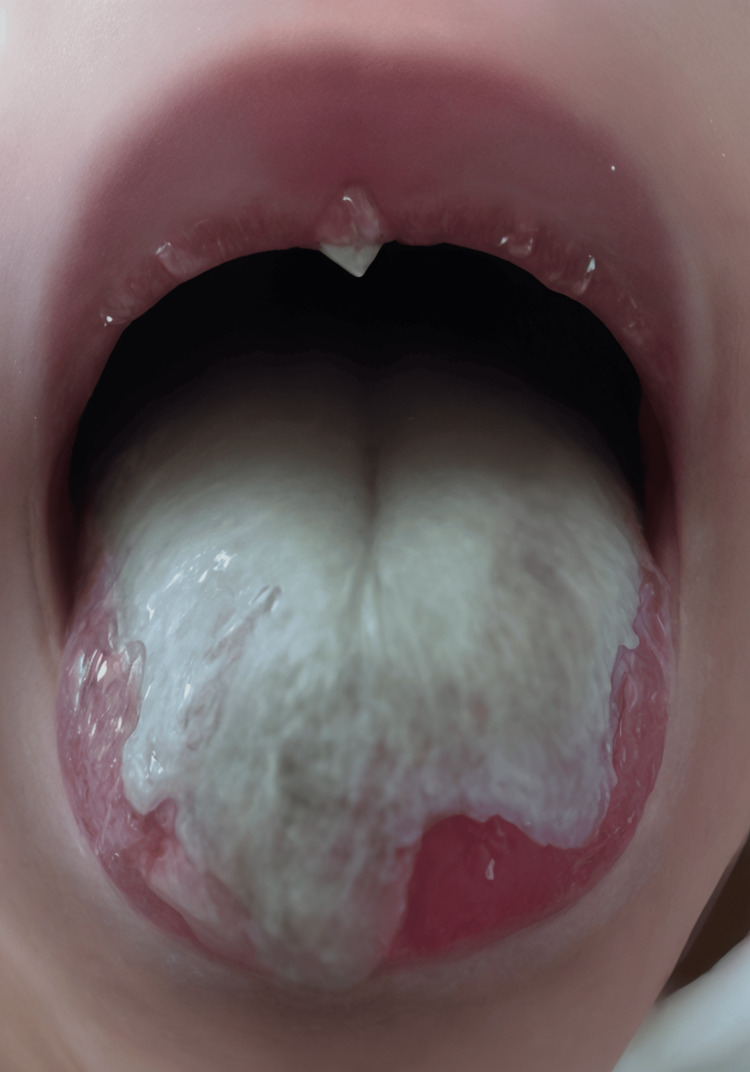 Figure 1
| Laboratory test | On admission | Reference range |
| Hemoglobin | 11.1 g/dL | 11.5–13.5 g/dL |
| Total leukocyte count | 10.38 × 10³/µL | 4.5–13.5 × 10³/µL |
| Platelet count | 295 × 10³/µL | 150–450 × 10³/µL |
| CRP | 47.4 mg/L | <5 mg/L |
| CD4+ lymphocyte count | 179 cells/µL | 500–1500 cells/µL |
| Urea | 28 mg/dL (normal) | 10–40 mg/dL |
| Creatinine | 0.4 mg/dL (normal) | 0.3–0.7 mg/dL |
| AST | 35 U/L (normal) | 15–50 U/L |
| ALT | 25 U/L (normal) | 10–40 U/L |
| Sodium (Na) | 138 mEq/L (normal) | 135–145 mEq/L |
| Potassium (K) | 4.2 mEq/L (normal) | 3.5–5.0 mEq/L |
| Chloride (Cl) | 102 mEq/L (normal) | 98–107 mEq/L |
| Microbiological test | Specimen type | Result |
| Blood cultures | Blood | Negative |
| Bacterial pathogens | Throat swab | Negative |
| Influenza | Throat swab | Negative |
| Adenovirus | Throat swab | Negative |
| EBV | Throat swab | Negative |
| CMV | Throat swab | Negative |
| HIV serology | Blood | Negative |
| Hepatitis B serology | Blood | Negative |
| Hepatitis C serology | Blood | Negative |
| Syphilis serology | Blood | Negative |
| Toxoplasmosis serology | Blood | Negative |
| Fungal culture | Oral lesions |
|
| Antifungal agent | MIC (μg/mL) | Interpretation |
| Amphotericin B | 0.5 | Susceptible |
| Fluconazole | 1 | Susceptible (dose-dependent/borderline) |
| Itraconazole | 0.03 | Susceptible |
| Isavuconazole | - | Not reported |
| Voriconazole | 0.008 | Susceptible |
| Posaconazole | 0.015 | Susceptible |
| Caspofungin | 0.125 | Susceptible |
| Anidulafungin | 0.25 | Susceptible |
| Micafungin | 0.125 | Susceptible |
| Flucytosine | 0.06 | Susceptible |
| Laboratory test | Reference range | On admission | After intervention |
| Hemoglobin | 11.5–13.5 g/dL | 11.1 g/dL | 12.3 g/dL (normal) |
| Total leukocyte count | 4.5–13.5 × 10³/µL | 10.38 × 10³/µL | 8.2 × 10³/µL (normal) |
| Platelet count | 150–450 × 10³/µL | 295 × 10³/µL | 310 × 10³/µL (normal) |
| CRP | <5 mg/L | 47.4 mg/L | 2.3 mg/L (normal) |
| CD4+ lymphocyte count | 500–1500 cells/µL | 179 cells/µL | 620 cells/µL (normal) |
| Urea | 10–40 mg/dL | 28 mg/dL (normal) | 25 mg/dL (normal) |
| Creatinine | 0.3–0.7 mg/dL | 0.4 mg/dL (normal) | 0.5 mg/dL (normal) |
| AST | 15–50 U/L | 35 U/L (normal) | 30 U/L (normal) |
| ALT | 10–40 U/L | 25 U/L (normal) | 22 U/L (normal) |
| Sodium (Na) | 135–145 mEq/L | 138 mEq/L (normal) | 140 mEq/L (normal) |
| Potassium (K) | 3.5–5.0 mEq/L | 4.2 mEq/L (normal) | 4.1 mEq/L (normal) |
| Chloride (Cl) | 98–107 mEq/L | 102 mEq/L (normal) | 104 mEq/L (normal) |
| Study | Age/sex | Clinical features | Underlying conditions/immunodeficiency | Treatment | Outcome |
| Mantadakis and Tragiannidis, 2019 [ | 2 years/female | Severe oral and esophageal candidiasis | Prolonged ICU stay, corticosteroid therapy | Fluconazole, caspofungin | Recovery after prolonged antifungal therapy |
| Dotis et al., 2012 [ | 4 years/male | Fever, bloodstream infection (fungemia) | Immunosuppressive therapy (chemotherapy for leukemia) | Amphotericin B, caspofungin | Complete recovery, resolution of candidemia |
| Mohan et al., 2015 [ | 5 years/male | Persistent fever, oral thrush, poor intake | Previously healthy, transient lymphopenia of unclear etiology | Amphotericin B, fluconazole | Complete recovery, normal immune function |
| Inacio et al., 2017 [ | 8 months/female | Extensive mucocutaneous candidiasis, failure to thrive | Previously healthy, no definitive immunodeficiency identified | Fluconazole, topical antifungals | Improvement with prolonged antifungal therapy |
| Current case (2025) | 6 years/female | Severe oral candidiasis, high-grade fever, poor intake | Isolated profound CD4+ lymphopenia (179 cells/µL), HIV-negative, suspected primary immunodeficiency | IV and oral fluconazole | Clinical improvement, awaiting genetic evaluation |
Peer Reviews
No public reviews on file for this paper yet. If you reviewed it on a platform where reviews are public (OpenReview, ICLR, NeurIPS, ICML), you can paste yours below so the community can read it here.
Videos
No videos yet. Explain this paper in a talk, walkthrough, or lecture? Add one.
Taxonomy
TopicsAntifungal resistance and susceptibility · Fungal Infections and Studies · Immunodeficiency and Autoimmune Disorders
Introduction
Candida parapsilosis (C. parapsilosis) has emerged as a significant fungal pathogen, predominantly affecting immunocompromised hosts, neonates, patients on prolonged antibiotic therapy, or individuals with compromised immune systems, including HIV-positive patients, transplant recipients, and those undergoing immunosuppressive treatments [1,2]. Oral candidiasis is a common mucosal fungal infection predominantly caused by frequently attributed to *Candida albicans. *Infections caused by non-albicans Candida species, such as C. parapsilosis, are particularly unusual in otherwise healthy pediatric populations and strongly suggest underlying immunodeficiency [3,4].
Primary immunodeficiency disorders (PIDs) are heterogeneous conditions characterized by impaired immune responses, predisposing patients to recurrent, severe, or atypical infections, autoimmunity, or malignancies. Profound CD4^+^ lymphopenia in HIV-negative children is exceedingly rare and often indicative of underlying conditions such as idiopathic CD4 lymphocytopenia (ICL), common variable immunodeficiency (CVID), or combined immunodeficiencies (CIDs). These disorders compromise mucosal immunity significantly, predisposing patients to severe fungal infections [5-7]. CD4^+^ T-cells are critical for effective immune responses against fungal pathogens, including mucosal defense against Candida species, thus rendering CD4-deficient individuals particularly susceptible to chronic or severe candidal infections [7-9]. Evidence in the literature highlights the need for early identification and characterization of immunodeficiencies to implement timely and effective interventions, reducing morbidity and improving patient outcomes [8,9].
The standard therapeutic approach for oral candidiasis typically involves topical antifungals, such as nystatin or clotrimazole, for mild cases. In moderate-to-severe or recurrent infections, systemic therapy with azoles, especially fluconazole, is preferred due to its favorable pharmacokinetics, tolerability, and effective mucosal penetration. However, increasing azole resistance among non-albicans Candida species, including C. parapsilosis, underscores the importance of performing antifungal susceptibility testing to tailor appropriate therapy and avoid clinical failure [10-12]. Alternative therapeutic options in cases of azole resistance or intolerance include echinocandins (e.g., caspofungin, micafungin) or amphotericin B formulations [10,12].
Given the rarity of severe C. parapsilosis mucosal infections in immunocompetent pediatric populations, identification of such cases should prompt clinicians to thoroughly evaluate for possible immunological defects and promptly initiate targeted antifungal therapy guided by susceptibility profiles. Early recognition and comprehensive management, including detailed immunological and genetic evaluations, can significantly improve prognosis, prevent complications, and guide long-term care strategies [3,5,9]. In this context, the unique clinical presentation of the patient in this case report highlights the critical importance of comprehensive immunological evaluations in pediatric patients with atypical oral infections.
Case presentation
A previously healthy six-year-old female presented with a four-day history of persistent high-grade fever reaching up to 39.4 °C, severe oral pain, difficulty swallowing, significantly decreased oral intake, lethargy, irritability, mild weight loss, and decreased urine output. The patient had been initially assessed as an outpatient by a general pediatrician and diagnosed with pharyngotonsillitis and managed with amoxicillin and pain relief. However, a lack of treatment response and worsening of symptoms had prompted hospital admission for further evaluation and treatment.
Upon hospital admission, she appeared moderately ill, febrile (38.1 °C), mildly pale, tachycardic (heart rate: 122 bpm), with dry mucous membranes and decreased skin turgor indicative of mild dehydration. Detailed examination of the oral cavity showed severe candidiasis characterized by extensive, thick, adherent white plaques covering the tongue, buccal mucosa, and soft palate, with significant surrounding erythema, mucosal edema, tenderness, ulceration, and minimal mucosal bleeding on manipulation (Figure 1). Figure 1 shows extensive, thick, white adherent plaques involving the buccal mucosa and dorsal tongue surface, characterized by significant surrounding mucosal erythema and edema, presence of superficial mucosal ulcerations, and minimal mucosal bleeding upon gentle manipulation, indicating severe inflammation and tissue fragility.
Oral candidiasis involving buccal mucosa and tongueThe image shows an extensive, thick, white adherent plaques involving the buccal mucosa and dorsal tongue surface, characterized by significant surrounding mucosal erythema and edema, presence of superficial mucosal ulcerations, and minimal mucosal bleeding upon gentle manipulation, indicating severe inflammation and tissue fragility
Physical examination revealed no cervical or generalized lymphadenopathy, facial swelling, or rash. Capillary refill time was approximately two seconds, indicating adequate peripheral perfusion. Her nutritional status was mildly compromised, reflected by recent mild weight loss.
Initial laboratory evaluation demonstrated mild anemia (hemoglobin: 11.1 g/dL, normal range: 11.5-13.5 g/dL), leukocytosis (white cell count: 10.38 × 10³/µL, normal range: 4.5-13.5 × 10³/µL, neutrophils predominant) and elevated inflammatory markers [C-reactive protein: CRP: 47.4 mg/L, normal range: <5 mg/L]. Platelet count was within the normal range (295 × 10³/µL). Renal and liver function tests, as well as electrolyte levels, remained within normal limits (Table 1).
Due to the atypical clinical presentation of severe oral stomatitis, an extensive immunological workup was performed. Peripheral blood immunophenotype test by flow cytometry was performed and showed a significant reduction in CD4+ lymphocyte count (179 cells/µL, normal range: 500-1500 cells/µL). Other lymphocyte subsets, including CD8+ T cells (850 cells/µL, reference range: 300-1000 cells/µL), B cells (520 cells/µL, reference range: 200-600 cells/µL), and natural killer (NK) cells (250 cells/µL, reference range: 90-590 cells/µL), were within normal limits. Immunoglobulin levels were also normal: IgG: 1020 mg/dL (reference range: 700-1600 mg/dL), IgA: 95 mg/dL (reference range: 70-400 mg/dL), and IgM: 85 mg/dL (reference range: 50-250 mg/dL). Complement factors C3 (120 mg/dL, reference range: 80-160 mg/dL) and C4 (25 mg/dL, reference range: 15-45 mg/dL) were normal. Vaccine response assessments showed protective antibody titers against tetanus (>1.0 IU/mL; protective: ≥0.1 IU/mL), diphtheria (>1.0 IU/mL; protective: ≥0.1 IU/mL), hemophilus influenzae type b (anti-Hib antibodies: 2.5 µg/mL; protective: ≥1.0 µg/mL), hepatitis B surface antibody (120 IU/L; protective: ≥10 IU/L), measles (positive), and pneumococcal conjugate vaccine serotypes (adequate protective levels for age). HIV serology remained negative.
Microbiological evaluations, which included multiple blood cultures, throat swabs for bacterial and viral pathogens [influenza, adenovirus, Epstein-Barr virus (EBV), Cytomegalovirus (CMV)], and specific serology for HIV, hepatitis B and C, syphilis, and toxoplasmosis, were negative (Table 2).
Oral lesion cultures identified C. parapsilosis, exhibiting borderline resistance to fluconazole (Table 3).
Following infectious disease consultation and given the normal renal and liver function tests (creatinine: 0.4 mg/dL, AST: 35 U/L, ALT: 25 U/L), intravenous fluconazole (6 mg/kg/day) was initiated alongside supportive care, including analgesics for pain management (paracetamol), and nutritional support with intravenous fluids and hypercaloric oral supplements.
Clinical improvement was prompt; fever resolved within 48 hours, oral lesions and mucosal inflammation significantly improved by day four, and oral intake gradually restored within one week. The comparison of laboratory values on admission and after therapeutic intervention is presented in Table 4.
Given the severity of the initial presentation, the borderline susceptibility (MIC of 1 µg/mL) of C. paraprsilosis, and the documented underlying CD4+ lymphopenia (indicating immune compromise), it was deemed optimal to continue oral fluconazole (6 mg/kg/day) therapy for two additional weeks post-discharge in line with current clinical guidelines for the management of mucosal candidiasis in immunocompromised pediatric patients [10].
The patient was diagnosed clinically with profound isolated CD4+ lymphopenia of suspected primary immunodeficiency origin [likely ICL or another genetically driven CID], pending definitive genetic confirmation. Scheduled comprehensive genetic and immunological evaluations included immunoglobulin levels, vaccine response assessments, genetic counseling, and follow-up immunological consultations to monitor immune recovery and identify underlying genetic or immune deficiencies.
Discussion
C. parapsilosis commonly causes invasive infections in neonates, critically ill, or immunocompromised children, particularly those with central venous catheters or extended hospital stays [1-3]. Isolation of C. parapsilosis from oral lesions in a previously healthy child, as reported here, is exceptionally unusual and highlights potential undiagnosed immunological dysfunction [2,5]. Previous pediatric cases involving non-albicans Candida infections, particularly C. parapsilosis, generally report underlying risk factors such as immunosuppressive therapy or extensive hospitalizations, unlike this patient's presentation [2,3]. Comparing these cases emphasizes the uniqueness of this patient's severe candidiasis in the absence of common risk factors, suggesting a novel immunological defect.
Azole resistance in *C. parapsilosis *is increasingly recognized and linked to mechanisms such as mutations in the ERG11 gene, overexpression of efflux pumps, and biofilm formation, complicating therapeutic management. The borderline resistance seen in this case reinforces the importance of routine antifungal susceptibility testing to guide treatment effectively [7-10]. Profound CD4+ lymphopenia without HIV infection in pediatric patients is exceedingly rare and often indicates significant underlying immunological abnormalities [5-7]. CD4+ T-cells play a critical role in mucosal immunity, which is essential for effective responses against fungal pathogens, including Candida species. Their depletion increases vulnerability to invasive and persistent infections, as observed in this case [3-6]. Long-term implications of chronic CD4+ lymphopenia include heightened susceptibility to recurrent infections, autoimmune conditions, and potentially increased malignancy risk, necessitating careful and prolonged follow-up. Preventive strategies, including prophylactic antimicrobial therapy, routine vaccination updates, and regular monitoring for autoimmune and malignant diseases, are recommended [3-5].
The limited literature on pediatric cases combined with insights from adult studies provides valuable guidance for clinicians encountering atypical presentations of C. parapsilosis infections in HIV-negative children, prompting careful immunological and microbiological evaluation. The existing pediatric literature primarily reports invasive infections associated with significant predisposing factors, such as prolonged hospitalization, immunosuppressive therapy, or surgical interventions [3,13,14,15]. Case reports describing severe mucosal or systemic infections with C. parapsilosis in previously healthy children without overt risk factors or HIV infection remain exceedingly rare, highlighting unique underlying immune dysfunction scenarios similar to the case presented here [16,17]. A comparative summary table contrasting key clinical features, underlying conditions, and outcomes from similar pediatric case reports available in the literature is presented in Table 5.
Data in adult populations suggest that infections with non-albicans Candida species, including C. parapsilosis, often occur in the context of reduced cellular immunity, prolonged hospital stays, broad-spectrum antibiotic exposure, or prior antifungal treatment [1,9]. Furthermore, increasing recognition of fluconazole resistance mechanisms among C. parapsilosis isolates in adults, including ERG11 gene mutations and efflux-pump overexpression, emphasizes the importance of antifungal susceptibility testing to guide pediatric management [11,17]. Such evidence underscores the necessity for comprehensive immunological evaluation and susceptibility-guided antifungal therapy in pediatric cases to optimize therapeutic outcomes.
Beyond HIV-driven immunodeficiency, several alternative factors could have contributed to the profound CD4+ lymphopenia and severe oral candidiasis observed in this patient. Genetic predispositions, such as ICL, CVID, or CIDs, may underlie isolated CD4+ deficiencies, particularly when standard infectious etiologies have been excluded. While extensive microbiological screening in this patient excluded active coinfections, previous infections or transient viral suppressions of cellular immunity could also theoretically contribute. Furthermore, although no recent immunosuppressive medications were documented in the patient's history, clinicians should always consider medication-induced lymphopenia. Lastly, mild nutritional compromise and dehydration observed at admission may have further influenced the immune response, highlighting the multifactorial nature of such clinical presentations.
Comprehensive genetic and immunological screening in similar pediatric cases should involve assessments of immunoglobulin levels, specific vaccine responses, lymphocyte subset analysis, and genetic tests targeting primary immunodeficiencies such as ICL, CVID, and CID syndromes. Multidisciplinary collaboration involving immunologists, geneticists, infectious disease specialists, and pediatricians is essential for optimal patient management and outcomes [11-13].
Conclusions
This report underscores the diagnostic challenge posed by severe oral candidiasis caused by *C. parapsilosis *in an HIV-negative infant without apparent risk factors. Clinicians should maintain a high index of suspicion for underlying primary immunodeficiencies when encountering atypical fungal infections. Early recognition, prompt antifungal therapy guided by susceptibility testing, and timely referral for genetic and immunological evaluation are essential steps to prevent severe complications and improve patient outcomes.
The reference list from the paper itself. Each links out to its DOI / PubMed record.
- 1Epidemiology of invasive candidiasis: a persistent public health problem Clin Microbiol Rev Pfaller MA Diekema DJ 1331632020071722362610.1128/CMR.00029-06PMC 1797637 · doi ↗ · pubmed ↗
- 2Candida parapsilosis, an emerging fungal pathogen Clin Microbiol Rev Trofa D Gácser A Nosanchuk JD 6066252120081885448310.1128/CMR.00013-08PMC 2570155 · doi ↗ · pubmed ↗
- 3Invasive fungal infections in the pediatric intensive care unit Pediatr Infect Dis J Mantadakis E Tragiannidis A 0838201910.1097/INF.000000000000239431261360 · doi ↗ · pubmed ↗
- 4Hematogenous infections due to Candida parapsilosis: changing trends in fungemic patients at a comprehensive cancer center during the last four decades Diagn Microbiol Infect Dis Safdar A Perlin DS Armstrong D 11164420021237602510.1016/s 0732-8893(02)00423-6 · doi ↗ · pubmed ↗
- 5Idiopathic CD 4 lymphocytopenia: clinical and immunologic characteristics and follow-up of 40 patients Medicine (Baltimore) Régent A Autran B Carcelain G 61729320142464646210.1097/MD.0000000000000017 PMC 4616307 · doi ↗ · pubmed ↗
- 6Common variable immunodeficiency: clinical and immunological features of 248 patients Clin Immunol Cunningham-Rundles C Bodian C 34489219991041365110.1006/clim.1999.4725 · doi ↗ · pubmed ↗
- 7Severe combined immunodeficiency--molecular pathogenesis and diagnosis Arch Dis Child Gaspar HB Gilmour KC Jones AM 1691738420011115930010.1136/adc.84.2.169PMC 1718644 · doi ↗ · pubmed ↗
- 8Antifungal drug resistance: molecular mechanisms in Candida albicans and beyond Chem Rev Lee Y Puumala E Robbins N Cowen LE 3390341112120213244152710.1021/acs.chemrev.0c 00199 PMC 8519031 · doi ↗ · pubmed ↗