Balloon enteroscope insertion over an endoscopic nasobiliary drainage tube in patients with surgically altered anatomy
Yoshihiro Goda, Kuniyasu Irie, Yuto Matsuoka, Tomomi Hamaguchi, Hideyuki Anan, Yoshimasa Suzuki, Shin Maeda

Abstract
Genes, proteins, chemicals, diseases, species, mutations and cell lines named across the full text — each resolved to its canonical identifier and authoritative record.
Click any figure to enlarge with its caption.
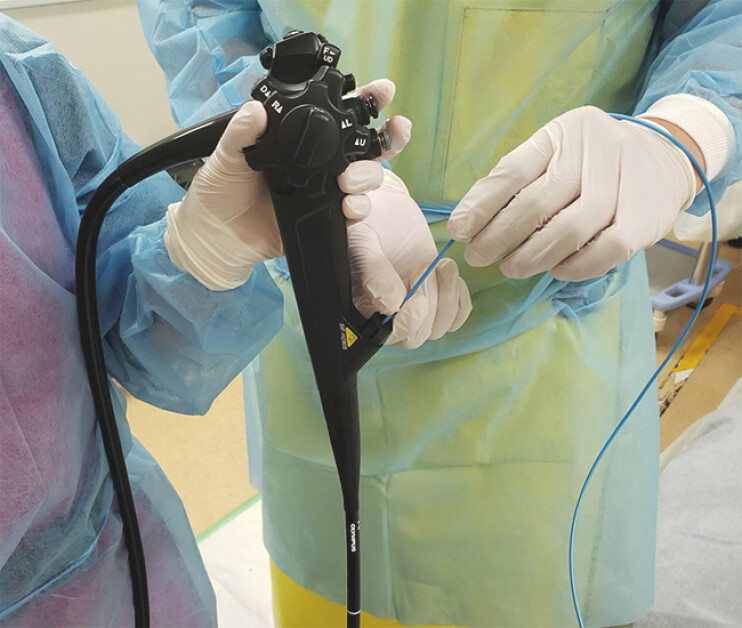 Fig. 1
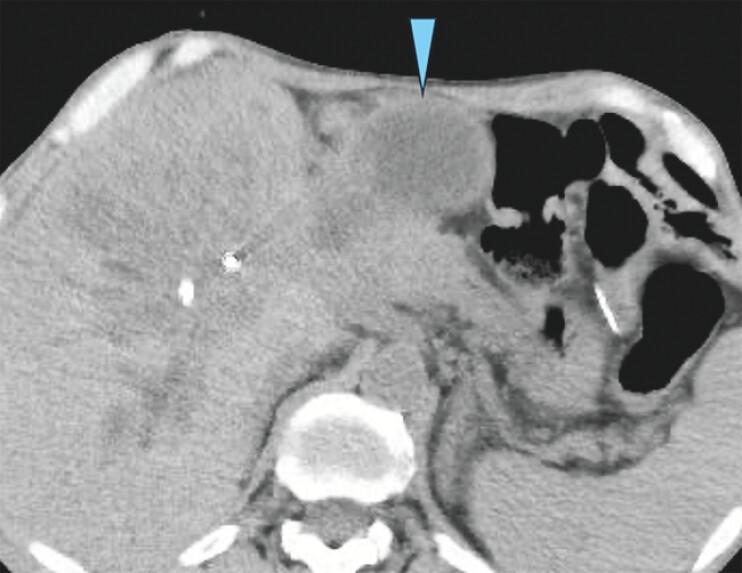 Fig. 2
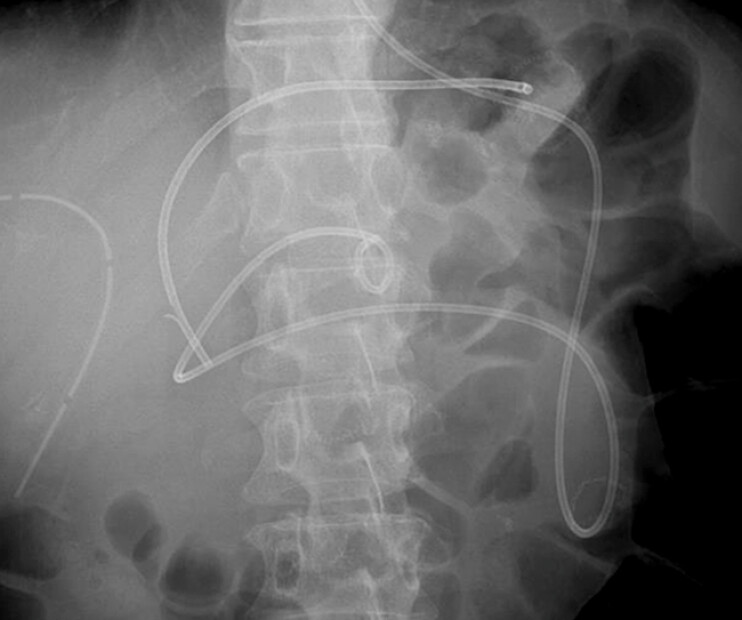 Fig. 3
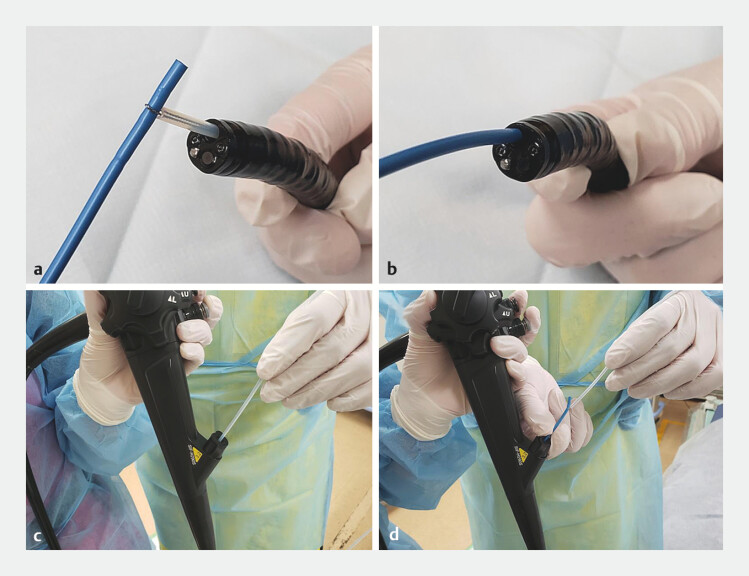 Fig. 4
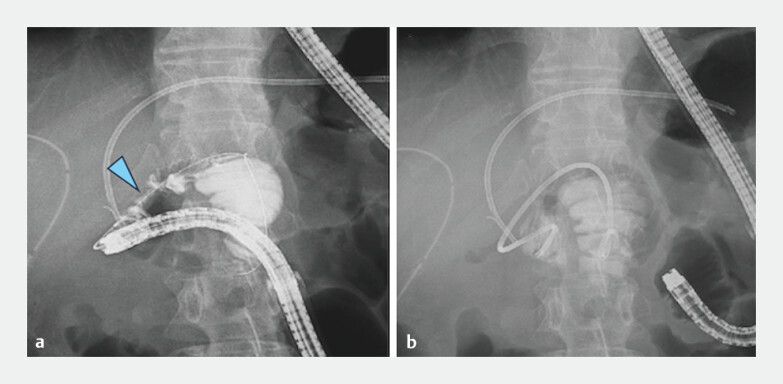 Fig. 5
Peer Reviews
No public reviews on file for this paper yet. If you reviewed it on a platform where reviews are public (OpenReview, ICLR, NeurIPS, ICML), you can paste yours below so the community can read it here.
Videos
No videos yet. Explain this paper in a talk, walkthrough, or lecture? Add one.
Taxonomy
TopicsGallbladder and Bile Duct Disorders · Esophageal and GI Pathology · Gastrointestinal Bleeding Diagnosis and Treatment
Scope insertion over an endoscopic nasobiliary drainage (ENBD) tube can facilitate the exchange to internal drainage without the need for selective guidewire reinsertion 1 2 3 . During the procedure, an assistant pushes or pulls the ENBD tube to prevent distal migration of the tube tip ( Fig. 1 ). However, insertion of a balloon enteroscope over an ENBD tube in patients with surgically altered anatomy is challenging because of the insufficient length of the tube relative to the enteroscope, which precludes positional adjustment by the assistant. Here, we report a case of successful balloon enteroscope insertion over an ENBD tube followed by the exchange of the tube with a plastic stent.
During scope insertion, the assistant adjusts the endoscopic nasobiliary drainage tube to prevent distal migration of the tube tip.
A 55-year-old man who had undergone pancreaticoduodenectomy with Billroth II reconstruction for pancreatic neuroendocrine neoplasm was diagnosed with afferent loop obstruction on computed tomography ( Fig. 2 ). Balloon enteroscopy-assisted endoscopic retrograde cholangiopancreatography (ERCP) with short-type single-balloon enteroscope (SIF-H290S; Olympus Medical Systems, Tokyo, Japan) was performed and a 7-Fr ENBD tube (Liguory Nasal Biliary Drainage Set; Cook Medical, Tokyo, Japan) was placed ( Fig. 3 ).
Computed tomography showing afferent loop obstruction (arrowhead).
The endoscopic nasobiliary drainage tube (Liguory Nasal Biliary Drainage Set; Cook Medical, Tokyo, Japan) was placed for afferent loop obstruction.
After resolution of the inflammation, balloon enteroscope-assisted ERCP was repeated to exchange the ENBD tube for internal drainage. The ENBD tube was repositioned from the nostril to the mouth 4 , and the tip was grasped with a snare and pulled into the accessory channel of the enteroscope ( Fig. 4 ). The balloon enteroscope was then advanced over the ENBD tube while the assistant adjusted tube positioning during insertion ( Fig. 1 , Video 1 ). The enteroscope successfully reached the duodenal stricture. A guidewire was inserted through the ENBD tube, which was then removed. Contrast-enhanced imaging confirmed duodenal stenosis ( Fig. 5 a ). A 7-Fr plastic stent (Through & Pass double pigtail; Gadelius, Tokyo, Japan) was successfully placed ( Fig. 5 b ).
Tube application. a The endoscopic nasobiliary drainage tube tip was grasped with a snare. b–d The tube was pulled into the accessory channel of the enteroscope, enabling the assistant to adjust tube position during scope insertion.
Contrast-enhanced imaging. a Duodenal stenosis (arrowhead) was confirmed. b A 7-Fr plastic stent (Through & Pass double pigtail; Gadelius, Tokyo, Japan) was successfully placed.
Scope insertion over an endoscopic nasobiliary drainage tube was feasible and useful in a patient with surgically altered anatomy.Video 1
To the best of our knowledge, this is the first report of balloon enteroscope insertion over an ENBD tube in a patient with surgically altered anatomy.
Endoscopy_UCTN_Code_TTT_1AP_2AD
The reference list from the paper itself. Each links out to its DOI / PubMed record.
- 1Tonozuka R Itoi T Sofuni A Novel peroral direct digital cholangioscopy-assisted lithotripsy using a monorail technique through the overtube in patients with surgically altered anatomy (with video)Dig Endosc 20193120320830506597 10.1111/den.13310 · doi ↗ · pubmed ↗
- 2Takenaka M Minaga K Kudo M Endoscopic nasobiliary drainage tube-guided scope insertion technique for internal drainage in a case of difficult selective biliary duct guiding Dig Endosc 201931 e 1e 210.1111/den.1326630152880 · doi ↗ · pubmed ↗
- 3Ogura T Ueno S Tanaka Y Endoscopic nasal biliary drainage-guided approach after endoscopic ultrasound-guided hepaticojejunostomy: safe stent exchange technique Endoscopy 202052 E 310E 31110.1055/a-1113-729232084670 · doi ↗ · pubmed ↗
- 4Hamano T Yoshida S Nishino TA novel guide-wire technique for repositioning a nasobiliary catheter from mouth to nostril without using a Nelaton tube Med Princ Pract 20152433934325967465 10.1159/000382033 PMC 5588249 · doi ↗ · pubmed ↗