Prototype of a novel cold snare polypectomy device
Lode Van Overbeke, Gerd Jacomen, Koen Chiers

Abstract
Genes, proteins, chemicals, diseases, species, mutations and cell lines named across the full text — each resolved to its canonical identifier and authoritative record.
Click any figure to enlarge with its caption.
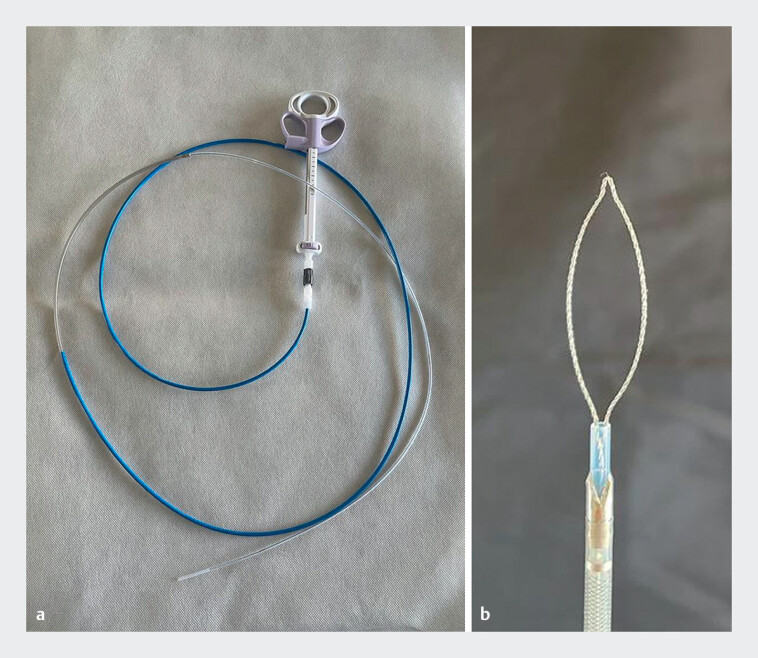 Fig. 1
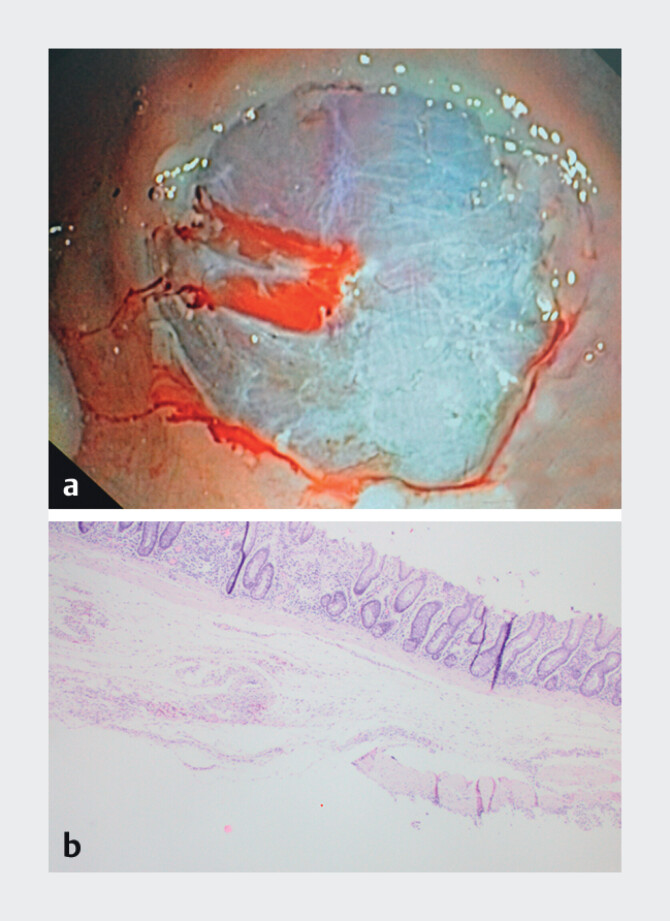 Fig. 2
| 15-mm device | 25-mm device | 15-mm snare | |
| Resection specimen diameter (mm) | 12.8, 17.8, 23.4, 17.5 | 20.3, 22.8, 16.0 | 5.6 |
| Median (range) | 17.65 (12.8–23.4) | 20.3 (16.0–22.8) | |
| Resection depth (µm) | 500, 50, 300, 0 | 200, 1100, 400 | 0 |
| Median (range) | 175 (0–500) | 400 (200–1100) | |
| Adverse events | None | None | None |
- —Prion Medical Belgium
Peer Reviews
No public reviews on file for this paper yet. If you reviewed it on a platform where reviews are public (OpenReview, ICLR, NeurIPS, ICML), you can paste yours below so the community can read it here.
Videos
No videos yet. Explain this paper in a talk, walkthrough, or lecture? Add one.
Taxonomy
TopicsMaterials Engineering and Processing · Recycling and utilization of industrial and municipal waste in materials production
There is a growing trend toward removing large sessile colonic polyps using cold snare piecemeal resection. This technique has proven to be both safer and more cost-effective than the traditional endoscopic mucosal resection method. However, cold snares are restricted to removing only small and superficial tissue fragments, increasing the risk of residual polyp tissue 1 .
We hypothesize that the safety of cold snare resection is not attributed to the superficial nature of the excision but rather to the absence of coagulation-related damage to the endothelium, vascular muscle layer, and muscularis propria.
Our objective is to develop a device capable of achieving larger and deeper resection specimens without coagulation.
To achieve this, we designed a robust 10-Fr catheter with a specially engineered cutting tip through which a conventional snare can be advanced. After the polyp is encircled by the conventional snare, the catheter is advanced, providing additional cutting capacity ( Fig. 1 ).
The device comprises a robust 10-Fr catheter with a specially engineered cutting tip through which a conventional snare can be advanced. After encircling the polyp by the snare, the catheter is advanced forward, providing additional cutting capacity.
We tested this prototype on an anesthetized pig where normal colonic mucosa was resected for evaluation ( Video 1 ).
Prototype of a novel cold snare polypectomy device.Video 1
A 15-mm snare device was used without submucosal injection, yielding four resections with a median diameter of 17.65 mm (range 12.8–23.4) and a depth from the muscularis mucosae of 175 µm (range 0–500). Subsequently, a 25-mm snare device was used with submucosal injection (to capture more mucosa), yielding three resections with a median diameter of 20.3 mm (range 16.0–22.8) and a depth of 400 µm (range 200–1100). One resection was performed using the 15-mm snare (without device), yielding a resection diameter of 5.6 mm and a depth of 0 µm ( Table 1 and Fig. 2 ).
: Table 1 Results of four resections using the 15-mm snare device, three resections using the 25-mm snare device, and one resection using a 15-mm cold snare (without device).
a Resection specimen (diameter 22.8 mm) obtained with the 25-mm device. b Histopathological examination reveals a large fragment containing mucosa, muscularis mucosae, and substantial submucosa including an arteriole (1100 µm).
No perforations or significant acute bleeding events were observed. Since the pig was euthanized following the procedure, no conclusions could be drawn regarding delayed bleeding.
Endoscopy_UCTN_Code_TTT_1AQ_2AD_3AB
The reference list from the paper itself. Each links out to its DOI / PubMed record.